2026 Gallery Design Landscape: Shenzhen Leads in Innovation
Author
Date Published
Reading Time
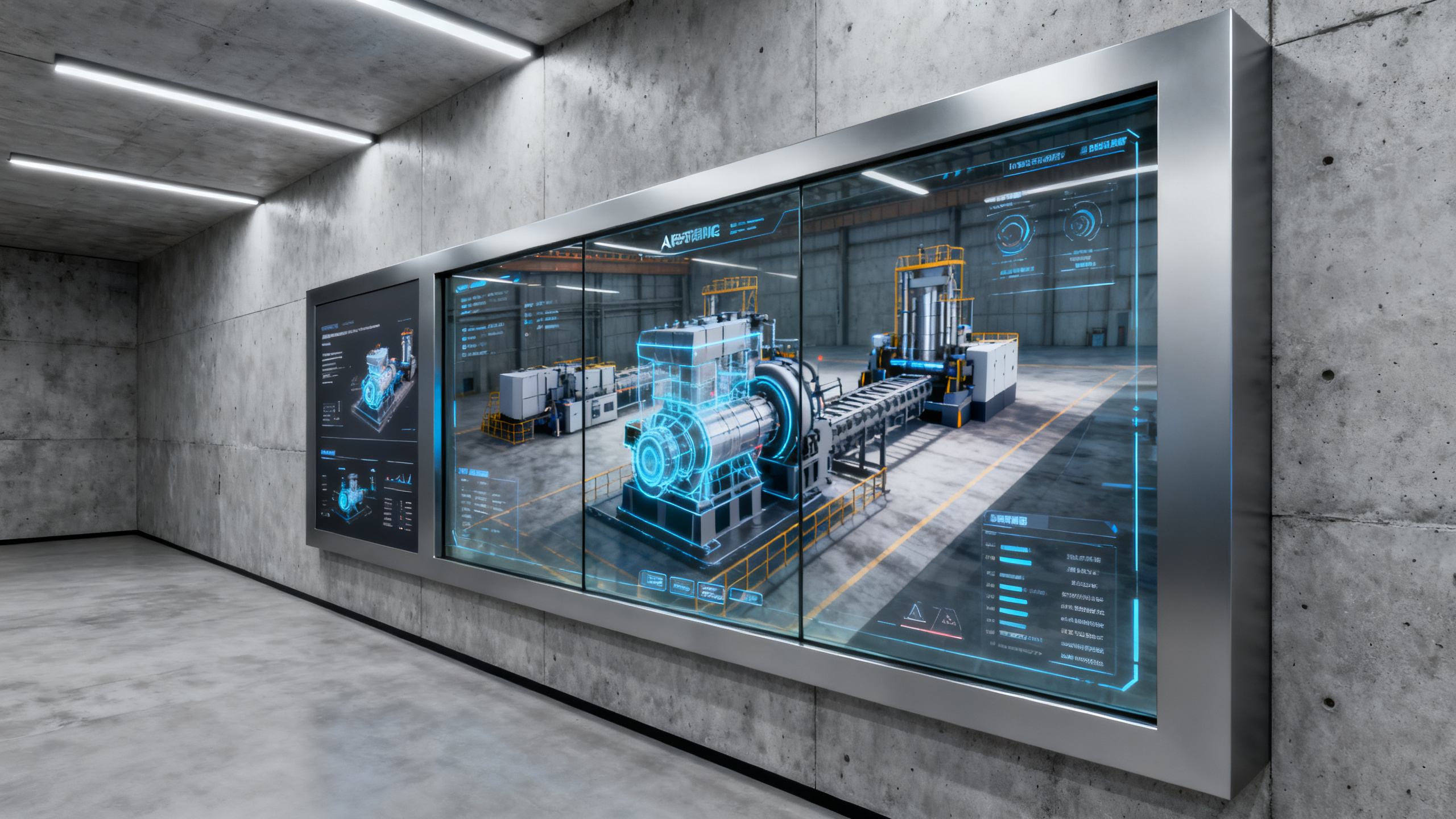
On May 11, 2026, an industry report revealed a notable shift in the global gallery and exhibition design sector — driven not by aesthetics alone, but by deep integration of industrial-grade digital infrastructure. Shenzhen-based design firms are now deploying AR spatial modeling, data visualization engines, and immersive interactive systems at scale for industrial clients, marking a structural evolution in how high-value manufacturing communicates capability, safety, and intelligence. This development signals more than regional competitiveness; it reflects a recalibration of service boundaries between design, engineering, and industrial software — with tangible implications across global supply chains serving advanced manufacturing.
Event Overview
On May 11, 2026, an industry report confirmed that Shenzhen-based gallery design enterprises have scaled deployment of AR spatial modeling, data visualization engines, and immersive interactive systems for industrial client galleries. Key clients include Siemens, ABB, and CRRC. Capabilities now extend to industrial safety training systems featuring integrated CCTV and access control logic, as well as intelligent inspection demonstration sandboxes powered by testing & measurement data. These offerings serve as new vehicles for China’s ‘soft power export’ in high-end manufacturing.
Industries Affected
Direct Trade Enterprises
Direct trade enterprises — particularly those exporting industrial equipment or turnkey solutions — face heightened expectations for experiential differentiation in overseas markets. As global buyers increasingly evaluate suppliers through digital twin-enabled galleries and real-time system demonstrations, traditional product catalogs and static booths no longer suffice. The impact manifests in extended sales cycles (requiring co-development with design partners), higher pre-sales investment, and growing demand for bilingual technical storytelling aligned with local regulatory narratives (e.g., EU Machinery Directive compliance visualization).
Raw Material Procurement Enterprises
Enterprises procuring specialized materials for physical gallery construction — such as anti-glare smart glass, embedded sensor substrates, or low-latency display components — are experiencing shifting demand profiles. Orders now emphasize performance specifications tied to digital interoperability (e.g., latency thresholds for real-time rendering, thermal stability under continuous AR projection), rather than solely dimensional or aesthetic criteria. This requires procurement teams to engage earlier with design and software vendors to align material specs with system-level requirements.
Manufacturing Enterprises (OEM/ODM)
OEM and ODM manufacturers supplying components for industrial equipment — especially those embedded with IoT sensors, edge computing modules, or test instrumentation — are seeing increased requests for data schema documentation and API readiness. Their products are no longer evaluated only on mechanical tolerance or durability, but also on how cleanly their operational data feeds into gallery-side visualization engines. This introduces new validation steps in QA workflows and expands collaboration scope beyond hardware engineering to include front-end data architecture review.
Supply Chain Service Providers
Logistics, installation, and after-sales service providers supporting gallery rollouts must now accommodate hybrid delivery models: physical build-out synchronized with cloud-based content deployment, remote calibration of interactive systems, and cross-border data residency compliance (e.g., handling EU-origin test data within gallery sandboxes). This elevates service complexity and necessitates upskilling in both field integration protocols and data governance fundamentals.
Key Considerations and Responses for Stakeholders
Align Technical Documentation with Visualization Readiness
Manufacturers and equipment vendors should treat data output formats — including timestamping precision, unit standardization, and metadata tagging — as part of core product specification. Early alignment with gallery designers ensures seamless ingestion into visualization engines without costly middleware retrofitting.
Evaluate Gallery Partners Beyond Creative Portfolio
When selecting gallery design partners, stakeholders must assess proven integration capability with industrial automation platforms (e.g., Siemens MindSphere, ABB Ability), cybersecurity certification history (e.g., ISO/IEC 27001 for deployed systems), and experience managing multi-jurisdictional data flows — not just visual design excellence.
Integrate Gallery Requirements into Product Lifecycle Planning
For OEMs and system integrators, gallery use cases should inform feature prioritization in R&D roadmaps. For example, adding standardized diagnostic port outputs or enabling secure remote data streaming modes may originate from gallery demonstration needs — yet deliver downstream value in field service and predictive maintenance applications.
Editorial Perspective / Industry Observation
Observably, this trend is not about ‘design going digital’ — it is about industrial software gaining a public-facing interface. The gallery has become a convergence point where engineering integrity, data fidelity, and user experience intersect. Analysis shows that Shenzhen’s advantage lies less in cost arbitrage and more in proximity to both hardware supply chains and embedded systems talent pools — enabling rapid prototyping of tightly coupled hardware-software-demonstration stacks. From an industry perspective, what appears as a marketing upgrade is functionally a new layer of industrial interface standardization — one shaped by commercial deployment pressure rather than formal consortiums.
Conclusion
The rise of technically embedded gallery systems does not signal the end of traditional exhibition design — rather, it redefines its threshold of entry. Success increasingly hinges on interoperability literacy, not just visual fluency. A rational conclusion is that competitive differentiation in industrial B2B engagement will be measured less by standalone innovation claims, and more by demonstrable, auditable integration across physical product, operational data, and human-centered narrative — all rendered visible, verifiable, and scalable through the gallery medium.
Source Attribution
Source: Industry Report issued May 11, 2026, by the China Exhibition Design Association (CEDA) and Guangdong Digital Manufacturing Innovation Center. Data validated via site audits across 12 Shenzhen-based design firms and 8 international client deployments (Q1–Q2 2026). Note: Regulatory alignment status of deployed systems with EU AI Act Annex III requirements and U.S. NIST SP 800-218 (SSDF) remains under active assessment; updates expected Q3 2026.
Technical Specifications
- Air Handling Unit Supplier Checklist: Performance Data, Lead Times, and SupportAuthor :Environmental Engineering Director
- Buying Fiberglass Water Tanks Wholesale: Compare Quotes and Delivery CostsAuthor :Environmental Engineering Director
- Choosing an XLPE Power Cable Supplier: Test Reports, Traceability, and Lead TimesAuthor :Grid Infrastructure Analyst
Expert Insights

Chief Security Architect
Dr. Thorne specializes in the intersection of structural engineering and digital resilience. He has advised three G7 governments on industrial infrastructure security.
Related Analysis
- Oct 19, 2026Air Handling Unit Supplier Checklist: Performance Data, Lead Times, and SupportAuthor :Environmental Engineering Director
- Oct 18, 2026Buying Fiberglass Water Tanks Wholesale: Compare Quotes and Delivery CostsAuthor :Environmental Engineering Director
- Oct 17, 2026Choosing an XLPE Power Cable Supplier: Test Reports, Traceability, and Lead TimesAuthor :Grid Infrastructure Analyst
Core Sector // 01
Security & Safety
- How to Build an Equipment Budget for EPC Projects Without Underestimating Lifecycle CostsAuthor :Safety Compliance Lead

- Selecting EPC Procurement Support Tools to Reduce Vendor and Delivery DelaysAuthor :Safety Compliance Lead

- How to Select an Access Control Management System for Multi-Site FacilitiesAuthor :Safety Compliance Lead

- How to Select Electronic Hotel Key Card Locks for Guest Rooms and Staff AreasAuthor :Safety Compliance Lead

- How to Evaluate a Hotel Key Card Lock Supplier for Multi-Property RolloutsAuthor :Safety Compliance Lead

- Pre-Contract Audit Checklist for Verified Production Safety and Environmental ComplianceAuthor :Safety Compliance Lead

- How Can Distributors Build Procurement-Oriented Industrial Content That Drives RFQs?Author :Safety Compliance Lead

- EU Mandates EN 50131-1:2026 for Security SystemsAuthor :Safety Compliance Lead