Are Security Patrol Robots Practical in 2026
Author
Date Published
Reading Time
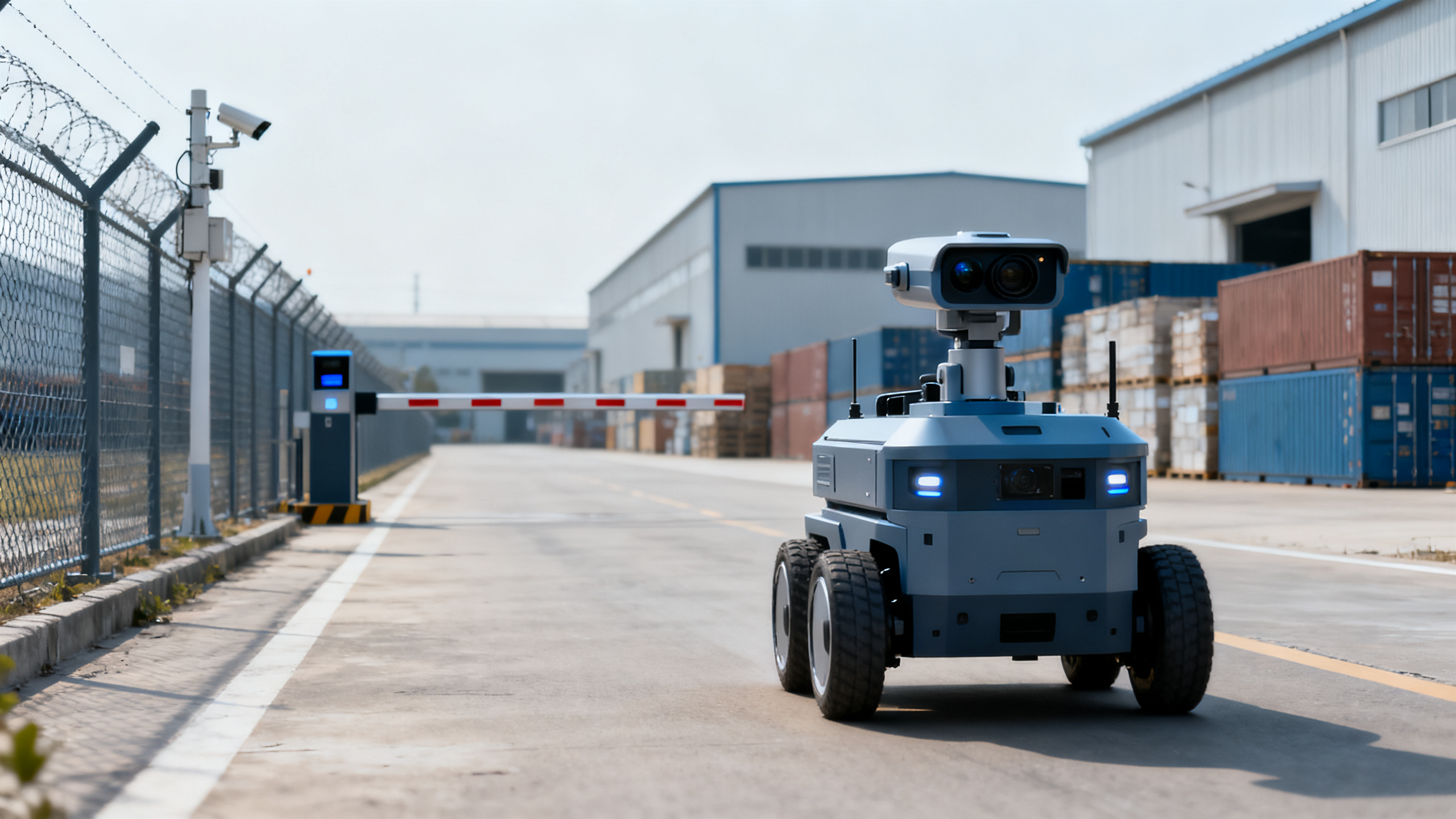
As industrial sites face rising labor costs, wider perimeters, and stricter safety demands, many buyers are asking whether security patrol robots are truly practical in 2026. For procurement teams comparing perimeter intrusion detection, wholesale smart door locks, automatic boom barriers, and x ray baggage scanners, the real question is not hype but measurable performance, integration, and long-term value.
In industrial security, practicality is never defined by novelty alone. A patrol robot has to prove that it can operate for 8–16 hours per shift, function in mixed indoor-outdoor environments, transmit usable data to the control room, and fit existing access control and alarm workflows without creating a new management burden.
For information researchers, operators, procurement teams, and business decision-makers, the 2026 question is straightforward: where do security patrol robots deliver real value, where do they still fall short, and how should they be evaluated against fixed surveillance, human guards, and other security equipment?
Where Security Patrol Robots Are Becoming Practical
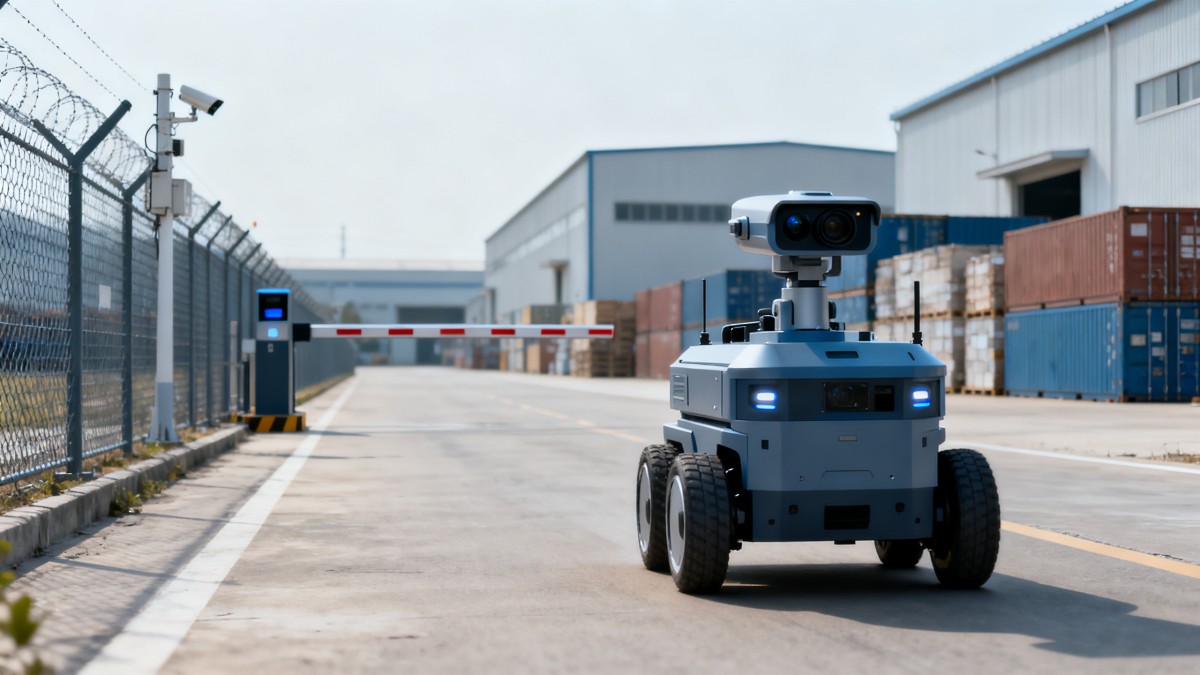
Security patrol robots are increasingly practical in sites with repetitive patrol routes, measurable security rules, and high labor exposure. Typical examples include logistics parks, manufacturing campuses, substations, petrochemical buffer zones, bonded warehouses, ports, and large commercial-industrial compounds with perimeters of 500 meters to 5 kilometers.
In these environments, the robot is not replacing the full security system. It usually serves as a mobile sensing node that fills the gap between static CCTV, access control, perimeter intrusion detection, and guard patrol. Its practical advantage appears when incidents occur outside camera angles, between patrol intervals, or in areas where sending staff every 30–60 minutes is costly or unsafe.
By 2026, the strongest use case is not “autonomous guarding” in a science-fiction sense. It is structured patrol automation. That means scheduled route execution, live video verification, thermal screening, two-way audio, abnormal event alerts, and digital patrol logs that reduce manual reporting time by 20%–40% in routine operations.
Best-fit operational scenarios
Facilities with predictable terrain and repeated inspection points gain the most. A robot can revisit 20–80 checkpoints per shift, verify whether gates are open, detect unusual lingering vehicles, and monitor restricted areas after hours. In sites operating 24/7, this consistency matters more than novelty because security failures often happen during low-attention windows such as 11 p.m. to 5 a.m.
- Perimeter roads around factories, substations, and storage yards
- Indoor logistics corridors with repeatable traffic patterns
- Outdoor loading areas where visibility changes during night shifts
- Mixed-use campuses needing routine patrol plus event-based response
The practical threshold is usually environmental stability. If the site has severe mud, deep potholes, uncontrolled slopes above 10–15 degrees, or frequent route obstructions, robot patrol efficiency declines quickly. In that case, fixed cameras and selective guard patrol may remain more effective.
Comparison against traditional security layers
A useful way to judge practicality is to compare the robot with adjacent security investments rather than viewing it in isolation.
The key takeaway is that security patrol robots are practical when deployed as part of a layered system. They are weakest when expected to operate as a standalone substitute for guards, gates, locks, or baggage screening equipment.
What Buyers Should Evaluate Before Procurement
Procurement teams should avoid evaluating patrol robots on marketing language such as “AI-powered” or “fully autonomous” alone. In 2026, the more reliable purchasing method is to score the robot across 4 dimensions: mobility, sensing, integration, and serviceability. If any one of these fails, long-term practicality drops sharply.
Mobility includes battery endurance, route stability, obstacle handling, slope capability, operating temperature, wheel or track design, and docking behavior. For many industrial users, an endurance range of 6–12 hours per charge is workable, but only if auto-docking or quick battery swap is available and recharge time stays within 2–4 hours.
Sensing should be tied to specific risks. A robot meant for warehouse patrol may need HD video, audio warning, and access-point verification. A robot for utility or energy sites may also need thermal imaging, smoke or gas-related inputs via integrated sensors, and exception tagging for heat anomalies. Not every site benefits from the same payload.
Core evaluation checklist
The table below gives procurement teams a practical decision framework that can be used during RFI, RFQ, or pilot testing.
This checklist helps separate practical systems from showroom concepts. A robot that performs well in a clean demo zone but fails around reflective surfaces, rain, uneven concrete, or loading traffic is not procurement-ready for industrial deployment.
Questions decision-makers should ask vendors
- What is the tested operating environment: indoor, outdoor, or mixed, and under what temperature and precipitation conditions?
- How many patrol routes can be configured, and how quickly can they be updated after site changes?
- What happens when the robot loses network connectivity for 30 seconds, 5 minutes, or longer?
- Can alerts be pushed into existing security operations workflows, or is a separate dashboard required?
- What spare parts, preventive maintenance intervals, and software update windows are expected over 12 months?
These questions matter because total usability is often decided by service and integration, not by the robot chassis itself. A lower-priced unit with poor uptime support can create a higher 3-year operating cost than a better-integrated system with clearer maintenance planning.
Integration with Broader Industrial Security Systems
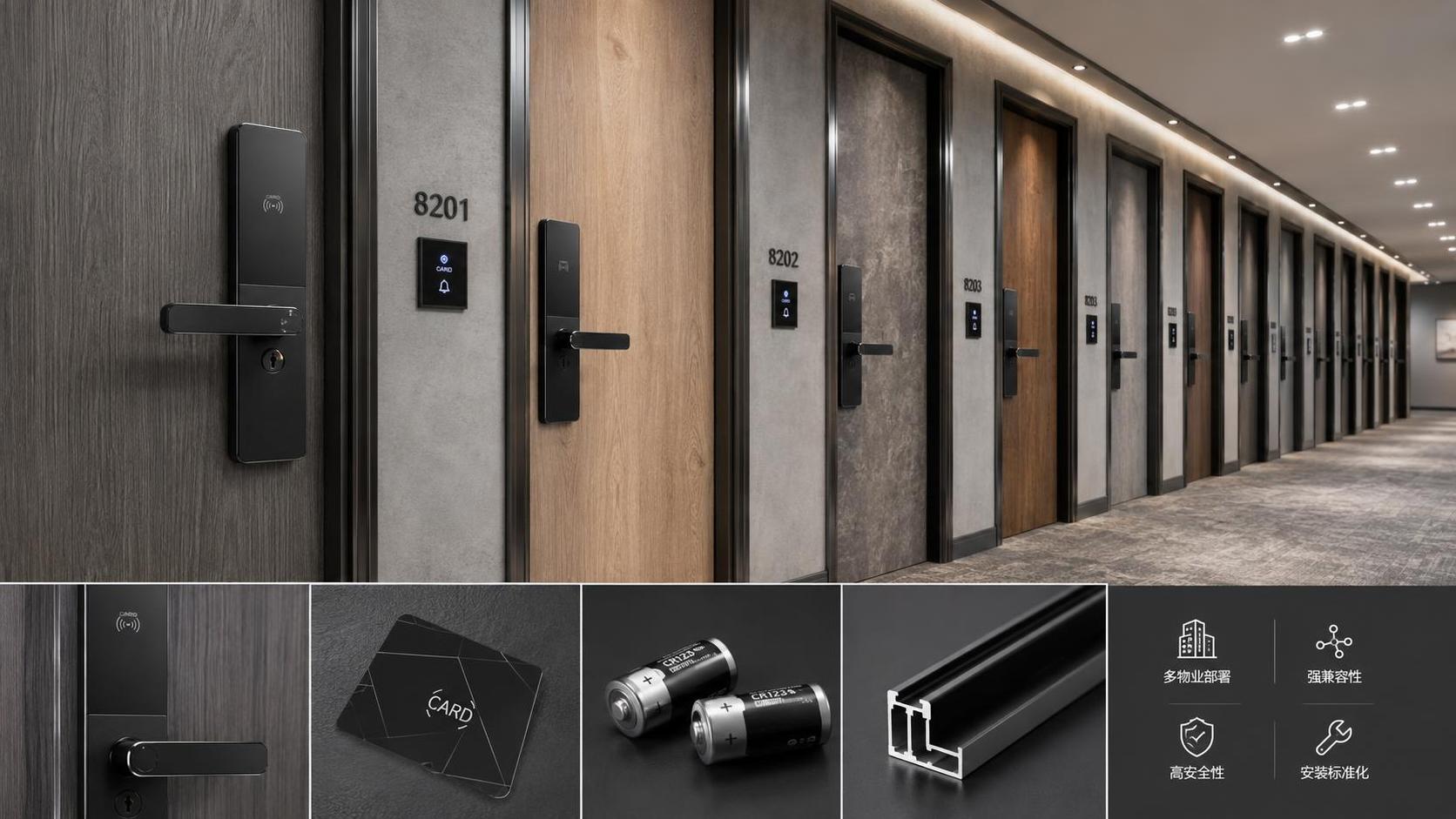
Security patrol robots become genuinely practical only when they connect to the rest of the site’s protective infrastructure. In 2026, buyers increasingly compare them not only with guard patrols but with perimeter intrusion detection, smart locks, boom barriers, x ray baggage scanners, visitor management, and video management platforms.
For example, if a perimeter sensor triggers a fence-line alarm at 02:15, the value of the robot is its ability to move to that zone, provide live video and thermal verification, broadcast two-way audio, and reduce false dispatches. If a smart door lock shows repeated invalid access attempts, a robot can be sent to nearby corridors or loading areas to confirm whether the event is a user error or a coordinated breach attempt.
This type of coordination matters especially in multi-layer environments. A boom barrier controls vehicle entry, an x ray baggage scanner protects personnel or visitor entry points, and the robot extends mobile awareness beyond those fixed control nodes. Instead of competing directly, the technologies cover different segments of the risk chain.
How robots fit into the response workflow
A practical deployment usually follows a 5-step operational model rather than free roaming.
- Scheduled patrol of fixed routes and checkpoints during standard intervals such as every 30, 60, or 120 minutes.
- Event-triggered dispatch from perimeter alarms, access anomalies, or operator commands.
- Live verification using video, thermal imaging, and audio communication.
- Human escalation to guards, control room staff, or emergency responders when required.
- Digital archiving of patrol records, incident footage, and route exceptions for audit review.
When this workflow is in place, security teams typically gain faster verification and cleaner documentation. When it is absent, the robot often becomes an isolated gadget that security operators only use sporadically.
System-level compatibility priorities
Before adoption, integrators and facility managers should map which systems the robot must communicate with in phase 1 and phase 2.
The practical lesson is simple: a patrol robot delivers higher value when it strengthens the response time and visibility of existing security investments. It becomes harder to justify when deployed with no integration plan and no clear operating triggers.
Cost, Maintenance, and Operational Risks in 2026
Practicality depends as much on ownership discipline as on hardware performance. Buyers should evaluate 3 cost layers: acquisition, deployment, and lifecycle support. Acquisition is only the visible part. Deployment may require site mapping, route commissioning, docking setup, network tuning, operator training, and software onboarding over 1–4 weeks depending on site complexity.
Maintenance is equally important. Patrol robots include batteries, drivetrains, cameras, obstacle detection components, wireless modules, and charging mechanisms. In industrial settings with dust, vibration, and variable temperatures, preventive checks may be needed monthly, while deeper service intervals may fall at 6 or 12 months depending on usage hours.
The hidden risk is not always breakdown. It is performance drift. A robot that still powers on but loses navigation confidence, generates repeated false stops, or docks unreliably can gradually fall out of daily use. That is why uptime targets, remote diagnostics, and spare part access should be contract questions, not afterthoughts.
Common deployment risks
- Overestimating terrain readiness: cracked pavement, standing water, and random obstructions often reduce route reliability.
- Underestimating wireless needs: weak Wi-Fi or patchy private network coverage can interrupt live streaming and command continuity.
- Buying too many features too early: sensor packages should match risk exposure instead of inflating complexity.
- Ignoring operator adoption: if guards and control room staff are not trained in 2–3 clear workflows, utilization drops.
- Skipping pilot metrics: without a 30–90 day test phase, it is hard to prove alarm verification gains or labor offset.
For many sites, the right entry strategy is one robot in a defined zone rather than a campus-wide rollout. A pilot should measure route completion rate, alert response time, battery behavior, docking success, and operator usage frequency. If these metrics are stable, expansion becomes easier to justify.
What “practical” usually means in financial terms
In B2B environments, practicality often means one of three outcomes: reducing repetitive guard rounds, improving after-hours verification, or raising audit quality without adding headcount. Not every project will create direct labor replacement. Some will instead create risk reduction, better incident documentation, and faster response during low-staff periods.
For procurement leaders, the better question is whether the robot improves security operations over a 24–36 month horizon. If it lowers missed patrol events, reduces manual report time, and enhances alarm verification in critical zones, it may be practical even if it does not eliminate a full guard post.
How to Decide if a Security Patrol Robot Is Right for Your Site
By 2026, security patrol robots are practical for many industrial and infrastructure settings, but only under the right conditions. They work best where routes are structured, risk points are known, and integration with existing security systems is planned from the start. They are less suitable for chaotic environments, highly manual response tasks, or sites expecting a robot to replace every human security function.
For researchers, the takeaway is to focus on measurable use cases rather than trend language. For operators, the priority is ease of dispatch, route reliability, and low-friction incident handling. For procurement teams, the decision should balance technical fit, support quality, and lifecycle maintenance. For executives, the main concern is whether the system strengthens resilience without adding complexity that the site cannot sustain.
A practical site-readiness checklist
- Define 1–3 patrol zones with clear objectives such as perimeter verification, loading bay monitoring, or restricted area checks.
- Confirm terrain, lighting, and network conditions across those zones during day and night operations.
- List the systems that must connect first, such as video management, intrusion alarms, or access control.
- Run a pilot for 30–90 days with measurable KPIs including route completion, incident response, and operator adoption.
- Review lifecycle support terms, preventive maintenance frequency, and escalation SLAs before scaling.
If your site can satisfy these conditions, security patrol robots are no longer experimental. They become a practical component of modern industrial protection architecture. If those conditions are missing, fixed surveillance, access control upgrades, smart locks, barriers, and human patrol optimization may deliver faster returns first.
Final recommendation
The smartest 2026 buying strategy is not to ask whether security patrol robots are universally practical. It is to ask whether they are practical for your routes, your risks, and your response model. When selected with operational discipline, they can extend coverage, improve verification, and support safer, more efficient facilities.
If you are evaluating patrol robots alongside perimeter intrusion detection, smart access devices, boom barriers, or x ray screening systems, now is the right time to compare architectures, integration paths, and support models. Contact us to discuss your site conditions, request a tailored security sourcing framework, or explore broader industrial security solutions aligned with your operational goals.
Technical Specifications
Expert Insights

Chief Security Architect
Dr. Thorne specializes in the intersection of structural engineering and digital resilience. He has advised three G7 governments on industrial infrastructure security.
Related Analysis
- Oct 24, 2026Niagara Power Transformer Begins $71 Million-Plus Buffalo ExpansionAuthor :Grid Infrastructure Analyst
- Oct 24, 2026Buying Lab Incubators Wholesale: MOQs, Lead Times, and Warranty TermsAuthor :Precision Metrology Expert
- Oct 23, 2026World Steel Association Releases Climate Change and Steel Production Policy PaperAuthor :
Core Sector // 01
Security & Safety
- How to Build an Equipment Budget for EPC Projects Without Underestimating Lifecycle CostsAuthor :Safety Compliance Lead

- Selecting EPC Procurement Support Tools to Reduce Vendor and Delivery DelaysAuthor :Safety Compliance Lead

- How to Select an Access Control Management System for Multi-Site FacilitiesAuthor :Safety Compliance Lead

- How to Select Electronic Hotel Key Card Locks for Guest Rooms and Staff AreasAuthor :Safety Compliance Lead

- How to Evaluate a Hotel Key Card Lock Supplier for Multi-Property RolloutsAuthor :Safety Compliance Lead

- Pre-Contract Audit Checklist for Verified Production Safety and Environmental ComplianceAuthor :Safety Compliance Lead

- How Can Distributors Build Procurement-Oriented Industrial Content That Drives RFQs?Author :Safety Compliance Lead

- EU Mandates EN 50131-1:2026 for Security SystemsAuthor :Safety Compliance Lead