Wholesale Alcohol Breathalyzers: What Buyers Should Check Before Placing Bulk Orders
Author
Date Published
Reading Time
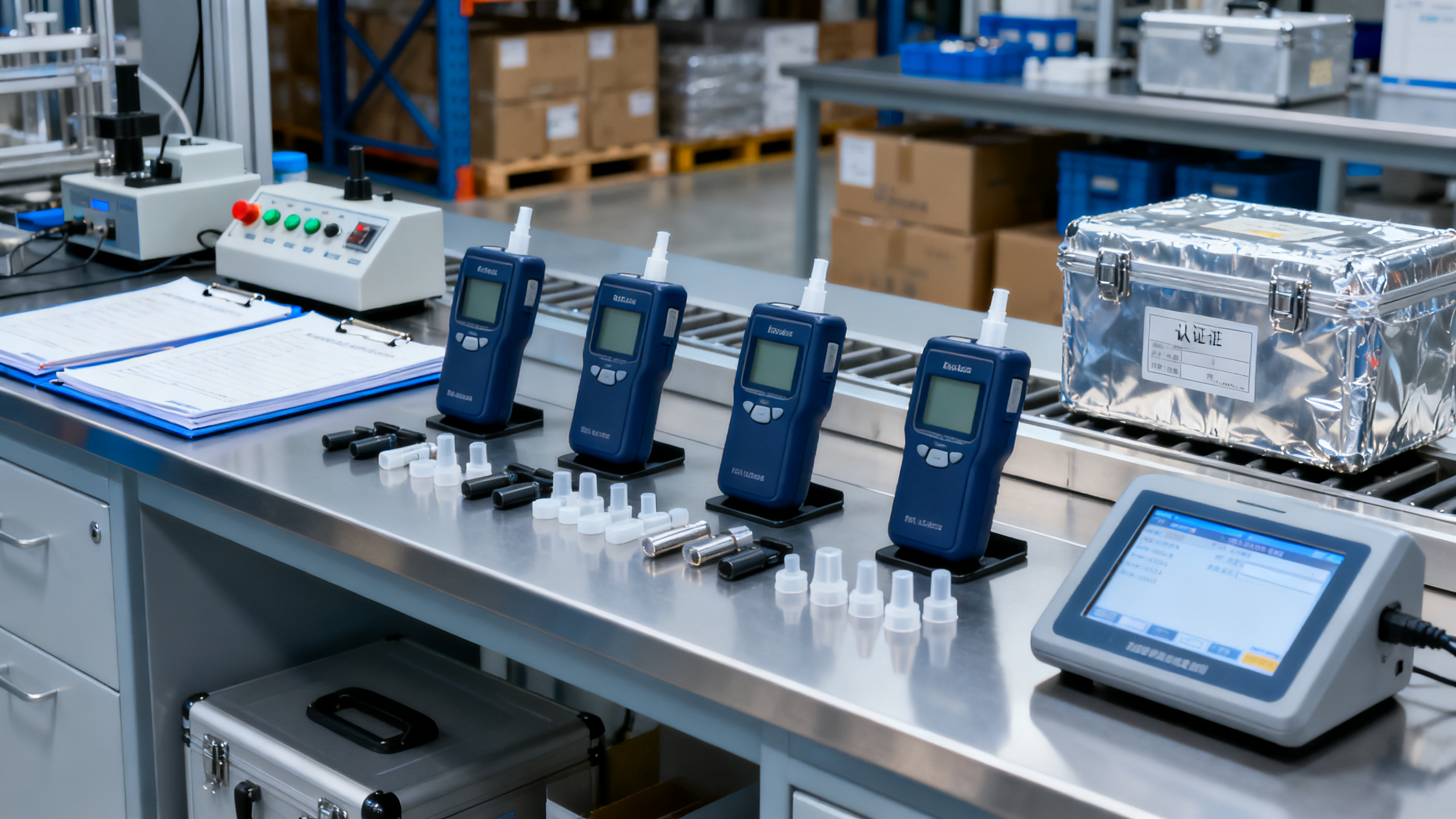
Sourcing wholesale alcohol breathalyzers for workplace, fleet, hospitality, or institutional programs is a compliance decision before it is a pricing exercise. A low unit cost can quickly lose value if devices drift out of tolerance, fail documentation checks, or create retesting overhead. For large-volume orders, the stronger approach is to evaluate accuracy, certifications, calibration demands, sensor durability, and supplier control as one connected risk profile.
Why bulk buying deserves closer scrutiny
In many sectors, alcohol screening sits inside broader safety and liability systems. That places wholesale alcohol breathalyzers closer to instruments and measurement equipment than to simple retail electronics.
This matters in industrial environments, transport operations, construction access control, mining camps, event venues, and public safety programs. A reading may influence entry decisions, incident records, or internal disciplinary processes.
That is also why GIC consistently treats safety tools through an infrastructure lens: reliability, traceability, and standards alignment must hold up under real operating pressure.
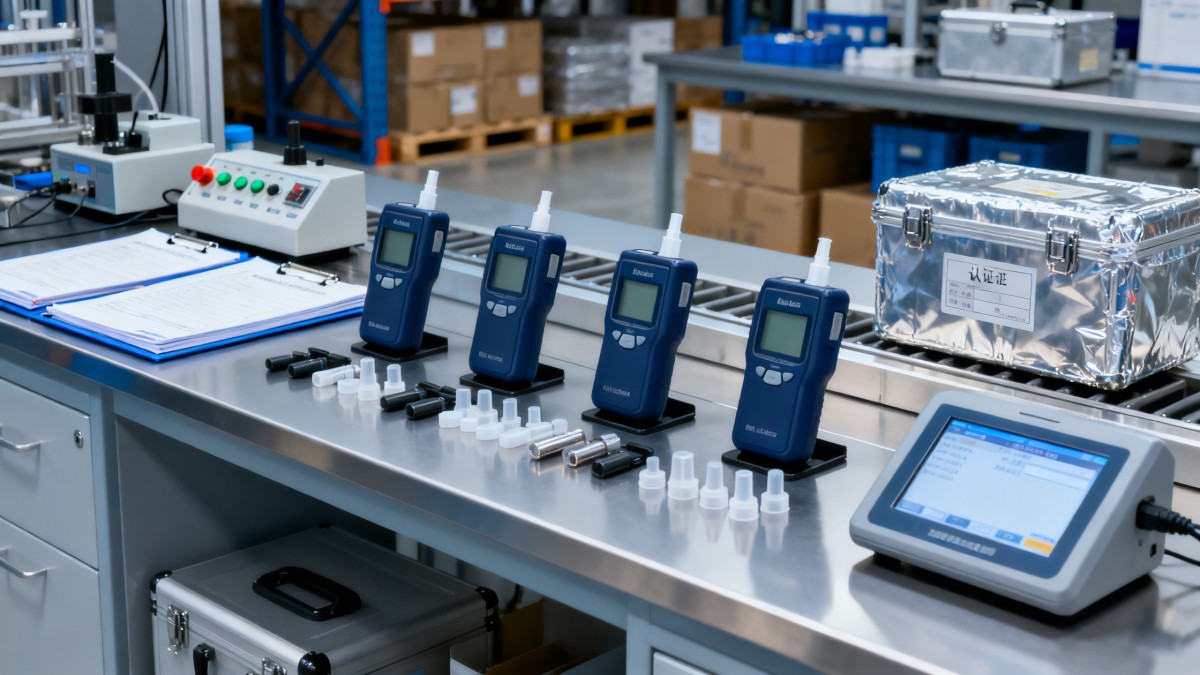
When orders scale from dozens to hundreds or thousands of units, even minor weaknesses become systemic. Inconsistent sensors, unclear calibration intervals, or mixed certification files can multiply operating cost after delivery.
Start with the device category, not the catalog photo
Not all alcohol breathalyzers are built for the same use case. Some are designed for occasional personal checks, while others support repeated screening in regulated or semi-regulated environments.
For wholesale alcohol breathalyzers, the first filter is whether the model is intended for consumer, professional, or evidential-style use. That distinction affects everything from sensor type to maintenance planning.
Sensor technology changes the buying decision
Semiconductor sensors are usually cheaper. They may suit light-duty programs, but they often show more sensitivity to environmental interference and may require more frequent replacement.
Fuel cell sensors usually offer stronger specificity for alcohol, better repeatability, and greater acceptance in professional screening settings. For large deployments, they often deliver better total ownership economics.
Some buyers focus only on headline accuracy. In practice, consistency across batches and stability across thousands of tests are often more important.
Accuracy claims need documentation behind them
Many listings for wholesale alcohol breathalyzers use broad phrases like high precision or professional grade. Those claims are not enough for institutional procurement.
Ask for the actual accuracy specification at defined concentration points. A serious supplier should state tolerance values, test conditions, and the method used to validate performance.
It is also worth checking repeatability data. A device may look acceptable in a single test but show unacceptable variation over repeated sampling.
Documents worth requesting before approval
- Test reports from accredited laboratories
- Calibration certificates or calibration method statements
- CE, ISO, RoHS, or other applicable declarations
- Quality control records for batch sampling
- User manuals with operating temperature and humidity limits
Certification should never be treated as a logo-checking exercise. The practical question is whether the documentation matches the specific model, production batch, and target market.
Calibration planning affects long-term cost more than many expect
A common mistake in wholesale alcohol breathalyzers procurement is comparing only purchase price while ignoring calibration frequency. That can distort the real budget over twelve to twenty-four months.
Some devices require recalibration after a fixed number of tests. Others are managed by time interval. The better choice depends on usage intensity, geography, and internal maintenance capacity.
If a deployment spans multiple facilities, calibration logistics become critical. Shipping units back to a central point can create downtime, spares requirements, and administrative burden.
Questions that reveal hidden service costs
- How many tests can the sensor support before recalibration is recommended?
- Can calibration be performed locally, or only by the original supplier?
- Are replacement sensors available, and what is the lead time?
- Will the supplier provide calibration gas, adapters, or partner referrals?
- What happens to warranty coverage after recalibration by a third party?
In high-use settings, a slightly higher-priced model with longer calibration intervals may prove less expensive than an entry model with frequent service interruptions.
Operational conditions often separate suitable models from risky ones
Wholesale alcohol breathalyzers are frequently used outside laboratory conditions. Dust, temperature swings, humidity, waiting lines, and rough handling all influence field performance.
A model that performs well in a controlled office may struggle at a remote site gate or in a transportation depot at dawn. Environmental specifications deserve the same attention as measurement claims.
Look beyond the device body. Mouthpiece supply, battery life, charging format, protective cases, and sanitation workflow all shape daily usability.
Typical deployment scenarios
Supplier consistency is as important as the device itself
In bulk purchasing, the supplier becomes part of the risk equation. Reliable wholesale alcohol breathalyzers require consistent manufacturing, traceable batches, and responsive after-sales handling.
A capable supplier should be able to explain production controls, incoming inspection, firmware version management, and return procedures. Vague answers usually signal future friction.
It also helps to request a pilot batch before full rollout. A smaller pre-order can expose packaging flaws, inconsistent manuals, charging issues, or unexpected user errors.
Practical points for supplier evaluation
- Batch numbering and traceability procedures
- Accessory availability over the full contract period
- Spare unit policy for warranty and calibration downtime
- Lead times during peak demand periods
- Support for regional compliance documentation
This is where a sourcing framework informed by metrology and safety standards becomes useful. It keeps the review focused on verifiable evidence rather than brochure language.
A workable shortlist should connect performance, compliance, and service
By the time a shortlist is formed, the most useful comparison is not cheapest versus premium. It is operational fit versus lifecycle burden.
For wholesale alcohol breathalyzers, that means checking whether the model can meet testing volume, maintain stable readings, satisfy documentation requirements, and remain serviceable across its deployment life.
A disciplined review usually starts with three internal questions: what threshold policy applies, how often will units be used, and who will manage calibration and records after delivery.
Once those answers are clear, it becomes easier to compare sensor type, certification package, maintenance cycle, and supplier readiness on equal terms.
The next step is simple: build a check sheet before requesting final quotations. That single move can reduce compliance gaps, prevent avoidable replacements, and make wholesale alcohol breathalyzers a controlled procurement decision rather than a reactive purchase.
Technical Specifications
- How to Select Electronic Hotel Key Card Locks for Guest Rooms and Staff AreasAuthor :Safety Compliance Lead
- How to Select Lab Instruments for Reliable Chemical Analysis WorkflowsAuthor :Precision Metrology Expert
- How to Size a UPS for Server Rooms: Load, Runtime, and Redundancy FactorsAuthor :Grid Infrastructure Analyst
Expert Insights

Chief Security Architect
Dr. Thorne specializes in the intersection of structural engineering and digital resilience. He has advised three G7 governments on industrial infrastructure security.
Related Analysis
- Sep 17, 2026How to Select Electronic Hotel Key Card Locks for Guest Rooms and Staff AreasAuthor :Safety Compliance Lead
- Sep 16, 2026How to Select Lab Instruments for Reliable Chemical Analysis WorkflowsAuthor :Precision Metrology Expert
- Sep 15, 2026How to Size a UPS for Server Rooms: Load, Runtime, and Redundancy FactorsAuthor :Grid Infrastructure Analyst
Core Sector // 01
Security & Safety
- What to Check When Sourcing Vibration Meters Wholesale for Industrial MaintenanceAuthor :Precision Metrology Expert

- How to Select Process Control Instruments for Accuracy, Safety, and UptimeAuthor :Precision Metrology Expert

- What Should Standards Compliance Analysis Training Cover Before an Audit?Author :Precision Metrology Expert

- Why Do Pressure Instruments Fail in High-Vibration Sites?Author :Precision Metrology Expert

- Is FM Software Integration Needed for Overseas Instrument Maintenance?Author :Precision Metrology Expert

- What Are the Differences Between Lab and Field Testing Equipment?Author :Precision Metrology Expert

- Is Independent Testing Necessary for Critical Safety Components?Author :Precision Metrology Expert

- How to Validate Industrial Application Scenarios Before ProcurementAuthor :Precision Metrology Expert