Emission Gas Analyzer Selection: Key Sensors, Ranges, and Compliance Uses
Author
Date Published
Reading Time
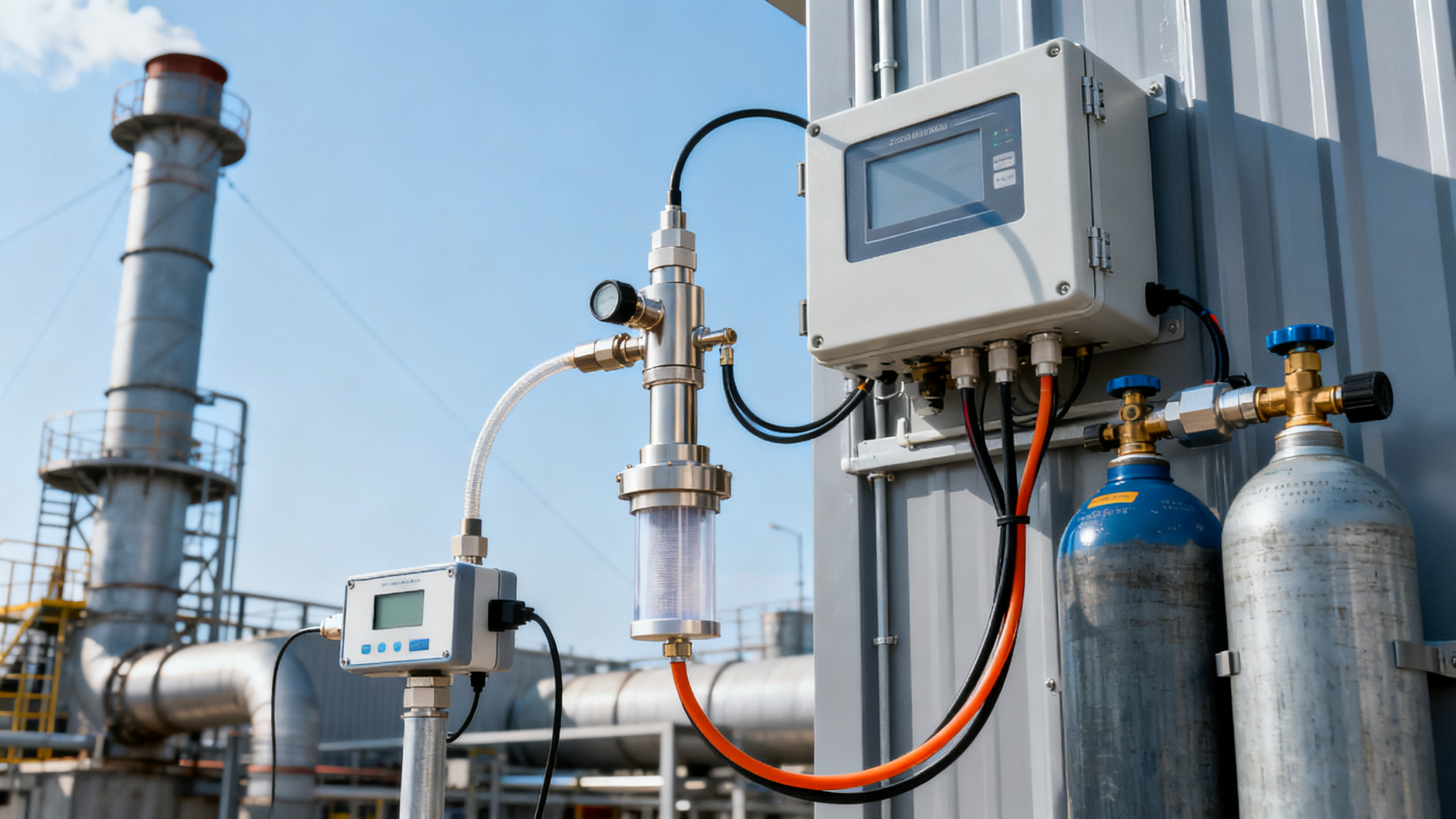
Selecting the right emission gas analyzer is a technical decision with direct implications for compliance, process control, and environmental risk management.
For evaluators comparing sensor technologies, measurement ranges, calibration needs, and regulatory use cases, accuracy alone is not enough.
Long-term reliability under heat, moisture, dust, vibration, and changing gas matrices often determines whether an emission gas analyzer performs as expected.
This guide explains how to align emissions monitoring equipment with application demands, international standards, and disciplined industrial sourcing expectations.
What Does an Emission Gas Analyzer Actually Measure?
An emission gas analyzer measures target gases released from combustion, production, treatment, or ventilation systems.
Common measured components include O₂, CO, CO₂, NO, NO₂, SO₂, CH₄, H₂S, VOCs, and sometimes NH₃ or N₂O.
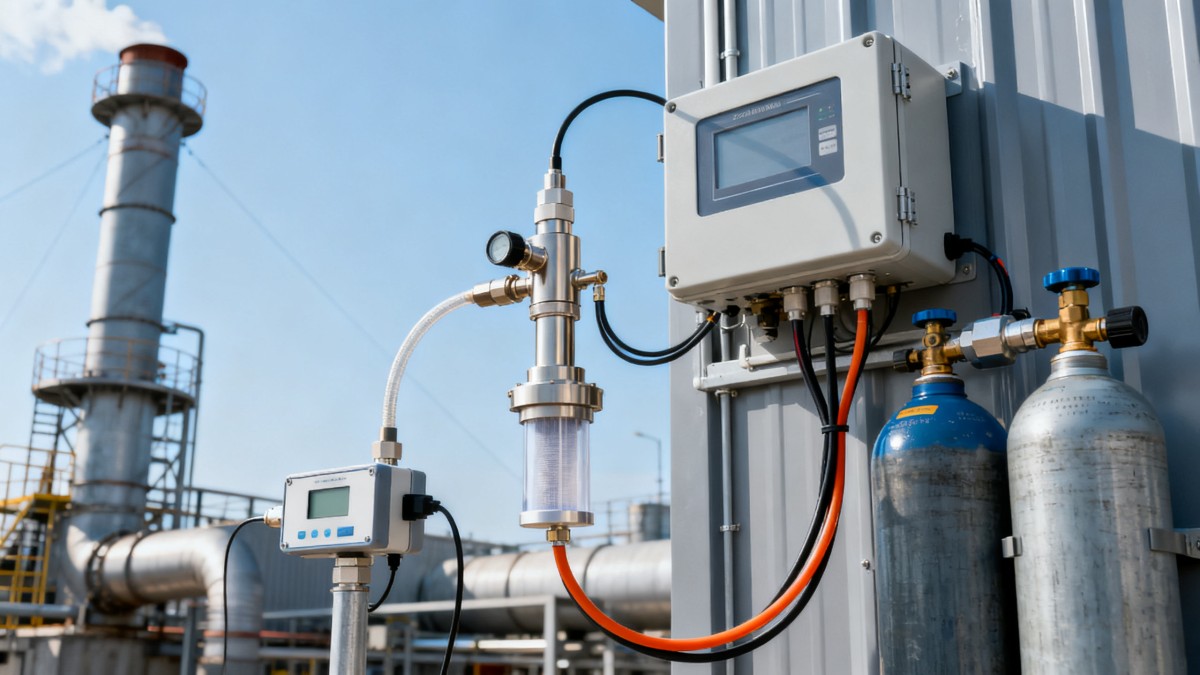
The correct emission gas analyzer depends on whether the goal is regulatory reporting, combustion tuning, leak detection, safety control, or process optimization.
A stack monitoring instrument may require stable readings over months, while a portable unit must survive field handling.
In industrial environments, gas concentration is only one part of the measurement challenge.
Temperature, pressure, humidity, particulates, corrosive gases, and cross-sensitivity can affect reported values.
A suitable emission gas analyzer therefore combines sensing technology, sampling design, filtration, calibration logic, and data integrity controls.
Key question: Is the analyzer for indication, control, or compliance?
For basic indication, moderate accuracy and fast response may be acceptable.
For process control, repeatability, response time, and signal integration are more important.
For compliance use, the emission gas analyzer must support traceable calibration, audit-ready records, and applicable regulatory methods.
Which Sensor Technologies Are Used in an Emission Gas Analyzer?
Sensor selection shapes accuracy, maintenance, lifetime cost, and suitability for specific gases.
No single sensor type is best for every emission gas analyzer application.
Electrochemical sensors
Electrochemical sensors are widely used for CO, NO, NO₂, SO₂, H₂S, and O₂ measurement.
They are compact, cost-effective, and common in portable emission gas analyzer designs.
However, they can be affected by temperature, humidity, poisoning gases, and finite sensor life.
They fit periodic inspection, combustion checks, and moderate-duty emission screening.
NDIR infrared sensors
NDIR sensors measure gases such as CO₂, CO, CH₄, and selected hydrocarbons through infrared absorption.
They offer good stability and are often selected for fixed emission gas analyzer systems.
They are less suitable for gases without strong infrared absorption.
Optical contamination, water vapor, and path length must be considered during specification.
Paramagnetic and zirconia oxygen sensors
Oxygen measurement is central to combustion efficiency and emissions correction calculations.
Paramagnetic oxygen sensors provide high selectivity and stable performance in laboratory-grade systems.
Zirconia sensors tolerate high temperatures and are common in combustion and boiler applications.
The best emission gas analyzer choice depends on temperature, sample conditioning, and maintenance access.
FTIR, UV, and chemiluminescence methods
Advanced systems may use FTIR, UV absorption, or chemiluminescence for complex emissions measurement.
FTIR supports multi-gas analysis, including some VOCs and acid gases.
Chemiluminescence remains important for high-performance NOx measurement.
These technologies usually require stronger technical support and controlled installation conditions.
How Should Measurement Ranges Be Selected?
Measurement range is one of the most common sources of poor analyzer performance.
An emission gas analyzer should cover normal values, expected peaks, and regulatory limit thresholds.
A range that is too narrow may saturate during peaks.
A range that is too broad may reduce useful resolution near the compliance limit.
Practical range selection steps
- Identify target gases and likely concentration profiles.
- Compare normal operation, startup, shutdown, and upset conditions.
- Check legal reporting limits and alarm thresholds.
- Confirm resolution at low concentrations.
- Verify overload tolerance and recovery behavior.
For example, a combustion system may need low CO resolution during tuning.
The same system may also produce high CO during abnormal combustion.
A dual-range emission gas analyzer can help preserve accuracy without losing peak visibility.
Wet basis, dry basis, and oxygen correction
Emissions data may be reported on a wet or dry basis.
Some regulations require correction to a reference oxygen concentration.
An emission gas analyzer used for compliance should clearly define these calculations.
Unclear basis conversion can create data conflicts during audits or third-party verification.
Where Is an Emission Gas Analyzer Commonly Applied?
Applications differ across energy, metallurgy, chemical processing, environmental treatment, and building infrastructure.
Each environment changes the required analyzer configuration.
Combustion and boiler optimization
An emission gas analyzer supports air-fuel ratio adjustment, efficiency checks, and CO control.
O₂, CO, CO₂, and NOx values help detect incomplete combustion and excessive excess air.
Stable readings can reduce fuel waste and improve thermal performance.
Industrial stack emissions monitoring
Fixed systems monitor stacks, ducts, and exhaust lines for regulated pollutants.
A compliance-oriented emission gas analyzer may be part of a continuous emissions monitoring system.
Sampling probes, heated lines, filters, condensate control, and data logging become critical.
Waste treatment and environmental plants
Waste incineration, wastewater treatment, and biogas systems require careful gas analysis.
H₂S, CH₄, CO₂, O₂, and VOCs may appear in varying concentrations.
Corrosion resistance and sample conditioning are essential in these applications.
Laboratory validation and field inspection
Portable analyzers are useful for spot checks, commissioning, troubleshooting, and verification.
A portable emission gas analyzer should balance battery life, ruggedness, response time, and calibration stability.
Field use also demands clear displays, data export, and practical filter replacement.
What Compliance and Standards Factors Matter Most?
Compliance use requires more than a technically capable instrument.
The emission gas analyzer must support documented performance, traceability, calibration control, and defensible data handling.
Relevant frameworks may include ISO, EN, EPA, local environmental rules, and site-specific permit conditions.
Electrical and safety approvals may also be relevant, including CE, UL, or hazardous-area certification.
Calibration and quality assurance
Calibration should use certified reference gases appropriate for the target gases and ranges.
Zero and span checks help identify drift before data quality becomes unacceptable.
For a fixed emission gas analyzer, automatic calibration can reduce manual workload and missed intervals.
Data integrity and audit readiness
Compliance records should include timestamps, calibration events, alarm history, and maintenance logs.
Data export formats should match reporting workflows and environmental management systems.
A qualified emission gas analyzer should make abnormal data visible, not hidden.
Installation conditions
Sampling location affects representativeness.
Poor probe placement can cause stratified readings, condensation, dust loading, or delayed response.
Before final selection, confirm stack access, utilities, shelter needs, and maintenance space.
How Can Selection Risks and Cost Mistakes Be Avoided?
The lowest purchase price rarely represents the true cost of emissions measurement.
A poorly matched emission gas analyzer can increase downtime, recalibration frequency, spare parts use, and compliance exposure.
Common mistakes to avoid
- Selecting sensors without checking cross-interference.
- Ignoring sample moisture and condensation risk.
- Using portable equipment for permanent compliance duties.
- Choosing ranges without upset-condition data.
- Underestimating calibration gas logistics.
- Failing to verify spare sensor availability.
Lifecycle cost should include installation, sample conditioning, calibration materials, training, service response, and expected sensor replacement.
For critical facilities, redundancy or backup measurement may be justified.
The best emission gas analyzer specification is built from operating evidence, not only catalog values.
Emission Gas Analyzer FAQ and Selection Reference
Quick specification checklist
- Target gas list and concentration ranges.
- Required accuracy, repeatability, and response time.
- Wet or dry basis reporting requirements.
- Sample temperature, humidity, dust, and corrosive content.
- Calibration method and reference gas availability.
- Data logging, alarm outputs, and system integration.
- Applicable ISO, EN, EPA, CE, UL, or local requirements.
Final Takeaway: Build the Specification Around Real Conditions
A reliable emission gas analyzer is selected through application evidence, not generic performance claims.
Sensor technology, measurement range, sampling design, calibration discipline, and compliance documentation must work together.
Before approving any emission gas analyzer, define gases, ranges, reporting basis, installation conditions, and validation responsibilities.
Then compare suppliers against proof of performance, service capability, standards alignment, and lifecycle cost.
This structured approach reduces environmental risk and supports stronger industrial measurement decisions across global operations.
Technical Specifications
- How to Select Electronic Hotel Key Card Locks for Guest Rooms and Staff AreasAuthor :Safety Compliance Lead
- How to Select Lab Instruments for Reliable Chemical Analysis WorkflowsAuthor :Precision Metrology Expert
- How to Size a UPS for Server Rooms: Load, Runtime, and Redundancy FactorsAuthor :Grid Infrastructure Analyst
Expert Insights

Chief Security Architect
Dr. Thorne specializes in the intersection of structural engineering and digital resilience. He has advised three G7 governments on industrial infrastructure security.
Related Analysis
- Sep 17, 2026How to Select Electronic Hotel Key Card Locks for Guest Rooms and Staff AreasAuthor :Safety Compliance Lead
- Sep 16, 2026How to Select Lab Instruments for Reliable Chemical Analysis WorkflowsAuthor :Precision Metrology Expert
- Sep 15, 2026How to Size a UPS for Server Rooms: Load, Runtime, and Redundancy FactorsAuthor :Grid Infrastructure Analyst
Core Sector // 01
Security & Safety
- What to Check When Sourcing Vibration Meters Wholesale for Industrial MaintenanceAuthor :Precision Metrology Expert

- How to Select Process Control Instruments for Accuracy, Safety, and UptimeAuthor :Precision Metrology Expert

- What Should Standards Compliance Analysis Training Cover Before an Audit?Author :Precision Metrology Expert

- Why Do Pressure Instruments Fail in High-Vibration Sites?Author :Precision Metrology Expert

- Is FM Software Integration Needed for Overseas Instrument Maintenance?Author :Precision Metrology Expert

- What Are the Differences Between Lab and Field Testing Equipment?Author :Precision Metrology Expert

- Is Independent Testing Necessary for Critical Safety Components?Author :Precision Metrology Expert

- How to Validate Industrial Application Scenarios Before ProcurementAuthor :Precision Metrology Expert