When is an Instruments & Measurement OEM worth choosing?
Author
Date Published
Reading Time

Choosing an Instruments & Measurement OEM becomes worthwhile when precision, certification, and lifecycle reliability matter more than simple unit price. In industrial environments, measurement errors can trigger downtime, safety incidents, and compliance failures.
A qualified Instruments & Measurement OEM can align product design, calibration, traceability, and production capacity with strict operating requirements. That alignment often lowers sourcing risk and supports faster deployment in complex projects.
This article explains when an Instruments & Measurement OEM is the right choice, what signals to review, and how the OEM model creates durable operational value across industrial sectors.
Definition and scope of an Instruments & Measurement OEM
An Instruments & Measurement OEM designs and manufactures products to customer-defined specifications, branding, integration needs, or performance targets. The relationship goes beyond distribution or simple contract assembly.
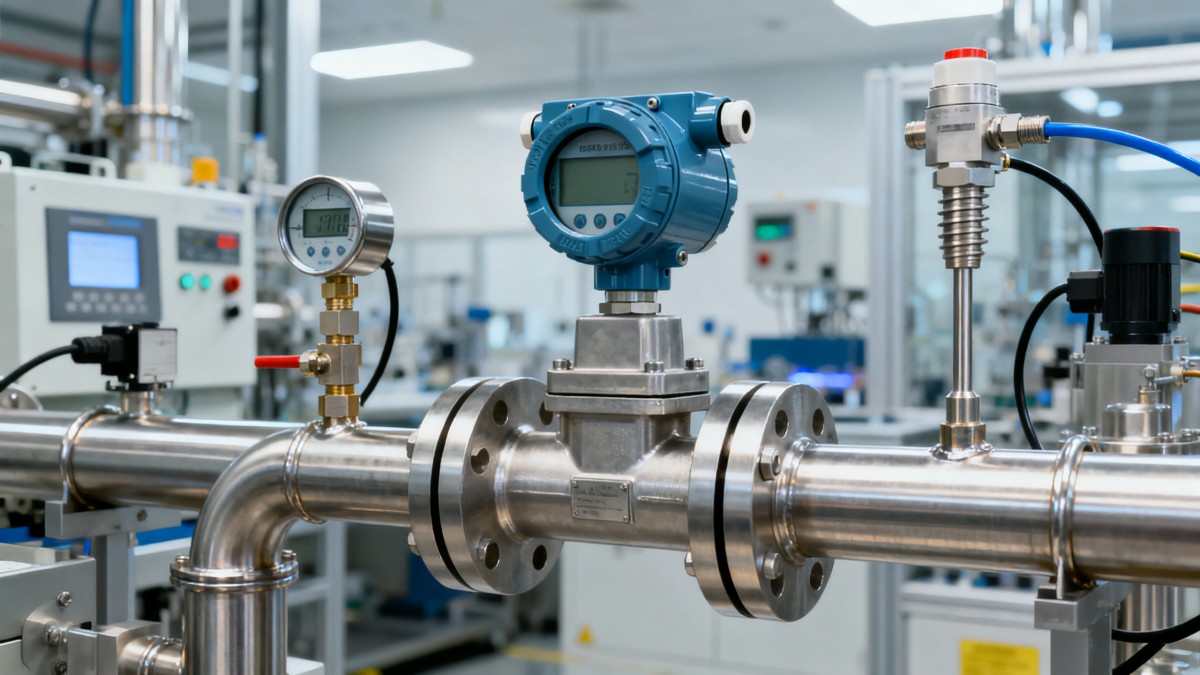
Typical products include pressure sensors, flow meters, temperature transmitters, level instruments, analyzers, controllers, signal conditioners, and data acquisition modules. Many solutions also include firmware, calibration services, and documentation packages.
The real value of an Instruments & Measurement OEM appears when a site needs exact ranges, specific materials, communication protocols, hazardous-area approvals, or stable repeatability under harsh process conditions.
In heavy industry, standard catalog products may not fully match process media, ambient temperature, mounting limitations, or control-system architecture. OEM capability fills those gaps with engineered fit and controlled consistency.
How OEM differs from off-the-shelf sourcing
- OEM supports specification-driven customization, not just product selection.
- OEM production usually includes traceable quality plans and defined revision control.
- OEM partners often provide testing data, certification files, and integration support.
- OEM agreements can secure long-term supply continuity for critical parts.
Industry conditions that make an Instruments & Measurement OEM worth choosing
Not every operation needs an OEM model. It becomes valuable under conditions where performance variance carries financial, regulatory, or safety consequences beyond the initial purchase cost.
An Instruments & Measurement OEM is especially relevant in power, water treatment, oil and gas, mining, chemicals, food processing, and infrastructure monitoring. These sectors depend on dependable data for safe operation.
It is also a strong option when internal engineering teams need fewer supplier variables. Standardized documentation and controlled manufacturing simplify validation, commissioning, and future maintenance planning.
Current market signals supporting OEM selection
- Rising compliance scrutiny increases the need for documented measurement integrity.
- Digitalization demands sensors compatible with SCADA, PLC, and IIoT architectures.
- Supply chain volatility favors strategic partners with stable sourcing controls.
- Energy efficiency targets require more accurate monitoring and process optimization.
Business value created by the Instruments & Measurement OEM model
The strongest case for an Instruments & Measurement OEM is not customization alone. It is the combination of technical fit, controlled quality, and lower total operational uncertainty.
First, OEM supply improves performance alignment. Instruments can be designed around actual process pressure, media chemistry, vibration level, ingress protection, and installation geometry, rather than compromise choices.
Second, it reduces hidden lifecycle costs. A cheaper generic device may require more adapters, recalibration, troubleshooting, or earlier replacement. OEM-built instruments often cut those indirect expenses.
Third, the Instruments & Measurement OEM approach supports quality assurance. Batch consistency, serialized traceability, and factory acceptance testing make failures easier to investigate and correct.
Fourth, OEM collaboration can accelerate development timelines. Instead of redesigning around unsuitable standard products, teams receive configured solutions that fit performance and interface requirements from the start.
Strategic gains beyond procurement
- Better data quality for automation, reporting, and predictive maintenance.
- Improved audit readiness through cleaner technical documentation.
- Lower operational disruption from compatibility or reliability issues.
- Stronger long-term supply planning for standardized asset fleets.
Typical scenarios where an Instruments & Measurement OEM delivers the best fit
Some industrial situations clearly justify OEM selection. The decision becomes easier when standard products cannot satisfy environmental, integration, or certification demands without operational compromise.
An Instruments & Measurement OEM is also useful when a project requires a family of related products. Common housings, signal formats, and software behavior improve training and spare-parts management.
Where uptime is critical, OEM support can include failure analysis, controlled engineering changes, and stable replacement programs. Those services are often more valuable than initial price reductions.
Evaluation criteria for selecting the right Instruments & Measurement OEM
Selection should be evidence-based. The right Instruments & Measurement OEM demonstrates capability through documented processes, technical depth, and performance consistency across production batches.
Core factors to verify
- Calibration competence and traceability to recognized standards.
- Compliance evidence for CE, UL, ISO, and relevant sector approvals.
- Material compatibility with media, temperature, corrosion, and pressure profiles.
- Production scalability and change-control discipline.
- Documentation quality, including drawings, certificates, and test reports.
- Communication protocol support, such as 4-20 mA, HART, Modbus, or digital interfaces.
- After-sales response, replacement lead times, and lifecycle roadmap transparency.
Sample validation is essential. Review pilot units under real operating conditions, not only laboratory data. A strong Instruments & Measurement OEM should welcome structured testing before full-scale release.
It is equally important to assess engineering responsiveness. Fast, technically accurate answers during evaluation often predict smoother cooperation during design updates and urgent field issues.
Implementation guidance and risk controls
Even a capable Instruments & Measurement OEM needs clear project governance. Ambiguity in specifications, acceptance criteria, or revision ownership can create delays and unnecessary rework.
- Define measurement range, accuracy, response time, and environmental limits early.
- Specify all compliance and documentation requirements in writing.
- Set approval gates for samples, drawings, firmware, and labels.
- Require traceability for critical components and calibration records.
- Plan spare units, service intervals, and obsolescence communication methods.
Avoid choosing solely on quoted price. A lower-cost supplier without stable controls may create higher costs through downtime, nonconformance, delayed approvals, or field replacement campaigns.
The best Instruments & Measurement OEM relationship works as a technical partnership. Shared planning on forecasts, revisions, and validation reduces uncertainty for both product performance and supply continuity.
Practical next steps for an informed OEM decision
An Instruments & Measurement OEM is worth choosing when the project demands exact fit, documented compliance, reliable scaling, and dependable lifecycle support. Those conditions are common in high-stakes industrial systems.
Start with a specification matrix covering technical performance, certifications, interface needs, environmental exposure, and service expectations. Then compare candidate OEMs against the same measurable criteria.
Request pilot samples, quality documents, and production controls before making volume commitments. A disciplined evaluation process reveals whether an Instruments & Measurement OEM can support both current requirements and future expansion.
For organizations building resilient infrastructure, the right OEM choice strengthens measurement confidence, operational safety, and long-term system performance. In that context, OEM is not just a sourcing model. It is a risk-management decision.
Technical Specifications
- How to Select Electronic Hotel Key Card Locks for Guest Rooms and Staff AreasAuthor :Safety Compliance Lead
- How to Select Lab Instruments for Reliable Chemical Analysis WorkflowsAuthor :Precision Metrology Expert
- How to Size a UPS for Server Rooms: Load, Runtime, and Redundancy FactorsAuthor :Grid Infrastructure Analyst
Expert Insights

Chief Security Architect
Dr. Thorne specializes in the intersection of structural engineering and digital resilience. He has advised three G7 governments on industrial infrastructure security.
Related Analysis
- Sep 17, 2026How to Select Electronic Hotel Key Card Locks for Guest Rooms and Staff AreasAuthor :Safety Compliance Lead
- Sep 16, 2026How to Select Lab Instruments for Reliable Chemical Analysis WorkflowsAuthor :Precision Metrology Expert
- Sep 15, 2026How to Size a UPS for Server Rooms: Load, Runtime, and Redundancy FactorsAuthor :Grid Infrastructure Analyst
Core Sector // 01
Security & Safety
- What to Check When Sourcing Vibration Meters Wholesale for Industrial MaintenanceAuthor :Precision Metrology Expert

- How to Select Process Control Instruments for Accuracy, Safety, and UptimeAuthor :Precision Metrology Expert

- What Should Standards Compliance Analysis Training Cover Before an Audit?Author :Precision Metrology Expert

- Why Do Pressure Instruments Fail in High-Vibration Sites?Author :Precision Metrology Expert

- Is FM Software Integration Needed for Overseas Instrument Maintenance?Author :Precision Metrology Expert

- What Are the Differences Between Lab and Field Testing Equipment?Author :Precision Metrology Expert

- Is Independent Testing Necessary for Critical Safety Components?Author :Precision Metrology Expert

- How to Validate Industrial Application Scenarios Before ProcurementAuthor :Precision Metrology Expert