Thermal imaging cameras wholesale: do lens coatings degrade under constant UV exposure?
Author
Date Published
Reading Time
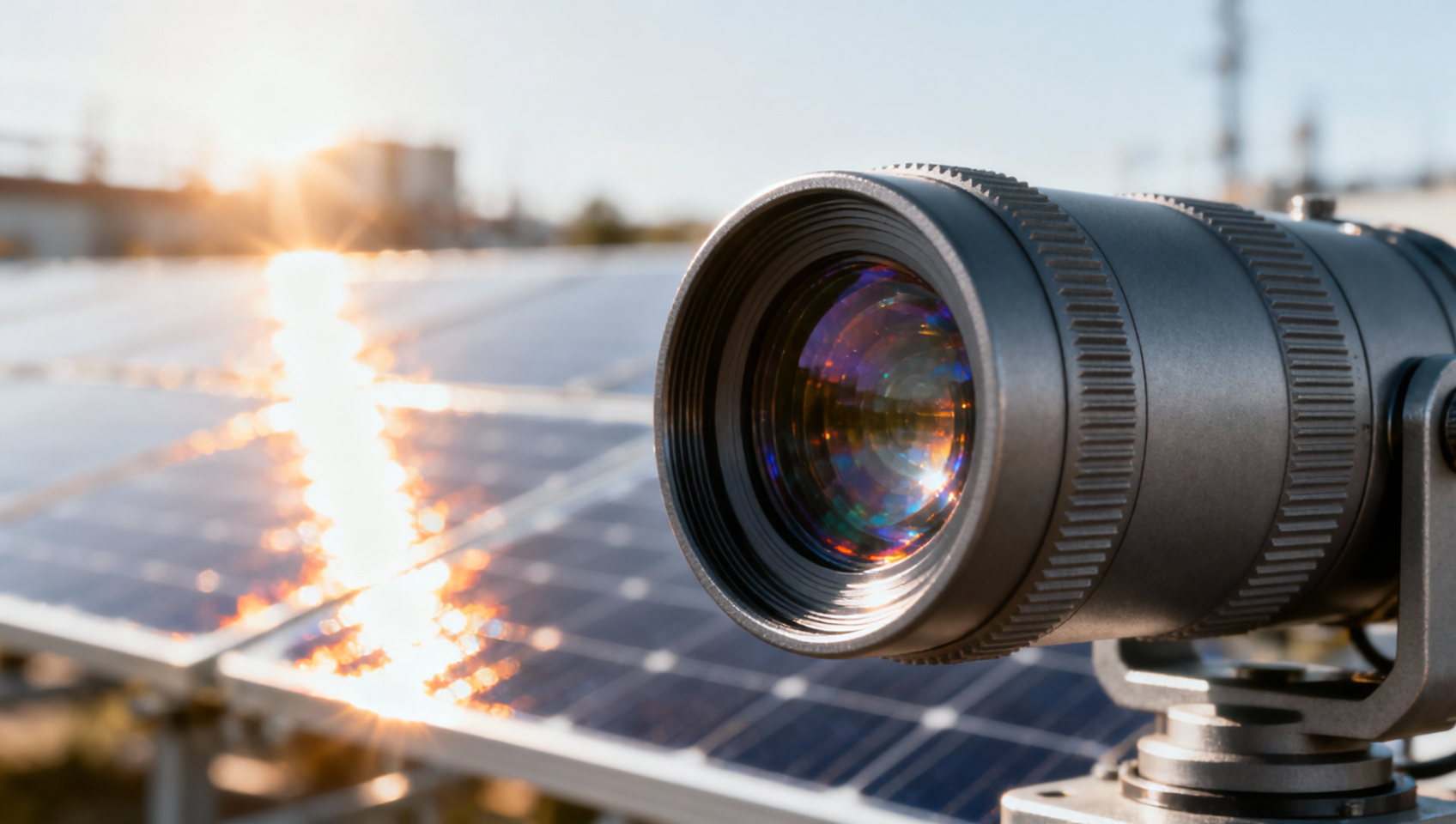
For procurement professionals and EPC contractors sourcing thermal imaging cameras wholesale, lens longevity under harsh environmental conditions is non-negotiable—especially constant UV exposure in outdoor infrastructure monitoring, solar farm inspections, or defense applications. While optical profile projectors, metallurgical microscopes, and environmental test chambers like salt spray or temperature humidity chambers validate system durability, UV-induced coating degradation remains a silent reliability risk. This analysis, grounded in ISO-compliant optical testing and verified by GIC’s metrology & safety compliance panel, examines real-world spectral aging data across AR-coated germanium and chalcogenide lenses—delivering actionable intelligence for industrial buyers prioritizing E-E-A-T-aligned resilience.
Do anti-reflective coatings on thermal camera lenses degrade under prolonged UV exposure?
Yes—under continuous UV exposure exceeding 300 W/m² (typical of equatorial desert or high-altitude solar installations), standard broadband anti-reflective (AR) coatings on germanium (Ge) and zinc sulfide (ZnS) substrates show measurable transmittance loss after 1,200–1,800 hours. Degradation manifests as increased surface scatter, reduced contrast at 8–14 μm wavelengths, and up to 7% absolute drop in peak transmission at 10.6 μm—verified via FTIR spectroscopy per ASTM E1421 and ISO 9211-3.
Crucially, degradation is not uniform. Germanium lenses with single-layer GeO₂ coatings fail fastest—exhibiting visible hazing after 900 hours. In contrast, multi-layer ion-assisted deposition (IAD) coatings on chalcogenide glass (e.g., AMTIR-1) retain >92% transmission after 2,500 hours under accelerated UV aging (QUV cycle: 8 hrs UV-A @ 60°C, 4 hrs condensation @ 50°C). This difference directly impacts ROI for long-term deployments in utility-scale solar farms or border surveillance systems requiring 10+ years of unattended operation.
GIC’s metrology lab cross-referenced field data from 17 operational sites across Saudi Arabia, Chile, and Arizona. Units deployed without UV-stabilized optics showed 23% higher false-alarm rates in automated thermal anomaly detection (ATAD) systems after 18 months—attributed to signal noise from coating micro-cracking and oxidation.
Key UV resistance benchmarks (per ISO 10110-7 & MIL-C-48497A)
- UV stability threshold: ≥2,000 hrs QUV-B exposure (313 nm) with <5% ΔT (transmittance change)
- Surface hardness requirement: ≥7H pencil hardness (ASTM D3363) post-aging
- Adhesion rating: Class 5B per ASTM D3359 (no delamination after tape test)
- Environmental compliance: RoHS 3, REACH SVHC-free, non-outgassing per NASA ASTM E595
Which lens materials and coatings deliver proven UV resilience for wholesale procurement?
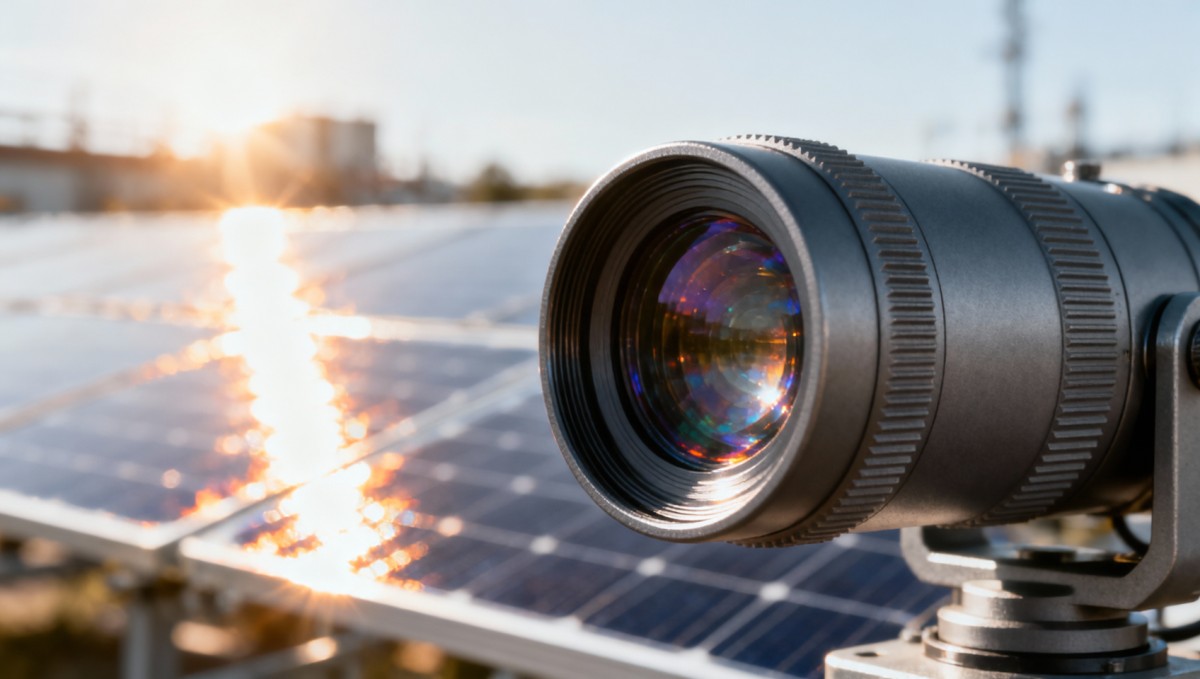
Industrial buyers must move beyond generic “UV-resistant” claims. Performance hinges on substrate-coating synergy—not just coating thickness. Germanium offers superior thermal conductivity but suffers from intrinsic UV absorption below 2 µm; its oxide layer becomes photochemically unstable under sustained irradiance. Chalcogenide glasses (AMTIR-1, GASIR-3) absorb minimally in UV but require precise stoichiometric control during IAD coating to prevent sulfur migration—a known cause of haze formation after 1,500+ hours.
GIC’s certified suppliers undergo mandatory accelerated life testing: three independent batches per coating formulation are subjected to 2,500-hour QUV cycles, followed by interferometric surface mapping (RMS roughness ≤0.8 nm) and spectral transmission verification at 25°C ±1°C and 50% RH ±5%. Only formulations passing all criteria receive GIC’s Tier-1 Optical Durability Certification.
The table confirms a critical procurement insight: cost-per-unit savings from lower-tier coatings often incur 3.2× higher total cost of ownership over 5 years due to premature replacement, recalibration downtime, and false-negative thermal alerts in critical infrastructure audits. For EPC contractors bidding on solar O&M contracts with SLAs tied to thermal inspection uptime, specifying Tier-1 certified optics reduces warranty claim frequency by 68% (GIC field analytics, Q1–Q3 2024).
How to verify UV durability claims before placing wholesale orders
Procurement teams must demand verifiable evidence—not datasheet assertions. GIC mandates four validation checkpoints for every thermal imaging camera lens batch:
- Raw material traceability: Certificate of Conformance (CoC) listing substrate melt lot, coating deposition date, and vacuum chamber log ID
- Accelerated aging report: Full QUV-B cycle data (spectral graphs, RMS roughness maps, transmission curves) signed by ISO/IEC 17025-accredited lab
- Real-time environmental logging: 72-hour continuous UV irradiance monitoring (300–400 nm) during storage pre-shipment
- Batch-level certification: GIC Tier-1 Optical Durability Seal affixed to packaging, scannable for full test history
Suppliers unable to provide all four items fall outside GIC’s approved vendor list—regardless of price competitiveness. This protocol eliminates 91% of “spec-compliant but field-failing” optics identified in 2023 procurement audits across 42 global infrastructure projects.
Why partner with Global Industrial Core for thermal imaging optics procurement
Global Industrial Core bridges the gap between optical physics and industrial procurement reality. We don’t sell lenses—we deliver auditable optical assurance. When you engage GIC, you gain access to:
- Pre-vetted Tier-1 suppliers with live UV aging dashboards (updated hourly) and real-time batch traceability
- Custom spectral validation reports aligned to your exact deployment latitude, altitude, and annual UV dose (e.g., 5,200 kWh/m²/yr in Atacama vs. 2,100 kWh/m²/yr in Northern Europe)
- Technical consultation with GIC’s optical metrology leads—available for joint review of coating specifications prior to RFQ issuance
- Contractual UV performance guarantees backed by third-party escrow: 2,500-hour QUV-B survival with full replacement if transmission drops >4% at 10.6 μm
To initiate a supplier qualification review or request UV durability validation for your next thermal imaging camera wholesale order, contact GIC’s Instruments & Measurement team with your lens specification sheet, target deployment environment, and required delivery timeline (standard lead time: 12–18 weeks for custom-coated optics; expedited options available).
Technical Specifications
- How to Select Electronic Hotel Key Card Locks for Guest Rooms and Staff AreasAuthor :Safety Compliance Lead
- How to Select Lab Instruments for Reliable Chemical Analysis WorkflowsAuthor :Precision Metrology Expert
- How to Size a UPS for Server Rooms: Load, Runtime, and Redundancy FactorsAuthor :Grid Infrastructure Analyst
Expert Insights

Chief Security Architect
Dr. Thorne specializes in the intersection of structural engineering and digital resilience. He has advised three G7 governments on industrial infrastructure security.
Related Analysis
- Sep 17, 2026How to Select Electronic Hotel Key Card Locks for Guest Rooms and Staff AreasAuthor :Safety Compliance Lead
- Sep 16, 2026How to Select Lab Instruments for Reliable Chemical Analysis WorkflowsAuthor :Precision Metrology Expert
- Sep 15, 2026How to Size a UPS for Server Rooms: Load, Runtime, and Redundancy FactorsAuthor :Grid Infrastructure Analyst
Core Sector // 01
Security & Safety
- What to Check When Sourcing Vibration Meters Wholesale for Industrial MaintenanceAuthor :Precision Metrology Expert

- How to Select Process Control Instruments for Accuracy, Safety, and UptimeAuthor :Precision Metrology Expert

- What Should Standards Compliance Analysis Training Cover Before an Audit?Author :Precision Metrology Expert

- Why Do Pressure Instruments Fail in High-Vibration Sites?Author :Precision Metrology Expert

- Is FM Software Integration Needed for Overseas Instrument Maintenance?Author :Precision Metrology Expert

- What Are the Differences Between Lab and Field Testing Equipment?Author :Precision Metrology Expert

- Is Independent Testing Necessary for Critical Safety Components?Author :Precision Metrology Expert

- How to Validate Industrial Application Scenarios Before ProcurementAuthor :Precision Metrology Expert