How to Choose an Ambient Air Quality Monitor for Construction Dust and Compliance
Author
Date Published
Reading Time
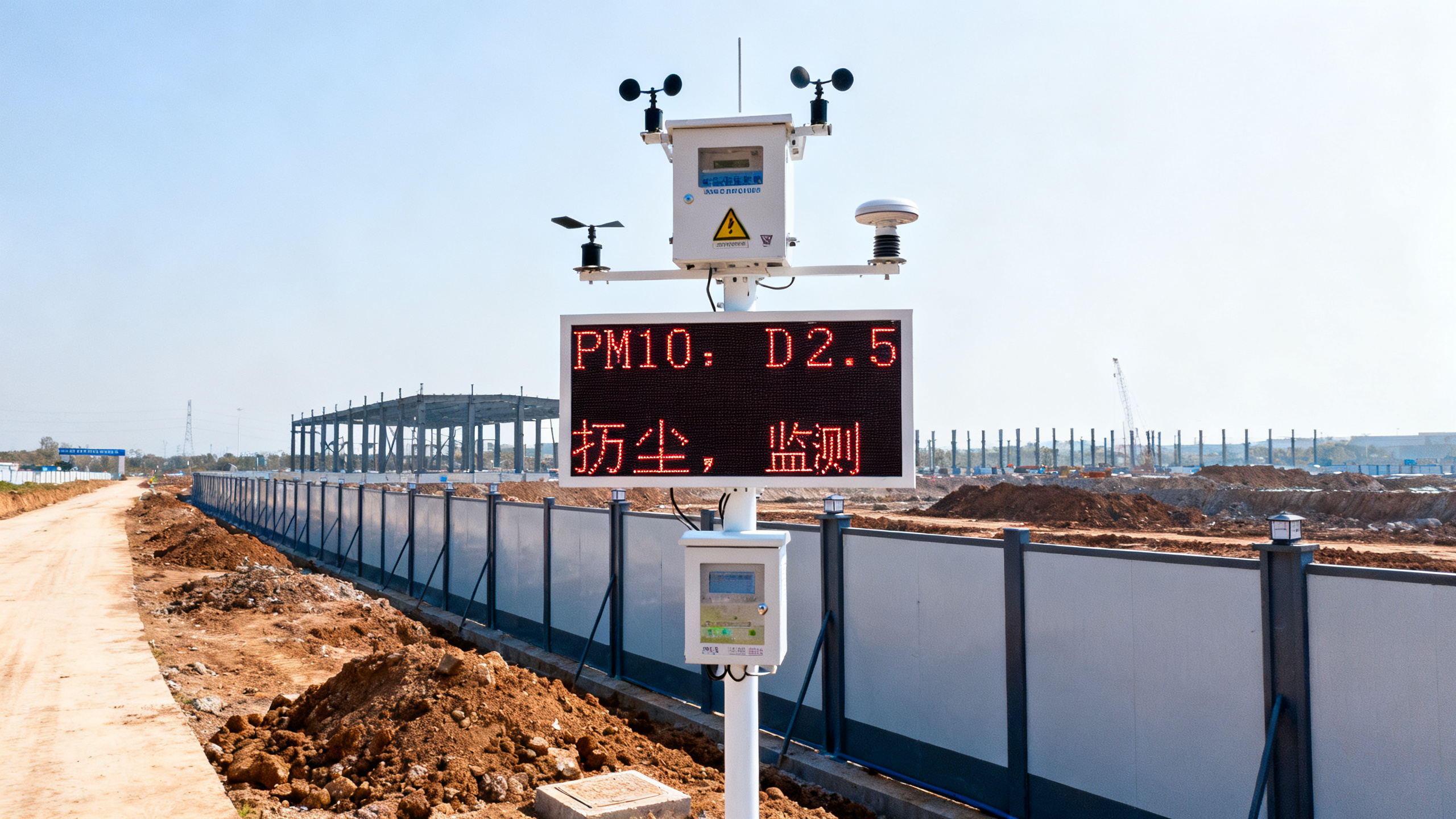
What Actually Matters When Choosing an Ambient Air Quality Monitor for Construction Dust and Compliance
Choosing the right ambient air quality monitor for construction is less about buying a sensor and more about deciding what kind of evidence your site will be able to produce when dust becomes a safety issue, a community complaint, or a compliance question. That distinction matters. A monitor may look technically impressive on a datasheet and still be the wrong fit for an active project if it cannot survive the site environment, maintain data quality over time, or generate records that stand up during an audit.
Construction teams usually encounter this problem from two directions at once. Internally, they need practical control of nuisance dust, silica-related risk, and site boundary impacts. Externally, they may need to satisfy permit conditions, environmental management plans, client specifications, or local authority expectations. In that setting, “ambient” monitoring does not mean measuring what a worker personally inhales during a task; it means measuring the surrounding air at the site perimeter, near sensitive receptors, or in the broader work zone to understand off-site and general-area exposure conditions.
That is one of the first places buyers get tripped up. An ambient monitor is not a substitute for every occupational hygiene instrument. If the project requires personal exposure assessment for respirable crystalline silica, that is a different monitoring objective and often a different method. But if the site needs continuous visibility into dust migration, trend spikes during demolition or earthworks, and documented response actions, an ambient system is the right conversation.
Start with the compliance question, not the hardware
Before comparing brands or sensor types, define what the monitor will be asked to prove. On some projects, the main requirement is operational: alert the team when dust suppression needs adjustment. On others, the monitor is expected to support environmental reporting, neighbor complaint investigation, or contractual compliance documentation. Those are not the same use cases, and they do not demand the same level of traceability.
A useful selection process usually begins with a short list of decisions:
- Which pollutants matter on this site: TSP, PM10, PM2.5, or a combination?
- Is the concern visible nuisance dust, fine particulate transport, or both?
- Will the data be used for live site control, formal reporting, or potential dispute resolution?
- Do local permit conditions specify averaging periods, action thresholds, or approved methods?
- Is meteorological context required to interpret the readings credibly?
Those questions shape the specification far more than headline claims about “smart monitoring” or “real-time insight.” A perimeter monitor for a roadworks project near residences may need robust PM10 tracking with wind data and remote alerts. A confined urban demolition site may also need finer particle visibility, tighter event correlation, and stronger reporting discipline because complaints can escalate quickly when buildings, schools, or healthcare facilities sit nearby.
Not all dust metrics answer the same problem
One of the most common mistakes is assuming that any particulate number tells the whole story. It does not. TSP, PM10, and PM2.5 describe different particle size fractions, and each has a different practical meaning on a construction site.
If the project team cannot explain why it needs one metric rather than another, it is usually a sign that the monitoring plan is still underdefined. For many construction applications, PM10 becomes the practical center of gravity because it aligns with common environmental dust concerns. But that does not make PM2.5 irrelevant, and it does not mean TSP has no role. The right mix depends on how the site creates dust, how far that dust can travel, and what outside parties care about.
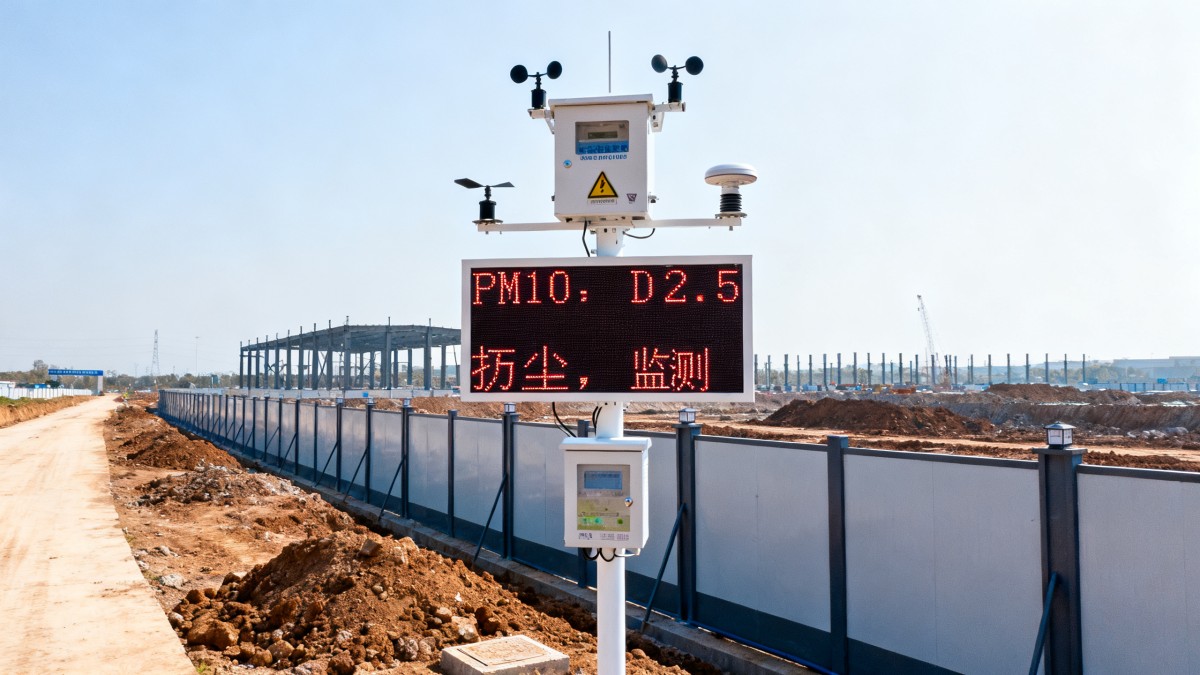
Real-time data is useful only if the readings are interpretable
Most buyers now expect continuous, real-time monitoring, and that expectation is reasonable. Construction dust events are episodic. They spike during excavation, crushing, loading, sweeping, vehicle movement, and dry weather. A monitor that only produces delayed lab-style results cannot help a site supervisor decide whether to pause activity, increase misting, modify haul-road management, or investigate an unusual plume.
Still, real-time numbers can mislead when they are stripped from context. Optical particle monitors, which are widely used for continuous field monitoring, infer mass concentration from light scattering. Their readings can be influenced by particle composition, humidity, and local conditions. That does not make them unsuitable; it means buyers should pay attention to calibration approach, correction methodology, and the manufacturer’s stated limitations. If a vendor cannot clearly explain how readings relate to recognized reference methods, the data may be difficult to defend later.
For project managers, the practical question is not whether the instrument is theoretically perfect. It is whether the measurement approach is appropriate for the site objective and whether the data stream is stable enough to support decisions. That includes confidence in time stamps, averaging intervals, alarm logic, and the ability to separate a true dust event from a passing diesel vehicle, a moisture shift, or sensor drift.
Durability is part of measurement quality
Construction buyers sometimes treat enclosure rating and power configuration as secondary concerns. On an active site, they are not secondary. If the unit fails in heat, rain, vibration, or unstable power conditions, the project does not just lose convenience; it loses continuity in its environmental record.
A credible ambient air quality monitor for construction should be evaluated as field equipment, not office electronics. The specification review should look closely at ingress protection, operating temperature range, mounting options, battery backup or solar compatibility where relevant, communication reliability, and routine maintenance burden. Remote sites and linear infrastructure projects often expose weak hardware choices very quickly. Urban projects create a different problem: the unit may survive physically but become useless if connectivity is inconsistent or if the mounting arrangement makes tampering and repositioning too easy.
This is where seasoned teams usually become more demanding. They know that every manual intervention introduces risk: missed data, inconsistent checks, undocumented relocation, or unverified restart after shutdown. A system that looks economical on day one can become expensive if it requires frequent site visits just to stay operational.
Meteorological data is not optional on most serious projects
Dust concentration without weather context often creates more argument than clarity. Wind speed and wind direction are the most obvious variables, but rainfall, humidity, and sometimes temperature also affect interpretation. If a complaint comes from a receptor west of the site, the team needs to know whether site-generated dust could plausibly have moved in that direction at the time of the event. Without that context, a concentration spike becomes hard to attribute.
For that reason, many effective site setups pair particulate monitoring with at least basic meteorological sensing. Some integrated units already do this; in other cases, the data may come from a nearby station. Either way, the evidence chain is stronger when dust levels and weather conditions are recorded together and visible in the same reporting environment.
Reporting is where compliance value is won or lost
A construction monitor should not be judged only by what it measures, but by what it can prove after the fact. That usually comes down to reporting architecture. Can the system export raw and summarized data? Can it show exceedance events against selected averaging periods? Does it preserve an audit trail for alarms, acknowledgments, and corrective actions? Can the team annotate events, such as demolition phases, water suppression failure, or wind-driven dust from off-site sources?
Those details matter when regulators, clients, or community stakeholders ask what happened on a specific date and what the site did in response. A dashboard that only shows live numbers may help operations, but it is not enough for governance. Conversely, a strong reporting platform can turn monitoring from a defensive cost into a project-control tool. It allows site leaders to connect readings with work packages, refine mitigation timing, and document that controls were adjusted before a minor event became a formal issue.
Questions worth pressing vendors on
When comparing systems, experienced buyers usually move past general claims quickly and ask narrower questions:
- What measurement principle is being used, and what are its known field limitations?
- How is the instrument calibrated, verified, and maintained over a multi-month project?
- What level of data completeness can realistically be expected in harsh site conditions?
- How are alarms configured, and can thresholds match project-specific action levels?
- What evidence supports the monitor’s use for environmental compliance workflows, not just indicative screening?
- How easily can data be exported for independent review?
Notice that these are operational and evidentiary questions, not just procurement questions. That is deliberate. A low-friction purchase process means very little if the system later creates uncertainty in front of a client or authority.
Where buyers often overbuy and underbuy
Some projects overbuy by specifying a highly sophisticated monitoring network without a clear response plan. That can leave teams with dense data and weak action discipline. Other projects underbuy by selecting a low-cost sensor package that produces attractive charts but lacks defensible QA/QC procedures, durable deployment hardware, or useful reporting outputs. Neither approach serves the project well.
The better approach is proportionality. Match the system to the project’s dust risk, receptor sensitivity, permit burden, and contractual exposure. A remote industrial expansion with wide setbacks may need a different setup from a city-center redevelopment beside residential blocks. The point is not to chase the most advanced device in the category. It is to secure a monitoring solution that the project can rely on every day and explain confidently when challenged.
When an ambient air quality monitor for construction is chosen well, it becomes more than a compliance accessory. It gives project leadership a working picture of how dust behaves on that site, under those conditions, during those activities. That is the level where better decisions happen: where suppression measures can be timed properly, complaints can be answered with evidence, and compliance records reflect actual control rather than guesswork. For most construction teams, that is the standard worth buying against.
Technical Specifications
- How to Select Electronic Hotel Key Card Locks for Guest Rooms and Staff AreasAuthor :Safety Compliance Lead
- How to Select Lab Instruments for Reliable Chemical Analysis WorkflowsAuthor :Precision Metrology Expert
- How to Size a UPS for Server Rooms: Load, Runtime, and Redundancy FactorsAuthor :Grid Infrastructure Analyst
Expert Insights

Chief Security Architect
Dr. Thorne specializes in the intersection of structural engineering and digital resilience. He has advised three G7 governments on industrial infrastructure security.
Related Analysis
- Sep 17, 2026How to Select Electronic Hotel Key Card Locks for Guest Rooms and Staff AreasAuthor :Safety Compliance Lead
- Sep 16, 2026How to Select Lab Instruments for Reliable Chemical Analysis WorkflowsAuthor :Precision Metrology Expert
- Sep 15, 2026How to Size a UPS for Server Rooms: Load, Runtime, and Redundancy FactorsAuthor :Grid Infrastructure Analyst
Core Sector // 01
Security & Safety
- What to Check When Sourcing Vibration Meters Wholesale for Industrial MaintenanceAuthor :Precision Metrology Expert

- How to Select Process Control Instruments for Accuracy, Safety, and UptimeAuthor :Precision Metrology Expert

- What Should Standards Compliance Analysis Training Cover Before an Audit?Author :Precision Metrology Expert

- Why Do Pressure Instruments Fail in High-Vibration Sites?Author :Precision Metrology Expert

- Is FM Software Integration Needed for Overseas Instrument Maintenance?Author :Precision Metrology Expert

- What Are the Differences Between Lab and Field Testing Equipment?Author :Precision Metrology Expert

- Is Independent Testing Necessary for Critical Safety Components?Author :Precision Metrology Expert

- How to Validate Industrial Application Scenarios Before ProcurementAuthor :Precision Metrology Expert