APEC Accelerates ICV Standard Mutual Recognition
Author
Date Published
Reading Time
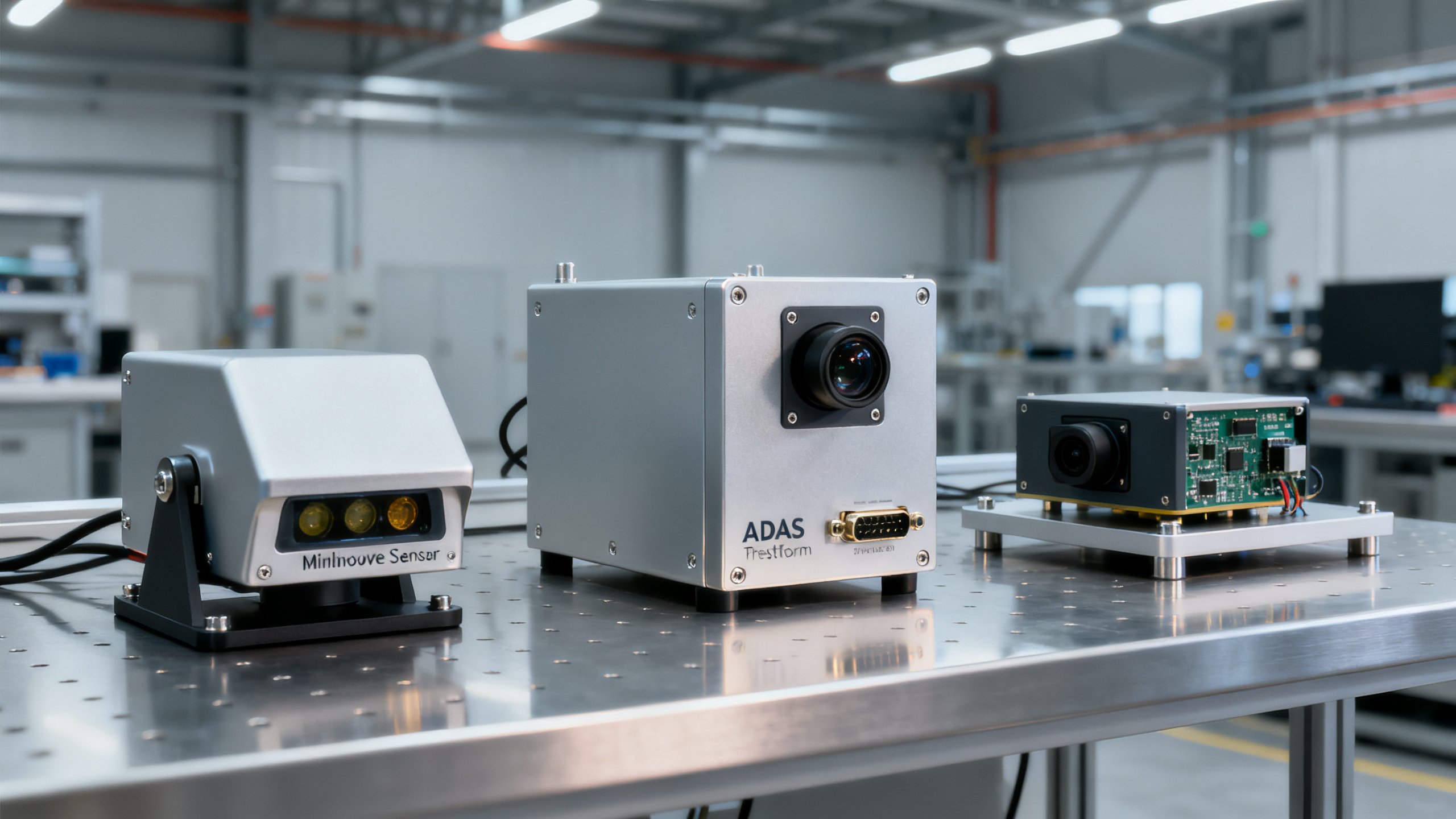
APEC Automotive Dialogue Meeting on May 12, 2026 announced accelerated international mutual recognition of standards for intelligent connected and new energy vehicles — a development poised to benefit Chinese sensor and test equipment exporters, particularly in Testing & Measurement and Industrial Optics sectors.
Event Overview
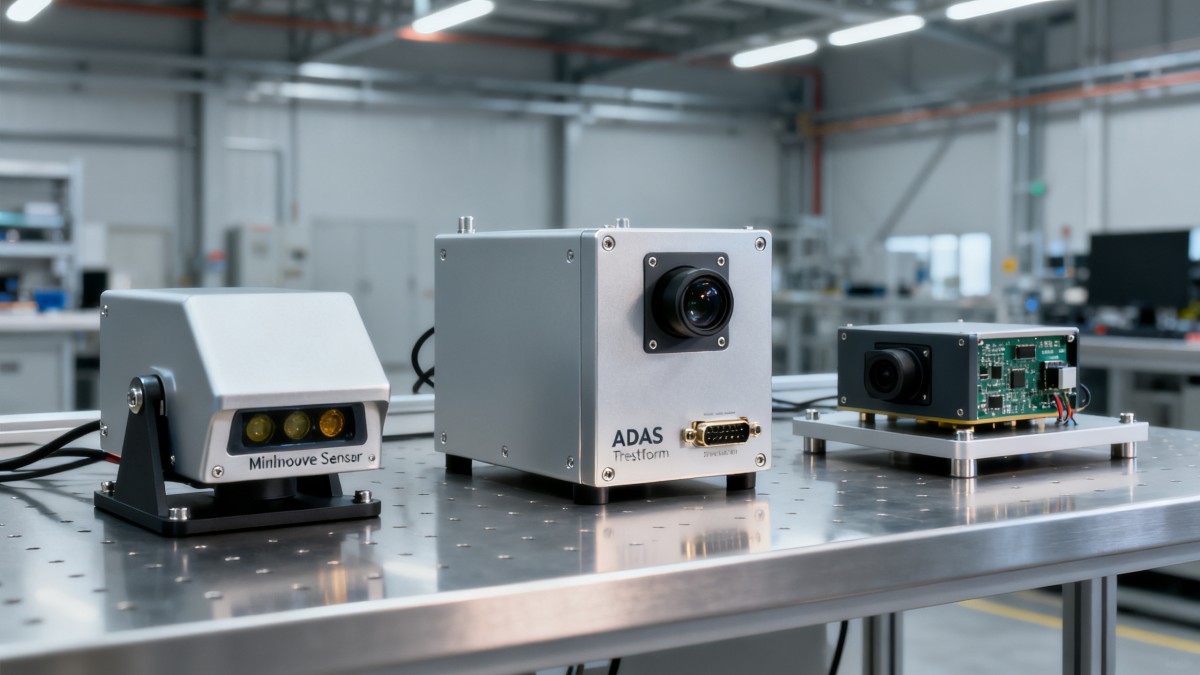
The 43rd APEC Automotive Dialogue Meeting was held in Shanghai on May 12, 2026. China announced it has led the development of over 60 international standards and regulatory guidelines covering electric vehicle safety and autonomous driving systems. It also confirmed active progress in mutual recognition agreements with the United States, Japan, South Korea, and ASEAN member states — specifically targeting key components including automotive cameras, millimeter-wave radar units, and ADAS testing platforms.
Industries Affected
Direct Exporters (Testing & Measurement and Industrial Optics firms): These enterprises face reduced conformity assessment burdens when entering APEC markets. Mutual recognition directly lowers third-party certification costs and shortens time-to-market — especially for export-oriented SMEs lacking in-house regulatory affairs capacity.
Raw Material Procurement Firms: Suppliers of optical substrates, RF-grade PCB laminates, or high-precision calibration targets may see demand shifts. While not directly regulated, their upstream supply contracts increasingly reference harmonized test protocols; procurement teams must now verify material traceability against ISO/IEC 17025-accredited test reports aligned with recognized APEC standards.
Contract Manufacturing & Tier-2 Component Producers: Firms assembling radar modules or camera-based ADAS sub-systems will encounter tighter integration requirements. Mutual recognition does not eliminate local type-approval but reduces redundant functional validation — meaning manufacturers must align internal QA workflows with shared test case libraries (e.g., ISO 21448 SOTIF scenarios) rather than duplicating region-specific test suites.
Supply Chain Service Providers (Certification bodies, lab accreditation consultants, technical translators): Demand for cross-border regulatory navigation services is expected to rise — not decline. Mutual recognition increases complexity in documentation mapping (e.g., translating GB/T test reports into ANSI/UL or JIS-compliant formats), requiring deeper technical bilingual capability and familiarity with APEC’s Joint Working Group on Vehicle Standards (JWG-VS) procedural frameworks.
Key Focus Areas and Recommended Actions
Review Existing Export Certification Portfolios
Exporters should audit current certifications against the newly listed mutually recognized items (e.g., GB/T 38186–2019 for millimeter-wave radar EMC). Where gaps exist, prioritize alignment with ISO/IEC 17065-accredited bodies already designated under APEC’s Mutual Recognition Arrangement (MRA).
Update Technical Documentation for Harmonized Test Evidence
Manufacturers must ensure test reports explicitly cite applicable APEC-recognized standards — not just domestic equivalents — and include measurement uncertainty statements compliant with ILAC P14:2021. Internal documentation systems should flag version-controlled standard references per destination market.
Engage Early with National Standards Bodies
China’s SAC (Standardization Administration of China) and counterpart agencies in the U.S. (ANSI), Japan (JISC), and ASEAN (ASEAN Centre for Energy) are coordinating implementation timelines. Participating in SAC-hosted webinars or JWG-VS public consultations enables firms to influence interpretation guidelines before formal enforcement.
Editorial Perspective / Industry Observation
Observably, this move signals a strategic pivot: rather than pursuing unilateral standard-setting dominance, China is leveraging APEC’s consensus-based platform to embed its technical specifications within multilateral frameworks — a more sustainable path for global market access. Analysis shows that mutual recognition alone does not guarantee automatic market entry; it merely removes one layer of regulatory friction. What matters more is whether domestic test infrastructure (e.g., CNAS-accredited labs) achieves real-time equivalence with NIST or JATE-certified facilities — a gap still under active calibration. From an industry perspective, the near-term impact is less about volume growth and more about margin resilience: reduced retesting costs improve bid competitiveness in competitive tenders across Southeast Asia and Latin America, where APEC-aligned standards are increasingly referenced informally.
Conclusion
This agreement marks a pragmatic step toward interoperable regulation in a fragmented global ICV landscape. It does not eliminate compliance complexity — but reframes it from duplication to coordination. For suppliers, the value lies not in faster approvals alone, but in more predictable regulatory roadmaps and stronger leverage in negotiating OEM qualification timelines.
Source Attribution
Official communiqué issued by the APEC Secretariat and the Ministry of Industry and Information Technology (MIIT) of China, May 12, 2026. Full text available via APEC JWG-VS Portal. Note: Implementation schedules for individual component categories (e.g., OTA testing for V2X modules) remain pending final adoption by national regulators — continued monitoring advised.
Technical Specifications
- How to Select Electronic Hotel Key Card Locks for Guest Rooms and Staff AreasAuthor :Safety Compliance Lead
- How to Select Lab Instruments for Reliable Chemical Analysis WorkflowsAuthor :Precision Metrology Expert
- How to Size a UPS for Server Rooms: Load, Runtime, and Redundancy FactorsAuthor :Grid Infrastructure Analyst
Expert Insights

Chief Security Architect
Dr. Thorne specializes in the intersection of structural engineering and digital resilience. He has advised three G7 governments on industrial infrastructure security.
Related Analysis
- Sep 17, 2026How to Select Electronic Hotel Key Card Locks for Guest Rooms and Staff AreasAuthor :Safety Compliance Lead
- Sep 16, 2026How to Select Lab Instruments for Reliable Chemical Analysis WorkflowsAuthor :Precision Metrology Expert
- Sep 15, 2026How to Size a UPS for Server Rooms: Load, Runtime, and Redundancy FactorsAuthor :Grid Infrastructure Analyst
Core Sector // 01
Security & Safety
- What to Check When Sourcing Vibration Meters Wholesale for Industrial MaintenanceAuthor :Precision Metrology Expert

- How to Select Process Control Instruments for Accuracy, Safety, and UptimeAuthor :Precision Metrology Expert

- What Should Standards Compliance Analysis Training Cover Before an Audit?Author :Precision Metrology Expert

- Why Do Pressure Instruments Fail in High-Vibration Sites?Author :Precision Metrology Expert

- Is FM Software Integration Needed for Overseas Instrument Maintenance?Author :Precision Metrology Expert

- What Are the Differences Between Lab and Field Testing Equipment?Author :Precision Metrology Expert

- Is Independent Testing Necessary for Critical Safety Components?Author :Precision Metrology Expert

- How to Validate Industrial Application Scenarios Before ProcurementAuthor :Precision Metrology Expert