How to Choose a Class II Biosafety Cabinet Supplier for Compliant Lab Procurement
Author
Date Published
Reading Time
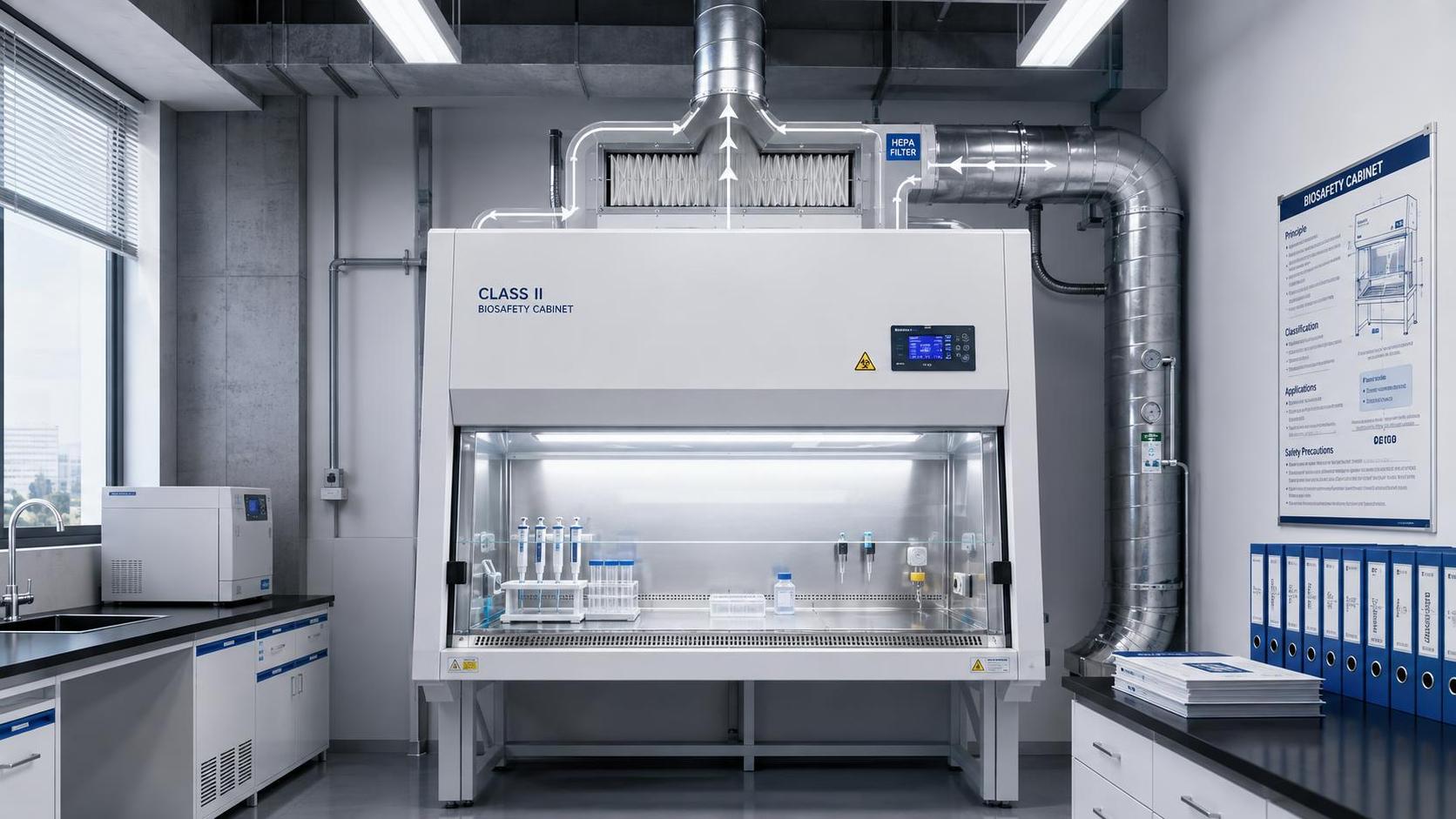
A low purchase price can become the most expensive outcome when a Class II biosafety cabinet arrives with incomplete documentation, cannot be commissioned correctly, or lacks local service support. The right Class II biosafety cabinet supplier does more than quote a cabinet model. It should help establish that the equipment is suitable for the laboratory’s work, can be installed without compromising airflow performance, and can remain verifiable throughout its service life.
This matters because a biosafety cabinet is not simply an enclosed workstation. Its protection depends on a controlled relationship between inflow air, downflow air, filtration, cabinet construction, room conditions, operator technique, and periodic testing. A cabinet that is appropriate for routine cell culture may be unsuitable for work involving volatile chemicals, radioactive materials, unusually large equipment, or procedures that generate high levels of aerosols. Procurement decisions need to begin with the intended use, not with a catalogue comparison.
Start with the work the cabinet must support
Before requesting quotations, define what will happen inside the cabinet. This avoids a common failure: comparing cabinets with similar dimensions while overlooking differences in protection type, operating constraints, and exhaust arrangements.
Class II cabinets are generally selected where protection is needed for the operator, the work product, and the laboratory environment. Within that broad category, cabinet configurations can differ in how air is recirculated or exhausted. That difference affects whether the unit fits the laboratory’s risk assessment, the building’s ventilation capacity, and the materials used in routine work.
A useful internal specification should identify:
- The biological materials and procedures expected in the cabinet, including aerosol-generating tasks.
- Whether chemicals or other non-biological hazards will be handled alongside biological materials.
- The required working width, height clearance, and the size of equipment placed inside.
- Whether the cabinet needs ducted exhaust, a canopy connection, or a recirculating configuration.
- Expected operating hours, user volume, cleaning practices, and decontamination requirements.
- Building constraints such as door widths, lift access, electrical supply, room heat load, and ventilation balance.
The last point is often underestimated. A cabinet can meet its published performance expectations yet perform poorly in a location exposed to door drafts, supply-air turbulence, high foot traffic, or an unstable room pressure regime. A supplier that only asks for a purchase order and delivery address is not gathering enough information to support a sound installation.
Do not treat “certified” as a complete answer
Cabinet certification is essential, but the word is frequently used too loosely in quotations. Separate three questions: whether the cabinet design has been tested to a relevant standard, whether the specific delivered cabinet has complete factory documentation, and whether the installed cabinet will be tested and accepted in its final location.
Ask the supplier to state clearly which recognized standard or certification basis applies to the offered model and what documents will be supplied with the unit. The documentation should be traceable to the exact model and configuration being purchased. A generic brochure or a certificate that does not match the proposed cabinet, electrical configuration, or exhaust arrangement is not sufficient evidence for a compliant procurement file.
Installation qualification is equally important. Transport, handling, assembly, site conditions, and connection to building exhaust can all affect cabinet operation. The supplier should define the commissioning scope, test methods, acceptance records, and responsibilities of each party. Where third-party field certification is required by the facility, the quotation should make clear whether it is included, coordinated, or excluded.
Compliance also extends beyond the cabinet itself. Electrical approvals, materials declarations, filtration documentation, and local facility rules may all be relevant. The procurement package should be reviewed with the laboratory safety lead, facilities team, and the group responsible for equipment qualification before an order is placed.
Compare airflow design and containment support, not brochure claims
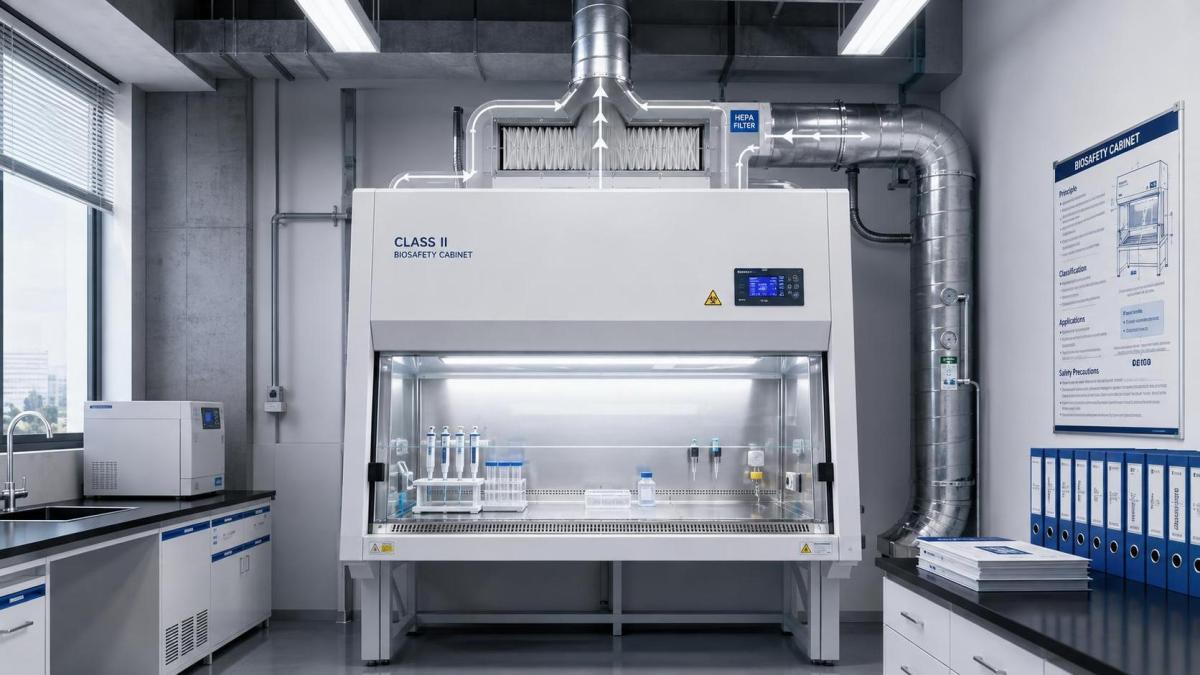
Most suppliers can describe airflow in general terms. The more useful question is how the supplier helps the laboratory preserve containment under normal working conditions. That includes stable airflow control, clear alarm behavior, accessible displays, appropriate filter monitoring, and practical guidance for loading and using the work zone.
Cabinet performance can be undermined by the way it is used. Large instruments may block grilles or disrupt downflow. Open containers near the front opening can be exposed to room air. Rapid arm movement, frequent sash adjustments, and cluttered work surfaces can all affect airflow patterns. A capable supplier should be able to discuss these operational limits before sale rather than treating them as an issue for the user to discover later.
Ask for a technical submittal that explains the proposed cabinet’s airflow concept, filtration arrangement, alarm functions, access for service, and limits on use. For cabinets connected to an exhaust system, obtain the operating requirements for the connection and confirm that the building design can maintain them. A cabinet and a building exhaust system must be evaluated as one operating arrangement, not as two unrelated purchases.
Evaluate the supplier’s installation and service model early
For a biosafety cabinet, delivery is not the end of the transaction. It is the point at which the most consequential operational work begins. A cabinet may need careful positioning, leveling, removal of shipping restraints, connection to utilities, test preparation, and user orientation. If it must be moved through constrained corridors or installed on an upper floor, logistics planning becomes part of the technical scope.
Service capability should be assessed before selecting the supplier, especially where the cabinet supports routine testing, quality control, research continuity, or critical workflows. Ask who will perform preventive maintenance, field testing, repairs, filter changes, and decontamination coordination. Determine whether the supplier relies on an authorized regional partner and whether that partner can service the specific cabinet brand and configuration.
The goal is not merely to secure a warranty. Warranties address defined defects; they do not necessarily cover disruption caused by delayed filters, unavailable technicians, incorrect installation, or missed recertification intervals. A lower-priced cabinet with weak post-sale support may create more operational exposure than a higher-priced offer with a credible local service pathway.
Questions that reveal service depth
- Who is responsible for installation, commissioning, and final acceptance documentation?
- Can the supplier provide a named service contact or an authorized support arrangement for the installation region?
- Which replacement parts and filters are normally stocked or available through the service network?
- How are urgent service requests handled when the cabinet cannot be used?
- What training is included for users, facilities staff, and those responsible for routine checks?
- What steps are required before maintenance on a cabinet that has been used with hazardous materials?
Answers should be written into the commercial offer or service agreement where possible. Verbal assurances are difficult to rely on when a cabinet is unavailable and laboratory schedules are affected.
Calculate total ownership cost instead of comparing cabinet prices alone
Initial equipment cost remains important, but it is only one line in the procurement decision. The practical cost of ownership includes delivery, installation, site preparation, certification or acceptance testing, electrical or exhaust modifications, preventive maintenance, filter replacement, repairs, decontamination, and eventual relocation or disposal.
Energy use can also influence the long-term comparison, particularly for cabinets operated for extended periods. However, energy claims should be considered alongside containment requirements, room conditions, control strategy, and the way the cabinet will actually be used. Choosing a unit primarily for an advertised operating feature without confirming its application fit is a false economy.
Use an itemized comparison sheet rather than a single “total quote” column. This exposes omissions that can make one supplier appear cheaper. It also helps distinguish a genuinely lower total cost from a quotation that transfers essential work to the laboratory, facilities contractor, or a third-party certifier.
Common buying mistakes that create avoidable risk
Choosing by external dimensions alone. Internal work area, sash arrangement, service clearances, and the footprint of equipment inside the cabinet can matter more than the nominal cabinet width. An oversized centrifuge, incubator, or waste container can compromise usable space and airflow discipline.
Assuming every Class II cabinet handles the same materials. Biological containment needs, chemical vapor handling, and radioactive work introduce different considerations. The intended materials must drive the cabinet selection and exhaust strategy.
Leaving facilities out of the decision. Room ventilation, structural loading, electrical supply, access routes, and exhaust coordination can determine whether a cabinet can be installed and operated properly. These issues are expensive to solve after delivery.
Accepting vague service language. “Technical support available” does not explain who arrives on site, what testing is included, how parts are sourced, or what happens during downtime. Procurement should request operational detail.
Buying a cabinet without a lifecycle plan. Filters, periodic testing, training, cleaning practices, and future relocation should be considered before installation. A cabinet is easier to manage when these responsibilities are assigned at the purchasing stage.
A practical supplier selection sequence
Begin by issuing a concise application brief, then invite suppliers to respond against the same technical and commercial requirements. This produces more useful comparisons than asking for a price on a broad cabinet category.
- Define the laboratory work, materials, equipment load, and building constraints.
- Confirm the required cabinet configuration with laboratory safety and facilities stakeholders.
- Request model-specific documentation, installation requirements, and a defined acceptance process.
- Evaluate local or regional service capability alongside cabinet design and price.
- Compare itemized lifecycle costs, including work that may sit outside the equipment quote.
- Document technical clarifications before issuing the purchase order.
For complex projects, an independent technical review can help align cabinet selection with laboratory layout, ventilation design, and operating procedures. Sourcing guidance should support that review by making technical evidence and commercial responsibilities easy to compare, rather than reducing the decision to a brand list.
FAQ
Should the lowest-priced Class II biosafety cabinet be rejected automatically?
No. A lower price may be appropriate when the offered model meets the application, documentation, installation, and support requirements. It becomes a concern when essential scope items are absent, unclear, or shifted to another party without being reflected in the comparison.
Can a cabinet be ordered before the laboratory room is finished?
It can, but the room design, access route, utilities, ventilation approach, and final placement should be sufficiently defined first. Ordering too early can lead to unexpected modifications, delayed commissioning, or an unsuitable exhaust arrangement.
What is the most important document to request from a supplier?
There is no single document that replaces the others. The most useful package combines model-specific technical documentation, evidence of the applicable certification basis, installation requirements, and a written commissioning and service scope.
When should a ducted arrangement be considered?
That decision depends on the cabinet configuration, materials handled, laboratory risk assessment, and building ventilation capability. It should be resolved during technical selection, not added as an afterthought after the cabinet has been delivered.
A defensible purchase decision is built on application fit, traceable documentation, commissioning responsibility, and service continuity. When those elements are clear, price becomes a meaningful comparison point rather than the only one.
Technical Specifications
- How to Select Electronic Hotel Key Card Locks for Guest Rooms and Staff AreasAuthor :Safety Compliance Lead
- How to Select Lab Instruments for Reliable Chemical Analysis WorkflowsAuthor :Precision Metrology Expert
- How to Size a UPS for Server Rooms: Load, Runtime, and Redundancy FactorsAuthor :Grid Infrastructure Analyst
Expert Insights

Chief Security Architect
Dr. Thorne specializes in the intersection of structural engineering and digital resilience. He has advised three G7 governments on industrial infrastructure security.
Related Analysis
- Sep 17, 2026How to Select Electronic Hotel Key Card Locks for Guest Rooms and Staff AreasAuthor :Safety Compliance Lead
- Sep 16, 2026How to Select Lab Instruments for Reliable Chemical Analysis WorkflowsAuthor :Precision Metrology Expert
- Sep 15, 2026How to Size a UPS for Server Rooms: Load, Runtime, and Redundancy FactorsAuthor :Grid Infrastructure Analyst
Core Sector // 01
Security & Safety
- How to Select Lab Instruments for Reliable Chemical Analysis WorkflowsAuthor :Precision Metrology Expert

- Buying Lint-Free Wipes in Bulk: How to Match Material and Packaging to Cleanroom UseAuthor :Precision Metrology Expert

- How to Choose a Class II Biosafety Cabinet Supplier for Compliant Lab ProcurementAuthor :Precision Metrology Expert

- Wholesale Binocular Microscopes: Comparing Specifications, MOQs, and QC RiskAuthor :Precision Metrology Expert

- How to Evaluate a UV-Visible Spectrophotometer Manufacturer for Lab Accuracy?Author :Precision Metrology Expert

- China Temporarily Bans Helium ExportsAuthor :Precision Metrology Expert

- What to Check Before Buying a Digital Lab Incubator Wholesale OrderAuthor :Precision Metrology Expert

- Electric Muffle Furnace Wholesale: How to Evaluate Capacity, Temperature, and MOQAuthor :Precision Metrology Expert