Buying Lint-Free Wipes in Bulk: How to Match Material and Packaging to Cleanroom Use
Author
Date Published
Reading Time
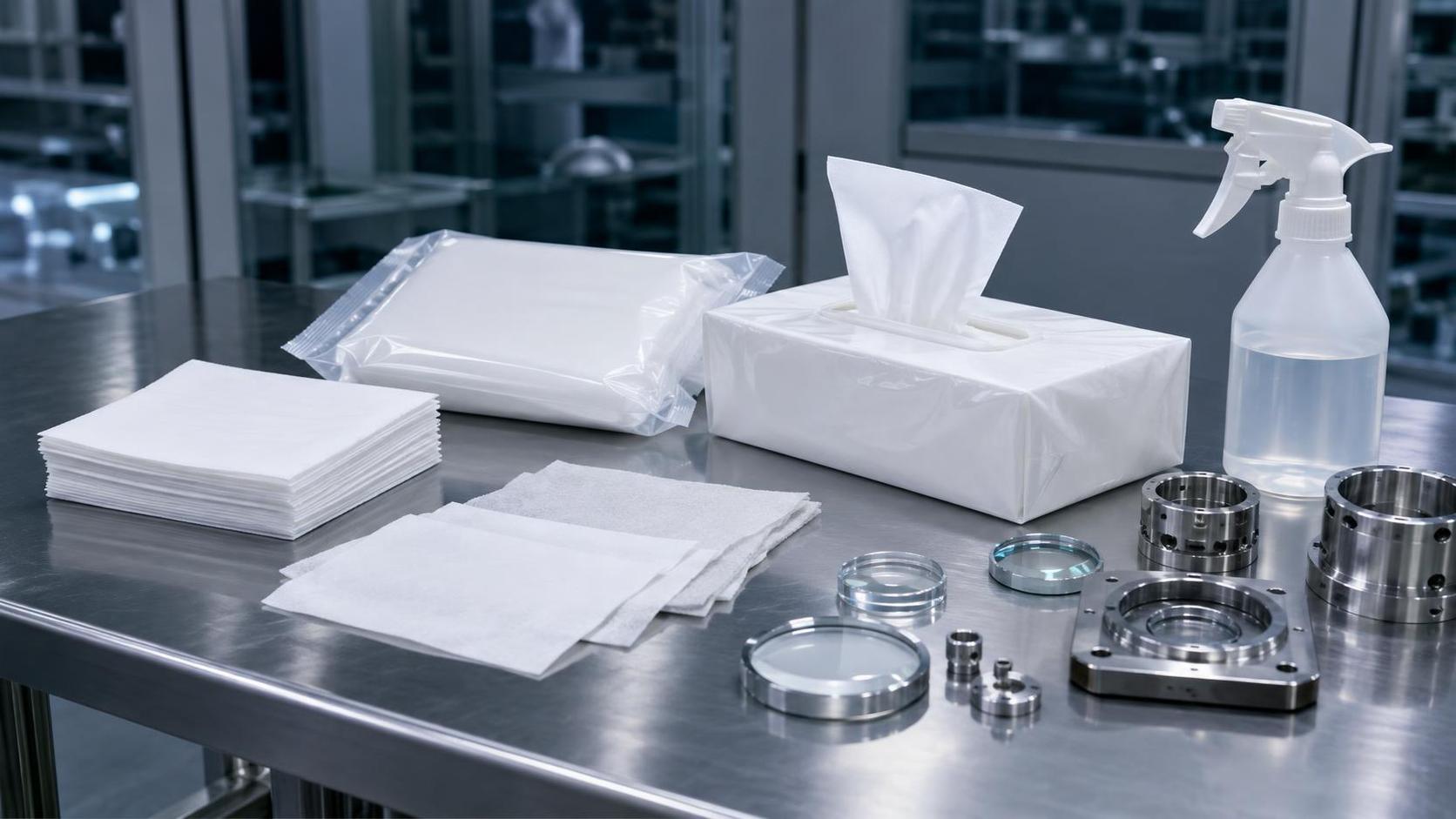
Bulk purchasing of lint-free wipes becomes a cleanroom decision the moment the wipe enters a controlled process. A lower carton price can quickly become expensive if the material sheds fibers near optical components, retains too much solvent, abrades a sensitive surface, or forces operators to use several wipes where one properly sized wipe would do. Conversely, the highest-specification wipe is not automatically the right buy for every room, task, or contamination risk.
For procurement teams, the practical question is how to match wipe construction and packaging to the work being performed, then calculate cost at the point of use rather than at the carton. That usually leads to a more disciplined specification: one based on particle control, chemical compatibility, absorbency, handling method, and replenishment practice.
Start with the cleaning task, not the word “lint-free”
“Lint-free” is a useful commercial description, but it is not a complete performance requirement. No wipe is entirely free of particles under every condition. Fiber release depends on the fabric, the edge treatment, the friction applied during use, the liquid involved, and the surface being wiped. A material that performs acceptably for routine bench cleaning may be unsuitable for critical optical inspection, precision assembly, or high-sensitivity electronic processes.
Before requesting quotations for lint free wipes bulk, define what the wipe must remove, what it must not leave behind, and how it will be used. A procurement specification should separate at least four questions:
- Is the task dry wiping, solvent application, spill pickup, surface preparation, or component handling?
- Will the wipe touch a product surface, a tool, a workbench, a packaging area, or only general equipment?
- What contamination creates the greatest consequence: visible fibers, particles, extractable residues, static charge, chemical carryover, or surface scratching?
- How will operators dispense the wipe: by individual pull, by taking a stack, through a pass-through, or from a sealed cleanroom bag?
These questions prevent a common purchasing error: treating all controlled environments as if they need the same wipe. A wipe used to apply isopropyl alcohol to a work surface is selected differently from one used to clean a lens, wipe a precision-machined part before inspection, or handle a component where electrostatic discharge is also a concern.
Match material construction to the contamination risk
Material selection drives most of the performance and cost trade-offs. The most suitable option depends less on a generic cleanliness claim than on the balance between particle release, absorbency, durability, and the nature of the liquid or surface involved.
Polyester: for low-particle, repeatable wiping
Knitted polyester wipes are often chosen where particle control and surface consistency matter. Their synthetic continuous-filament construction can provide a smooth wiping face and reduced fiber shedding compared with many cellulose-based products. They are commonly considered for precision cleaning tasks, controlled assembly, and surfaces where loose fibers would interfere with inspection or downstream processing.
The trade-off is absorbency. Polyester typically does not absorb and hold liquid in the same way as cellulose-rich wipes. For operators applying a controlled amount of solvent, that can be useful: the wipe releases liquid predictably rather than becoming saturated and dripping. For larger spills or heavy fluid pickup, it may be less economical because more wipes may be consumed.
Procurement should also examine edge construction. Laser-cut or sealed edges can reduce loose edge fibers, while mechanically cut edges may be adequate for lower-risk applications but deserve closer evaluation in sensitive zones. The edge is often where an otherwise suitable material loses its advantage.
Polyester-cellulose blends: for general cleaning with better uptake
Blended wipes combine polyester strength with cellulose absorbency. They are often a practical choice for routine cleanroom housekeeping, equipment wipe-down, solvent cleaning, and tasks involving moderate liquid pickup. Where the process can tolerate a somewhat higher risk of fiber or extractable release than a critical precision task, a blend may deliver a more favorable cost per completed cleaning operation.
That qualification matters. A blend should not be assumed to be a substitute for a polyester wipe simply because both are sold for controlled environments. Cellulose content can improve fluid handling but may also alter lint behavior, compatibility with aggressive chemicals, and the likelihood of residues. Buyers should require the supplier to state the composition clearly rather than relying on broad labels such as “cleanroom-grade.”
Cellulose-based and nonwoven wipes: useful, but application-specific
Cellulose-rich or nonwoven wipes can work well in lower-criticality controlled areas, maintenance activities, packaging support areas, or jobs requiring fast fluid absorption. They may be cost-effective when the wipe is not used near highly sensitive product surfaces. Their limitations become more relevant where process cleanliness is tightly controlled, particularly when wet strength, particle release, or residue control must remain stable during wiping.
For a bulk contract, it is sensible to avoid one universal wipe specification if the facility has clearly different cleaning risks. A two- or three-tier program often reduces total spend: a high-performance wipe for critical operations, an absorbent general-purpose wipe for routine cleaning, and a separate product for non-controlled support work where appropriate.
Packaging is part of contamination control
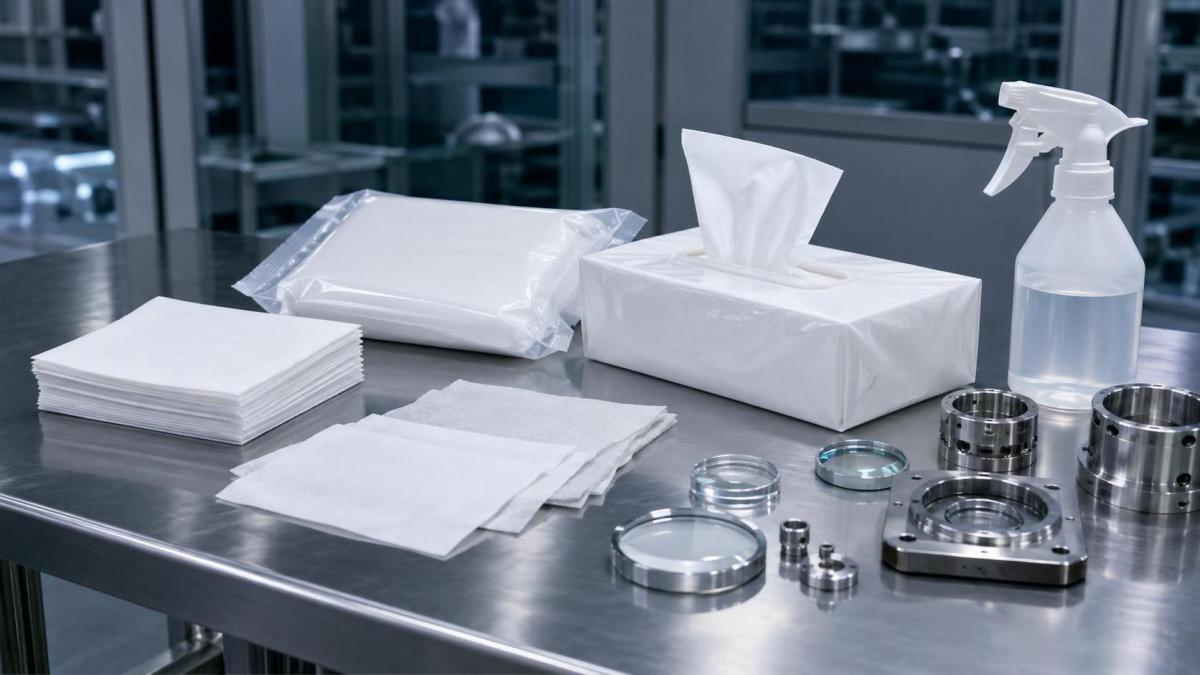
Bulk quantity does not have to mean bulk exposure. Packaging affects how long wipes remain protected, how easily operators can retrieve them, and how much product is discarded through accidental contamination or unnecessary handling.
For critical areas, sealed bags containing manageable inner quantities are usually easier to control than large, loosely protected cartons. Inner bags can be transferred into the room according to site procedures, opened close to the point of use, and replaced before the remaining wipes become exposed to repeated handling. This arrangement also helps isolate a problem if one package is damaged during transport or storage.
Large stacks may be suitable for a dedicated dispensing point where the environment and operating procedure support them. They are less attractive when users reach into an open package repeatedly, especially if gloves are changed frequently, tasks are intermittent, or the package remains on a shared bench for a long period. The problem is not just external dust. Repeated handling can cause unnecessary wipe contact, compression, and disordered dispensing, all of which increase waste.
Consider the packaging format alongside the workflow:
- Sealed flat packs suit controlled transfer, low-volume workstations, and applications where wipes need protection until use.
- Pop-up or interfold packs can improve one-at-a-time dispensing and reduce contact with the remaining wipes, provided the dispenser itself is maintained appropriately.
- Bagged bulk stacks may lower packaging cost and work well for high-consumption stations, but they require disciplined handling and a clean storage arrangement.
- Pre-saturated packs can improve consistency for defined cleaning procedures, although chemical shelf life, evaporation control, and hazardous-material storage requirements must be evaluated separately.
Packaging also affects inventory behavior. A very large inner pack can appear economical but create slow-moving stock after a process change, material approval revision, or chemical compatibility issue. Smaller inner packs normally offer better control over obsolete inventory, even where the outer case contains a high number of wipes.
Assess cost per task, not price per wipe
The lowest unit price is meaningful only when the wipes perform consistently in the intended operation. A procurement comparison should convert carton pricing into a usable cost model. Start with cost per wipe, then estimate how many wipes a typical task consumes. Add the cost of rework, discarded wipes, cleaning fluid losses, disposal, and production interruption where contamination failures can affect throughput.
A more absorbent wipe may reduce the number needed for spill response. A stronger wipe may avoid tearing during equipment cleaning. A cleaner polyester wipe may reduce repeat wiping on a sensitive surface. In each case, the purchase price can be higher while the task cost is lower.
Consumption data need not be elaborate to be useful. A short controlled evaluation across representative shifts can reveal whether a proposed wipe changes usage rates, operator handling, or re-cleaning frequency. The objective is to compare equivalent tasks, not to declare a product universally superior. Procurement can then negotiate volume based on realistic demand rather than a historical case count that includes preventable waste.
Ask for documentation that supports the actual specification
Supplier literature often presents broad claims about cleanliness, absorbency, or compatibility. For a material used in controlled operations, the purchasing file should connect those claims to the facility’s actual requirements. The needed documentation will vary by risk level, but buyers should be able to identify the wipe’s material composition, construction, dimensions, packaging configuration, lot traceability approach, and relevant performance information.
Where particle or residue control is important, ask how the supplier evaluates those characteristics and under what test conditions. A reported result has limited value without understanding whether the test method aligns with the process risk. Similarly, chemical compatibility statements should identify the chemicals and exposure conditions considered. “Compatible with solvents” is too broad for a process that uses a specific alcohol, ketone, disinfectant, lubricant, or cleaning agent.
It is also reasonable to clarify change-control practices. A bulk supply arrangement can become vulnerable if a supplier changes fiber source, packaging film, manufacturing location, or product construction without clear notification. For low-risk housekeeping products this may have little consequence. For an approved cleanroom process material, even a small change can require re-evaluation.
Use samples to resolve uncertainty before locking in volume
Samples are most useful when they are evaluated against a defined acceptance checklist. Leaving operators to choose a preferred feel can produce an incomplete result; comfort matters, but it does not capture particle release, residue, wet durability, or package handling.
A practical trial can examine whether the wipe leaves visible lint on representative surfaces, remains intact when used with the intended chemical, releases an appropriate amount of liquid, and fits existing dispensers or workstations. The review should include the people who clean, inspect, and manage inventory, since each sees a different failure mode. Quality personnel may focus on contamination; operators may identify poor dispensing or glove snagging; stores teams may see damaged outer cartons or inefficient pack sizes.
Do not approve a bulk order solely from a sample that arrives in premium presentation packaging. Confirm that the production packaging, case configuration, labeling, and lot identification will match the approved purchase condition. The product in the evaluation must be the product that will be received repeatedly.
Build the purchase specification around use zones
The strongest bulk-buying approach is usually a controlled specification by use zone rather than a single description such as “lint-free wipes.” Assign each approved wipe to a defined family of tasks, state the material and packaging requirements, and identify the acceptable alternatives. This gives purchasing leverage without allowing substitutions that quietly change cleaning performance.
For example, a critical inspection station may require sealed, low-particle polyester wipes with controlled edge treatment. General cleanroom equipment cleaning may allow a polyester-cellulose blend in an interfold pack. A maintenance area outside the controlled process may use a different absorbent product entirely. The distinction protects the sensitive operation while avoiding unnecessary spend on premium material where it adds little value.
When the specification, pack format, and consumption model align, buying lint-free wipes in bulk becomes easier to defend. The order quantity reflects real usage, the packaging supports clean handling, and the wipe is selected for the consequence of failure rather than for the broadest claim on a carton.
Technical Specifications
- How to Select Electronic Hotel Key Card Locks for Guest Rooms and Staff AreasAuthor :Safety Compliance Lead
- How to Select Lab Instruments for Reliable Chemical Analysis WorkflowsAuthor :Precision Metrology Expert
- How to Size a UPS for Server Rooms: Load, Runtime, and Redundancy FactorsAuthor :Grid Infrastructure Analyst
Expert Insights

Chief Security Architect
Dr. Thorne specializes in the intersection of structural engineering and digital resilience. He has advised three G7 governments on industrial infrastructure security.
Related Analysis
- Sep 17, 2026How to Select Electronic Hotel Key Card Locks for Guest Rooms and Staff AreasAuthor :Safety Compliance Lead
- Sep 16, 2026How to Select Lab Instruments for Reliable Chemical Analysis WorkflowsAuthor :Precision Metrology Expert
- Sep 15, 2026How to Size a UPS for Server Rooms: Load, Runtime, and Redundancy FactorsAuthor :Grid Infrastructure Analyst
Core Sector // 01
Security & Safety
- How to Select Lab Instruments for Reliable Chemical Analysis WorkflowsAuthor :Precision Metrology Expert

- Buying Lint-Free Wipes in Bulk: How to Match Material and Packaging to Cleanroom UseAuthor :Precision Metrology Expert

- How to Choose a Class II Biosafety Cabinet Supplier for Compliant Lab ProcurementAuthor :Precision Metrology Expert

- Wholesale Binocular Microscopes: Comparing Specifications, MOQs, and QC RiskAuthor :Precision Metrology Expert

- How to Evaluate a UV-Visible Spectrophotometer Manufacturer for Lab Accuracy?Author :Precision Metrology Expert

- China Temporarily Bans Helium ExportsAuthor :Precision Metrology Expert

- What to Check Before Buying a Digital Lab Incubator Wholesale OrderAuthor :Precision Metrology Expert

- Electric Muffle Furnace Wholesale: How to Evaluate Capacity, Temperature, and MOQAuthor :Precision Metrology Expert