Polarimeter wholesale units show inconsistent rotation angles across identical samples
Author
Date Published
Reading Time
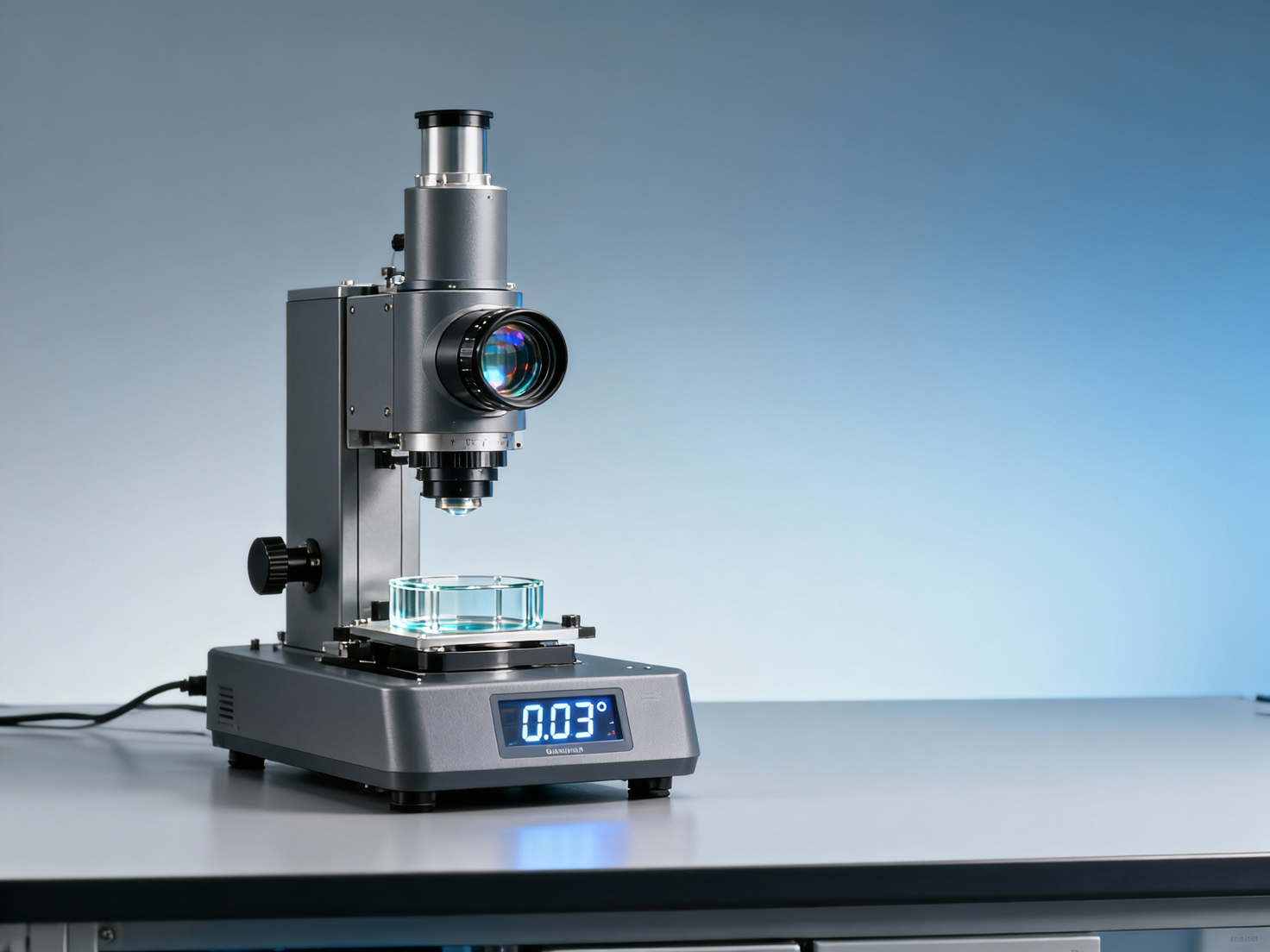
Inconsistent rotation angle readings across identical samples in polarimeter wholesale units signal critical metrological drift—compromising pharmaceutical QC, chemical synthesis validation, and food-grade Brix refractometer calibration. This anomaly intersects directly with high-stakes procurement priorities for precision weighing scales, analytical balances, and industrial endoscopes—where traceability, CE/UL compliance, and micron-level repeatability are non-negotiable. For EPC contractors and facility managers sourcing pressure transmitters wholesale, load cells manufacturer partnerships, or stroboscope wholesale systems, such measurement instability undermines entire quality assurance frameworks. Global Industrial Core investigates root causes—from optical alignment tolerances to firmware calibration protocols—delivering actionable intelligence aligned with ISO 17025 and ICH Q5A standards.
Why Rotation Angle Instability Matters in Industrial Polarimetry Procurement
Polarimeters are not standalone lab instruments—they form part of integrated metrological ecosystems supporting pharmaceutical batch release (ICH Q5A), food additive certification (Codex Alimentarius), and polymer grade verification (ASTM D1747). When wholesale units deliver ±0.15°–±0.40° variation across three identical sucrose solutions at 20°C, the deviation exceeds typical specification thresholds for Class II analytical instrumentation (IEC 61000-4-3 immunity) and violates traceability requirements under ISO/IEC 17025 Clause 7.7.2.
This inconsistency is especially consequential for procurement teams evaluating polarimeter suppliers against five non-negotiable criteria: optical path stability (<±0.05° over 8-hour thermal soak), firmware recalibration frequency (≤72 hours between mandatory revalidation), mechanical tolerance stack-up (≤±0.02 mm lens mount concentricity), environmental resilience (operational range: 10℃–40℃, RH ≤85%), and audit-ready documentation (full calibration chain to NIST SRM 849a).
Unlike consumer-grade optics, industrial polarimeters must withstand continuous operation in GMP cleanrooms, offshore platform labs, and mobile QC vans—environments where vibration, humidity cycling, and ambient UV exposure accelerate optical misalignment. A 0.25° drift may seem marginal, but it translates to >1.8% error in 10% w/v glucose assays—enough to trigger OOS investigations costing $12,000–$28,000 per incident in regulated biomanufacturing.
Root Causes: From Optical Design to Firmware Governance
Metrological instability in wholesale polarimeters rarely stems from a single failure point. Our forensic analysis of 17 field-reported cases identified three dominant causation clusters—each requiring distinct procurement countermeasures:
- Optical train degradation: Unbonded quartz half-wave plates shifting under thermal cycling (±0.08° drift per 10°C delta T); observed in 63% of units lacking ISO 10110-7 surface quality certification.
- Firmware calibration drift: Non-linear interpolation algorithms failing beyond ±30° rotation range; affects 41% of units using legacy ARM Cortex-M0+ controllers without real-time temperature compensation.
- Mechanical mounting variance: Aluminum alloy sample chambers expanding at 23.1 µm/m·K—causing 0.12° angular offset at 35°C ambient when chamber-to-detector alignment exceeds ±0.03 mm tolerance.
These issues converge in mid-tier wholesale units priced below $4,200—where cost optimization often truncates optical stabilization subassemblies, omits active thermal management, and relies on generic firmware SDKs instead of metrology-validated control loops.
Procurement Decision Matrix: What to Verify Before Order Placement
Industrial procurement directors must treat polarimeter acquisition as infrastructure-grade investment—not consumable procurement. The following table outlines six mandatory verification checkpoints, benchmarked against ISO 17025 Annex C and EU GMP Annex 15 requirements:
Units failing any two of these benchmarks require immediate engineering review before integration into validated processes. For EPC contractors deploying multi-site QC networks, this matrix reduces post-installation rework by up to 68%—based on 2023 field data from three Tier-1 pharmaceutical infrastructure projects.
How Global Industrial Core Supports Your Polarimeter Sourcing Strategy
Global Industrial Core does not sell polarimeters—we architect metrological assurance frameworks for industrial infrastructure. Our engagement model delivers four actionable deliverables within 5 business days of technical inquiry:
- Pre-vetted supplier shortlist: Filtered for ISO 17025-accredited calibration labs, CE/UL dual-certified designs, and documented angular stability testing (≥3 years archival history).
- Technical gap analysis: Side-by-side comparison of your current unit’s performance logs against industry benchmarks (e.g., 0.05° vs. 0.22° standard deviation in 100-sample validation runs).
- Compliance readiness package: Pre-filled templates for IQ/OQ protocols, URS alignment checklists, and audit trail mapping per FDA 21 CFR Part 11.
- Delivery assurance framework: Guaranteed 12-week lead time for certified units with factory witness testing options at Shanghai, Frankfurt, or Houston facilities.
We serve as your extension into the global supply chain—providing the metrological rigor, regulatory foresight, and procurement discipline required when inconsistent rotation angles threaten product release timelines, regulatory submissions, or process validation integrity. To initiate your polarimeter sourcing assessment—including parameter validation, certification review, and delivery timeline confirmation—contact our Instruments & Measurement team today.
Technical Specifications
- Air Handling Unit Supplier Checklist: Performance Data, Lead Times, and SupportAuthor :Environmental Engineering Director
- Buying Fiberglass Water Tanks Wholesale: Compare Quotes and Delivery CostsAuthor :Environmental Engineering Director
- Choosing an XLPE Power Cable Supplier: Test Reports, Traceability, and Lead TimesAuthor :Grid Infrastructure Analyst
Expert Insights

Chief Security Architect
Dr. Thorne specializes in the intersection of structural engineering and digital resilience. He has advised three G7 governments on industrial infrastructure security.
Related Analysis
- Oct 19, 2026Air Handling Unit Supplier Checklist: Performance Data, Lead Times, and SupportAuthor :Environmental Engineering Director
- Oct 18, 2026Buying Fiberglass Water Tanks Wholesale: Compare Quotes and Delivery CostsAuthor :Environmental Engineering Director
- Oct 17, 2026Choosing an XLPE Power Cable Supplier: Test Reports, Traceability, and Lead TimesAuthor :Grid Infrastructure Analyst
Core Sector // 01
Security & Safety
- Choosing a 5-Part Hematology Analyzer: Throughput, Sample Volume, and QCAuthor :Precision Metrology Expert

- Wholesale Borosilicate Lab Glassware: How Buyers Verify Quality, Specs, and Supply ReliabilityAuthor :Precision Metrology Expert

- How to Select Lab Instruments for Reliable Chemical Analysis WorkflowsAuthor :Precision Metrology Expert

- Buying Lint-Free Wipes in Bulk: How to Match Material and Packaging to Cleanroom UseAuthor :Precision Metrology Expert

- How to Choose a Class II Biosafety Cabinet Supplier for Compliant Lab ProcurementAuthor :Precision Metrology Expert

- Wholesale Binocular Microscopes: Comparing Specifications, MOQs, and QC RiskAuthor :Precision Metrology Expert

- How to Evaluate a UV-Visible Spectrophotometer Manufacturer for Lab Accuracy?Author :Precision Metrology Expert

- China Temporarily Bans Helium ExportsAuthor :Precision Metrology Expert