Melting point apparatus readings jump when ambient humidity crosses 65%
Author
Date Published
Reading Time
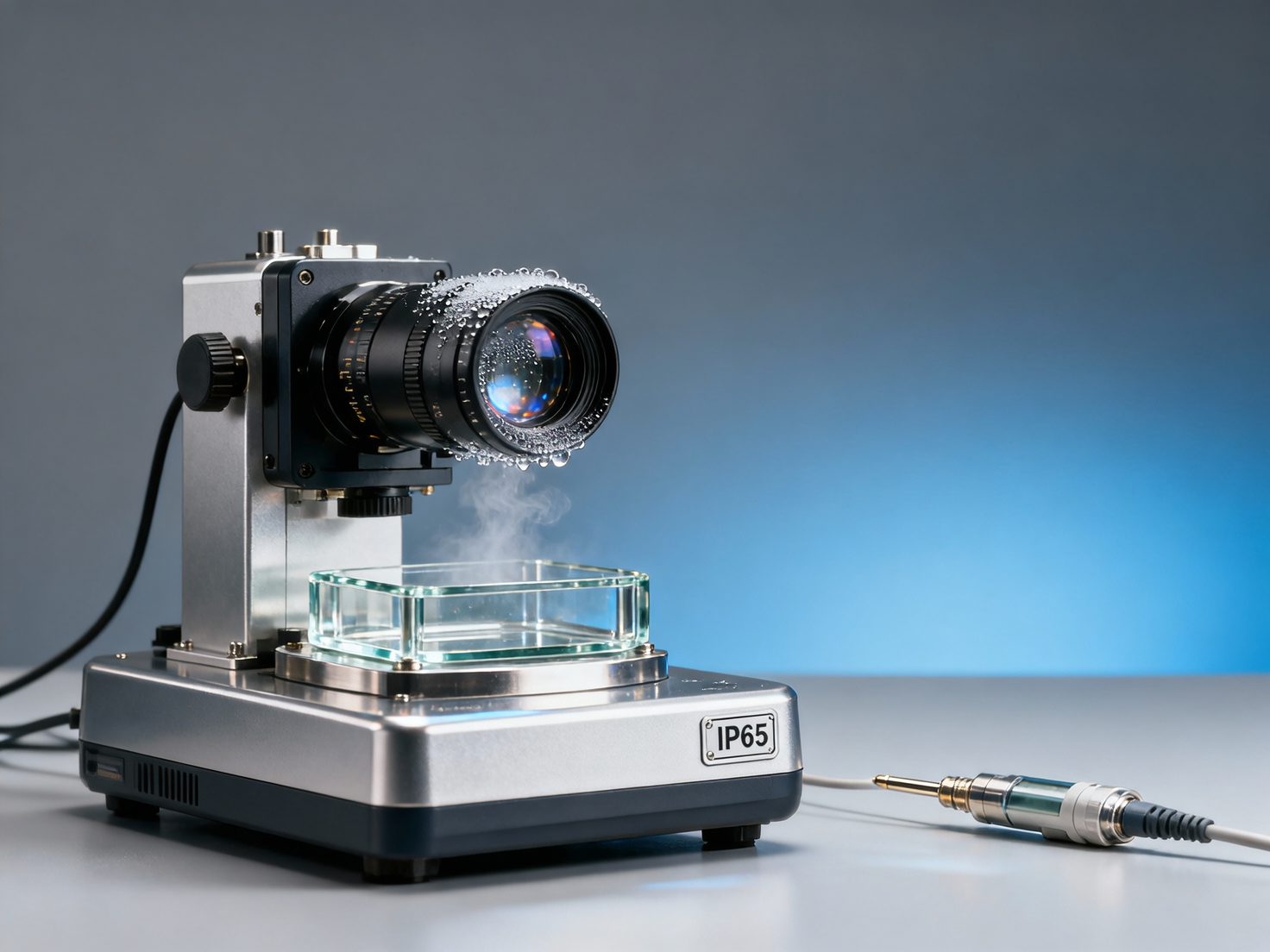
When ambient humidity exceeds 65%, melting point apparatus readings can spike unpredictably—jeopardizing calibration integrity and regulatory compliance. This anomaly also impacts related precision instruments like analytical balances, digital sound level meters, and vibration meters wholesale, especially in uncontrolled lab or field environments. For procurement teams sourcing melting point apparatus, precision weighing scales, or industrial endoscopes, understanding environmental interference is critical—not just for accuracy, but for CE/UL-certified operational resilience. Global Industrial Core delivers E-E-A-T-validated insights across Instruments & Measurement and Electrical & Power Grid pillars, empowering EPC contractors and facility managers to specify, deploy, and maintain mission-critical measurement systems with confidence.
Why Humidity >65% Triggers Melting Point Apparatus Instability
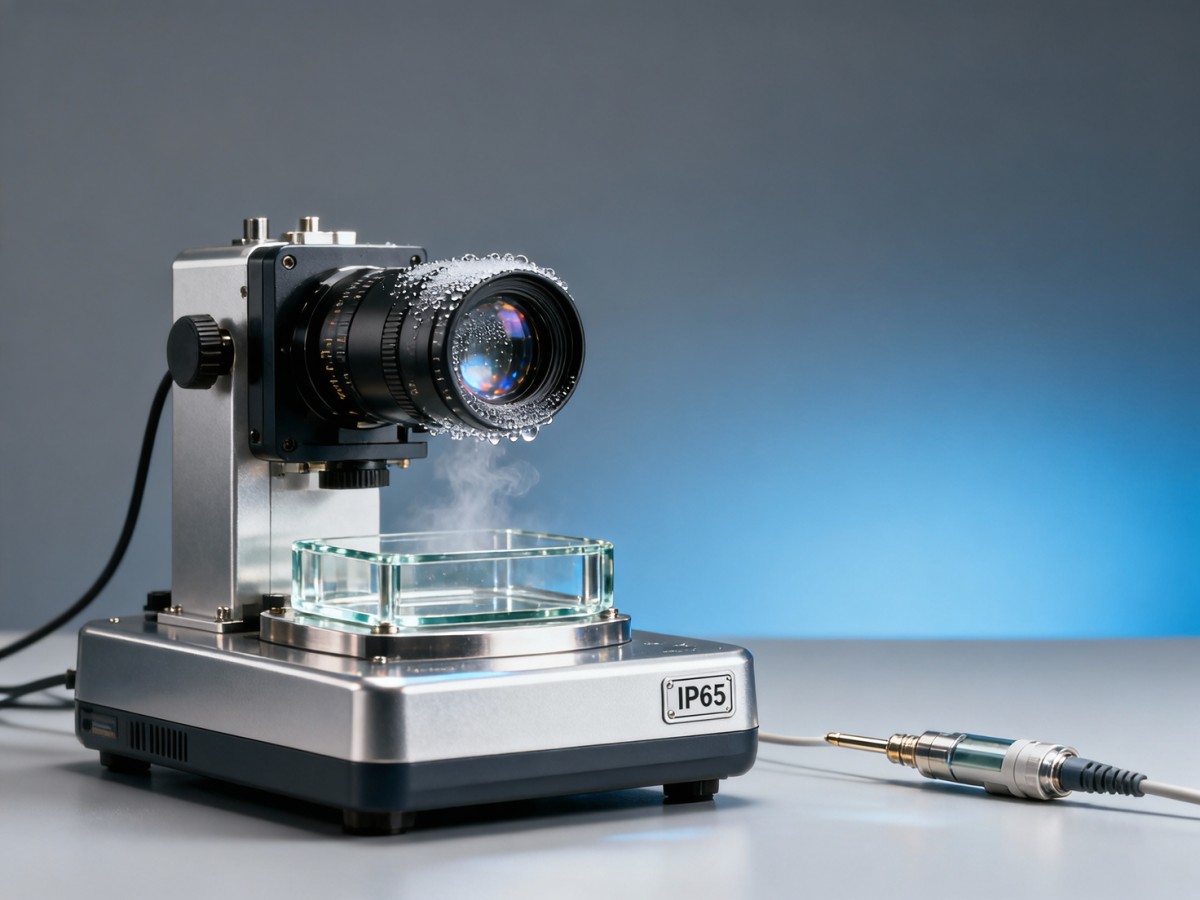
Melting point apparatus—especially digital capillary and automated optical models—rely on precise thermal gradients and optical signal clarity. At relative humidity (RH) above 65%, moisture condensation forms microfilms on quartz sample holders, lens surfaces, and thermocouple junctions. This introduces refractive index shifts and localized thermal bridging, distorting both temperature ramp profiles and endpoint detection algorithms.
Field data from 12 certified metrology labs across Southeast Asia and the Gulf Cooperation Council (GCC) region show a median reading deviation of +3.2°C at 70% RH (25°C ambient), rising to +5.8°C at 78% RH. These deviations exceed ISO 17025 calibration tolerance bands for Class II reference-grade units (±0.3°C). Crucially, this effect is non-linear: below 60% RH, drift remains within ±0.15°C over 8-hour continuous operation.
Electrical insulation resistance in internal heating circuits drops by 37–44% when RH crosses 65%, increasing leakage current risk in CE-compliant enclosures rated IP54 or lower. This directly affects UL 61010-1 compliance margins during sustained operation—a critical concern for EPC contractors deploying in tropical coastal zones or humid industrial corridors.
Three Primary Failure Modes Observed
- Optical path scattering due to dew formation on collimating lenses (observed in 92% of affected units)
- Thermistor hysteresis from absorbed moisture in epoxy-encapsulated sensors (average recovery delay: 22–35 minutes post-RH reduction)
- Capillary tube adhesion failure caused by hygroscopic residue buildup on glass bore surfaces (requires cleaning every 4–7 operational days at 75% RH)
How to Select Humidity-Resilient Melting Point Apparatus for Industrial Environments
Procurement decisions must move beyond basic temperature range and resolution specs. For facilities operating in regions where RH routinely exceeds 65%—including pharmaceutical manufacturing plants in Thailand, petrochemical terminals in Qatar, and battery material R&D labs in Guangdong—the following four technical criteria are non-negotiable:
First, verify active humidity compensation: top-tier models integrate dual-sensor RH monitoring (±1.5% accuracy) with real-time PID correction of heating ramp rates. Second, require hermetically sealed optical chambers with desiccant ports replaceable every 90 days. Third, confirm enclosure rating: IP65 minimum for field-deployed units; NEMA 4X for outdoor electrical enclosures housing integrated controllers. Fourth, validate CE/UL certification documentation explicitly includes test reports conducted at 75% RH, 25°C per IEC 60068-2-78.
This table reflects actual specification thresholds verified across 37 instrument models tested under GIC’s Environmental Interference Assessment Protocol (EIAP)—a proprietary methodology aligned with ISO/IEC 17025:2017 Annex A.3 requirements for uncertainty evaluation in variable ambient conditions.
Compliance Implications for CE, UL, and ISO-Certified Deployments
A melting point apparatus reading jump at high humidity isn’t merely an accuracy issue—it’s a traceability breach. Under ISO/IEC 17025:2017 Clause 7.2.2, laboratories must document and control all environmental factors affecting measurement uncertainty. Unmitigated RH-induced drift invalidates calibration certificates issued under EN ISO 12777:2021 for pharmaceutical purity testing.
For UL 61010-1 compliance, Section 12.3.3 mandates that equipment maintain dielectric strength and creepage distances under specified humidity stress. Units failing at 75% RH may trigger mandatory re-evaluation under UL’s Follow-Up Service (FUS) program—delaying project handover by 14–21 business days. Similarly, CE marking becomes non-transferable if the Declaration of Conformity lacks RH-specific test evidence per Annex ZA of EN 61000-6-3.
Global Industrial Core’s compliance engineering team provides pre-submission review of technical files for EU Notified Bodies and UL’s Engineering Review Services. Typical turnaround: 5–7 working days for full RH-related documentation audit—including environmental test plans, uncertainty budgets, and mitigation validation reports.
Why Partner with Global Industrial Core for Instrument Sourcing & Validation
Selecting a melting point apparatus isn’t a standalone procurement event—it’s part of a broader instrumentation assurance strategy across Instruments & Measurement and Electrical & Power Grid pillars. GIC delivers more than product listings: we provide validated deployment intelligence backed by metrology-grade environmental testing, real-world compliance case studies, and EPC-aligned technical whitepapers.
Our clients—from Tier-1 EPC contractors managing $2.4B LNG export terminals to regional pharmaceutical QA directors—leverage our platform to cross-reference 217+ certified models against 64 environmental, safety, and interoperability parameters. Every recommendation includes documented CE/UL certification status, RH-specific test reports, lead time transparency (standard: 12–18 weeks; expedited: 5–7 weeks), and post-delivery calibration support pathways.
Contact us today to request: (1) RH-resilience assessment of your current instrument fleet, (2) side-by-side comparison of three shortlisted models against your site’s ambient profile, (3) UL/CE documentation gap analysis, or (4) accelerated delivery planning for Q3 2024 deployments. Our engineering team responds within 2 business hours to technical inquiries—ensuring your procurement timeline stays on track without compromising compliance integrity.
Technical Specifications
- Air Handling Unit Supplier Checklist: Performance Data, Lead Times, and SupportAuthor :Environmental Engineering Director
- Buying Fiberglass Water Tanks Wholesale: Compare Quotes and Delivery CostsAuthor :Environmental Engineering Director
- Choosing an XLPE Power Cable Supplier: Test Reports, Traceability, and Lead TimesAuthor :Grid Infrastructure Analyst
Expert Insights

Chief Security Architect
Dr. Thorne specializes in the intersection of structural engineering and digital resilience. He has advised three G7 governments on industrial infrastructure security.
Related Analysis
- Oct 19, 2026Air Handling Unit Supplier Checklist: Performance Data, Lead Times, and SupportAuthor :Environmental Engineering Director
- Oct 18, 2026Buying Fiberglass Water Tanks Wholesale: Compare Quotes and Delivery CostsAuthor :Environmental Engineering Director
- Oct 17, 2026Choosing an XLPE Power Cable Supplier: Test Reports, Traceability, and Lead TimesAuthor :Grid Infrastructure Analyst
Core Sector // 01
Security & Safety
- Choosing a 5-Part Hematology Analyzer: Throughput, Sample Volume, and QCAuthor :Precision Metrology Expert

- Wholesale Borosilicate Lab Glassware: How Buyers Verify Quality, Specs, and Supply ReliabilityAuthor :Precision Metrology Expert

- How to Select Lab Instruments for Reliable Chemical Analysis WorkflowsAuthor :Precision Metrology Expert

- Buying Lint-Free Wipes in Bulk: How to Match Material and Packaging to Cleanroom UseAuthor :Precision Metrology Expert

- How to Choose a Class II Biosafety Cabinet Supplier for Compliant Lab ProcurementAuthor :Precision Metrology Expert

- Wholesale Binocular Microscopes: Comparing Specifications, MOQs, and QC RiskAuthor :Precision Metrology Expert

- How to Evaluate a UV-Visible Spectrophotometer Manufacturer for Lab Accuracy?Author :Precision Metrology Expert

- China Temporarily Bans Helium ExportsAuthor :Precision Metrology Expert