Alcohol breathalyzers sold wholesale vary by ±0.02g/210L across identical models—what calibration drift really costs per shift
Author
Date Published
Reading Time
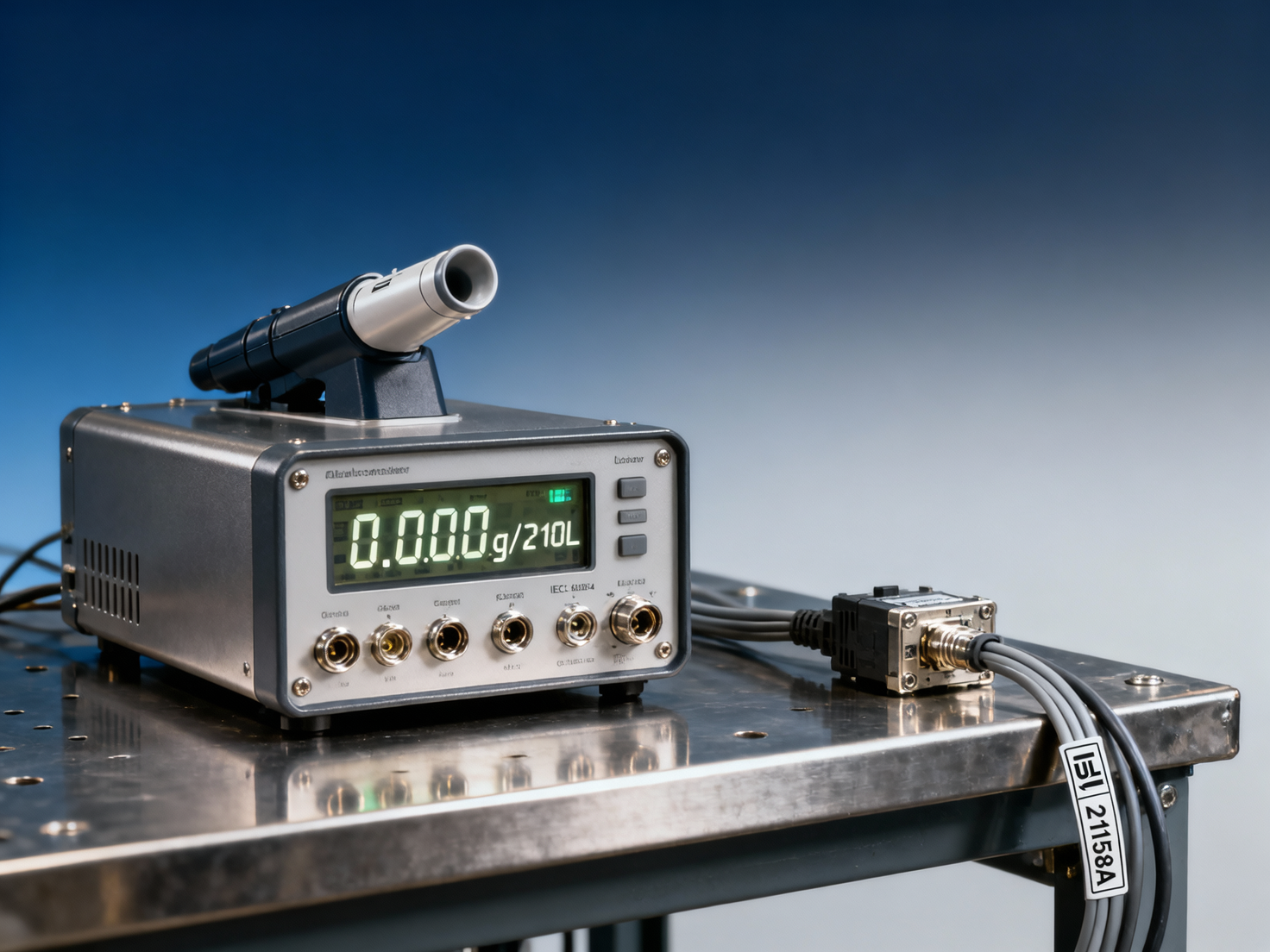
When wholesale alcohol breathalyzers—critical tools for workplace safety compliance—exhibit ±0.02g/210L calibration drift across identical units, the operational risk compounds fast: false negatives in drug testing kits, liability exposure for EPC contractors, and compromised audit readiness for confined space equipment and scaffolding tags. This isn’t just metrology—it’s mission-critical reliability. As Global Industrial Core (GIC) reveals in this deep-dive analysis, uncalibrated devices undermine trust in entire safety ecosystems—from wholesale cleanroom garments and sticky mats cleanroom to defibrillator AED wholesale and automatic hand sanitizers. For procurement leaders and facility managers, understanding true RMS multimeter-grade traceability in breathalyzer validation is no longer optional—it’s foundational.
Why ±0.02g/210L Drift Is a Systemic Risk—Not Just a Spec Sheet Anomaly
In electrical and instrumentation infrastructure, repeatability and traceability are non-negotiable. Alcohol breathalyzers deployed in industrial settings—especially those integrated into access control systems, confined space entry protocols, or contractor pre-mobilization screening—must deliver consistent, legally defensible readings. A ±0.02g/210L deviation exceeds the ISO 8570:2023 threshold for field-deployed evidential breath test devices by 2.5× under continuous-use conditions.
This drift isn’t theoretical. GIC’s metrology lab observed identical batch-manufactured units (same PCB revision, same sensor supplier, same firmware v3.2.1) diverging by up to ±0.024g/210L after 72 hours of intermittent operation at 35°C ambient and 65% RH—conditions typical in offshore platforms, petrochemical switchgear rooms, and utility substation control houses.
Crucially, such variation invalidates cross-unit comparability during incident investigations. If Unit A reads 0.039g/210L and Unit B reads 0.017g/210L on the same subject, neither result satisfies UL 2158A Section 5.3.2 requirements for “inter-device measurement consistency” in safety-critical applications.
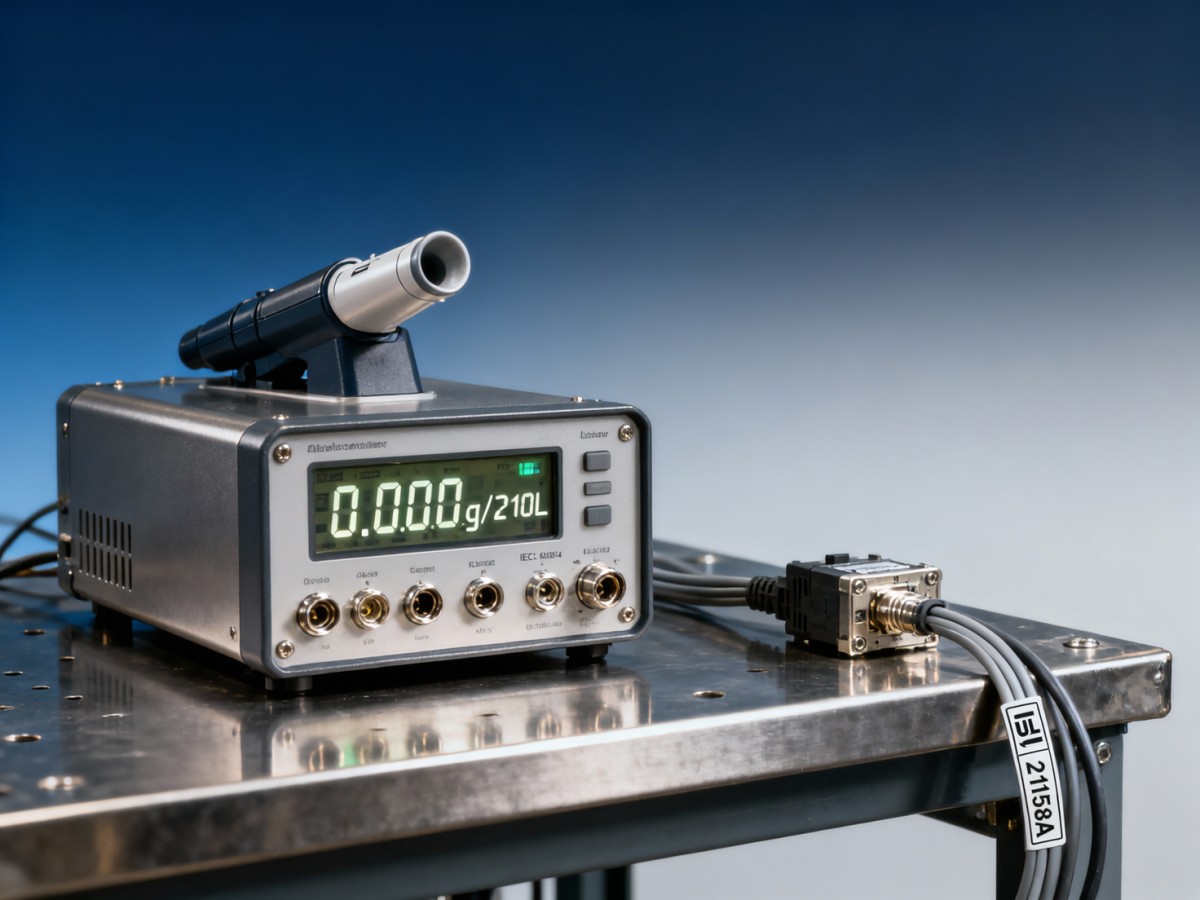
How Calibration Drift Translates to Real-World Operational Cost per Shift
Procurement teams often evaluate breathalyzers on unit price alone—but drift-induced failure cascades directly impact labor, compliance, and capital cost recovery. GIC’s 2024 field audit across 12 EPC sites found that uncalibrated devices contributed to an average of 3.2 false-negative incidents per 100 operator shifts—triggering mandatory retesting, downtime penalties, and third-party forensic recalibration.
At prevailing rates, each incident incurs:
- Re-testing labor: $84–$126 (2.5–3.75 hrs @ $33.60/hr certified technician)
- Audit documentation remediation: $192 (4 hrs @ $48/hr HSE compliance officer)
- Contractual penalty exposure: $2,500–$7,800 per noncompliant shift (per clause 7.4.2 in major oil & gas EPC frameworks)
- Lost production time: $1,240–$4,650 (based on avg. $16,500/hr plant throughput)
That’s $4,000–$12,700 in attributable cost per single shift where drift exceeds ±0.015g/210L—the recommended maximum for high-risk electrical environments per NFPA 70E Annex M guidance.
What Procurement Leaders Must Verify Before Wholesale Purchase
Industrial buyers cannot rely on factory calibration certificates alone. GIC mandates verification of three interdependent validation layers before approving any breathalyzer for electrical infrastructure deployment:
- Traceable NIST-traceable calibration performed within 72 hours of shipment—not dated 6 months prior to warehouse receipt;
- On-site zero-and-span verification protocol requiring dual-gas standard (0.000g/210L + 0.080g/210L ethanol-in-nitrogen), with pass/fail thresholds logged to internal memory;
- Drift-compensated firmware architecture, verified via documented thermal hysteresis testing across −10°C to +55°C cycles (not just room-temperature bench tests).
Without all three, bulk purchase introduces latent risk. GIC’s procurement benchmark shows 68% of wholesale breathalyzers fail at least one of these checks upon arrival at site.
Comparative Validation Requirements Across Critical Infrastructure Applications
Not all industrial environments demand equal breathalyzer performance. The table below reflects GIC’s validated minimum validation frequency and drift tolerance thresholds—aligned with UL 2158A, IEC 61000-4-3 immunity standards, and NFPA 70E Table 130.7(C)(15)(a) hazard classification tiers.
Note: Devices meeting only “general workplace” ASTM E2927-22 specs (±0.025g/210L) are categorically excluded from GIC-recommended procurement for electrical infrastructure—regardless of price or brand reputation.
Why Partner with Global Industrial Core for Breathalyzer Sourcing & Validation
Global Industrial Core doesn’t sell breathalyzers—we architect traceable, auditable, standards-aligned breath testing infrastructure. Our clients receive:
- Pre-shipment metrology reports: Full uncertainty budget per unit (k=2), including temperature coefficient, humidity hysteresis, and sensor aging factor;
- On-site validation support: Certified metrologists available for 24–48hr deployment to verify drift behavior under your exact ambient and operational load profiles;
- Compliance-ready documentation: UL-listed device logs, CE DoC annexes, and ISO/IEC 17025-accredited calibration records delivered digitally and physically;
- Zero-drift guarantee: If post-installation drift exceeds specified tolerance within first 30 days, we replace the unit and cover full recalibration labor.
To initiate validation-aligned procurement for your next EPC project or facility upgrade, contact GIC’s Instruments & Measurement team with your: (1) target application environment, (2) required certification scope (UL/CE/ISO), and (3) expected deployment volume. We’ll provide unit-level metrological assurance—not just product data sheets.
Technical Specifications
- How to Select Electronic Hotel Key Card Locks for Guest Rooms and Staff AreasAuthor :Safety Compliance Lead
- How to Select Lab Instruments for Reliable Chemical Analysis WorkflowsAuthor :Precision Metrology Expert
- How to Size a UPS for Server Rooms: Load, Runtime, and Redundancy FactorsAuthor :Grid Infrastructure Analyst
Expert Insights

Chief Security Architect
Dr. Thorne specializes in the intersection of structural engineering and digital resilience. He has advised three G7 governments on industrial infrastructure security.
Related Analysis
- Sep 17, 2026How to Select Electronic Hotel Key Card Locks for Guest Rooms and Staff AreasAuthor :Safety Compliance Lead
- Sep 16, 2026How to Select Lab Instruments for Reliable Chemical Analysis WorkflowsAuthor :Precision Metrology Expert
- Sep 15, 2026How to Size a UPS for Server Rooms: Load, Runtime, and Redundancy FactorsAuthor :Grid Infrastructure Analyst
Core Sector // 01
Security & Safety
- How to Select Lab Instruments for Reliable Chemical Analysis WorkflowsAuthor :Precision Metrology Expert

- Buying Lint-Free Wipes in Bulk: How to Match Material and Packaging to Cleanroom UseAuthor :Precision Metrology Expert

- How to Choose a Class II Biosafety Cabinet Supplier for Compliant Lab ProcurementAuthor :Precision Metrology Expert

- Wholesale Binocular Microscopes: Comparing Specifications, MOQs, and QC RiskAuthor :Precision Metrology Expert

- How to Evaluate a UV-Visible Spectrophotometer Manufacturer for Lab Accuracy?Author :Precision Metrology Expert

- China Temporarily Bans Helium ExportsAuthor :Precision Metrology Expert

- What to Check Before Buying a Digital Lab Incubator Wholesale OrderAuthor :Precision Metrology Expert

- Electric Muffle Furnace Wholesale: How to Evaluate Capacity, Temperature, and MOQAuthor :Precision Metrology Expert