How to compare an Instruments & Measurement supplier on service
Author
Date Published
Reading Time

Choosing the right Instruments & Measurement supplier is not only about product specifications or price sheets. In industrial environments, service quality often determines whether a minor issue becomes a short interruption or a prolonged shutdown. Calibration turnaround, troubleshooting speed, spare parts access, documentation accuracy, and technical communication all influence uptime, compliance, and operational safety. This guide explains how to compare an Instruments & Measurement supplier on service, using practical questions and decision criteria that support better sourcing outcomes across complex industrial operations.
What service factors matter most when comparing an Instruments & Measurement supplier?
The first step is to define service beyond basic responsiveness. A strong Instruments & Measurement supplier should support the full lifecycle of the equipment: pre-sales application advice, installation guidance, commissioning support, calibration services, repair handling, software or firmware updates, and end-of-life transition planning. In sectors where measurement accuracy affects product quality, energy performance, emissions control, or personnel safety, service must be viewed as part of the technical solution.
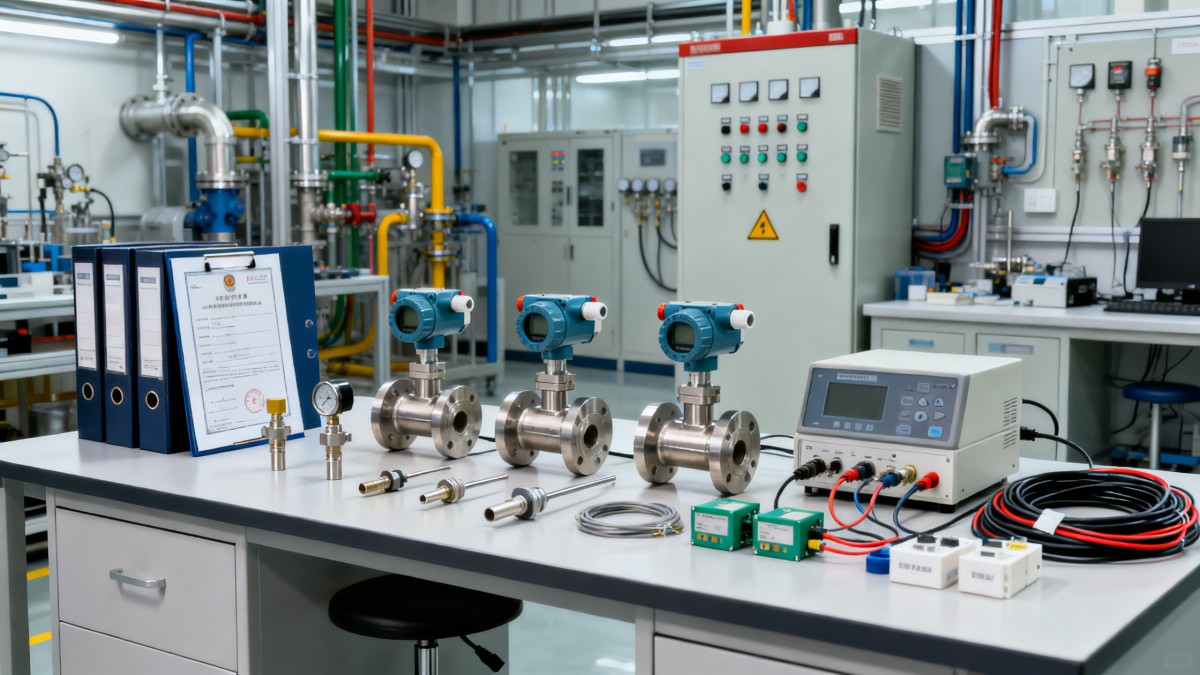
Core service indicators usually include response time, first-contact resolution rate, field support availability, calibration traceability, and the clarity of technical documentation. It is also useful to check whether the supplier can support multiple product families, such as pressure instruments, flow meters, temperature sensors, analyzers, transmitters, and control accessories. If one Instruments & Measurement supplier can coordinate support across a wider installed base, internal service complexity is reduced.
Another important factor is how the supplier handles urgent cases. Industrial service quality is not proven during routine orders; it is proven when a reading drifts out of tolerance before an audit, a sensor fails during commissioning, or a replacement part is needed during a maintenance window. Ask for examples of emergency escalation processes, local stock arrangements, and average repair lead times rather than relying on general promises.
How can service response and technical support be evaluated before purchase?
Service performance can be assessed before placing a large order. One practical method is to evaluate the supplier during the quotation and technical clarification stage. A reliable Instruments & Measurement supplier usually asks detailed application questions: process media, pressure range, ambient conditions, hazardous area classification, required accuracy, communication protocol, mounting limitations, and maintenance intervals. Suppliers that ask precise questions are often better prepared to provide accurate support later.
You can also test responsiveness with a structured comparison. Send the same technical inquiry to several suppliers and measure how quickly they reply, whether they provide a complete answer, and whether they identify application risks. Fast replies are useful, but quality matters more than speed alone. A short answer that ignores calibration intervals, ingress protection, or certification requirements may create future problems.
Technical support should also be judged by accessibility. Consider the following checkpoints:
- Is support available by email, phone, and live remote session?
- Are response commitments documented in a service-level agreement?
- Can the Instruments & Measurement supplier provide local or regional engineers?
- Are manuals, certificates, and troubleshooting guides easy to obtain?
- Can the supplier support integration with PLC, DCS, SCADA, or data logging systems?
If possible, request a sample support workflow for calibration drift, warranty claims, and replacement unit dispatch. This reveals whether the supplier has a real service system or only a sales front end.
Why do calibration, documentation, and compliance support matter so much?
In industrial measurement, service quality is closely tied to evidence. A capable Instruments & Measurement supplier should provide calibration certificates, traceability details, material certificates where required, and clear records of repair or adjustment history. This is essential not only for quality systems but also for audits, regulatory inspections, and root-cause investigations.
Calibration support should be reviewed in detail. Key questions include whether calibration is performed in-house or outsourced, whether traceability aligns with recognized standards, and how turnaround times are managed for critical instruments. In some operations, an annual calibration cycle may be sufficient; in others, tighter intervals are needed because measurement drift can affect batch consistency, energy efficiency, or environmental reporting.
Documentation quality also reflects operational maturity. A dependable Instruments & Measurement supplier provides datasheets that match the delivered configuration, serial number traceability, installation instructions, wiring diagrams, and guidance for storage and handling. Poor documentation often creates hidden costs during commissioning and maintenance, especially when multiple contractors or service teams are involved.
Compliance support matters in global projects as well. If installations require CE, UL, ISO-related quality evidence, hazardous area approvals, or environmental performance declarations, the supplier should be able to provide these documents promptly and accurately. Delays in compliance paperwork can postpone startup even when equipment is physically on site.
How should spare parts, repair capability, and lifecycle support be compared?
A low purchase price can become expensive if replacement probes, seals, transmitters, display modules, or communication boards are hard to source. That is why lifecycle support is a major differentiator for any Instruments & Measurement supplier. The best suppliers do not simply sell instruments; they maintain continuity across years of operation.
Start by asking about spare parts policy. Are common wear items stocked regionally? Are emergency shipments possible? How long will the current model remain supported? If a product line is discontinued, is there a documented migration path to a compatible replacement? These questions are especially important for plants that standardize on a limited number of instrument platforms.
Repair capability should also be separated into levels. Some suppliers can only replace units, while others can diagnose down to board or component level. A stronger Instruments & Measurement supplier often offers bench testing, repair reports, recalibration, and post-repair verification. This can reduce both downtime and total replacement cost.
What common mistakes lead to poor supplier service outcomes?
One frequent mistake is evaluating only catalog performance and ignoring support structure. An instrument may meet range, accuracy, and communication requirements, yet still create operational friction if the Instruments & Measurement supplier lacks local service capability or does not manage warranty claims efficiently.
Another mistake is assuming all authorized channels provide the same service level. Even when product quality is consistent, support quality may vary by distributor, region, or service partner. It is wise to verify who will actually perform calibration, startup support, and repairs.
A third issue is failing to define expectations in writing. If response times, documentation needs, training scope, and replacement procedures are not clarified before purchase, service disputes become harder to resolve. A professional Instruments & Measurement supplier should be comfortable documenting deliverables, escalation routes, and warranty boundaries.
There is also risk in overlooking application fit. Service problems often begin with incorrect selection rather than poor after-sales behavior. For example, a sensor chosen without considering washdown exposure, vibration, chemical compatibility, or electromagnetic interference may fail early. The supplier’s ability to challenge assumptions and recommend a more suitable configuration is therefore part of service quality.
How can suppliers be scored in a practical and repeatable way?
A structured scorecard makes comparison more objective. Instead of relying on general impressions, assign weighted scores to the service categories that matter most for the site or project. This is especially useful when comparing more than one Instruments & Measurement supplier across different product families or regions.
A practical scoring model may include technical response quality, calibration capability, document accuracy, spare parts availability, repair lead time, compliance support, training resources, and escalation handling. Weight each category according to operational risk. For example, calibration traceability may deserve a higher weight in regulated environments, while spare parts access may rank highest in remote facilities.
When possible, validate the scoring model with real references, service records, or a pilot order. The most suitable Instruments & Measurement supplier is rarely the one with the lowest unit price alone; it is the one that consistently lowers operational uncertainty.
Comparing an Instruments & Measurement supplier on service means looking at the real support system behind the product: response speed, application knowledge, calibration discipline, repair capability, documentation quality, and lifecycle continuity. A careful review of these factors helps prevent downtime, protects compliance, and improves long-term reliability. For the next step, build a service scorecard, test suppliers with a technical inquiry, and request written evidence for calibration, spare parts, and escalation support before final selection. That approach turns supplier comparison into a measurable decision rather than a guess.
Technical Specifications
- How to Select an Emissions Monitoring System Analyzer for Compliance ReportingAuthor :Precision Metrology Expert
- How to Select an Access Control Management System for Multi-Site FacilitiesAuthor :Safety Compliance Lead
- Portable Gas Monitor Calibration: How Often Is It Needed for Safe Confined-Space Work?Author :Precision Metrology Expert
Expert Insights

Chief Security Architect
Dr. Thorne specializes in the intersection of structural engineering and digital resilience. He has advised three G7 governments on industrial infrastructure security.
Related Analysis
- Sep 21, 2026How to Select an Emissions Monitoring System Analyzer for Compliance ReportingAuthor :Precision Metrology Expert
- Sep 20, 2026How to Select an Access Control Management System for Multi-Site FacilitiesAuthor :Safety Compliance Lead
- Sep 19, 2026Portable Gas Monitor Calibration: How Often Is It Needed for Safe Confined-Space Work?Author :Precision Metrology Expert
Core Sector // 01
Security & Safety
- Wholesale Borosilicate Lab Glassware: How Buyers Verify Quality, Specs, and Supply ReliabilityAuthor :Precision Metrology Expert

- How to Select Lab Instruments for Reliable Chemical Analysis WorkflowsAuthor :Precision Metrology Expert

- Buying Lint-Free Wipes in Bulk: How to Match Material and Packaging to Cleanroom UseAuthor :Precision Metrology Expert

- How to Choose a Class II Biosafety Cabinet Supplier for Compliant Lab ProcurementAuthor :Precision Metrology Expert

- Wholesale Binocular Microscopes: Comparing Specifications, MOQs, and QC RiskAuthor :Precision Metrology Expert

- How to Evaluate a UV-Visible Spectrophotometer Manufacturer for Lab Accuracy?Author :Precision Metrology Expert

- China Temporarily Bans Helium ExportsAuthor :Precision Metrology Expert

- What to Check Before Buying a Digital Lab Incubator Wholesale OrderAuthor :Precision Metrology Expert