FDA Updates Water Monitor Guidance: eSTAR Compliance Required
Author
Date Published
Reading Time
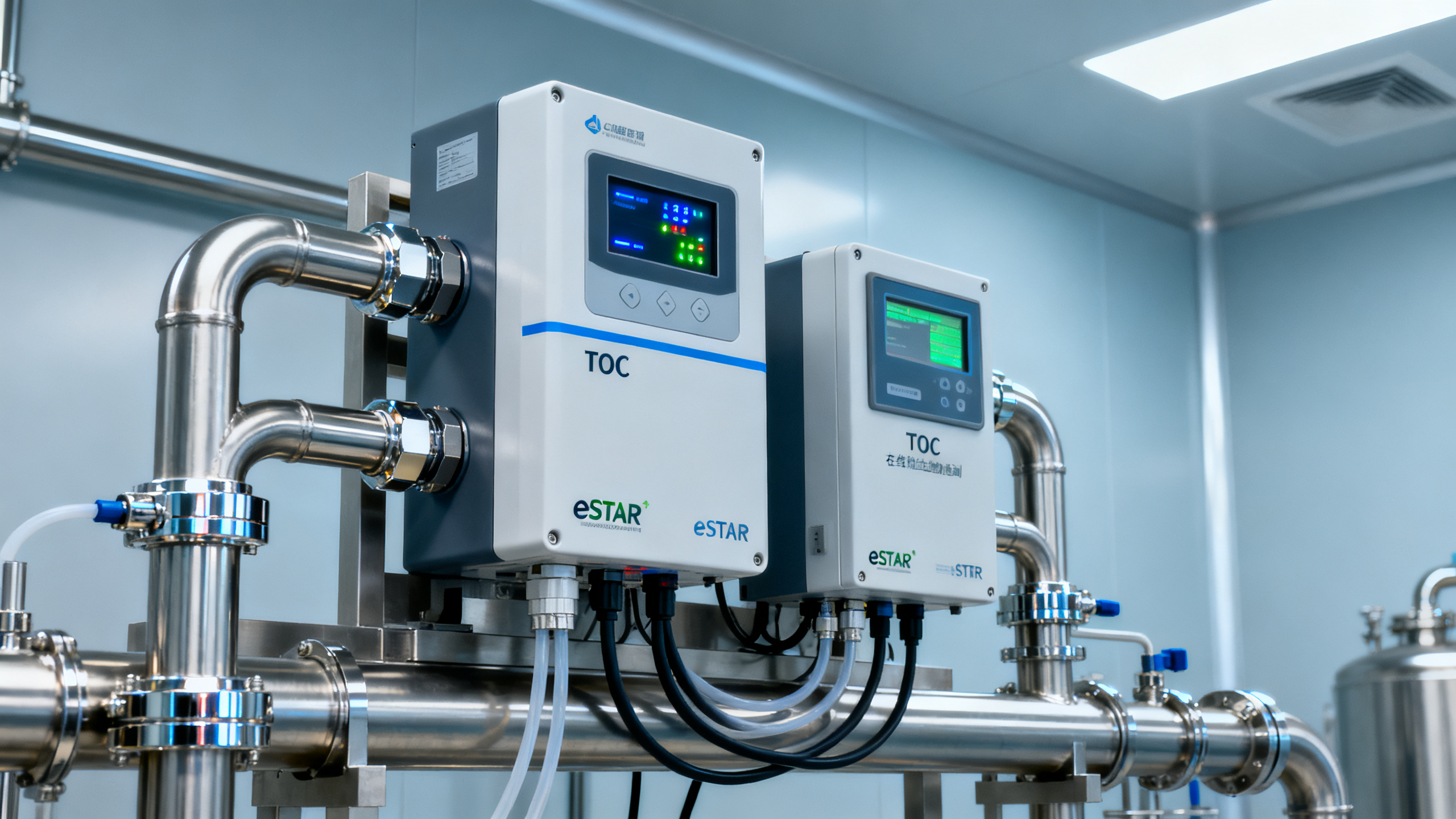
FDA updated its premarket notification guidance for industrial water monitoring devices on May 7, 2026 — impacting pharmaceutical and medical device manufacturers, as well as Chinese exporters of lab and analytics instrumentation. This change mandates eSTAR-compatible firmware for TOC, conductivity, and online microbial analyzers used in regulated production environments, making it a critical compliance milestone for global supply chains.
Event Overview
On May 7, 2026, the U.S. Food and Drug Administration (FDA) issued an updated version of its Guidance for Industry: Premarket Notification (510(k)) Submissions for Industrial Water Safety Monitoring Devices. The update specifies that, effective November 1, 2026, all industrial water monitoring instruments intended for use in pharmaceutical or medical device manufacturing — including total organic carbon (TOC), conductivity, and online microbial detection systems — must be equipped with FDA eSTAR-compatible embedded firmware. Such devices must automatically upload calibration logs, alarm records, and audit trail data to the FDA’s eSTAR electronic submission platform. The guidance explicitly states that Chinese manufacturers supplying these devices to the U.S. market must upgrade their embedded software architecture accordingly.
Industries Affected
Direct Exporters (U.S.-bound Lab & Analytics Equipment Manufacturers)
Chinese manufacturers exporting TOC analyzers, conductivity meters, or online microbial monitors to the U.S. are directly subject to the requirement. Non-compliant devices will fail 510(k) clearance or De Novo classification submissions after November 1, 2026, blocking market access.
Contract Manufacturing Organizations (CMOs) and Contract Development & Manufacturing Organizations (CDMOs)
CMOs/CDMOs operating in the U.S. or serving U.S.-registered facilities must verify that newly procured or upgraded water monitoring systems meet the eSTAR data transmission and audit trail requirements. Legacy equipment without compatible firmware may require replacement or retrofitting to maintain FDA audit readiness.
Pharmaceutical and Medical Device Production Facilities
Facilities relying on third-party water monitoring hardware must ensure vendor-provided devices support automated eSTAR uploads — especially for calibration and alarm events. This affects validation documentation, quality system procedures, and ongoing compliance with 21 CFR Part 11 and Annex 11 expectations.
Embedded Software and Firmware Development Providers
Suppliers supporting Chinese OEMs’ firmware development — particularly those handling secure data logging, cryptographic signing of audit trails, or eSTAR API integration — face increased demand for FDA-aligned design controls and verification protocols.
What Stakeholders Should Monitor and Do Now
Track official FDA communications and eSTAR technical specifications
The FDA has not yet published detailed eSTAR API documentation or firmware certification criteria for water monitoring devices. Stakeholders should monitor the FDA’s eSTAR Resource Page and upcoming industry webinars for implementation clarifications — especially regarding data schema, encryption standards, and audit trail formatting.
Identify affected product lines and assess firmware upgrade feasibility
Manufacturers should inventory all models destined for U.S. pharmaceutical or medical device markets and evaluate whether existing embedded platforms support over-the-air (OTA) updates, secure time-stamping, and structured data export. Hardware-level limitations may necessitate redesign timelines exceeding six months.
Distinguish between regulatory signal and enforceable requirement
This guidance is non-binding but reflects FDA’s current enforcement expectations. While formal rulemaking is not indicated, FDA consistently cites guidance-aligned practices during inspections. Firms should treat the November 1, 2026 date as operationally binding for new submissions — not merely aspirational.
Engage with U.S. regulatory consultants and notified body partners early
Pre-submission consultations with FDA or qualified third parties can help validate firmware architecture against eSTAR interoperability expectations. Early engagement reduces risk of rejection due to incomplete audit trail coverage or non-standard data fields.
Editorial Perspective / Industry Observation
Observably, this update signals FDA’s broader shift toward real-time, interoperable quality data infrastructure — extending beyond legacy paper-based or siloed digital records. It does not introduce new safety thresholds or analytical performance criteria; rather, it standardizes *how* compliance evidence is generated and submitted. Analysis shows the requirement targets traceability and system integrity, not measurement accuracy per se. From an industry perspective, this is less a discrete compliance deadline and more a structural inflection point: future FDA digital health and quality system initiatives are likely to build upon this same eSTAR-integrated architecture. Continued monitoring is warranted — especially for potential extensions to other process analyzers (e.g., pH, dissolved oxygen) in subsequent guidance revisions.
This is not yet a final rule, nor does it carry immediate penalties for noncompliance prior to November 2026. However, its alignment with FDA’s 2024–2027 Digital Health Center of Excellence roadmap suggests it represents a durable operational expectation — one that suppliers and users alike should treat as foundational to long-term U.S. market access.
Conclusion
The May 2026 FDA guidance update formalizes a procedural shift — from static device validation to dynamic, platform-connected quality assurance. Its significance lies not in technical novelty, but in its mandate for seamless, auditable data exchange between industrial instrumentation and FDA’s central review infrastructure. For stakeholders, this is best understood not as a one-off compliance task, but as an early indicator of how regulatory oversight will increasingly depend on interoperable digital systems — beginning with water monitoring, and likely expanding across the manufacturing quality ecosystem.
Source Attribution
Main source: U.S. Food and Drug Administration, Guidance for Industry: Premarket Notification (510(k)) Submissions for Industrial Water Safety Monitoring Devices, updated May 7, 2026. Available at: https://www.fda.gov/medical-devices/510k-clearance/guidance-industry-premarket-notification-submissions-industrial-water-safety-monitoring-devices
Note: Technical implementation details — including eSTAR API specifications, firmware certification pathways, and transitional provisions — remain pending publication and are under active observation.
Technical Specifications
- How to Select an Emissions Monitoring System Analyzer for Compliance ReportingAuthor :Precision Metrology Expert
- How to Select an Access Control Management System for Multi-Site FacilitiesAuthor :Safety Compliance Lead
- Portable Gas Monitor Calibration: How Often Is It Needed for Safe Confined-Space Work?Author :Precision Metrology Expert
Expert Insights

Chief Security Architect
Dr. Thorne specializes in the intersection of structural engineering and digital resilience. He has advised three G7 governments on industrial infrastructure security.
Related Analysis
- Sep 21, 2026How to Select an Emissions Monitoring System Analyzer for Compliance ReportingAuthor :Precision Metrology Expert
- Sep 20, 2026How to Select an Access Control Management System for Multi-Site FacilitiesAuthor :Safety Compliance Lead
- Sep 19, 2026Portable Gas Monitor Calibration: How Often Is It Needed for Safe Confined-Space Work?Author :Precision Metrology Expert
Core Sector // 01
Security & Safety
- Wholesale Borosilicate Lab Glassware: How Buyers Verify Quality, Specs, and Supply ReliabilityAuthor :Precision Metrology Expert

- How to Select Lab Instruments for Reliable Chemical Analysis WorkflowsAuthor :Precision Metrology Expert

- Buying Lint-Free Wipes in Bulk: How to Match Material and Packaging to Cleanroom UseAuthor :Precision Metrology Expert

- How to Choose a Class II Biosafety Cabinet Supplier for Compliant Lab ProcurementAuthor :Precision Metrology Expert

- Wholesale Binocular Microscopes: Comparing Specifications, MOQs, and QC RiskAuthor :Precision Metrology Expert

- How to Evaluate a UV-Visible Spectrophotometer Manufacturer for Lab Accuracy?Author :Precision Metrology Expert

- China Temporarily Bans Helium ExportsAuthor :Precision Metrology Expert

- What to Check Before Buying a Digital Lab Incubator Wholesale OrderAuthor :Precision Metrology Expert