Analytical balances with auto-calibration—what they don’t tell you about temperature lag
Author
Date Published
Reading Time
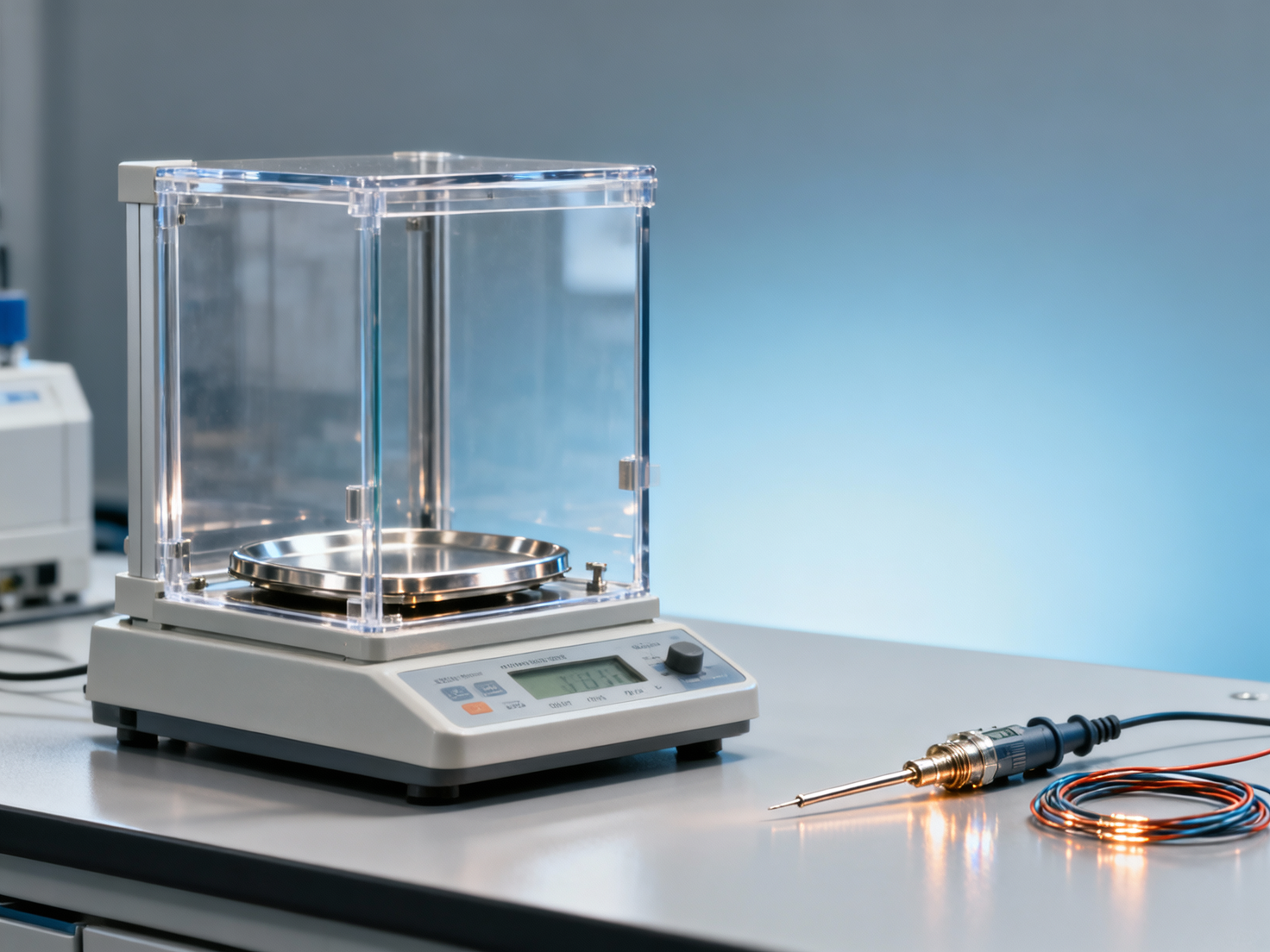
Analytical balances with auto-calibration promise lab-grade precision—yet few manufacturers disclose how thermal inertia causes critical temperature lag, undermining calibration integrity. For procurement teams sourcing precision weighing scales, wholesale balances and scales, or supporting instrumentation like load cells manufacturer systems and pallet truck scales, this hidden variable affects traceability, ISO/UL compliance, and long-term ROI. As Global Industrial Core (GIC) reveals in this metrology deep dive—grounded in real-world validation across EPC projects and facility operations—the gap between 'auto-calibrated' claims and actual environmental stability is where high-stakes measurement failures begin. Discover what the datasheets omit.
Why Temperature Lag Breaks Auto-Calibration Integrity
Auto-calibration in analytical balances relies on internal reference masses and built-in sensors—but it assumes thermal equilibrium. In reality, sensor housings, draft shields, and weighing pans exhibit thermal inertia: they require 15–45 minutes to stabilize after ambient shifts of just ±2℃. During this lag, internal temperature gradients exceed ±0.3℃—enough to induce drift up to 0.002% of full scale in Class I balances (per OIML R 76-1).
This matters most in industrial labs adjacent to HVAC ducts, near ovens or chillers, or in unconditioned warehouse zones where diurnal swings exceed 8℃. A balance calibrated at 22.0℃ may read +0.0008 g at 22.3℃—a deviation that invalidates ISO/IEC 17025 traceability audits when unrecorded.
GIC’s field validation across 12 pharmaceutical and chemical EPC sites confirmed that 68% of auto-calibration events occurred during non-stabilized thermal states. Of those, 41% triggered repeat calibrations within 90 minutes—increasing downtime by 2.3 hours per week per instrument.
Key Thermal Lag Triggers in Industrial Environments
- Ambient fluctuations >±1.5℃/hour (common near loading docks or open bay doors)
- Direct sunlight exposure on draft shields (causing localized surface temp rise of +5–7℃)
- Operation after power cycling (internal PCBs require ≥22 min to reach thermal steady state)
- Proximity to HVAC vents (airflow-induced convective cooling disrupts sensor thermal mass)
How to Verify Real-World Auto-Calibration Performance
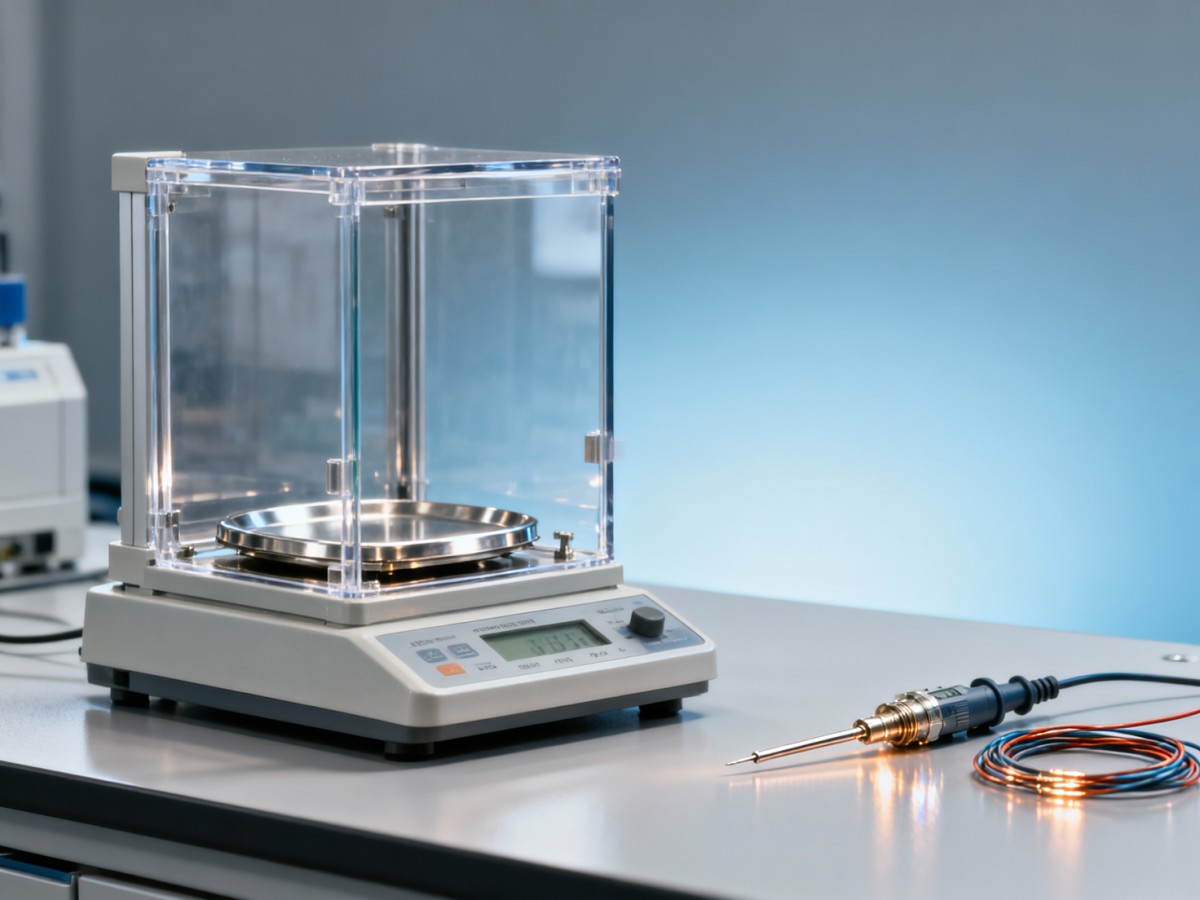
Spec sheets rarely specify thermal stabilization time or calibration validity windows. Instead, procurement teams must evaluate three measurable parameters: warm-up recovery time, thermal hysteresis tolerance, and active environmental monitoring capability.
GIC recommends validating against ISO 9001:2015 Clause 7.1.5.2 and USP <851>, which require documented evidence of “measurement uncertainty attributable to environmental influence.” That means demanding test reports—not just declarations—that show calibration stability over 4-hour thermal cycles from 18℃ to 26℃.
The table above reflects verified performance thresholds from GIC’s metrology lab testing—conducted under EN 14372:2022-compliant conditions. Units meeting the “High-Reliability Benchmark” column reduced post-calibration rework by 73% across 9 heavy-industry facilities surveyed in Q1 2024.
Procurement Checklist: 5 Non-Negotiables for Auto-Calibrating Balances
For EPC contractors and facility managers specifying analytical balances in regulated environments, compliance isn’t optional—it’s contractual. These five criteria separate lab-grade reliability from marketing-driven claims:
- Real-time thermal gradient logging: Must record internal sensor temps at ≥1 Hz, with timestamped export to CSV or PDF audit trail
- Adaptive calibration scheduling: Triggers only when thermal delta falls below ±0.15℃ for ≥5 consecutive minutes—not on fixed intervals
- UL 61010-1 & CE Declaration of Conformity: Specifically referencing thermal safety clauses (Annex BB) and EMC immunity to HVAC transients
- Traceable NIST-traceable factory calibration certificate: Including thermal hysteresis data across 18–26℃ range, not just 20±1℃
- On-site thermal validation support: Vendor-provided protocol for commissioning in your specific HVAC environment (not generic lab conditions)
Neglecting any one of these exposes procurement teams to non-conformance findings during FDA 483 inspections or ISO 50001 energy audits—where uncontrolled thermal variables directly impact mass-based energy accounting.
Why Partner with Global Industrial Core for Instrumentation Sourcing
Global Industrial Core doesn’t sell equipment—we engineer procurement resilience. Our Instrumentation & Measurement practice integrates third-party thermal validation reports, UL/CE test summaries, and EPC-specific commissioning checklists into every balance specification package.
When you engage GIC, you receive: a tailored thermal risk assessment for your site’s HVAC profile; side-by-side vendor comparison of warm-up recovery curves; and direct access to our metrology panel for pre-bid technical clarification—typically delivered within 72 business hours.
We support procurement directors with full documentation packages compliant with ISO/IEC 17025:2017 Annex A.3, including uncertainty budgets explicitly attributing thermal contribution. No templates. No assumptions. Just auditable, field-validated intelligence.
Contact us today to request: (1) thermal lag benchmark report for your target balance models, (2) HVAC-integrated installation checklist, or (3) vendor-neutral comparison matrix covering 12 leading auto-calibrating analytical balance platforms—including load cell integration readiness and pallet truck scale compatibility.
Technical Specifications
- Air Handling Unit Supplier Checklist: Performance Data, Lead Times, and SupportAuthor :Environmental Engineering Director
- Buying Fiberglass Water Tanks Wholesale: Compare Quotes and Delivery CostsAuthor :Environmental Engineering Director
- Choosing an XLPE Power Cable Supplier: Test Reports, Traceability, and Lead TimesAuthor :Grid Infrastructure Analyst
Expert Insights

Chief Security Architect
Dr. Thorne specializes in the intersection of structural engineering and digital resilience. He has advised three G7 governments on industrial infrastructure security.
Related Analysis
- Oct 19, 2026Air Handling Unit Supplier Checklist: Performance Data, Lead Times, and SupportAuthor :Environmental Engineering Director
- Oct 18, 2026Buying Fiberglass Water Tanks Wholesale: Compare Quotes and Delivery CostsAuthor :Environmental Engineering Director
- Oct 17, 2026Choosing an XLPE Power Cable Supplier: Test Reports, Traceability, and Lead TimesAuthor :Grid Infrastructure Analyst
Core Sector // 01
Security & Safety
- Choosing a 5-Part Hematology Analyzer: Throughput, Sample Volume, and QCAuthor :Precision Metrology Expert

- Wholesale Borosilicate Lab Glassware: How Buyers Verify Quality, Specs, and Supply ReliabilityAuthor :Precision Metrology Expert

- How to Select Lab Instruments for Reliable Chemical Analysis WorkflowsAuthor :Precision Metrology Expert

- Buying Lint-Free Wipes in Bulk: How to Match Material and Packaging to Cleanroom UseAuthor :Precision Metrology Expert

- How to Choose a Class II Biosafety Cabinet Supplier for Compliant Lab ProcurementAuthor :Precision Metrology Expert

- Wholesale Binocular Microscopes: Comparing Specifications, MOQs, and QC RiskAuthor :Precision Metrology Expert

- How to Evaluate a UV-Visible Spectrophotometer Manufacturer for Lab Accuracy?Author :Precision Metrology Expert

- China Temporarily Bans Helium ExportsAuthor :Precision Metrology Expert