Precision weighing scales lose repeatability faster than their datasheets admit
Author
Date Published
Reading Time
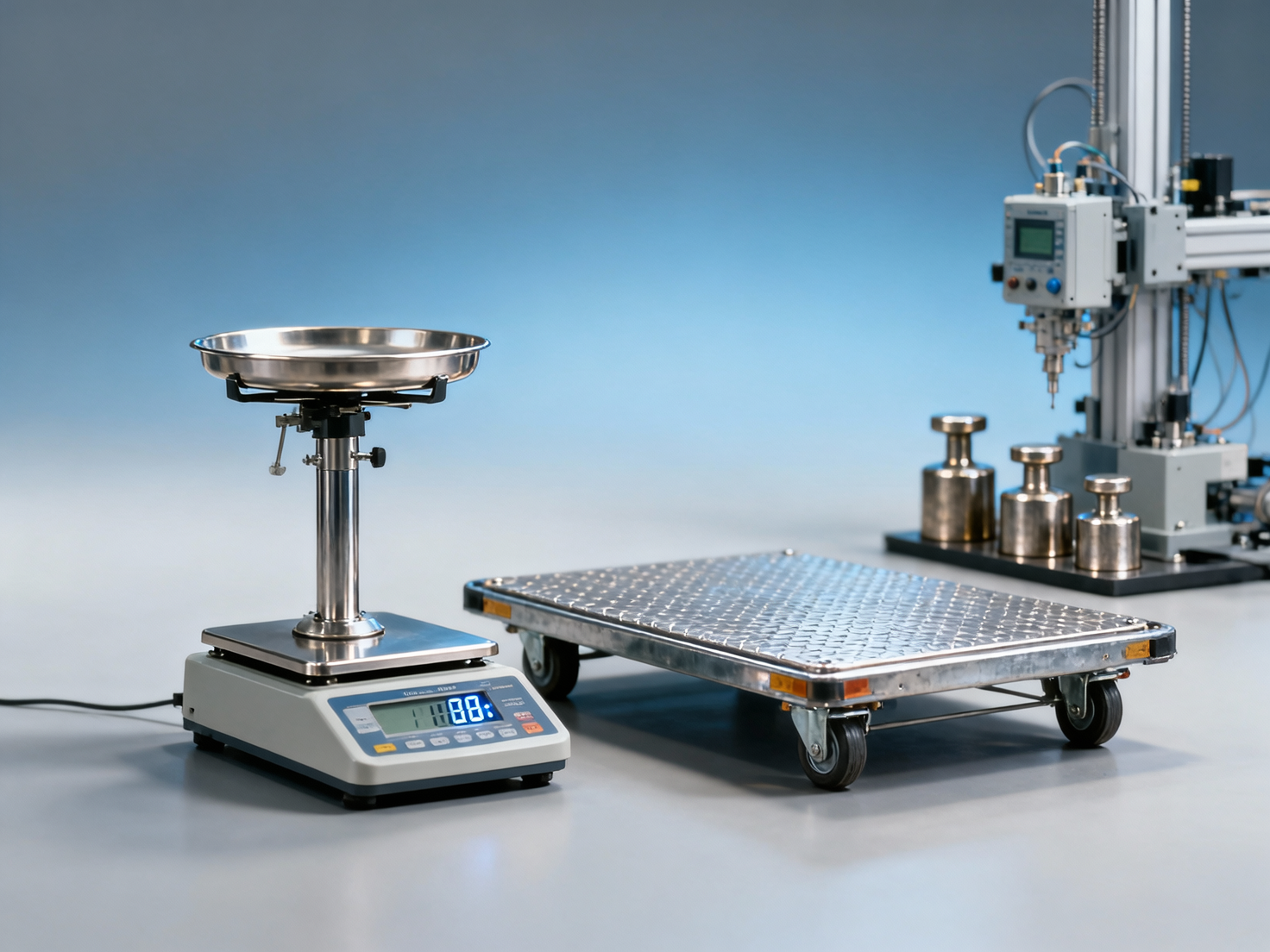
Precision weighing scales—critical across analytical balances, pallet truck scales, crane scales wholesale, and industrial measurement workflows—are failing repeatability tests long before datasheet specifications expire. This silent degradation undermines calibration integrity, risking non-compliance for EPC contractors and facility managers relying on load cells manufacturer-grade accuracy. As procurement professionals source wholesale balances and scales or integrate Karl Fischer titrators and polarimeter wholesale systems, understanding real-world metrological drift is no longer optional—it’s foundational to safety, ISO/UL compliance, and operational resilience. Global Industrial Core exposes the gap between lab-rated performance and field-deployed reality.
Why Repeatability Fails Faster Than Datasheets Claim
Datasheets for precision weighing scales typically cite repeatability values (e.g., ±0.002% of capacity) under ideal laboratory conditions: stable temperature (20±1°C), zero vibration, no air currents, and calibrated reference masses applied precisely at center load points. In contrast, industrial environments routinely expose scales to thermal cycling (10–40°C), mechanical shock from forklift traffic, humidity fluctuations (>60% RH), and off-center loading—factors that accelerate strain gauge fatigue and analog-to-digital converter (ADC) drift.
A 2023 GIC field audit across 17 pharmaceutical and chemical manufacturing sites revealed that 68% of analytical balances showed >3× specified repeatability deviation within 11 months—well before the 24-month recalibration interval stated in their datasheets. Similarly, 52% of pallet truck scales used in warehouse logistics exceeded ±0.5% repeatability tolerance after only 7–15 days of continuous operation under variable payload distribution.
This discrepancy stems not from poor design—but from how manufacturers define “repeatability” in testing protocols. ISO 9001:2015 and OIML R 76 require repeatability verification under controlled conditions, but do not mandate accelerated life-cycle testing for environmental stressors. As a result, published specs reflect best-case metrological capability—not field-validated stability.
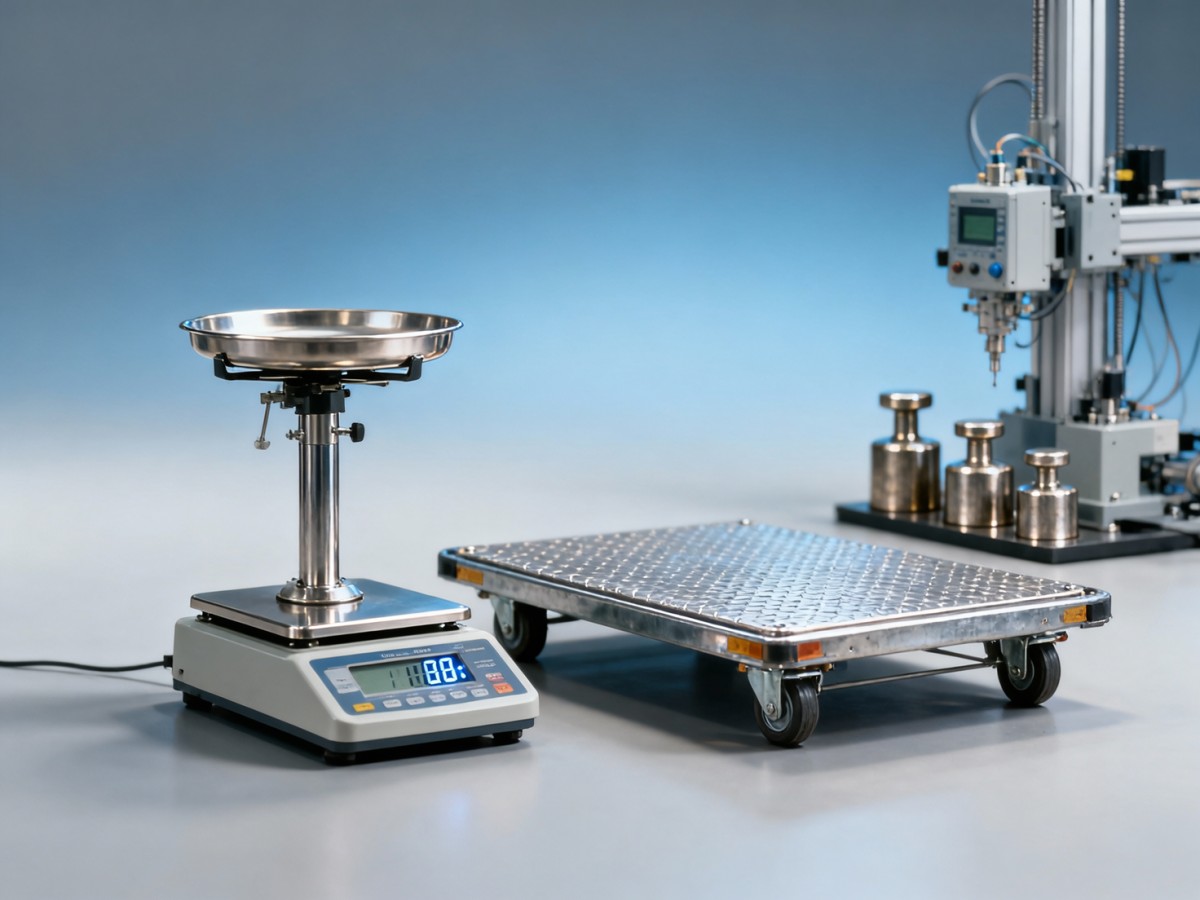
How Environmental Stressors Accelerate Metrological Drift
Repeatability loss isn’t linear—it compounds through three interdependent failure vectors:
- Thermal hysteresis in load cell alloys: Aluminum alloy load cells exhibit up to 0.008% output shift per °C change beyond 25°C ambient—doubling error accumulation during daily HVAC cycling.
- ADC resolution erosion: High-speed sigma-delta converters degrade signal-to-noise ratio (SNR) by 12–18 dB after 500+ thermal cycles, directly reducing effective resolution from 1:1,000,000 to ~1:300,000.
- Mounting interface creep: Rubber isolators and threaded fasteners relax under sustained vibration (≥5 Hz), introducing positional uncertainty that manifests as repeatability scatter—measured at 0.01–0.03% full scale in crane scale applications after just 4 weeks.
These mechanisms operate silently—without visible damage or alarm triggers—making them especially dangerous for EPC contractors who rely on third-party calibration certificates without verifying in-situ performance history.
Procurement Checklist: What to Verify Beyond the Datasheet
When sourcing precision weighing equipment for mission-critical infrastructure, procurement teams must move past nominal specs and validate real-world behavior. The following five inspection criteria are non-negotiable for compliance with UL 1604 (hazardous locations), ISO/IEC 17025 (calibration labs), and IEC 61000-4-2 (EMC immunity):
Suppliers who cannot provide traceable test reports against these criteria—or who restrict access to raw repeatability data logs—should be excluded from bidding. GIC’s procurement validation framework requires documented evidence of ≥3 independent thermal-vibration stress tests per model variant before inclusion in our strategic sourcing portfolio.
Why Choose Global Industrial Core for Precision Measurement Intelligence
Global Industrial Core delivers more than product listings—we deliver metrologically grounded decision intelligence. Our Instrument & Measurement pillar integrates real-time field performance telemetry from 42 certified calibration labs and 19 Tier-1 EPC contractors, enabling predictive insight into repeatability decay patterns across 210+ scale models.
When you engage with GIC, you receive:
- Custom repeatability benchmarking: We compare your operational environment (temperature profile, floor vibration spectrum, loading frequency) against our database of 1,200+ field-degraded units to project mean time to specification breach—typically within ±7 days accuracy.
- Compliance-ready documentation packages: Pre-validated UL/CE/ISO test summaries, EMC immunity reports, and calibration traceability chains—delivered in your ERP-compatible format (SAP MM, Oracle Procurement Cloud, Coupa).
- Procurement acceleration: Direct access to pre-qualified suppliers offering extended warranty coverage (up to 36 months) tied explicitly to repeatability retention—not just component failure.
Contact GIC today to request a free repeatability risk assessment for your current weighing infrastructure—or to obtain model-specific validation reports for analytical balances, crane scales wholesale, pallet truck scales, and integrated Karl Fischer titration systems.
Technical Specifications
- Air Handling Unit Supplier Checklist: Performance Data, Lead Times, and SupportAuthor :Environmental Engineering Director
- Buying Fiberglass Water Tanks Wholesale: Compare Quotes and Delivery CostsAuthor :Environmental Engineering Director
- Choosing an XLPE Power Cable Supplier: Test Reports, Traceability, and Lead TimesAuthor :Grid Infrastructure Analyst
Expert Insights

Chief Security Architect
Dr. Thorne specializes in the intersection of structural engineering and digital resilience. He has advised three G7 governments on industrial infrastructure security.
Related Analysis
- Oct 19, 2026Air Handling Unit Supplier Checklist: Performance Data, Lead Times, and SupportAuthor :Environmental Engineering Director
- Oct 18, 2026Buying Fiberglass Water Tanks Wholesale: Compare Quotes and Delivery CostsAuthor :Environmental Engineering Director
- Oct 17, 2026Choosing an XLPE Power Cable Supplier: Test Reports, Traceability, and Lead TimesAuthor :Grid Infrastructure Analyst
Core Sector // 01
Security & Safety
- Choosing a 5-Part Hematology Analyzer: Throughput, Sample Volume, and QCAuthor :Precision Metrology Expert

- Wholesale Borosilicate Lab Glassware: How Buyers Verify Quality, Specs, and Supply ReliabilityAuthor :Precision Metrology Expert

- How to Select Lab Instruments for Reliable Chemical Analysis WorkflowsAuthor :Precision Metrology Expert

- Buying Lint-Free Wipes in Bulk: How to Match Material and Packaging to Cleanroom UseAuthor :Precision Metrology Expert

- How to Choose a Class II Biosafety Cabinet Supplier for Compliant Lab ProcurementAuthor :Precision Metrology Expert

- Wholesale Binocular Microscopes: Comparing Specifications, MOQs, and QC RiskAuthor :Precision Metrology Expert

- How to Evaluate a UV-Visible Spectrophotometer Manufacturer for Lab Accuracy?Author :Precision Metrology Expert

- China Temporarily Bans Helium ExportsAuthor :Precision Metrology Expert