What makes an environment & ecology exporter reliable today
Author
Date Published
Reading Time
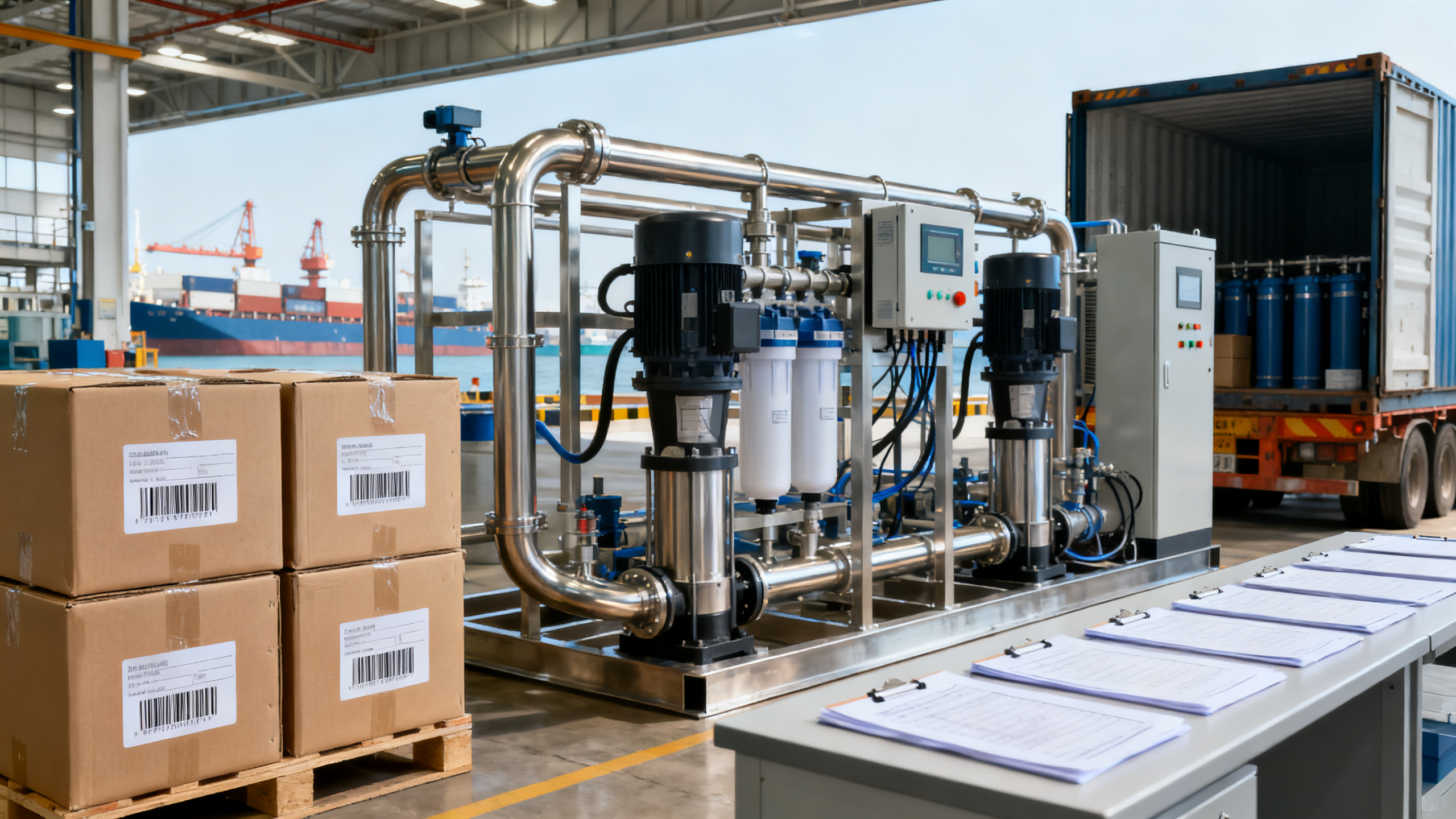
Choosing a reliable Environment & Ecology exporter now requires more than competitive pricing. For business evaluators, the real indicators lie in regulatory compliance, traceable quality systems, technical transparency, and proven delivery performance across complex industrial projects. This article outlines the standards and risk signals that help identify exporters capable of supporting long-term, compliant, and resilient environmental infrastructure decisions.
In industrial procurement, environmental systems often sit at the intersection of regulation, operational continuity, and public accountability. Whether the scope includes filtration units, wastewater treatment components, emission control assemblies, monitoring instruments, or ecological protection materials, an exporter must perform far beyond the quotation stage.
For business evaluators, the practical question is not simply who can ship product in 2 to 6 weeks. It is who can support documentation accuracy, stable batch quality, inspection readiness, and after-sales responsiveness across projects that may run 12 to 36 months and involve multiple approval gates.
Why reliability now means more than price and availability
The role of an Environment & Ecology exporter has changed. Many industrial buyers once prioritized unit cost, freight terms, and lead time. Today, procurement teams are also measuring compliance exposure, supply continuity risk, and the cost of rework when environmental equipment fails during installation, commissioning, or audit review.
A low initial price can quickly become expensive if missing certificates delay customs clearance by 7 to 14 days, or if inconsistent dimensions force on-site modification. In environmental infrastructure, even a tolerance drift of a few millimeters can disrupt fit-up, sealing performance, or system integration.
The new procurement pressure points
Business evaluators increasingly review exporters against 4 core dimensions: compliance, quality consistency, delivery discipline, and technical communication. If one dimension is weak, the exporter may still complete a shipment, but not necessarily support a successful project outcome.
- Compliance readiness for CE, ISO-related documentation, material declarations, and test records
- Manufacturing consistency across pilot order, repeat order, and multi-site deployment
- Lead-time realism, including production, inspection, packing, and customs preparation
- Responsiveness during RFQ, drawing review, deviation approval, and post-delivery issue handling
Why environmental projects create higher exporter scrutiny
Environment and ecology projects often involve government oversight, third-party inspection, or internal ESG reporting. That means the exporter is not only supplying goods but also supporting evidence. A missing mill certificate, calibration record, or packing trace can become a procurement risk rather than a paperwork issue.
This is especially true for applications such as wastewater treatment skids, dust collection systems, air emission monitoring, membrane modules, corrosion-resistant piping, and containment liners. These categories usually require 3 to 5 document layers before final acceptance.
Common signs of an unreliable exporter
During early screening, evaluators should watch for repeated quotation revisions, unclear origin declarations, broad tolerance claims without drawings, or generic quality statements with no inspection method attached. These are often more revealing than a polished sales presentation.
The table below highlights typical reliability indicators used by industrial sourcing teams when comparing an Environment & Ecology exporter across prequalification stages.
The key conclusion is simple: a dependable Environment & Ecology exporter demonstrates process visibility before the purchase order is released. Reliability is visible in how information is organized, verified, and communicated, not only in how attractive the offer appears.
How to evaluate compliance and traceable quality systems
For environmental and ecological procurement, compliance is rarely a single certificate. It is a chain of evidence linking product specification, manufacturing control, test execution, shipment identity, and receiving acceptance. Strong exporters understand that documentation must survive both technical review and audit review.
What business evaluators should verify first
Start with 5 document groups: company registration and export capability, quality management system records, product-level test documents, material traceability, and shipment documentation. If an exporter cannot map these 5 groups clearly, the operational burden will likely shift to the buyer later.
- Factory or trading model transparency, including subcontracting disclosure where relevant
- Inspection plan with checkpoints for incoming material, in-process control, and pre-shipment verification
- Technical file consistency between quote, drawing, datasheet, and packing list
- Retention period for quality records, often expected to be 2 to 5 years in industrial sourcing
- Clear corrective action process for nonconformance, return, or field complaint cases
Traceability matters more in harsh-duty applications
Environmental systems frequently operate in corrosive, abrasive, or high-moisture conditions. In such cases, traceability is not theoretical. Buyers may need to confirm coating thickness, polymer grade, stainless alloy family, gasket compatibility, or calibration status months after installation.
A reliable Environment & Ecology exporter can usually connect each shipped batch to at least 3 identifiers, such as lot number, inspection record, and packing mark. This reduces dispute time and improves root-cause analysis if a performance issue appears during commissioning.
Useful compliance checks by procurement stage
The following table can be used as a practical checklist when screening exporters at RFQ, order confirmation, and pre-shipment stages.
This staged review approach helps evaluators reduce hidden risk. Instead of waiting for a shipment problem, they create 3 control gates that reveal whether the exporter operates with discipline or improvisation.
Technical transparency and delivery discipline as decision filters
An experienced Environment & Ecology exporter should be able to explain not only what is supplied, but also where performance boundaries exist. That includes pressure, temperature, chemical compatibility, maintenance interval, installation orientation, and storage conditions where relevant.
Questions that expose technical strength
During evaluation, ask how the exporter handles deviations from standard duty. For example, can they explain material changes for pH variation, outdoor UV exposure, continuous moisture, or particulate loading? Can they define recommended inspection intervals such as every 3 months, 6 months, or annually?
Strong exporters answer with operating logic and limits. Weak exporters respond with vague assurances. For environmental systems, vague technical answers often lead to site-level troubleshooting costs that exceed the original price difference by a wide margin.
Minimum technical details worth requesting
- Material specification and substitution policy
- Tolerance or dimensional control range where installation fit matters
- Expected service interval under standard operating conditions
- Storage, packing, and handling precautions for sensitive components
- Recommended spare parts list for the first 12 months of operation
Delivery performance is a systems issue
Reliable delivery is not only about freight booking. It depends on capacity planning, inspection timing, export packing quality, and document readiness. A capable exporter typically provides a milestone schedule with at least 4 checkpoints: order release, production start, inspection completion, and dispatch handover.
For larger industrial packages, evaluators should also check whether partial shipment is possible and whether critical-path items are identified early. This matters when one delayed filtration frame, sensor batch, or containment accessory can hold up an entire installation sequence.
Commercial risk signals and sourcing recommendations for long-term buyers
Commercial evaluation should not stop at price, Incoterms, and payment terms. It should also assess whether the exporter can support repeatability over 2, 3, or 5 purchase cycles. Environmental infrastructure buyers often need continuity more than one-time savings.
Red flags in exporter quotations
Watch for quotations that omit revision numbers, test scope, packing assumptions, or origin details. If a supplier offers broad validity but cannot freeze technical assumptions for 15 to 30 days, the buyer may be comparing prices that do not cover the same scope.
Another warning sign is inconsistent response speed. A delay of 4 or 5 days on basic technical clarification during the RFQ phase often predicts slower issue resolution after shipment, when project pressure is much higher.
A practical selection framework for business evaluators
A useful model is to score each Environment & Ecology exporter across 6 weighted criteria: technical clarity, compliance readiness, quality traceability, lead-time reliability, communication discipline, and lifecycle support. Many buyers use a 100-point matrix with 15 to 20 points assigned to each critical area.
- Screen documents before price negotiation
- Validate technical fit against actual operating conditions
- Confirm traceability and inspection controls
- Review realistic production and shipping milestones
- Check post-delivery support process and response timing
- Compare total procurement risk, not only unit cost
Where long-term value usually comes from
In most industrial sourcing environments, the best exporter is not the cheapest one. Long-term value usually comes from fewer document errors, lower reinspection frequency, better packing integrity, faster claim handling, and more consistent repeat-order quality over 12 to 24 months.
For organizations managing EPC schedules, plant upgrades, or environmental compliance investments, that consistency can reduce internal coordination time across procurement, quality, engineering, and site teams. The savings are often operational rather than visible on the first purchase order.
A reliable Environment & Ecology exporter stands out through verifiable compliance, disciplined documentation, stable manufacturing control, and credible delivery planning. For business evaluators, the strongest decision comes from examining how the exporter manages risk across the full supply cycle, from RFQ to commissioning support.
Global Industrial Core supports industrial buyers, EPC contractors, and procurement leaders with decision-focused insight across environmental infrastructure sourcing. If you are reviewing exporters for complex projects, contact us to discuss your sourcing criteria, request a tailored evaluation framework, or explore more solutions for resilient and compliant procurement.
Technical Specifications
- How to Select Electronic Hotel Key Card Locks for Guest Rooms and Staff AreasAuthor :Safety Compliance Lead
- How to Select Lab Instruments for Reliable Chemical Analysis WorkflowsAuthor :Precision Metrology Expert
- How to Size a UPS for Server Rooms: Load, Runtime, and Redundancy FactorsAuthor :Grid Infrastructure Analyst
Expert Insights

Chief Security Architect
Dr. Thorne specializes in the intersection of structural engineering and digital resilience. He has advised three G7 governments on industrial infrastructure security.
Related Analysis
- Sep 17, 2026How to Select Electronic Hotel Key Card Locks for Guest Rooms and Staff AreasAuthor :Safety Compliance Lead
- Sep 16, 2026How to Select Lab Instruments for Reliable Chemical Analysis WorkflowsAuthor :Precision Metrology Expert
- Sep 15, 2026How to Size a UPS for Server Rooms: Load, Runtime, and Redundancy FactorsAuthor :Grid Infrastructure Analyst
Core Sector // 01
Security & Safety
- How to Size a Wafer Butterfly Valve for HVAC Chilled-Water and Heating LoopsAuthor :Environmental Engineering Director

- How Pressure Class and Joint Design Affect Long-Term Performance of Ductile Iron Pipes in Drainage InfrastructureAuthor :Environmental Engineering Director

- How Ductile Iron Pipe Joints Affect Installation Reliability and Leak ControlAuthor :Environmental Engineering Director

- How to Size Effluent Treatment Equipment for Variable Industrial Wastewater LoadsAuthor :Environmental Engineering Director

- US Battery Push Raises New Entry Rules for SuppliersAuthor :Environmental Engineering Director

- EU EMC Rule Tightens for Water Treatment ExportsAuthor :Environmental Engineering Director

- EU REACH Restriction Targets PFAS Water Treatment ImportsAuthor :Environmental Engineering Director

- EU Mandates EN 14113:2026 for Water Treatment ExportsAuthor :Environmental Engineering Director