Saudi SASO Tightens Energy Efficiency Rules for Industrial Pump Systems
Author
Date Published
Reading Time
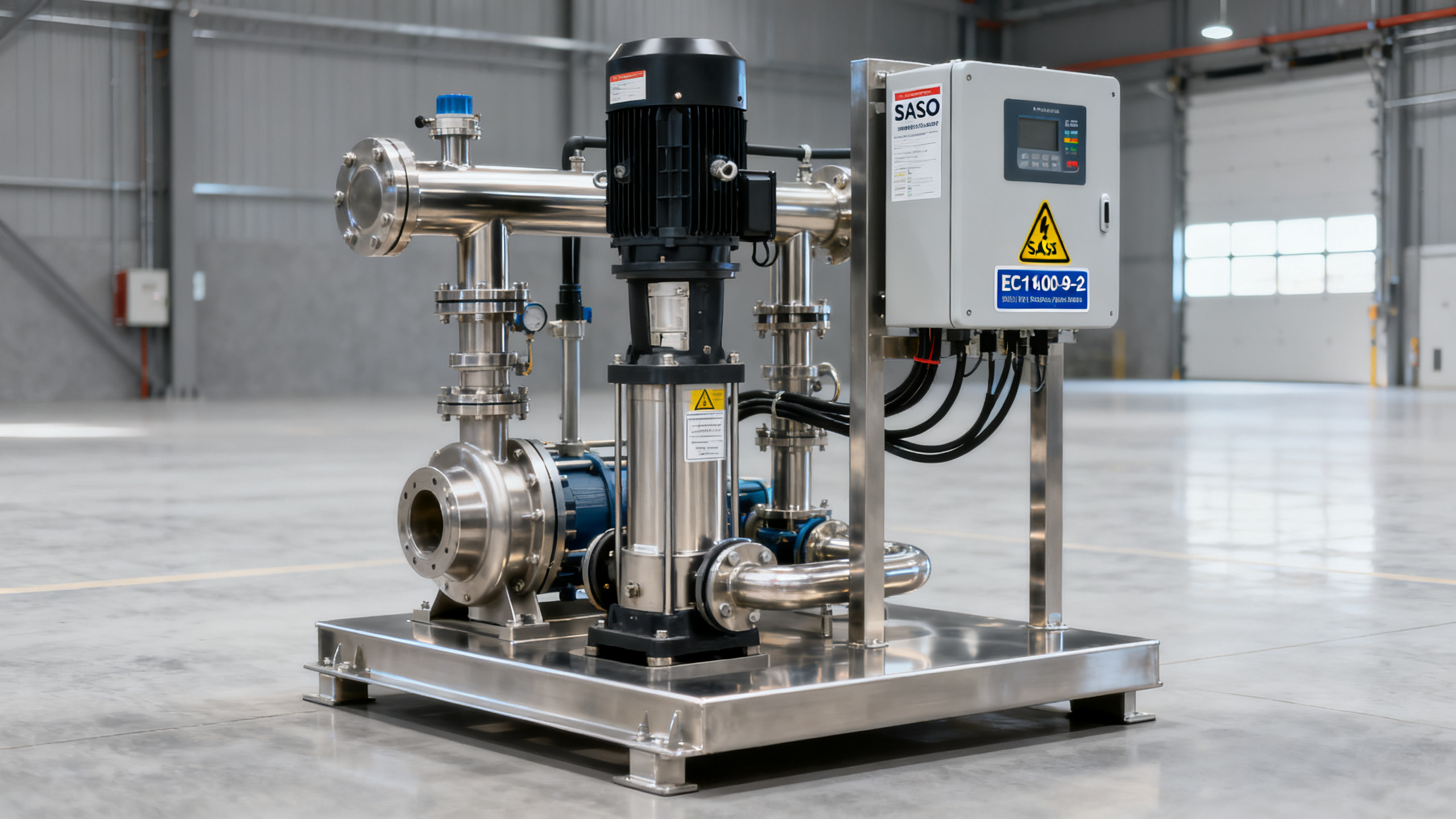
Saudi Arabia’s Standards, Metrology and Quality Organization (SASO) has introduced a significant update to its energy efficiency requirements for industrial water treatment pump systems, effective 1 November 2026. The revision targets exporters—particularly manufacturers and suppliers from China and other major pump-producing countries—and signals a shift toward system-level performance validation, not just component-level efficiency.
Event Overview
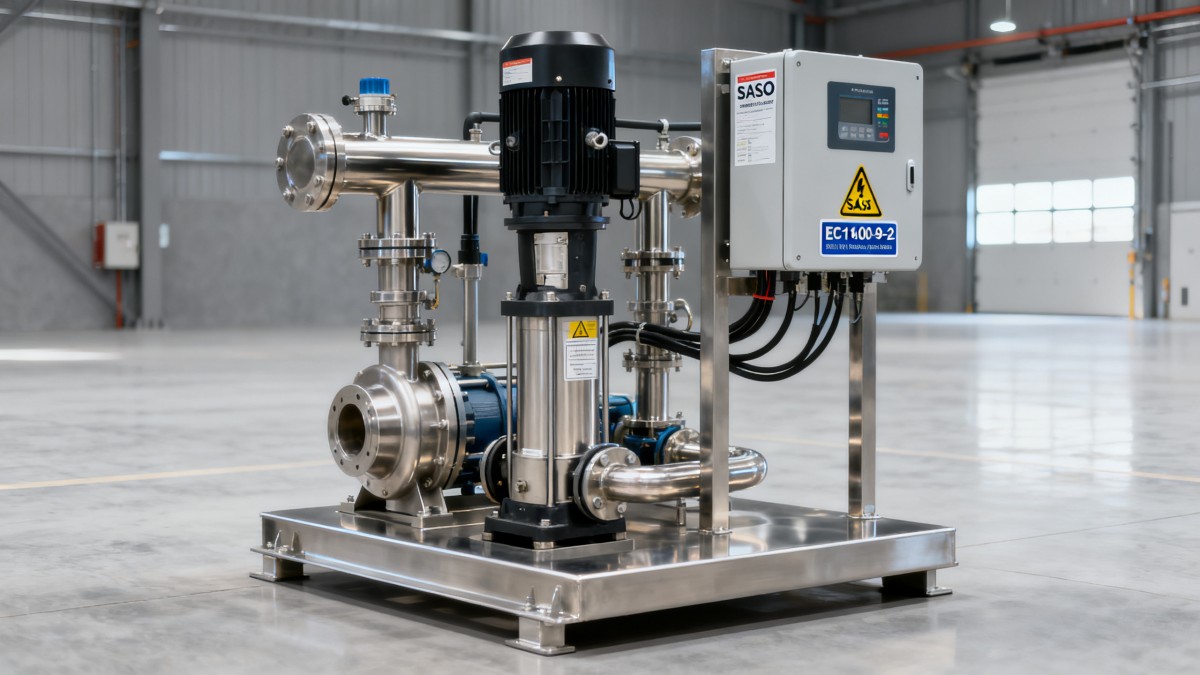
On 19 May 2026, SASO published the updated standard SASO 2870:2026, amending previous energy efficiency provisions for centrifugal pumps, multistage pumps, and integrated pump systems used in industrial water treatment applications. As of 1 November 2026, all imported units must comply with two new mandatory test requirements: intelligent variable-frequency drive (VFD) response testing per IEC 61800-9-2, and load transient adaptability testing. These assessments supplement existing motor and hydraulic efficiency measurements. Certification must be conducted at SASO-accredited laboratories, and Chinese pump manufacturers are explicitly required to collaborate with VFD suppliers to achieve system-level conformity.
Industries Affected
Direct Trading Enterprises
Export-oriented trading companies handling pump equipment shipments to Saudi Arabia face immediate compliance risk. Since SASO now mandates system-level certification—not just CE or ISO declarations—traders can no longer rely on supplier-provided component test reports alone. Documentation gaps may lead to customs rejection or post-import verification failures, increasing lead time uncertainty and potential demurrage costs.
Raw Material Procurement Enterprises
Firms sourcing motors, impellers, or control cabinets for pump assembly must now verify compatibility with IEC 61800-9-2-compliant VFDs. Procurement specifications must include interoperability parameters (e.g., torque response time, frequency ramp tolerance), which were previously non-mandatory. This adds technical due diligence to vendor qualification processes and may narrow the pool of eligible suppliers.
Manufacturing Enterprises
Industrial pump OEMs—especially those producing integrated pump skids for water treatment—must redesign or revalidate control logic, sensor placement, and communication protocols between pumps and drives. Testing under dynamic load transients requires new lab capabilities or third-party partnerships. For many Chinese manufacturers, this represents a step beyond traditional efficiency optimization toward real-time adaptive control—a capability not yet embedded in most domestic production lines.
Supply Chain Service Providers
Certification consultants, testing labs, and logistics coordinators supporting Middle East market access must expand service offerings to cover system-level IEC 61800-9-2 validation. This includes coordinating joint testing between pump and VFD vendors, managing multi-country test report harmonization, and advising on SASO’s newly emphasized “system integration dossier” submission format.
Key Considerations and Recommended Actions
Confirm System-Level Certification Pathways by Q3 2026
Manufacturers should identify SASO-accredited labs capable of full-system IEC 61800-9-2 testing—including coordinated pump+VFD load-step evaluation—and initiate pre-audit readiness checks before August 2026. Relying solely on motor or pump-only certifications is no longer sufficient.
Formally Align with VFD Suppliers Through Technical MOUs
Joint certification requires documented interoperability agreements covering firmware versions, communication protocols (e.g., Modbus TCP vs. EtherCAT), and shared test responsibility. Informal cooperation is insufficient for SASO audit purposes; signed memoranda outlining roles in test planning, data sharing, and corrective action are strongly advised.
Update Technical Documentation to Reflect Dynamic Performance Metrics
Product datasheets, user manuals, and declaration of conformity documents must now include measured values for response time (
Editorial Perspective / Industry Observation
Observably, SASO’s move reflects a broader regional trend: Gulf Cooperation Council (GCC) regulators are increasingly treating energy efficiency as a dynamic, context-sensitive attribute—not a static label. Analysis shows that requiring load transient testing suggests growing concern over grid stability and demand-side flexibility in water-intensive infrastructure projects. From an industry perspective, this regulation is less about raising barriers and more about signaling readiness for smart utility integration. Current evidence does not indicate harmonization with EU Ecodesign delegated acts—but alignment with IEC 61800-9-2 does create partial interoperability leverage for exporters already serving European markets.
Conclusion
This update marks a structural inflection point—not merely a technical amendment—for pump exporters targeting Saudi industrial water infrastructure. It shifts compliance focus from individual component efficiency to integrated system intelligence and responsiveness. A rational interpretation is that SASO is preparing the regulatory foundation for future digital twin validation and predictive maintenance readiness in public utility assets. Success will depend less on incremental engineering tweaks and more on cross-supplier collaboration frameworks and documentation discipline.
Source Attribution
Official source: SASO Standard 2870:2026, published 19 May 2026 (available via www.saso.gov.sa). Supporting guidance referenced: IEC 61800-9-2:2017, “Adjustable speed electrical power drive systems — Part 9-2: Ecodesign for power drive systems, motor starters, power electronics & their driven applications — Energy efficiency indicators for electrical drive systems.” Note: SASO’s implementation timeline, test report format requirements, and list of approved labs remain subject to further technical circulars—monitoring advised through SASO’s Exporter Portal and GCC Standardization Organization bulletins.
Technical Specifications
- How to Select Electronic Hotel Key Card Locks for Guest Rooms and Staff AreasAuthor :Safety Compliance Lead
- How to Select Lab Instruments for Reliable Chemical Analysis WorkflowsAuthor :Precision Metrology Expert
- How to Size a UPS for Server Rooms: Load, Runtime, and Redundancy FactorsAuthor :Grid Infrastructure Analyst
Expert Insights

Chief Security Architect
Dr. Thorne specializes in the intersection of structural engineering and digital resilience. He has advised three G7 governments on industrial infrastructure security.
Related Analysis
- Sep 17, 2026How to Select Electronic Hotel Key Card Locks for Guest Rooms and Staff AreasAuthor :Safety Compliance Lead
- Sep 16, 2026How to Select Lab Instruments for Reliable Chemical Analysis WorkflowsAuthor :Precision Metrology Expert
- Sep 15, 2026How to Size a UPS for Server Rooms: Load, Runtime, and Redundancy FactorsAuthor :Grid Infrastructure Analyst
Core Sector // 01
Security & Safety
- How to Size a Wafer Butterfly Valve for HVAC Chilled-Water and Heating LoopsAuthor :Environmental Engineering Director

- How Pressure Class and Joint Design Affect Long-Term Performance of Ductile Iron Pipes in Drainage InfrastructureAuthor :Environmental Engineering Director

- How Ductile Iron Pipe Joints Affect Installation Reliability and Leak ControlAuthor :Environmental Engineering Director

- How to Size Effluent Treatment Equipment for Variable Industrial Wastewater LoadsAuthor :Environmental Engineering Director

- US Battery Push Raises New Entry Rules for SuppliersAuthor :Environmental Engineering Director

- EU EMC Rule Tightens for Water Treatment ExportsAuthor :Environmental Engineering Director

- EU REACH Restriction Targets PFAS Water Treatment ImportsAuthor :Environmental Engineering Director

- EU Mandates EN 14113:2026 for Water Treatment ExportsAuthor :Environmental Engineering Director