EU CBAM Full Implementation Week One: EPD + Carbon Footprint Required for Industrial Water Treatment Chemicals and Filtration Media
Author
Date Published
Reading Time
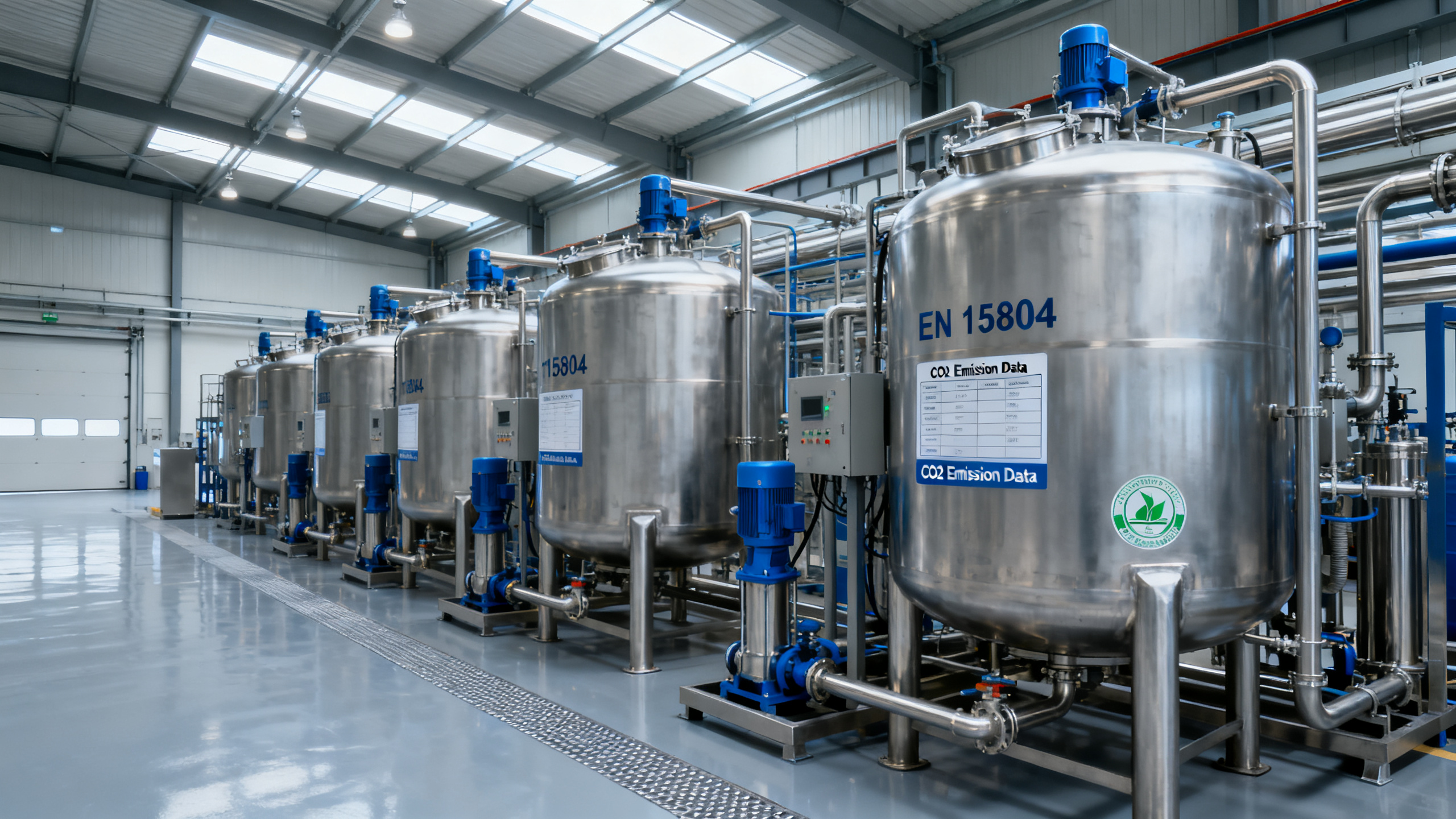
On May 20, 2026, the EU’s Carbon Border Adjustment Mechanism (CBAM) entered its mandatory reporting and linkage phase. Industrial water treatment chemicals—including polyaluminum chloride (PAC), sodium hypochlorite, and reverse osmosis scale inhibitors—as well as filtration media, are now subject to mandatory submission of Environmental Product Declarations (EPDs) verified via Life Cycle Assessment (LCA) and full lifecycle carbon footprint data. Non-compliant shipments have already faced detention at the Port of Rotterdam, signaling immediate operational impact for exporters in this supply chain.
Event Overview
Effective May 20, 2026, the EU CBAM transitioned into its mandatory clearance linkage period. Under this phase, exports of cement, steel, insulation materials, and industrial water treatment chemicals (e.g., PAC, sodium hypochlorite, reverse osmosis antiscalants) to the EU must be accompanied by EPDs validated through LCA and complete, third-party-verified carbon footprint declarations covering all life cycle stages. Public reports confirm that non-compliant cargo has been detained at the Port of Rotterdam. This requirement directly applies to the industrial water treatment supply chain and is prompting Chinese manufacturers to accelerate development of third-party carbon accounting systems.
Industries Affected by This Requirement
Direct Exporters (Trade Enterprises)
Exporters of industrial water treatment chemicals and filtration media to the EU are directly required to submit EPDs and carbon footprint reports prior to customs clearance. Failure to provide compliant documentation results in shipment delays or rejection—already observed in Rotterdam. The administrative burden has increased significantly, especially for SMEs lacking internal LCA expertise or certified verification pathways.
Manufacturers (Processing & Production Firms)
Chemical producers and filter media fabricators must now trace and quantify emissions across raw material extraction, energy-intensive synthesis (e.g., chlorine-based disinfectant production), packaging, and transport. Their existing environmental management systems do not automatically satisfy CBAM’s LCA-based disclosure requirements; dedicated carbon accounting infrastructure is now operationally necessary—not optional—for continued EU market access.
Raw Material Suppliers
Suppliers of precursors—such as aluminum hydroxide for PAC, chlorine gas for sodium hypochlorite, or polymer monomers for antiscalants—face upstream data requests. Exporters may require verified emission factors or supplier-specific EPDs to complete their own LCA inventories. This shifts transparency expectations deeper into Tier 2 and Tier 3 supply tiers.
Supply Chain Service Providers (Testing, Certification, Logistics)
Laboratories offering LCA support, EPD program operators (e.g., IBU, EPD International), and logistics firms managing EU-bound consignments are experiencing rising demand for CBAM-aligned verification services. However, only LCA practitioners accredited under EN 15804 or ISO 14044—and EPDs registered with an EPD Programme Operator recognized by the European Commission—are accepted under current CBAM rules.
What Relevant Enterprises or Practitioners Should Focus On Now
Monitor Official CBAM Transitional Guidance Updates
The European Commission is expected to issue clarifications on acceptable LCA methodologies, data cut-off dates for baseline reporting, and transitional allowances for SMEs. Enterprises should track updates published via the official CBAM Transitional Registry portal and EU Official Journal notices—not rely solely on national trade associations’ summaries.
Prioritize Verification for High-Volume, High-Risk Export SKUs
Not all water treatment products carry equal CBAM exposure. Focus verification efforts first on items with documented EU import volume (e.g., PAC grades used in municipal wastewater plants) and high embodied carbon intensity (e.g., chlorine-derived disinfectants). Avoid blanket EPD generation across entire product portfolios before confirming scope and thresholds.
Distinguish Between Regulatory Signal and Enforceable Obligation
While CBAM’s legal framework is binding, enforcement granularity—including penalties for minor data omissions or provisional reporting windows—remains under implementation review. Treat initial detentions as procedural alerts, not definitive precedent. Maintain records of good-faith verification attempts and engage EU importers early to align on documentation expectations.
Initiate Supplier Engagement and Internal Data Mapping Now
Begin mapping energy consumption, chemical inputs, and transport modes across production lines. Simultaneously request primary emission data from key raw material suppliers—even if formal EPDs are not yet available. Early data collection reduces lead time when third-party LCA verification is commissioned.
Editorial Perspective / Industry Observation
Observably, this is less a sudden regulatory shock and more the operational crystallization of a multi-year policy trajectory. The May 20, 2026, activation marks the point where CBAM shifts from preparatory reporting to binding customs linkage for covered sectors—including, critically, industrial water treatment inputs previously outside climate-trade policy focus. Analysis shows the inclusion of water treatment chemicals reflects the EU’s broader recalibration of ‘industrial input’ definitions under decarbonization frameworks—not just final goods, but essential process enablers. From an industry perspective, this signals that carbon transparency is no longer confined to heavy emitters like steel or cement; it now extends vertically into auxiliary chemical supply chains. Continued attention is warranted because CBAM’s sectoral scope remains under periodic review, and water treatment filtration media may serve as a precedent for future inclusions such as membrane elements or ion exchange resins.
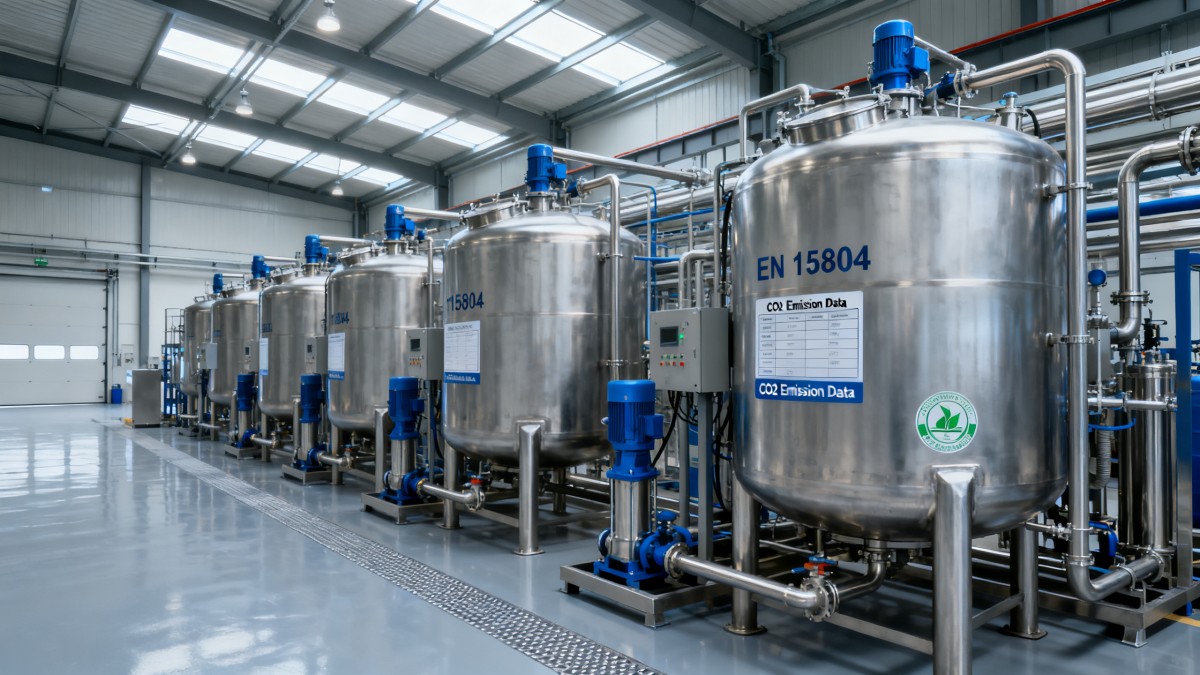
Conclusion: This development confirms that CBAM compliance is now a prerequisite—not a future consideration—for exporting industrial water treatment chemicals and filtration media to the EU. It does not represent a broad-based industry disruption, but rather a targeted, enforceable shift in documentation and data accountability. Currently, it is more accurate to understand this as a procedural threshold change than a market access barrier—provided enterprises treat carbon footprint reporting as an integrated component of export operations, not a standalone certification task.
Source Attribution:
– European Commission CBAM Transitional Regulation (Regulation (EU) 2023/1773), effective May 20, 2026
– Public detention notices issued by Port of Rotterdam Authority, week of May 20–24, 2026
– Verified industry incident reports from China Chamber of Commerce for Import & Export of Machinery & Electronic Products (CCCME)
Note: Ongoing monitoring is recommended for upcoming European Commission guidance on SME accommodations and LCA data default values—these remain pending as of May 2026.
Technical Specifications
- How to Select Electronic Hotel Key Card Locks for Guest Rooms and Staff AreasAuthor :Safety Compliance Lead
- How to Select Lab Instruments for Reliable Chemical Analysis WorkflowsAuthor :Precision Metrology Expert
- How to Size a UPS for Server Rooms: Load, Runtime, and Redundancy FactorsAuthor :Grid Infrastructure Analyst
Expert Insights

Chief Security Architect
Dr. Thorne specializes in the intersection of structural engineering and digital resilience. He has advised three G7 governments on industrial infrastructure security.
Related Analysis
- Sep 17, 2026How to Select Electronic Hotel Key Card Locks for Guest Rooms and Staff AreasAuthor :Safety Compliance Lead
- Sep 16, 2026How to Select Lab Instruments for Reliable Chemical Analysis WorkflowsAuthor :Precision Metrology Expert
- Sep 15, 2026How to Size a UPS for Server Rooms: Load, Runtime, and Redundancy FactorsAuthor :Grid Infrastructure Analyst
Core Sector // 01
Security & Safety
- How to Size a Wafer Butterfly Valve for HVAC Chilled-Water and Heating LoopsAuthor :Environmental Engineering Director

- How Pressure Class and Joint Design Affect Long-Term Performance of Ductile Iron Pipes in Drainage InfrastructureAuthor :Environmental Engineering Director

- How Ductile Iron Pipe Joints Affect Installation Reliability and Leak ControlAuthor :Environmental Engineering Director

- How to Size Effluent Treatment Equipment for Variable Industrial Wastewater LoadsAuthor :Environmental Engineering Director

- US Battery Push Raises New Entry Rules for SuppliersAuthor :Environmental Engineering Director

- EU EMC Rule Tightens for Water Treatment ExportsAuthor :Environmental Engineering Director

- EU REACH Restriction Targets PFAS Water Treatment ImportsAuthor :Environmental Engineering Director

- EU Mandates EN 14113:2026 for Water Treatment ExportsAuthor :Environmental Engineering Director