Vietnam Bans 12 Pesticide Actives, Mandates Vietnamese SDS for Industrial Water Treatment Chemicals
Author
Date Published
Reading Time
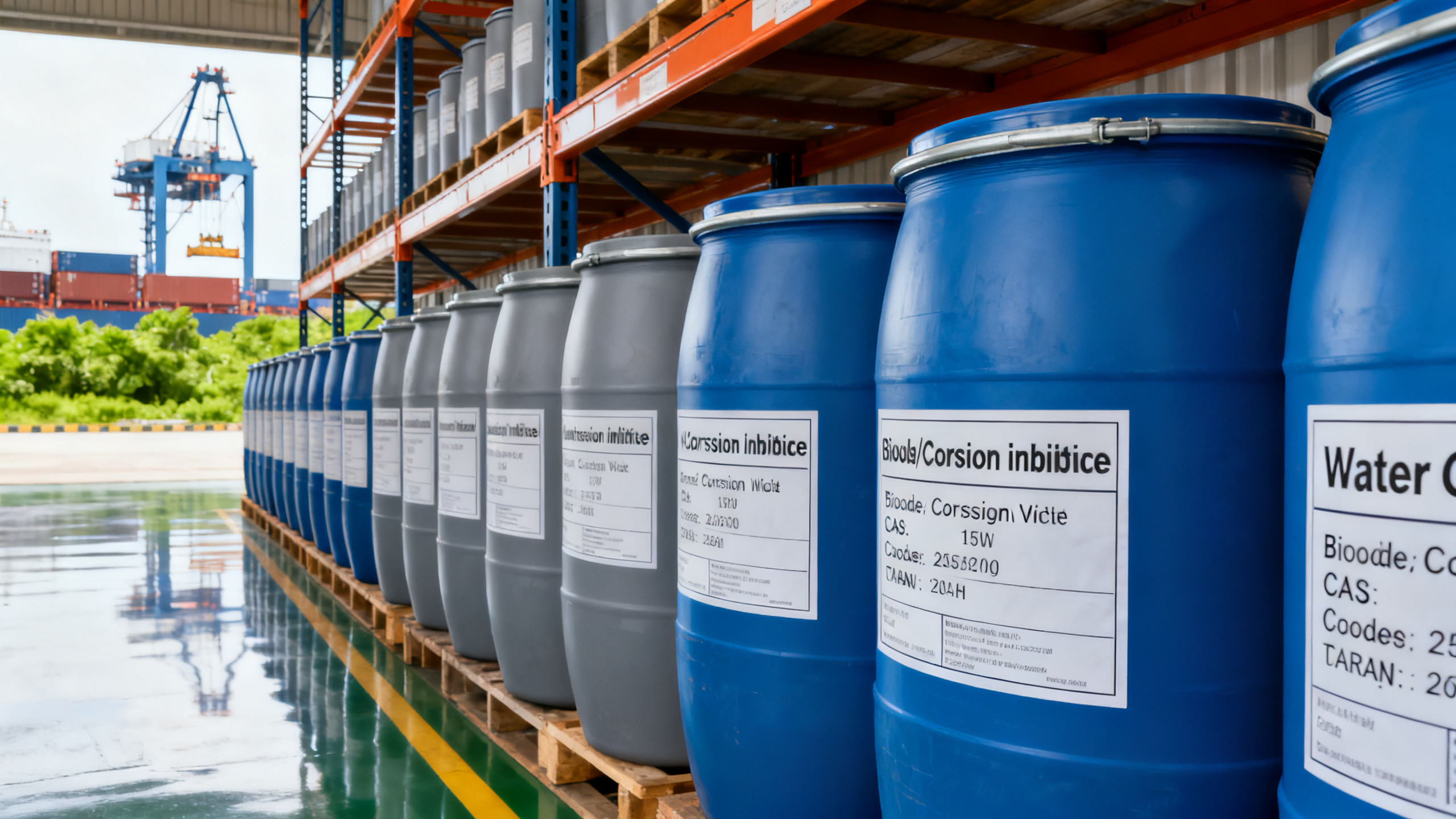
Vietnam’s Ministry of Agriculture and Rural Development issued a new regulatory notice on May 21, 2026, introducing dual requirements for pesticide and industrial chemical imports: a ban on 12 active ingredients—including chlorothalonil and chlorpyrifos—and mandatory submission of Vietnamese-language Safety Data Sheets (SDS) and full ingredient disclosure statements for all imported industrial water treatment agents. The measure has immediate operational impact on exporters, freight forwarders, and formulation manufacturers serving the Vietnamese market.
Event Overview
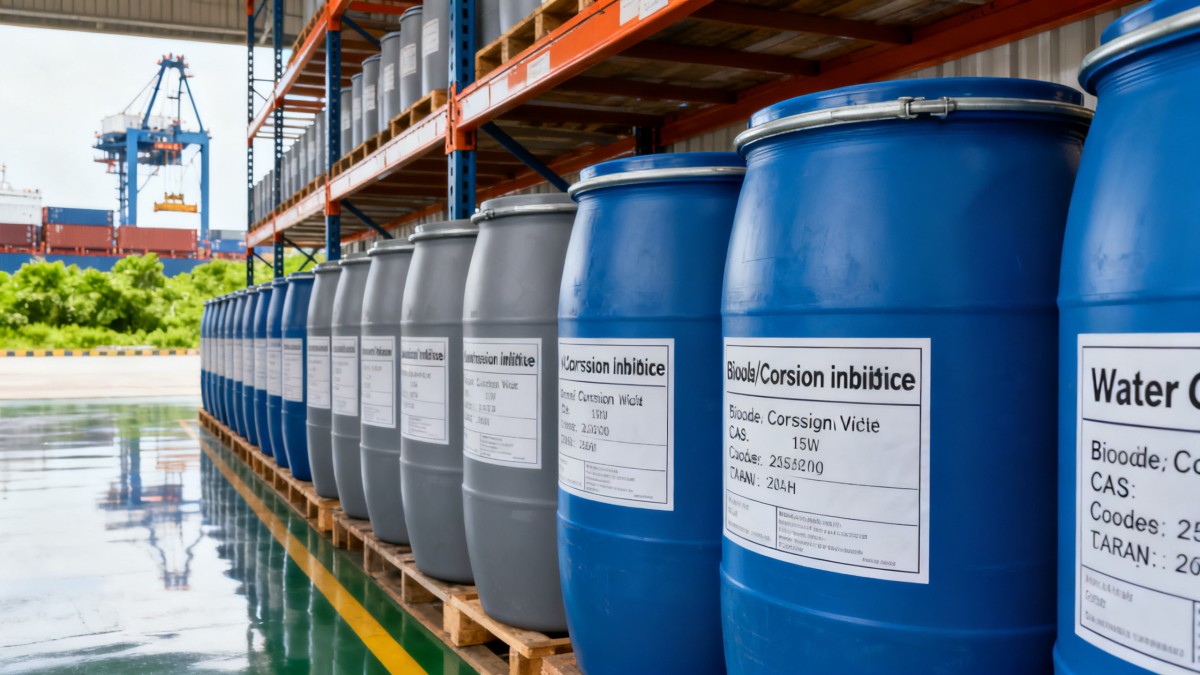
On May 21, 2026, Vietnam’s Ministry of Agriculture and Rural Development published an official notice listing 12 active substances—such as chlorothalonil, chlorpyrifos, carbendazim, and mancozeb—as prohibited for use in insecticidal and fungicidal products. Concurrently, the Ministry mandated that all industrial water treatment chemicals imported into Vietnam—including biocides, corrosion inhibitors, and scale inhibitors—must be accompanied by a Vietnamese-language SDS and a formal ingredient disclosure statement prior to customs clearance. Reports confirm that non-compliant shipments have already been detained at Ho Chi Minh City Port.
Industries Affected
Direct trading enterprises face immediate shipment delays and customs rejection risks. Since Vietnamese customs now enforce pre-clearance verification of SDS language compliance and active ingredient eligibility, export documentation must be validated before vessel departure—not after arrival. This shifts liability upstream and increases lead time for documentation preparation and third-party translation verification.
Raw material procurement enterprises are impacted due to revised formulation constraints. Suppliers sourcing intermediates or technical-grade actives from global vendors must now cross-check whether any component appears on the newly banned list—even if used below threshold concentrations or in non-agricultural applications. Traceability systems previously designed for REACH or EPA reporting may not capture Vietnam-specific prohibitions, creating gaps in compliance screening.
Formulation and manufacturing enterprises must reassess product portfolios targeting Vietnam. A product containing chlorpyrifos as a co-formulant (e.g., in synergized biocide blends) is now ineligible—even if its primary function is non-pesticidal—because the regulation applies to the presence of the substance, not its functional role. Reformulation timelines, stability testing, and label updates add cost and delay to market entry.
Supply chain service providers, including customs brokers, regulatory consultants, and SDS localization specialists, are experiencing surging demand for Vietnamese-language technical documentation support. However, current capacity is constrained: few certified Vietnamese translators possess domain expertise in industrial water chemistry or toxicological terminology, leading to longer turnaround times and higher validation costs.
Key Focus Areas and Recommended Actions
Verify active ingredient status against the official banned list
Companies must consult the original Vietnamese-language annex published by the Ministry—not secondary summaries—to confirm exact CAS numbers, synonyms, and scope notes (e.g., whether salts or metabolites are included). Cross-referencing with older EU or US bans is insufficient, as Vietnam’s list includes substances still permitted elsewhere.
Localize SDS and disclosure documents with technical accuracy—not just linguistic fidelity
A literal translation of an English SDS fails regulatory review if hazard classifications, first-aid measures, or exposure controls do not align with Vietnam’s Decree No. 65/2023/ND-CP on chemical safety. Engagement with locally accredited chemical safety professionals is advised to ensure alignment with national GHS implementation rules.
Implement proactive batch-level traceability for exported consignments
Given detention incidents at Ho Chi Minh City Port, exporters should maintain auditable records linking each shipped lot to its corresponding SDS version, ingredient declaration, and certificate of analysis—preferably with digital signatures and timestamped issuance. This supports rapid response during customs inquiries and reduces rework risk.
Editorial Perspective / Industry Observation
Observably, this regulation signals a structural shift—not just a procedural update—in Vietnam’s chemical governance. Unlike previous notifications focused solely on agricultural pesticides, the inclusion of industrial water treatment agents under the same regulatory framework suggests convergent oversight across application domains. Analysis shows that the Ministry is increasingly leveraging pesticide control mechanisms to manage broader chemical risk, especially where end-use overlaps (e.g., chlorine dioxide used both as disinfectant and biocide). From an industry perspective, this convergence implies that future compliance strategies must integrate agrochemical, industrial, and occupational health frameworks—not treat them as siloed regimes.
Conclusion
This measure underscores Vietnam’s accelerating transition toward autonomous, risk-based chemical regulation—less reliant on foreign standards and more attuned to domestic enforcement capacity. While short-term disruption is inevitable, the long-term implication is clearer: market access will increasingly hinge on localized technical readiness, not just global compliance credentials. A reactive ‘check-the-box’ approach is no longer viable; sustained engagement with Vietnamese regulatory practice is becoming a core competency for exporters.
Source Attribution
Official notice issued by the Ministry of Agriculture and Rural Development of Vietnam, dated May 21, 2026 (Reference No. 1878/QĐ-BNN-BVTV). Full text available via the Ministry’s Public Legal Database (https://vanban.chinhphu.vn). Note: The regulation enters full enforcement on January 1, 2027; however, customs detention of non-compliant cargo has commenced immediately. Updates on implementation guidance, recognized SDS translation bodies, and appeals procedures remain pending and warrant ongoing monitoring.
Technical Specifications
- How to Select Electronic Hotel Key Card Locks for Guest Rooms and Staff AreasAuthor :Safety Compliance Lead
- How to Select Lab Instruments for Reliable Chemical Analysis WorkflowsAuthor :Precision Metrology Expert
- How to Size a UPS for Server Rooms: Load, Runtime, and Redundancy FactorsAuthor :Grid Infrastructure Analyst
Expert Insights

Chief Security Architect
Dr. Thorne specializes in the intersection of structural engineering and digital resilience. He has advised three G7 governments on industrial infrastructure security.
Related Analysis
- Sep 17, 2026How to Select Electronic Hotel Key Card Locks for Guest Rooms and Staff AreasAuthor :Safety Compliance Lead
- Sep 16, 2026How to Select Lab Instruments for Reliable Chemical Analysis WorkflowsAuthor :Precision Metrology Expert
- Sep 15, 2026How to Size a UPS for Server Rooms: Load, Runtime, and Redundancy FactorsAuthor :Grid Infrastructure Analyst
Core Sector // 01
Security & Safety
- How to Size a Wafer Butterfly Valve for HVAC Chilled-Water and Heating LoopsAuthor :Environmental Engineering Director

- How Pressure Class and Joint Design Affect Long-Term Performance of Ductile Iron Pipes in Drainage InfrastructureAuthor :Environmental Engineering Director

- How Ductile Iron Pipe Joints Affect Installation Reliability and Leak ControlAuthor :Environmental Engineering Director

- How to Size Effluent Treatment Equipment for Variable Industrial Wastewater LoadsAuthor :Environmental Engineering Director

- US Battery Push Raises New Entry Rules for SuppliersAuthor :Environmental Engineering Director

- EU EMC Rule Tightens for Water Treatment ExportsAuthor :Environmental Engineering Director

- EU REACH Restriction Targets PFAS Water Treatment ImportsAuthor :Environmental Engineering Director

- EU Mandates EN 14113:2026 for Water Treatment ExportsAuthor :Environmental Engineering Director