Saudi Arabia Updates Washer Energy Standard: Water Treatment Modules Must Undergo节水 Testing
Author
Date Published
Reading Time
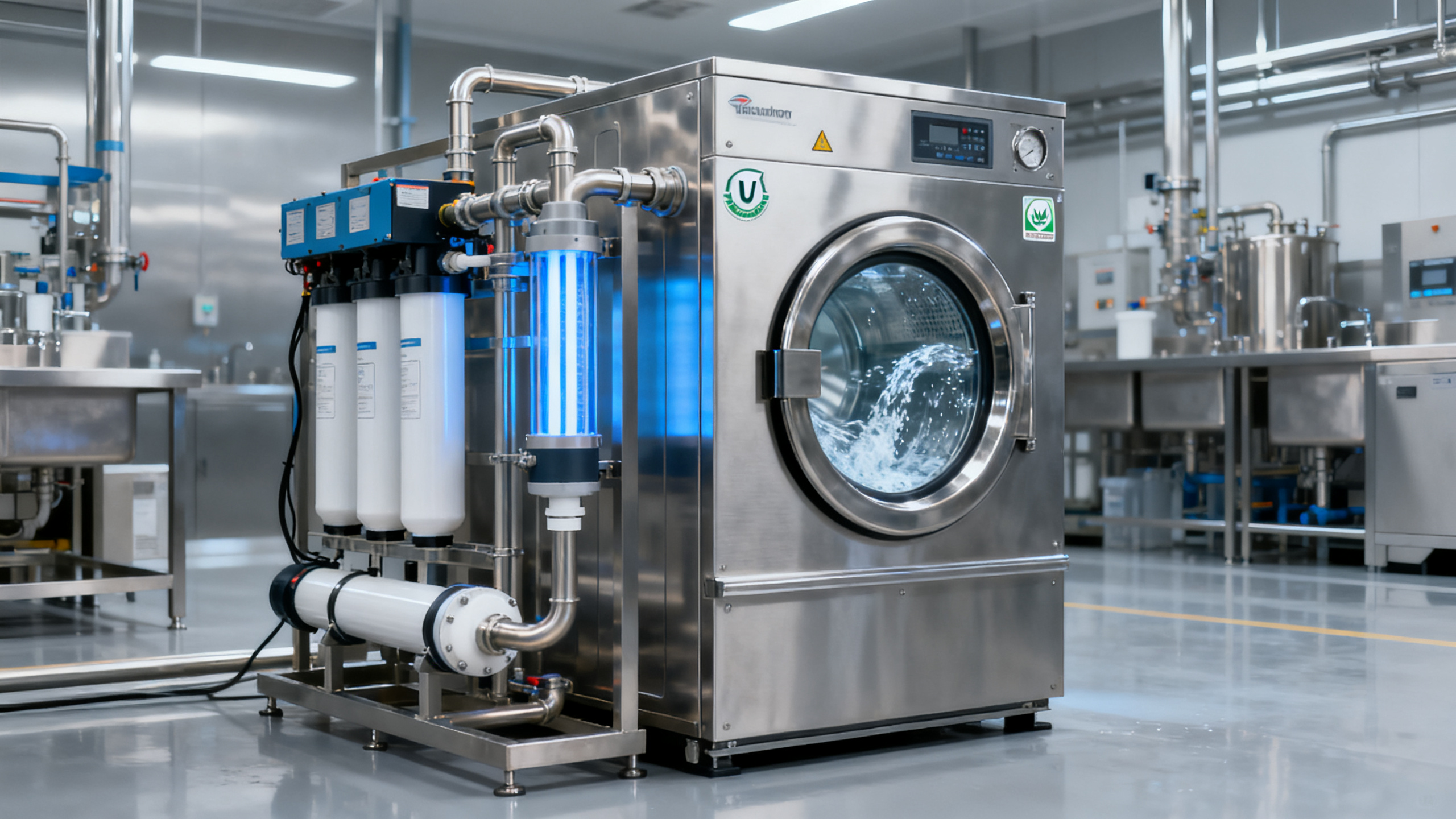
Saudi Arabia’s Standards Organization (SASO) issued WS 2790:2026 on May 18, 2026, introducing mandatory water-saving performance testing for commercial washing machines equipped with integrated water treatment modules—including softening, reverse osmosis (RO), and UV disinfection systems. This update directly affects manufacturers and exporters of integrated fire decontamination units, cleanroom laundry systems, and hospital infection control equipment serving the Middle East market.
Event Overview
On May 18, 2026, SASO published WS 2790:2026, the revised energy efficiency standard for washing machines. The new edition explicitly requires that all commercial washers incorporating built-in water treatment subsystems must undergo additional water conservation performance verification per ISO 15270 Annex D. This requirement applies to products placed on the Saudi market after the standard’s effective date; no transitional period or grandfathering clause has been publicly confirmed.
Industries Affected
Direct Exporters to the Middle East
Exporters supplying integrated laundry systems—especially those embedding water treatment functions for fire response, pharmaceutical cleanrooms, or healthcare sterilization—must now ensure compliance with both energy efficiency and newly mandated water-saving criteria. Non-compliant units may face customs rejection or post-import conformity assessment failure in Saudi Arabia.
Original Equipment Manufacturers (OEMs) of Integrated Laundry Systems
OEMs designing multi-function units (e.g., washer + RO + UV) are impacted at the product development and certification stage. The inclusion of ISO 15270 Annex D testing adds a new validation step not previously required under WS 2790:2019, potentially extending time-to-market and requiring updated technical documentation and test reports.
Suppliers of Water Treatment Subsystems
Vendors providing modular softeners, compact RO units, or UV sterilizers intended for integration into commercial washers must verify whether their components influence overall system-level water consumption metrics under ISO 15270 Annex D. While the standard targets the final assembled product, subsystem design choices—such as flow rate, regeneration cycles, or rinse water reuse logic—may materially affect pass/fail outcomes.
Key Focus Areas and Recommended Actions
Monitor Official Implementation Guidance from SASO
WS 2790:2026 is published, but SASO has not yet released official implementation timelines, enforcement dates, or recognized laboratories for ISO 15270 Annex D testing. Companies should subscribe to SASO’s regulatory updates and verify whether accredited third-party labs in China or GCC countries currently offer this specific test protocol.
Prioritize Review of High-Risk Product Lines
Focus initial compliance review on models marketed for Saudi Arabia or other Gulf Cooperation Council (GCC) markets that include water treatment features—particularly fire service decon units and hospital-grade washer-disinfectors. These categories are explicitly cited in the standard’s scope notes and carry higher regulatory scrutiny.
Distinguish Between Policy Signal and Operational Requirement
The introduction of ISO 15270 Annex D reflects an emerging emphasis on holistic resource efficiency—not just energy use, but water use—in regulated appliances. However, until SASO confirms enforcement mechanisms (e.g., mandatory SABER registration linkage, pre-shipment inspection triggers), companies should treat this as a near-term compliance planning item rather than an immediate shipment blocker.
Update Internal Technical Documentation and Supplier Agreements
Manufacturers should revise internal test plans, bill-of-materials specifications, and supplier quality agreements to reflect the new water-saving verification requirement. Where water treatment modules are sourced externally, contracts should clarify responsibility for supporting system-level ISO 15270 Annex D test data generation.
Editorial Observation / Industry Insight
Observably, this revision signals a shift in SASO’s regulatory approach—from isolated component-based energy labeling toward integrated environmental performance assessment of complex appliances. Analysis shows it is less a sudden enforcement action and more a calibrated expansion of existing sustainability frameworks, aligning with broader GCC climate commitments. From an industry perspective, it underscores that water efficiency is now being treated as a co-equal pillar alongside energy efficiency in regulated appliance standards—not merely a voluntary or niche feature. Current attention should focus on readiness, not reaction: the change is confirmed, but its operational impact depends on how SASO structures verification pathways and acceptance criteria.
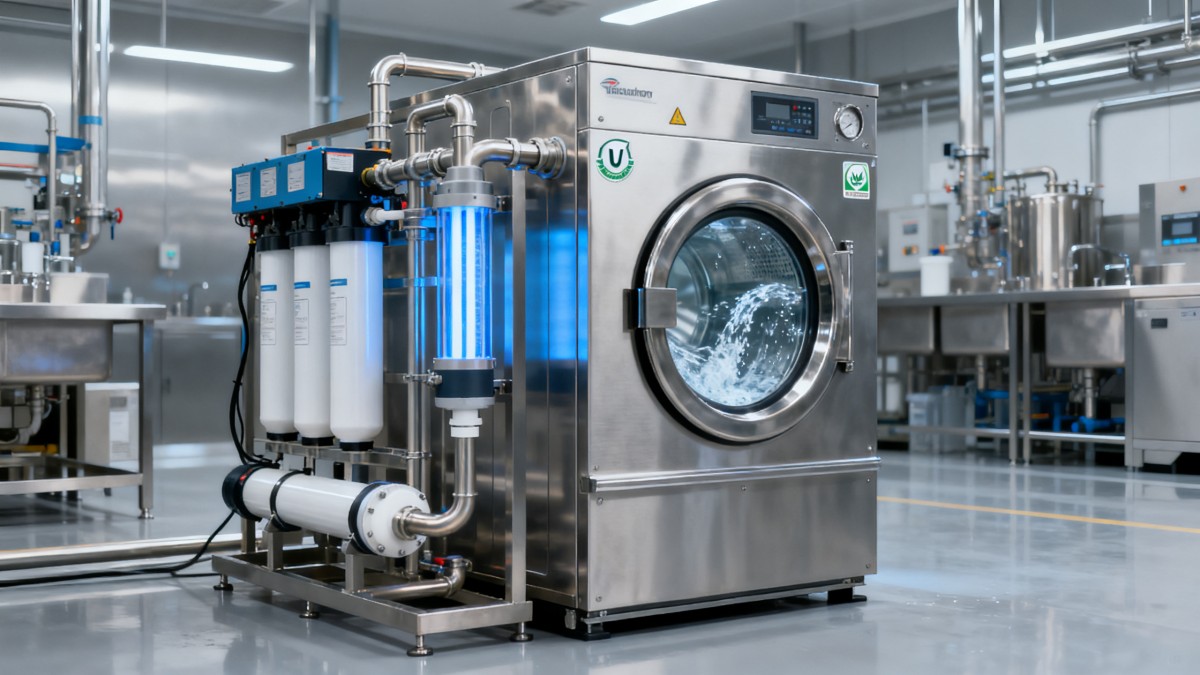
In summary, WS 2790:2026 introduces a concrete, testable requirement for water conservation performance in commercial washers with integrated treatment systems—a development with direct implications for export compliance, product engineering, and supply chain coordination. It is best understood not as an isolated technical amendment, but as an early indicator of tightening lifecycle resource-efficiency expectations across GCC-regulated equipment categories.
Source: Saudi Standards, Metrology and Quality Organization (SASO), WS 2790:2026 (published May 18, 2026).
Note: SASO’s official implementation schedule, list of accredited testing bodies for ISO 15270 Annex D, and any transitional provisions remain pending confirmation and are under active observation.
Technical Specifications
- How to Select Electronic Hotel Key Card Locks for Guest Rooms and Staff AreasAuthor :Safety Compliance Lead
- How to Select Lab Instruments for Reliable Chemical Analysis WorkflowsAuthor :Precision Metrology Expert
- How to Size a UPS for Server Rooms: Load, Runtime, and Redundancy FactorsAuthor :Grid Infrastructure Analyst
Expert Insights

Chief Security Architect
Dr. Thorne specializes in the intersection of structural engineering and digital resilience. He has advised three G7 governments on industrial infrastructure security.
Related Analysis
- Sep 17, 2026How to Select Electronic Hotel Key Card Locks for Guest Rooms and Staff AreasAuthor :Safety Compliance Lead
- Sep 16, 2026How to Select Lab Instruments for Reliable Chemical Analysis WorkflowsAuthor :Precision Metrology Expert
- Sep 15, 2026How to Size a UPS for Server Rooms: Load, Runtime, and Redundancy FactorsAuthor :Grid Infrastructure Analyst
Core Sector // 01
Security & Safety
- How to Size a Wafer Butterfly Valve for HVAC Chilled-Water and Heating LoopsAuthor :Environmental Engineering Director

- How Pressure Class and Joint Design Affect Long-Term Performance of Ductile Iron Pipes in Drainage InfrastructureAuthor :Environmental Engineering Director

- How Ductile Iron Pipe Joints Affect Installation Reliability and Leak ControlAuthor :Environmental Engineering Director

- How to Size Effluent Treatment Equipment for Variable Industrial Wastewater LoadsAuthor :Environmental Engineering Director

- US Battery Push Raises New Entry Rules for SuppliersAuthor :Environmental Engineering Director

- EU EMC Rule Tightens for Water Treatment ExportsAuthor :Environmental Engineering Director

- EU REACH Restriction Targets PFAS Water Treatment ImportsAuthor :Environmental Engineering Director

- EU Mandates EN 14113:2026 for Water Treatment ExportsAuthor :Environmental Engineering Director