How to vet an Environment & Ecology exporter before import
Author
Date Published
Reading Time
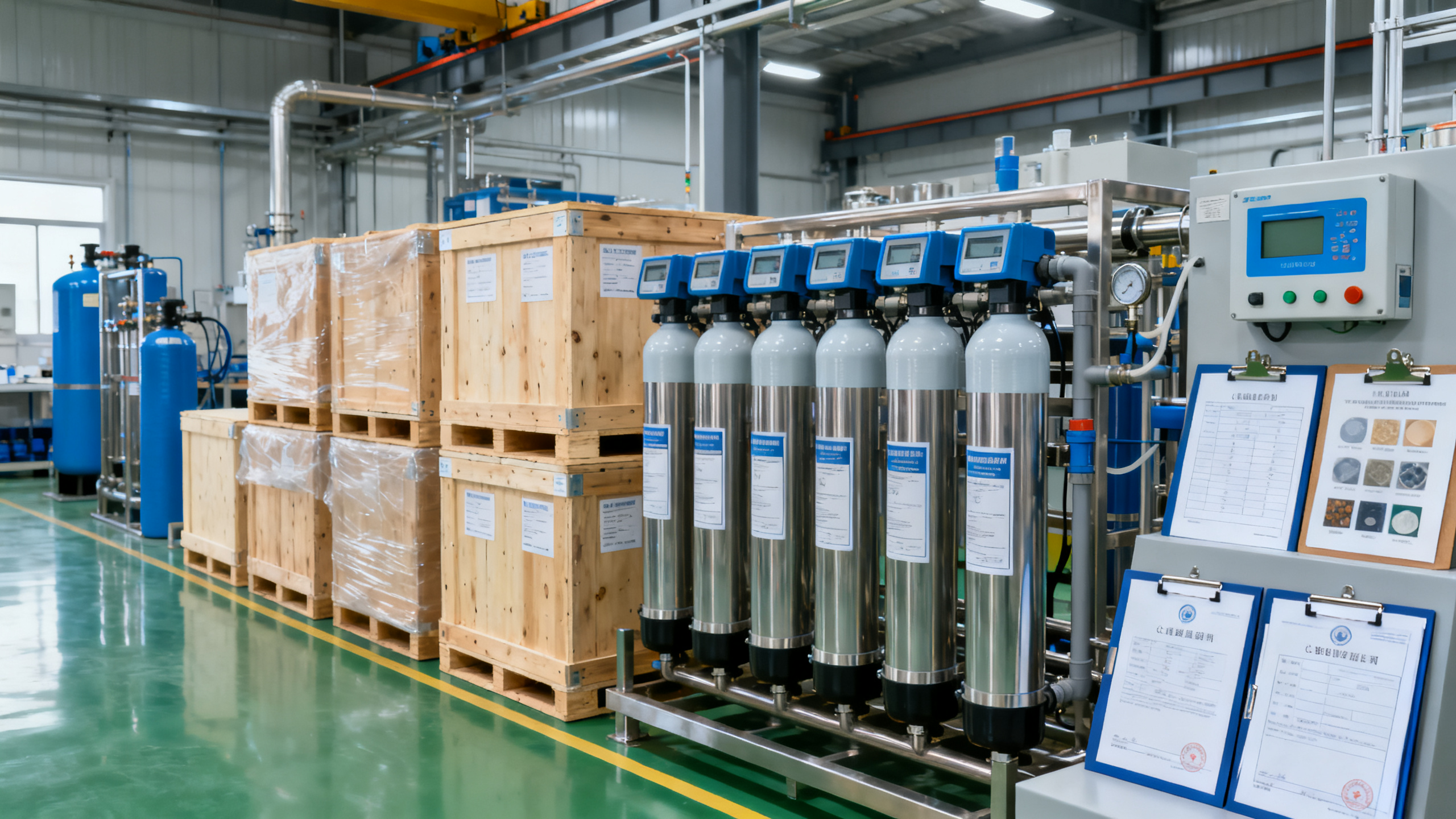
Choosing the right Environment & Ecology exporter can determine whether your import project meets compliance goals, delivery schedules, and long-term performance expectations. For procurement professionals, proper vetting goes beyond price comparison—it requires checking certifications, production capability, quality control systems, and export experience to reduce supply chain risk and secure dependable industrial outcomes.
What procurement teams really need to verify before selecting an Environment & Ecology exporter
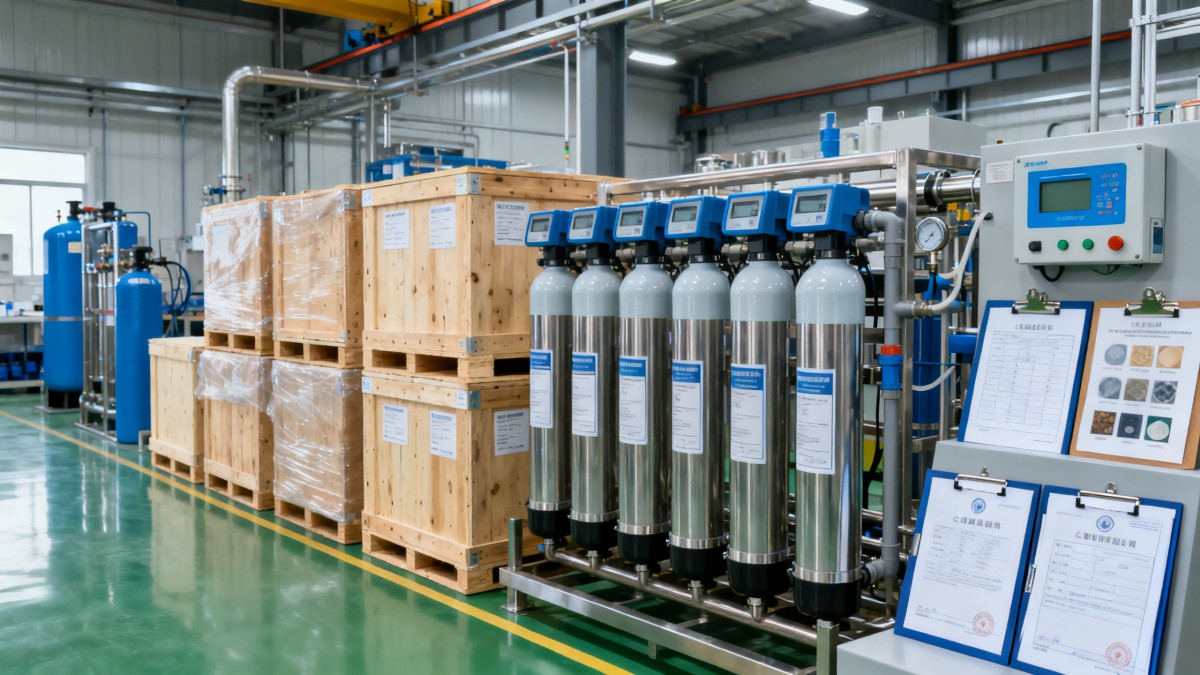
The core search intent behind this topic is practical supplier risk screening. Buyers are not looking for theory. They want a reliable way to confirm whether an Environment & Ecology exporter can deliver compliant products, stable quality, and dependable export execution.
For procurement professionals, the biggest concern is not simply whether a supplier can quote. It is whether the supplier can support real projects without causing regulatory delays, field failures, documentation gaps, or expensive replacement cycles after import.
That means the best vetting process should answer a few critical questions early. Is the exporter legitimately qualified, technically capable, quality disciplined, export experienced, and financially stable enough to support repeat industrial orders?
If those points are unclear, the apparent low-cost offer may become the highest-cost choice. Delayed customs clearance, failed inspections, poor packaging, incorrect labeling, and inconsistent batch quality often begin with weak supplier qualification.
A strong Environment & Ecology exporter should be able to prove capability with documents, records, plant evidence, testing data, and transparent communication. If the exporter avoids specifics, that is already a meaningful procurement signal.
Start with product scope, application fit, and regulatory alignment
Before evaluating any exporter, define exactly what you are sourcing. Environment & Ecology products can include filtration systems, wastewater treatment components, monitoring devices, emission control equipment, recycling machinery, and industrial environmental protection materials.
Each category carries different technical standards, certification pathways, and operational risks. A supplier that performs well in one niche may not be suitable for another, even if both sit under the same broad industrial label.
Procurement teams should first map the product to its end-use environment. Will it be used in municipal treatment, industrial processing, hazardous waste handling, air emission control, or environmental measurement applications?
This matters because application conditions affect the exporter’s required expertise. Corrosion resistance, media compatibility, calibration reliability, energy efficiency, contamination control, and traceability can all become decisive factors depending on the installation context.
Regulatory alignment must also be checked early. Ask which market standards the exporter already supports, such as CE, RoHS, REACH, ISO-related systems, or country-specific import and environmental requirements relevant to your destination market.
If the exporter cannot clearly explain how its products align with your market’s technical and compliance expectations, the sourcing process is already exposed to avoidable risk. Good exporters usually provide a compliance matrix, declaration package, or documented standard references.
Check whether the exporter is a real manufacturer, a trading company, or a hybrid sourcing operator
One of the most important vetting steps is understanding the exporter’s business model. Many buyers assume they are dealing directly with a manufacturer when they are actually speaking with a trading intermediary.
That is not automatically a problem. Some trading firms add value through consolidation, supplier management, and export execution. The issue is whether the company is transparent about its role and capable of controlling supply consistency.
Ask direct questions about factory ownership, production lines, subcontracting, and critical component sourcing. Request the legal company name, factory address, export registration details, and the names of affiliated manufacturing entities if applicable.
For an Environment & Ecology exporter, this distinction is especially important because process control often determines product performance. If membranes, sensors, housings, valves, or treatment media are outsourced, you need to know who controls quality at each stage.
Useful verification methods include business license review, export records, factory audit reports, video inspections, live production walkthroughs, and third-party verification. A trustworthy supplier should not resist these checks if the opportunity is commercially meaningful.
When the exporter is a hybrid operator, evaluate both its manufacturing depth and supplier management system. In many industrial categories, disciplined coordination matters as much as direct ownership, especially for integrated environmental systems assembled from multiple sourced components.
Evaluate certifications, testing records, and technical documentation with skepticism and structure
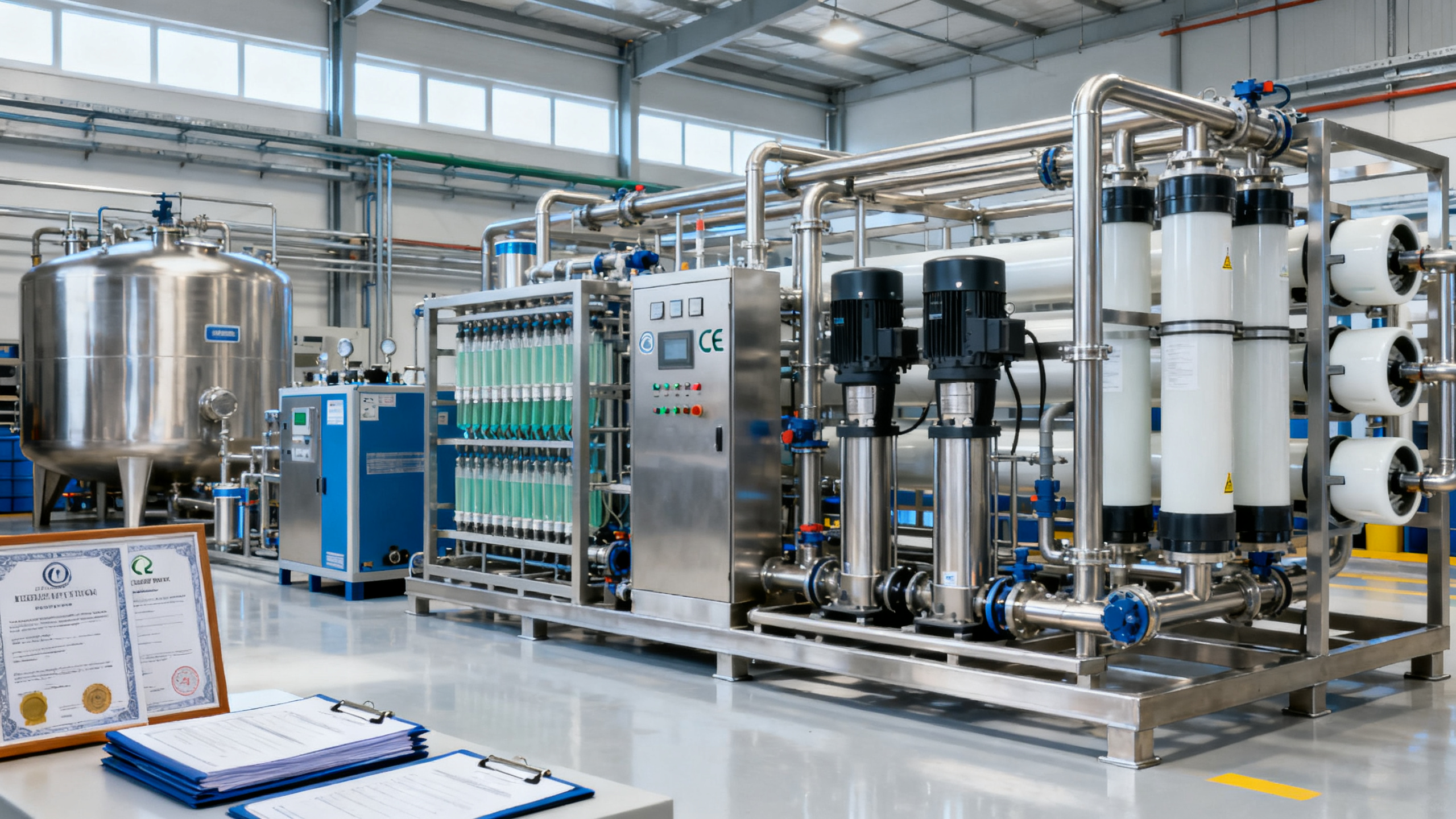
Certificates should support a sourcing decision, not replace one. Many buyers make the mistake of stopping at a logo on a brochure. Real vetting means checking whether the certification is valid, relevant, current, and issued by a credible body.
Start with quality system credentials such as ISO 9001 where relevant, then move to product-specific test reports, safety documentation, environmental declarations, material data sheets, and inspection records tied to the exact products you intend to import.
For environmental equipment and components, request laboratory test evidence, performance curves, material specifications, tolerance data, and maintenance documentation. If the exporter claims filtration efficiency, emission reduction performance, or monitoring accuracy, ask how those values were verified.
It is also essential to match the documents to the shipment reality. Some exporters provide genuine documents, but for older product versions, different models, or unrelated production sites. That gap creates a hidden compliance failure.
Check certificate numbers with issuing bodies where possible. Confirm the scope of certification, the name of the certificate holder, and the covered products. Review expiry dates, test conditions, and whether reports were performed by recognized laboratories.
A capable Environment & Ecology exporter should be comfortable sharing organized technical files. If documentation arrives incomplete, inconsistent, or difficult to trace, expect similar disorder in production and shipment execution.
Audit manufacturing capability, process control, and quality consistency
Import success depends on repeatability, not just sample performance. A vetted sample means little if the supplier cannot maintain the same quality across production lots, seasonal demand changes, or scaled order volumes.
That is why procurement teams should examine process control in detail. Ask about incoming material inspection, in-process checkpoints, final inspection protocols, nonconformance handling, and traceability systems from raw materials to shipment release.
For Environment & Ecology products, process discipline is often tied to performance stability. Coating thickness, welding quality, membrane uniformity, sensor calibration, seal integrity, and contamination prevention may directly affect field reliability.
Request quality documents such as control plans, inspection checklists, calibration schedules, defect rate history, corrective action examples, and batch traceability samples. Strong exporters can usually provide structured evidence rather than generic claims.
Factory audits do not need to be overly complex to be useful. Even a focused review of line layout, testing stations, warehouse organization, packaging flow, and document control can reveal whether the supplier operates with industrial rigor.
Pay attention to change management as well. Ask how the exporter handles material substitutions, component shortages, process revisions, and engineering changes. Uncontrolled substitutions are a common cause of import disputes and performance deviations.
Review export experience, shipping discipline, and destination market familiarity
A technically capable supplier may still be a poor export partner if documentation, packaging, and logistics execution are weak. For importers, this can create delays that erase any unit-price advantage.
Ask how long the supplier has exported, which countries it serves, and what share of revenue comes from overseas orders. Experience with your destination region matters because documentation and labeling expectations vary by market.
Assess whether the exporter understands commercial invoices, packing lists, HS code use, certificates of origin, fumigation or pallet rules, dangerous goods handling if relevant, and destination-specific customs requirements.
Packaging quality deserves close review, especially for environmental equipment containing sensors, coatings, fragile media, or precision assemblies. Poor internal protection, weak moisture control, or unclear carton marking can damage products before installation begins.
Ask for shipment photos, packaging specifications, and examples of export labels. Good exporters usually have standard operating procedures for container loading, spare parts segregation, palletization, and transit protection for long-distance industrial freight.
If your imports support project schedules, also examine on-time delivery performance. Request lead-time history, peak-capacity planning information, and examples of how the exporter handled urgent orders or supply disruptions without quality compromise.
Use commercial due diligence to reduce financial and contractual risk
Technical vetting alone is not enough. Procurement teams should also assess the exporter’s commercial reliability because unstable cash flow, unrealistic payment demands, or vague contract language often lead to avoidable disputes.
Start with quotation quality. Serious exporters provide clear model references, specification details, Incoterms, tooling or sample terms, inspection standards, warranty coverage, lead times, and packaging assumptions. Weak quotes often hide future claims and ambiguities.
Review payment terms in the context of supplier maturity and order criticality. A supplier demanding aggressive prepayment while offering limited verifiable credentials should trigger deeper review before commitment.
Where practical, check bank information consistency, corporate age, customer references, credit indicators, and litigation or sanction exposure. For strategic buys, third-party background reports can be worthwhile, especially in unfamiliar sourcing regions.
Your contract should define revision control, approved materials, inspection rights, quality acceptance criteria, spare parts terms, claim windows, confidentiality obligations, and remedies for late delivery or nonconforming goods.
For an Environment & Ecology exporter, warranty language should be especially precise. Environmental systems often interact with variable site conditions, so responsibilities for installation, commissioning, operating parameters, and consumables should be documented clearly.
Run a pilot order before moving to large-scale procurement
Even when a supplier looks strong on paper, a pilot order is one of the most effective ways to validate real-world performance. It turns assumptions into evidence.
A pilot can test communication speed, drawing control, sample approval discipline, production consistency, packaging quality, transit performance, and post-shipment support. These factors are hard to judge through documents alone.
For higher-value or technically sensitive items, consider pre-shipment inspection, laboratory re-testing, or site acceptance checks after arrival. The objective is not distrust for its own sake, but structured risk reduction before scaling spend.
Build a supplier scorecard covering compliance, quality, delivery, responsiveness, documentation accuracy, and corrective action quality. That gives your team a repeatable framework for comparing exporters over time.
If the exporter performs well in the pilot stage, you can move toward preferred supplier status with more confidence. If not, the pilot order has protected your organization from a much larger sourcing failure.
Red flags that should slow or stop your supplier approval process
Some warning signs deserve immediate attention. One common red flag is inconsistent company identity across certificates, contracts, invoices, and bank details. Another is refusal to share factory evidence or quality records.
Be cautious if lead times seem unrealistically short, technical answers remain vague, or the exporter pushes hard for quick deposits before clarifying specifications. These behaviors often indicate limited operational control.
Other warning signs include copied test reports, poor English in critical technical documents, reluctance to define warranty terms, and resistance to third-party inspection. None of these alone proves fraud, but together they increase sourcing risk.
Procurement teams should also question exporters that cannot explain past export projects, common failure modes, or maintenance considerations for their own products. A reliable industrial partner usually demonstrates both product knowledge and practical application awareness.
Conclusion: the best Environment & Ecology exporter is the one that reduces uncertainty, not just price
To vet an Environment & Ecology exporter effectively, procurement professionals should look beyond quotations and catalog claims. The real decision should be based on compliance alignment, manufacturing control, document credibility, export discipline, and commercial reliability.
In practice, the strongest suppliers are usually transparent, evidence-based, and operationally consistent. They can explain their processes, prove their qualifications, and support repeat orders with fewer surprises across quality, logistics, and documentation.
If your team uses a structured vetting process, you will not only reduce import risk. You will also improve total cost of ownership, protect project schedules, and build a more resilient supplier base for future industrial procurement needs.
For buyers working in high-stakes industrial environments, that is the real value of supplier due diligence. A well-vetted exporter does more than ship goods. It strengthens the reliability of the entire supply chain.
Technical Specifications
- How to Select Electronic Hotel Key Card Locks for Guest Rooms and Staff AreasAuthor :Safety Compliance Lead
- How to Select Lab Instruments for Reliable Chemical Analysis WorkflowsAuthor :Precision Metrology Expert
- How to Size a UPS for Server Rooms: Load, Runtime, and Redundancy FactorsAuthor :Grid Infrastructure Analyst
Expert Insights

Chief Security Architect
Dr. Thorne specializes in the intersection of structural engineering and digital resilience. He has advised three G7 governments on industrial infrastructure security.
Related Analysis
- Sep 17, 2026How to Select Electronic Hotel Key Card Locks for Guest Rooms and Staff AreasAuthor :Safety Compliance Lead
- Sep 16, 2026How to Select Lab Instruments for Reliable Chemical Analysis WorkflowsAuthor :Precision Metrology Expert
- Sep 15, 2026How to Size a UPS for Server Rooms: Load, Runtime, and Redundancy FactorsAuthor :Grid Infrastructure Analyst
Core Sector // 01
Security & Safety
- How to Size a Wafer Butterfly Valve for HVAC Chilled-Water and Heating LoopsAuthor :Environmental Engineering Director

- How Pressure Class and Joint Design Affect Long-Term Performance of Ductile Iron Pipes in Drainage InfrastructureAuthor :Environmental Engineering Director

- How Ductile Iron Pipe Joints Affect Installation Reliability and Leak ControlAuthor :Environmental Engineering Director

- How to Size Effluent Treatment Equipment for Variable Industrial Wastewater LoadsAuthor :Environmental Engineering Director

- US Battery Push Raises New Entry Rules for SuppliersAuthor :Environmental Engineering Director

- EU EMC Rule Tightens for Water Treatment ExportsAuthor :Environmental Engineering Director

- EU REACH Restriction Targets PFAS Water Treatment ImportsAuthor :Environmental Engineering Director

- EU Mandates EN 14113:2026 for Water Treatment ExportsAuthor :Environmental Engineering Director