China to Launch Multi-User Green Electricity Direct-Connection Policy
Author
Date Published
Reading Time
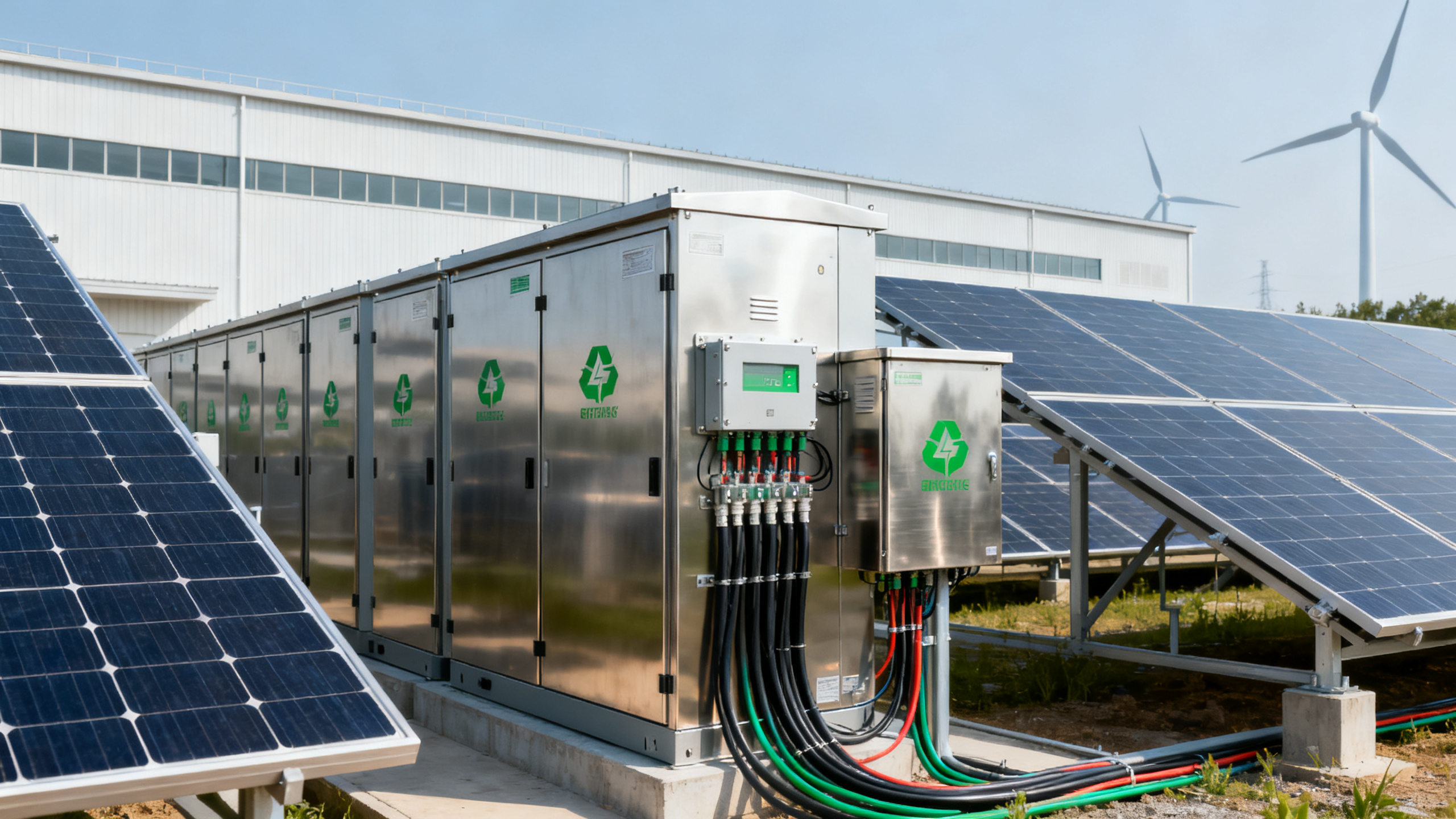
China’s National Energy Administration (NEA) has confirmed that a multi-user green electricity direct-connection policy will be released imminently. Though no specific date has been announced, the policy is expected to take effect in the near term. Industrial equipment manufacturers — particularly those producing water treatment systems, fire protection equipment, transformers, and power cables — should closely monitor its rollout, as it will directly affect carbon footprint accounting and ESG compliance for export markets, especially under EU CBAM and U.S. IRA green procurement requirements.
Event Overview
The National Energy Administration has stated that a multi-user green electricity direct-connection policy will be issued shortly. Under this policy, industrial users — including export-oriented manufacturing enterprises — will be permitted to procure renewable electricity directly via distributed energy aggregation and intelligent microgrids. No further details on implementation timelines, eligibility criteria, or technical standards have been publicly disclosed at this stage.
Industries Affected
Industrial Equipment Manufacturers (e.g., water treatment, fire protection, transformers, cables)
These manufacturers are classified as high-energy-consuming producers. Their products are increasingly subject to carbon intensity assessments in key export markets. The new policy enables them to source green electricity more flexibly — a prerequisite for accurate scope 2 emissions reporting and ESG verification. Impact manifests primarily in carbon accounting methodology, third-party audit readiness, and eligibility for green procurement programs.
Export-Oriented Manufacturing Enterprises
For manufacturers exporting to the EU or U.S., compliance with CBAM and IRA-related supply chain disclosure rules hinges on verifiable clean energy usage. The policy introduces a formal domestic mechanism to support such verification. Affected enterprises may see shifts in buyer expectations around energy sourcing documentation and upstream supplier engagement.
Energy Service Providers & Distributed Generation Aggregators
Entities facilitating distributed energy aggregation or operating intelligent microgrids stand to gain new regulatory recognition and operational pathways. The policy signals formal institutional acceptance of their role in enabling green power access for multiple end users — though commercial models and grid interconnection protocols remain unconfirmed.
What Relevant Enterprises or Practitioners Should Focus On
Monitor official NEA announcements and supporting documents
Current information is limited to a high-level policy announcement. Enterprises should track subsequent guidance — including pilot region designations, eligibility thresholds for industrial users, and certification requirements for aggregated green power — before adjusting internal compliance frameworks.
Assess exposure to EU CBAM and U.S. IRA supply chain clauses
Focus on product categories and export destinations where green electricity procurement is already factored into buyer due diligence. Prioritize internal data collection on current electricity sourcing (grid mix vs. PPAs), especially for facilities supplying EU or U.S.-bound goods.
Distinguish policy signal from operational readiness
While the policy indicates strategic direction, infrastructure, metering standards, and contractual templates for multi-user direct procurement are not yet public. Avoid premature commitments to new procurement structures until technical and administrative implementation details are released.
Initiate cross-departmental alignment on energy data management
Prepare for potential integration of green electricity procurement data into existing ESG reporting workflows. This includes coordination between energy procurement, production planning, sustainability, and export compliance teams — particularly where scope 2 emissions attribution becomes tied to verified green power contracts.
Editorial Perspective / Industry Observation
Observably, this policy announcement functions primarily as a regulatory signal — not an immediately actionable framework. It reflects China’s alignment of domestic energy market reform with international climate trade mechanisms, rather than delivering a ready-made compliance tool. Analysis shows that its significance lies less in immediate operational change and more in validating the strategic priority of decarbonizing industrial electricity consumption. From an industry perspective, sustained attention is warranted because future implementation rules will likely define which industrial subsectors gain first-mover advantage in green power access — and therefore in export market positioning.
Conclusion: This policy marks a procedural milestone in linking China’s domestic clean energy infrastructure with global carbon-constrained trade regimes. It does not replace existing ESG reporting obligations or alter current CBAM/IRA enforcement timelines. Rather, it introduces a domestically coordinated pathway — still nascent — for industrial users to strengthen evidence-based claims about renewable electricity use. At present, it is more appropriately understood as an enabler-in-development than a compliance solution.
Source: National Energy Administration (NEA) public statement. Note: Implementation details, effective date, and technical specifications remain pending official release and are subject to ongoing observation.
Technical Specifications
- How to Select Electronic Hotel Key Card Locks for Guest Rooms and Staff AreasAuthor :Safety Compliance Lead
- How to Select Lab Instruments for Reliable Chemical Analysis WorkflowsAuthor :Precision Metrology Expert
- How to Size a UPS for Server Rooms: Load, Runtime, and Redundancy FactorsAuthor :Grid Infrastructure Analyst
Expert Insights

Chief Security Architect
Dr. Thorne specializes in the intersection of structural engineering and digital resilience. He has advised three G7 governments on industrial infrastructure security.
Related Analysis
- Sep 17, 2026How to Select Electronic Hotel Key Card Locks for Guest Rooms and Staff AreasAuthor :Safety Compliance Lead
- Sep 16, 2026How to Select Lab Instruments for Reliable Chemical Analysis WorkflowsAuthor :Precision Metrology Expert
- Sep 15, 2026How to Size a UPS for Server Rooms: Load, Runtime, and Redundancy FactorsAuthor :Grid Infrastructure Analyst
Core Sector // 01
Security & Safety
- How to Size a Wafer Butterfly Valve for HVAC Chilled-Water and Heating LoopsAuthor :Environmental Engineering Director

- How Pressure Class and Joint Design Affect Long-Term Performance of Ductile Iron Pipes in Drainage InfrastructureAuthor :Environmental Engineering Director

- How Ductile Iron Pipe Joints Affect Installation Reliability and Leak ControlAuthor :Environmental Engineering Director

- How to Size Effluent Treatment Equipment for Variable Industrial Wastewater LoadsAuthor :Environmental Engineering Director

- US Battery Push Raises New Entry Rules for SuppliersAuthor :Environmental Engineering Director

- EU EMC Rule Tightens for Water Treatment ExportsAuthor :Environmental Engineering Director

- EU REACH Restriction Targets PFAS Water Treatment ImportsAuthor :Environmental Engineering Director

- EU Mandates EN 14113:2026 for Water Treatment ExportsAuthor :Environmental Engineering Director