How to vet an Environment & Ecology exporter before buying
Author
Date Published
Reading Time
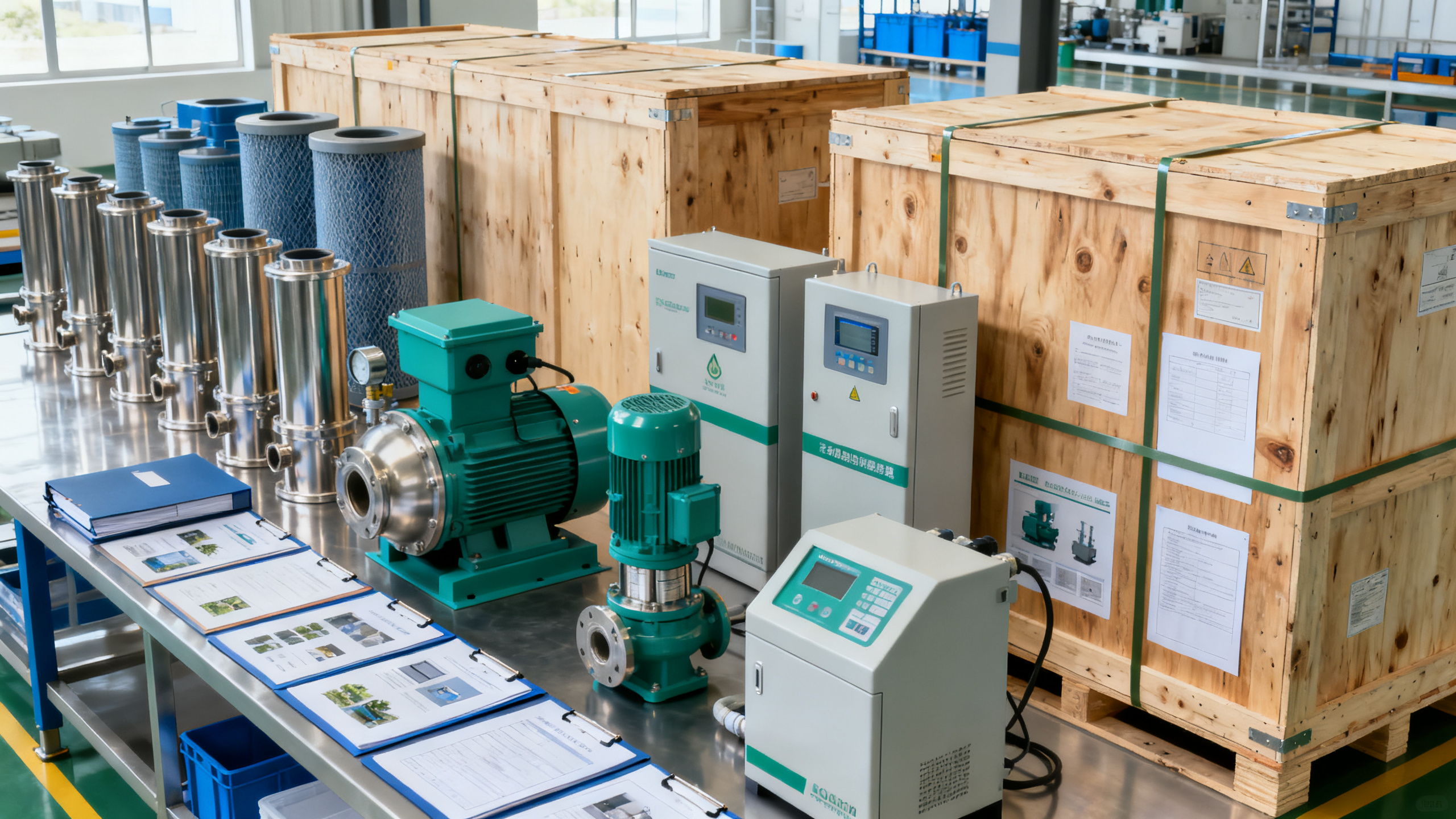
Choosing an Environment & Ecology exporter is more than a price comparison—it is a risk decision that can affect compliance, project performance, and long-term operational reliability. Before buying, procurement teams should verify certifications, production capability, quality controls, export experience, and after-sales support to avoid costly delays or non-conforming products. This guide explains how to assess suppliers with confidence and build a safer, more dependable sourcing process.
Why procurement teams must vet an Environment & Ecology exporter beyond price
In industrial and infrastructure projects, Environment & Ecology equipment often supports wastewater treatment, dust control, emissions handling, environmental monitoring, recycling systems, and site compliance programs. A weak supplier can create downstream problems that are far more expensive than an initial unit discount.
For procurement personnel, the challenge is rarely just finding a vendor. The real task is identifying an Environment & Ecology exporter that can supply consistent quality, valid documentation, stable lead times, and technical support that matches project conditions.
This matters even more in cross-border sourcing. Export packaging, customs documentation, language clarity, standards alignment, and replacement-part logistics all influence total procurement risk.
- A low-cost quotation may exclude testing reports, spare parts, or commissioning guidance.
- A factory with limited export experience may mismanage shipping marks, fumigation rules, or certificate consistency.
- A trader without technical depth may fail to confirm chemical compatibility, environmental duty cycles, or site integration details.
That is why a disciplined vetting process should focus on supplier capability, not only the quoted price. Global Industrial Core supports this approach by helping buyers compare technical claims, compliance evidence, and sourcing risks in a more structured way.
What should you verify first when screening an Environment & Ecology exporter?
The first screening stage should be fast but evidence-based. Procurement teams do not need to audit every supplier in depth at the start, but they do need to filter out weak exporters early.
Use the following shortlist criteria before requesting samples, drawings, or final commercial negotiations.
- Confirm whether the supplier is a manufacturer, an integrated exporter, or a pure trading company.
- Check whether the supplier has relevant product documentation such as specification sheets, inspection procedures, and material declarations.
- Verify export history by asking for shipment destinations, common Incoterms used, and standard packaging methods.
- Review communication quality, including response speed, technical accuracy, and willingness to clarify deviations.
- Request a preliminary lead-time breakdown covering production, inspection, packing, and dispatch.
A capable Environment & Ecology exporter should be able to explain where quality is controlled, how traceability is maintained, and what documents will accompany the shipment. If those answers remain vague, buyers should proceed carefully.
Quick screening checklist for procurement teams
The table below helps procurement teams compare suppliers during the first evaluation round. It is especially useful when several quotations look similar on the surface.
This early-stage matrix helps reduce wasted time. It also gives buyers a practical basis for deciding which Environment & Ecology exporter deserves a deeper technical and commercial review.
How to assess certifications, compliance, and document control
In Environment & Ecology sourcing, certifications are often misunderstood. Procurement teams sometimes treat any certificate as a green light, but the real question is whether the document is relevant to the specific product, destination market, and operating use.
For example, a management-system certificate does not automatically confirm product conformity. Likewise, a laboratory test report may cover one configuration, not the full production range you intend to buy.
What procurement should validate
- Whether the certificate applies to the actual product category being purchased.
- Whether the issuing body is appropriate for the market and recognized by customers or project consultants.
- Whether the document date, model reference, and factory name match the quotation and shipping documents.
- Whether additional declarations are needed for material safety, environmental handling, or installation guidance.
Industrial buyers should also review document control discipline. A reliable Environment & Ecology exporter usually maintains revision management for drawings, inspection reports, packing lists, and shipment records.
This becomes critical when products are integrated into EPC packages, municipal systems, plant retrofits, or regulated industrial operations where one document mismatch can delay site acceptance.
Common compliance documents and why they matter
The following table does not replace project-specific requirements, but it helps procurement teams understand which document categories should be checked during supplier qualification.
When certification review is linked to product scope, document revision, and destination use, procurement gains a much clearer picture of supplier reliability. This is where structured sourcing intelligence adds measurable value.
How to judge manufacturing capability and quality control
A strong Environment & Ecology exporter should be able to prove how products move from raw material intake to final shipment. Buyers should not rely only on polished catalogs or website claims.
Instead, ask how the supplier controls incoming materials, in-process checks, final inspection, nonconforming items, and lot traceability. The goal is to understand process maturity, not just sales confidence.
Signals of a more reliable supplier
- They can explain key production stages for the specific environmental product you need.
- They maintain inspection records linked to batch numbers or serial references.
- They can define acceptance criteria for dimensions, pressure, flow, filtration, emissions, or other relevant metrics.
- They accept pre-shipment inspection or third-party witness review when required by contract.
For larger or repeat orders, procurement should consider a remote factory audit, live production walk-through, or third-party verification. These steps are especially useful when sourcing critical components for filtration systems, monitoring assemblies, treatment skids, or pollution-control packages.
Global Industrial Core often recommends comparing the supplier’s claimed capacity with actual project rhythm. A factory that can make the product may still struggle with synchronized release schedules, mixed-SKU orders, or custom documentation packages.
What export experience should an Environment & Ecology exporter demonstrate?
Export competence is not a side issue. Even technically sound goods can become procurement failures if labels, crates, declarations, or spare-part lists are poorly managed.
Buyers should ask an Environment & Ecology exporter about shipping routes, packaging norms, customs paperwork, and damaged-goods response procedures. Strong exporters usually answer in a process-based way, not in broad promises.
Questions that reveal real export capability
- How do you prepare export packaging for moisture, vibration, and handling risks?
- Which documents do you normally issue for customs clearance and destination inspection?
- How do you manage replacement parts if transit damage or site mismatch occurs?
- Can you support mixed shipments with accessories, manuals, and marked spare kits?
This is particularly important for procurement teams handling multi-country projects, emergency maintenance orders, or framework agreements where shipment consistency matters as much as product quality.
How to compare quotations without missing hidden cost drivers
A procurement decision should compare landed value, not only unit price. In Environment & Ecology sourcing, hidden costs often appear in rework, missing accessories, delayed approvals, or unsuitable materials for the operating medium.
When reviewing quotations, create a normalized comparison sheet. Ensure every supplier is quoting the same scope, same testing basis, same delivery condition, and same documentation package.
Cost comparison points that matter
The table below helps buyers compare an Environment & Ecology exporter on commercial terms that often affect total project cost.
A quotation that looks higher at first may carry lower total risk. Procurement teams should translate technical gaps into commercial exposure before awarding to any Environment & Ecology exporter.
Which after-sales and technical support terms reduce procurement risk?
After-sales support is often overlooked until problems occur. Yet in industrial environments, a missing replacement seal, delayed calibration support, or unclear installation instruction can affect commissioning and compliance.
Buyers should define service expectations before placing the order, especially when the Environment & Ecology exporter is supplying products for regulated processes or continuous operations.
- Ask for the standard response window for technical questions and claim handling.
- Confirm whether spare parts can be supplied separately and how long critical items remain available.
- Check whether commissioning documents, maintenance instructions, and exploded-part lists are included.
- For custom products, clarify drawing approval, change control, and responsibility for deviations.
A practical supplier relationship is built on documented commitments, not assumptions. This is especially true for procurement teams balancing urgent lead times, budget controls, and audit requirements.
Common mistakes buyers make when choosing an Environment & Ecology exporter
Mistake 1: Treating all certificates as equal
A generic certificate can create false confidence. Buyers need to connect every compliance document to the exact product, model, and application.
Mistake 2: Accepting unclear technical scope
If the quotation does not define materials, performance limits, interfaces, or included accessories, later disputes become likely. Clear scope protects both buyer and supplier.
Mistake 3: Underestimating export execution risk
Many procurement problems arise after manufacturing is complete. Poor packaging, incomplete paperwork, or inconsistent labeling can still jeopardize the order.
Mistake 4: Choosing on price without lifecycle thinking
Environmental and ecological systems often interact with corrosive media, variable loads, or compliance-sensitive operations. Cheap components may increase maintenance, downtime, or replacement frequency.
FAQ: practical questions procurement teams ask before buying
How do I know whether an Environment & Ecology exporter is a real manufacturer?
Ask for production-flow details, factory photos tied to the product line, inspection records, and packaging examples. A genuine manufacturer or integrated exporter can usually explain process control in concrete terms and provide consistent technical documentation.
What documents should I request before placing an order?
At minimum, request datasheets, drawings where applicable, inspection standards, compliance-related documents relevant to your market, packing details, and a lead-time schedule. For customized items, include approved specifications and revision control.
How important is destination-market experience for an Environment & Ecology exporter?
It is highly important when your project involves regulated imports, consultant approvals, or strict delivery milestones. Exporters with destination experience are generally better prepared for document format, labeling rules, and issue resolution during customs or site receipt.
Should I always request a sample or third-party inspection?
Not always, but these steps are strongly recommended for new suppliers, critical applications, custom assemblies, or large-volume orders. The cost of verification is often low compared with the cost of project delay or nonconforming goods.
Why work with Global Industrial Core for supplier evaluation and sourcing support
Global Industrial Core is built for industrial procurement environments where compliance, reliability, and technical clarity carry more weight than simple price comparisons. In Environment & Ecology sourcing, that means helping buyers evaluate exporters through practical, evidence-based criteria.
Our coverage is shaped for EPC contractors, facility managers, and procurement directors who need stronger visibility into supplier qualification, standards alignment, and operational risk. We focus on the foundational systems that power and sustain industry, so sourcing decisions are assessed in their real project context.
- We help clarify parameter confirmation before inquiry or order placement.
- We support product selection logic when multiple Environment & Ecology exporter options appear similar.
- We help buyers review delivery-cycle assumptions, documentation requirements, and export-readiness signals.
- We assist with discussions around customization, certification expectations, sample evaluation, and quotation comparison.
If your team is screening a new Environment & Ecology exporter, preparing a multi-supplier comparison, or trying to reduce sourcing risk before contract award, contact Global Industrial Core for structured guidance. You can consult on product parameters, supplier vetting criteria, lead time planning, certification matching, sample support, custom solution feasibility, and commercial quotation review.
Technical Specifications
- How to Select Electronic Hotel Key Card Locks for Guest Rooms and Staff AreasAuthor :Safety Compliance Lead
- How to Select Lab Instruments for Reliable Chemical Analysis WorkflowsAuthor :Precision Metrology Expert
- How to Size a UPS for Server Rooms: Load, Runtime, and Redundancy FactorsAuthor :Grid Infrastructure Analyst
Expert Insights

Chief Security Architect
Dr. Thorne specializes in the intersection of structural engineering and digital resilience. He has advised three G7 governments on industrial infrastructure security.
Related Analysis
- Sep 17, 2026How to Select Electronic Hotel Key Card Locks for Guest Rooms and Staff AreasAuthor :Safety Compliance Lead
- Sep 16, 2026How to Select Lab Instruments for Reliable Chemical Analysis WorkflowsAuthor :Precision Metrology Expert
- Sep 15, 2026How to Size a UPS for Server Rooms: Load, Runtime, and Redundancy FactorsAuthor :Grid Infrastructure Analyst
Core Sector // 01
Security & Safety
- How to Size a Wafer Butterfly Valve for HVAC Chilled-Water and Heating LoopsAuthor :Environmental Engineering Director

- How Pressure Class and Joint Design Affect Long-Term Performance of Ductile Iron Pipes in Drainage InfrastructureAuthor :Environmental Engineering Director

- How Ductile Iron Pipe Joints Affect Installation Reliability and Leak ControlAuthor :Environmental Engineering Director

- How to Size Effluent Treatment Equipment for Variable Industrial Wastewater LoadsAuthor :Environmental Engineering Director

- US Battery Push Raises New Entry Rules for SuppliersAuthor :Environmental Engineering Director

- EU EMC Rule Tightens for Water Treatment ExportsAuthor :Environmental Engineering Director

- EU REACH Restriction Targets PFAS Water Treatment ImportsAuthor :Environmental Engineering Director

- EU Mandates EN 14113:2026 for Water Treatment ExportsAuthor :Environmental Engineering Director