‘New Dual’ Policy Boosts Export Demand for Water & Waste Equipment
Author
Date Published
Reading Time
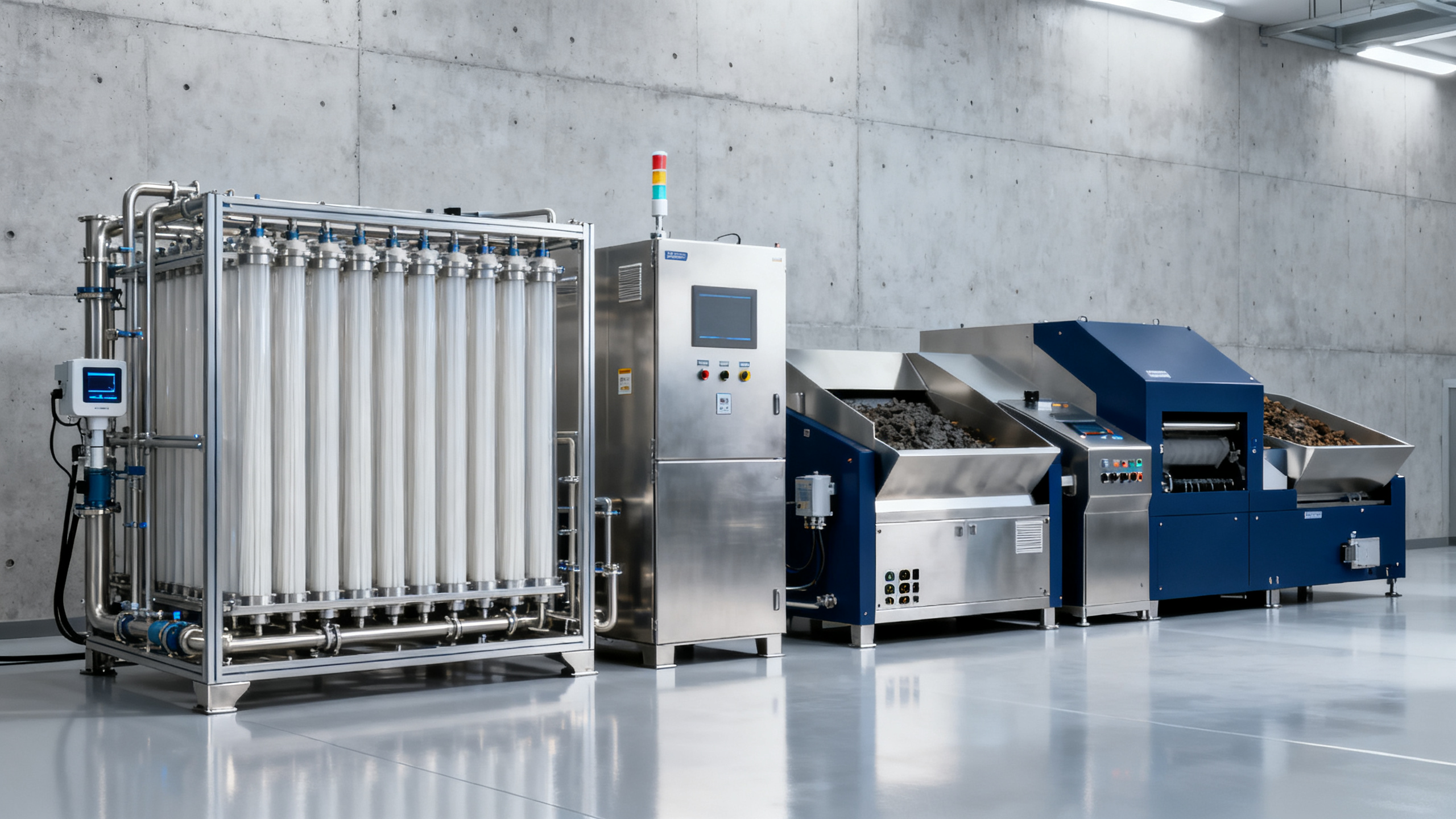
On May 9, 2026, the State Council issued the Several Measures on Accelerating Support for Large-Scale Equipment Renewal and Consumer Goods Replacement, marking a significant expansion of the ‘New Dual’ (‘Two New’) policy framework. The move directly impacts the environmental equipment sector—particularly industrial water treatment and solid waste management—by integrating key technologies into central fiscal subsidy programs and explicitly promoting bundled ‘equipment + technical services’ exports. This represents a structural shift from hardware-only support toward integrated, high-value solutions.
Event Overview
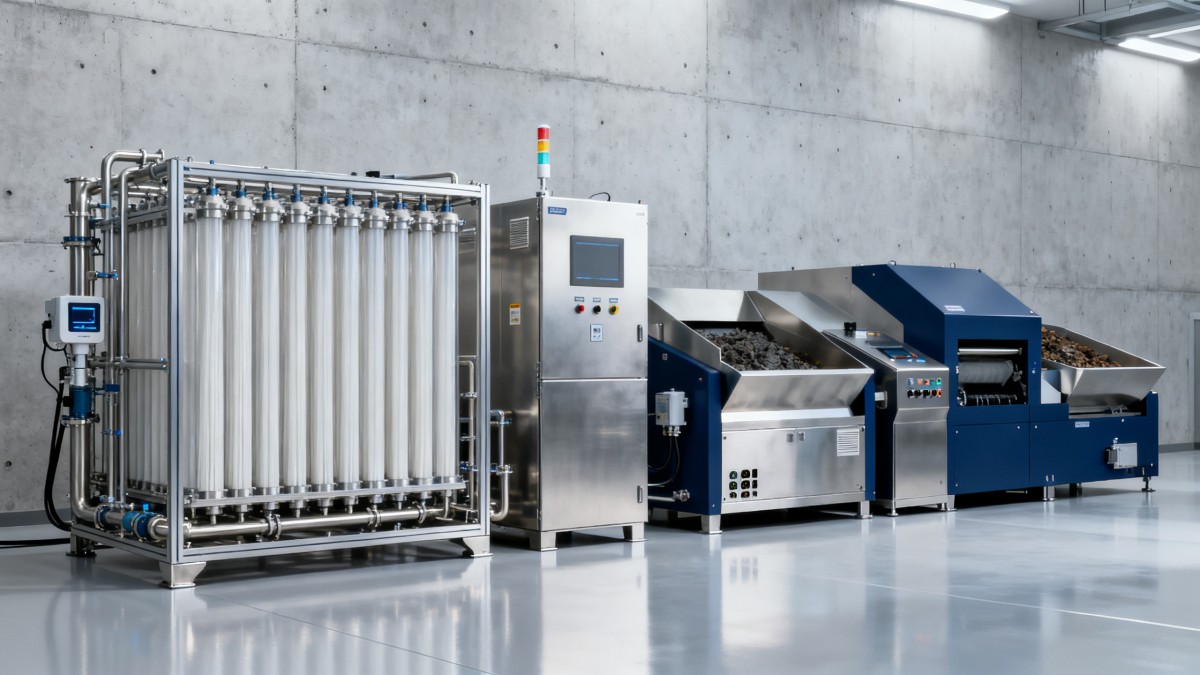
On May 9, 2026, the State Council released the Several Measures on Accelerating Support for Large-Scale Equipment Renewal and Consumer Goods Replacement. For the first time, industrial water treatment membrane modules, MBR (Membrane Bioreactor) integrated systems, and intelligent solid waste sorting systems were added to the central government’s fiscal subsidy catalog. Subsidies reach up to 30% per unit. The policy also encourages export of ‘equipment + technical services’ packages. As a result, three Chinese environmental equipment enterprises have signed EPC+O (Engineering, Procurement, Construction + Operations) contracts with water utilities in Indonesia and Vietnam—including remote diagnostics and digital twin–based operation & maintenance services.
Industries Affected
Direct Trade Enterprises: Export-oriented equipment suppliers are seeing heightened demand for bundled offerings—not just hardware, but embedded digital services. Impact manifests in longer sales cycles (due to service integration), higher contract values, and increased pre-sales technical engagement with overseas clients.
Raw Material Procurement Enterprises: Suppliers of critical components—such as high-flux PVDF membranes, PLC controllers for sorting systems, or corrosion-resistant stainless-steel housings—are experiencing upstream order visibility improvements. However, procurement teams now face tighter specifications tied to certified performance metrics required for subsidy eligibility.
Manufacturing Enterprises: OEMs producing MBR units or AI-powered sorting lines must adapt production workflows to accommodate service-enabling features (e.g., IoT sensor integration, edge-computing modules, standardized API interfaces). Certification alignment with national subsidy criteria—especially energy efficiency and data interoperability standards—is becoming a prerequisite for qualification.
Supply Chain Service Enterprises: Logistics providers specializing in oversized equipment, customs brokers familiar with dual-use technology classifications, and after-sales service networks are seeing demand diversify—from pure freight handling toward coordinated delivery of physical assets plus cloud-based platform onboarding and local technician training.
Key Considerations and Recommended Actions
Verify Eligibility Against Updated Subsidy Catalog
Manufacturers and exporters must cross-check product models against the official May 2026 subsidy list—particularly verifying whether membrane flux ratings, MBR hydraulic retention time compliance, or AI model validation reports meet newly defined thresholds. Retroactive exclusion remains possible for non-conforming variants.
Develop Modular Service Packages for Export Contracts
Given the policy’s emphasis on ‘equipment + technical services’, firms should formalize tiered service add-ons—e.g., Tier 1: remote monitoring only; Tier 2: predictive maintenance + spare parts logistics; Tier 3: full digital twin deployment with local staff certification. Pricing and SLAs must be structured to align with host-country regulatory timelines and utility budget cycles.
Strengthen Cross-Border Data Governance Protocols
Remote diagnostics and digital twin deployments involve cross-border data flows. Exporters must assess compliance with both China’s Personal Information Protection Law and host-country data localization rules (e.g., Indonesia’s PDP Law, Vietnam’s Decree 13/2023/ND-CP). Pre-contract data mapping and jurisdiction-specific consent frameworks are now essential due diligence items.
Editorial Insight / Industry Observation
Observably, this policy iteration signals a deliberate pivot: the ‘New Dual’ initiative is no longer solely about domestic capacity renewal—it is increasingly functioning as a strategic export catalyst. Analysis shows that inclusion of digital operations enablers (not just hardware) reflects an institutional recognition that global competitiveness in environmental infrastructure now hinges on lifecycle value capture—not just unit sales. From an industry perspective, the move better aligns with ASEAN’s growing emphasis on smart utility modernization, yet it also raises the technical and contractual bar for mid-tier suppliers lacking in-service engineering depth.
Conclusion
This policy update does not merely expand subsidy scope—it redefines what qualifies as ‘eligible equipment’ in international markets. The coupling of hardware subsidies with service mandates shifts competitive dynamics toward firms capable of orchestrating cross-functional delivery. A rational interpretation is that near-term winners will be those who treat digital operations not as an add-on, but as a co-engineered core component of their export proposition.
Source Attribution
Official source: State Council of the People’s Republic of China, Several Measures on Accelerating Support for Large-Scale Equipment Renewal and Consumer Goods Replacement, issued May 9, 2026. Implementation guidelines and subsidy application procedures are pending release by the Ministry of Finance and the National Development and Reform Commission. Market participants should monitor upcoming provincial-level implementation rules—and particularly watch for clarifications on cross-border VAT treatment for bundled service elements.
Technical Specifications
- How to Select Electronic Hotel Key Card Locks for Guest Rooms and Staff AreasAuthor :Safety Compliance Lead
- How to Select Lab Instruments for Reliable Chemical Analysis WorkflowsAuthor :Precision Metrology Expert
- How to Size a UPS for Server Rooms: Load, Runtime, and Redundancy FactorsAuthor :Grid Infrastructure Analyst
Expert Insights

Chief Security Architect
Dr. Thorne specializes in the intersection of structural engineering and digital resilience. He has advised three G7 governments on industrial infrastructure security.
Related Analysis
- Sep 17, 2026How to Select Electronic Hotel Key Card Locks for Guest Rooms and Staff AreasAuthor :Safety Compliance Lead
- Sep 16, 2026How to Select Lab Instruments for Reliable Chemical Analysis WorkflowsAuthor :Precision Metrology Expert
- Sep 15, 2026How to Size a UPS for Server Rooms: Load, Runtime, and Redundancy FactorsAuthor :Grid Infrastructure Analyst
Core Sector // 01
Security & Safety
- How to Size a Wafer Butterfly Valve for HVAC Chilled-Water and Heating LoopsAuthor :Environmental Engineering Director

- How Pressure Class and Joint Design Affect Long-Term Performance of Ductile Iron Pipes in Drainage InfrastructureAuthor :Environmental Engineering Director

- How Ductile Iron Pipe Joints Affect Installation Reliability and Leak ControlAuthor :Environmental Engineering Director

- How to Size Effluent Treatment Equipment for Variable Industrial Wastewater LoadsAuthor :Environmental Engineering Director

- US Battery Push Raises New Entry Rules for SuppliersAuthor :Environmental Engineering Director

- EU EMC Rule Tightens for Water Treatment ExportsAuthor :Environmental Engineering Director

- EU REACH Restriction Targets PFAS Water Treatment ImportsAuthor :Environmental Engineering Director

- EU Mandates EN 14113:2026 for Water Treatment ExportsAuthor :Environmental Engineering Director