New 'Two Renewals' Policy Boosts Export of Water & Waste Equipment
Author
Date Published
Reading Time
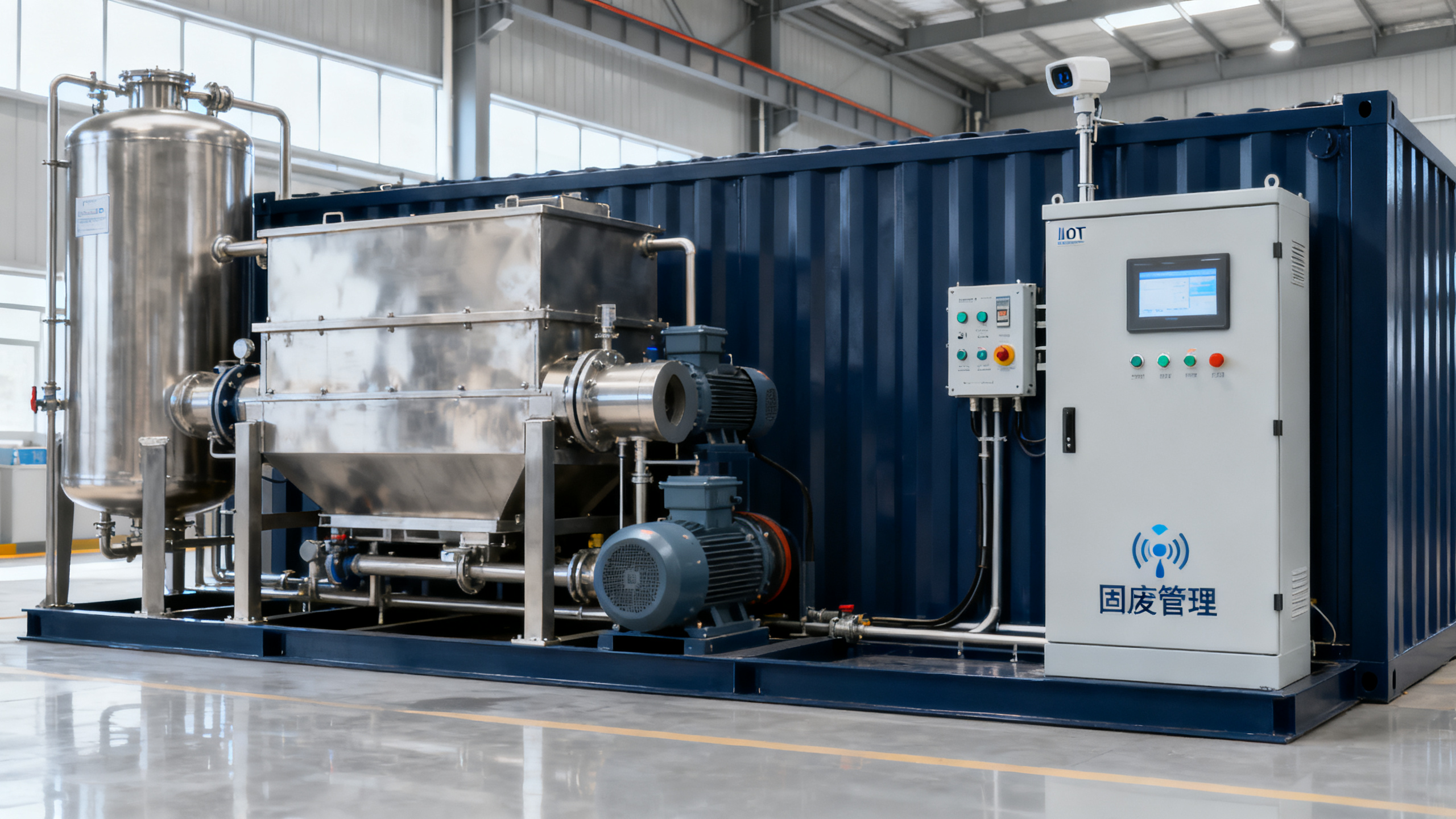
On May 18, 2026, China’s National Development and Reform Commission (NDRC) announced an expansion of the ‘Large-Scale Equipment Renewal and Consumer Goods Trade-In’ initiative—commonly referred to as the ‘Two Renewals’ policy—to include targeted subsidies for industrial water treatment and solid waste management equipment. This move is expected to accelerate domestic upgrades while simultaneously stimulating demand for integrated export solutions combining hardware, IoT-enabled remote operation platforms, and localized technical services.
Event Overview
On May 18, 2026, the NDRC confirmed that the ‘Two Renewals’ policy now extends technical renovation subsidies to industrial water treatment and solid waste management equipment. Subsidies cover up to 30% of eligible equipment investment. To qualify, installations must incorporate certified remote operations platforms and energy-efficiency monitoring modules. No further implementation guidelines or application timelines were disclosed in the initial announcement.
Industries Affected
Direct Trading Enterprises
Export-oriented equipment suppliers face newly structured demand: overseas buyers—particularly in emerging markets with tightening environmental compliance requirements—are increasingly seeking turnkey offerings rather than standalone hardware. The subsidy-linked requirement for certified remote platforms incentivizes Chinese exporters to bundle devices with cloud-based monitoring and service contracts, shifting revenue models from one-time sales toward recurring service income. However, this also raises entry barriers for SMEs lacking platform development capacity or international certification experience.
Raw Material Procurement Enterprises
Suppliers of sensors, edge controllers, corrosion-resistant alloys, and modular tank components may see upstream demand growth—but only for materials compliant with the performance and interoperability standards implied by the NDRC’s platform certification mandate. For example, pressure sensors used in remote monitoring systems must support standardized MQTT/OPC UA protocols and meet cybersecurity benchmarks aligned with ISO/IEC 27001. Procurement firms without traceable compliance documentation risk exclusion from subsidized supply chains.
Equipment Manufacturing Enterprises
Manufacturers of water filtration skids, sludge dewatering units, and automated sorting systems are directly incentivized to retrofit product lines with embedded telemetry, over-the-air update capability, and real-time energy dashboards. Yet integration complexity remains high: retrofitting legacy production lines requires both firmware re-engineering and third-party platform certification—neither of which are covered under the subsidy. Analysis shows that manufacturers with pre-existing IoT partnerships (e.g., with Huawei Cloud or Alibaba Cloud) hold a first-mover advantage in qualifying applications.
Supply Chain Service Enterprises
Logistics providers specializing in oversized equipment transport, customs brokers familiar with dual-use technology classifications (e.g., SCADA-capable controllers), and after-sales service networks with multilingual remote support capabilities stand to benefit. Observably, demand is rising not just for physical delivery but for ‘certification-readiness audits’—pre-shipment verification that bundled hardware-software-service packages meet host-country regulatory expectations. These services are currently fragmented and lack standardized pricing, presenting both opportunity and coordination challenge.
Key Considerations and Recommended Actions
Verify Platform Certification Pathways Early
Enterprises planning to apply for subsidies must identify which remote operations platforms have received NDRC-recognized certification—and whether those platforms support integration with common OEM control systems (e.g., Siemens S7, Rockwell Logix). Delayed certification alignment risks disqualification even if hardware qualifies.
Assess Energy Monitoring Module Compliance Scope
The policy mandates ‘energy-efficiency monitoring modules’, but does not specify minimum measurement granularity (e.g., per-pump vs. system-level), data retention duration, or reporting frequency. Firms should treat current industry norms—such as ISO 50001-aligned metering and 15-minute interval logging—as de facto baselines until formal guidance emerges.
Evaluate Localized Service Partnership Models
Since the policy emphasizes ‘localization’ of technical services abroad, exporters should prioritize co-location agreements or joint ventures with regional maintenance partners—not just subcontractors—especially in ASEAN, Middle East, and Latin American markets where regulatory enforcement of operational uptime is tightening.
Editorial Insight / Industry Observation
This policy expansion is better understood as a strategic nudge toward value-chain upgrading—not merely stimulus spending. From an industry perspective, it signals a deliberate shift: Chinese environmental equipment exports are no longer competing on price alone, but on verifiable operational intelligence, lifecycle transparency, and service responsiveness. Current evidence suggests that firms with existing digital service infrastructure (e.g., predictive maintenance logs, multilingual remote diagnostics portals) will capture disproportionate share of early subsidy-qualified orders. However, the absence of clear metrics for ‘localization’ or ‘certification’ introduces near-term execution risk—particularly for mid-tier exporters navigating overlapping regulatory regimes across target markets.
Conclusion
The inclusion of industrial water and solid waste equipment in the ‘Two Renewals’ framework marks a material step toward aligning domestic decarbonization incentives with global environmental infrastructure needs. While short-term impact hinges on timely implementation details, the long-term implication is clearer: competitiveness in this sector will increasingly depend on integrated digital capability—not just mechanical engineering excellence.
Source Attribution
Official statement issued by the National Development and Reform Commission (NDRC), People’s Republic of China, dated May 18, 2026. Full text available via www.ndrc.gov.cn. Pending clarification includes: (1) list of approved remote operations platforms; (2) technical specifications for energy-efficiency monitoring modules; (3) eligibility criteria for ‘localized service’ components in export bundles—these items remain under observation.
Technical Specifications
- How to Select Electronic Hotel Key Card Locks for Guest Rooms and Staff AreasAuthor :Safety Compliance Lead
- How to Select Lab Instruments for Reliable Chemical Analysis WorkflowsAuthor :Precision Metrology Expert
- How to Size a UPS for Server Rooms: Load, Runtime, and Redundancy FactorsAuthor :Grid Infrastructure Analyst
Expert Insights

Chief Security Architect
Dr. Thorne specializes in the intersection of structural engineering and digital resilience. He has advised three G7 governments on industrial infrastructure security.
Related Analysis
- Sep 17, 2026How to Select Electronic Hotel Key Card Locks for Guest Rooms and Staff AreasAuthor :Safety Compliance Lead
- Sep 16, 2026How to Select Lab Instruments for Reliable Chemical Analysis WorkflowsAuthor :Precision Metrology Expert
- Sep 15, 2026How to Size a UPS for Server Rooms: Load, Runtime, and Redundancy FactorsAuthor :Grid Infrastructure Analyst
Core Sector // 01
Security & Safety
- How to Size a Wafer Butterfly Valve for HVAC Chilled-Water and Heating LoopsAuthor :Environmental Engineering Director

- How Pressure Class and Joint Design Affect Long-Term Performance of Ductile Iron Pipes in Drainage InfrastructureAuthor :Environmental Engineering Director

- How Ductile Iron Pipe Joints Affect Installation Reliability and Leak ControlAuthor :Environmental Engineering Director

- How to Size Effluent Treatment Equipment for Variable Industrial Wastewater LoadsAuthor :Environmental Engineering Director

- US Battery Push Raises New Entry Rules for SuppliersAuthor :Environmental Engineering Director

- EU EMC Rule Tightens for Water Treatment ExportsAuthor :Environmental Engineering Director

- EU REACH Restriction Targets PFAS Water Treatment ImportsAuthor :Environmental Engineering Director

- EU Mandates EN 14113:2026 for Water Treatment ExportsAuthor :Environmental Engineering Director