Selecting Waste Recycling Equipment by Waste Stream, Throughput, and Contamination Level
Author
Date Published
Reading Time
A recycling line can appear to be underperforming for a simple reason that is easy to miss during early planning: the equipment was selected for the material people expected to receive, not for the material that actually arrives at the tipping floor. A stream described as “mixed plastics,” “commercial dry waste,” or “scrap metal” often contains fines, moisture, oversized pieces, film, wire, food residue, labels, and non-target materials that change from load to load.
The consequences show up quickly in daily operations. Conveyors bridge or overload, optical sorters reject too much usable material, shredders consume cutters faster than planned, and recovered fractions fail to meet downstream specifications. In some facilities, the most expensive problem is not low recovery; it is repeated manual intervention around equipment that was technically suitable for a cleaner and more consistent feedstock.
Selecting waste recycling equipment is therefore less about choosing a machine category and more about defining the operating reality. Waste stream composition, throughput, contamination, particle size, moisture, material value, safety exposure, and outlet requirements need to be considered together. The most reliable purchasing decisions usually begin with a disciplined examination of incoming material before a supplier comparison begins.
Start with the waste as received, not the waste described on paper
Many project briefs use broad material names that are useful for commercial planning but too vague for equipment selection. “Municipal solid waste,” for example, may include organics, packaging, textiles, rigid plastics, glass, paper, ferrous objects, non-ferrous metals, and inert debris. “Construction waste” can contain clean concrete in one batch and gypsum, timber, insulation, plastic film, and long reinforcing bar in the next.
Before specifying any process line, record the practical features of the material at the point where it enters the facility:
- Typical and worst-case particle-size distribution, including bulky and elongated items.
- Percentage of fines, dust, soil, sand, glass fragments, or other abrasive material.
- Moisture level and seasonal variation.
- Presence of flexible film, textiles, cords, strapping, wire, or other wrapping materials.
- Hazardous or problematic items such as batteries, pressurized containers, sharps, oils, and electronic components.
- Expected composition variation by source, collection route, supplier, or shift.
- Required quality of each recovered material and the intended downstream destination.
Visual inspection alone is not enough. A representative sampling plan should capture variation across loads and operating periods. If the proposed line will process material from different origins, samples should remain separated long enough to reveal how those sources differ. Averaging everything into one generic blend can hide the conditions most likely to cause blockages, wear, poor sorting, or unsafe handling.
A useful question is: Which item in this stream is most likely to stop the line? The answer may be less obvious than the dominant material. Long plastic film can wrap around shafts even when it represents a small percentage of the feed. Dense contaminants can damage screens. Damp fines can blind screening surfaces. Lithium-ion batteries may demand a detection and removal strategy even where their frequency is low.
Throughput is a range, not a single nameplate figure
A stated capacity in tonnes per hour is only meaningful when the feed condition is clear. A shredder may process a high mass flow of uniform, dry, pre-sized material but perform very differently with irregular bags, wet organics, bulky packaging, or dense debris. The same applies to screens, magnets, air separators, balers, and optical sorting units.
Define at least three throughput conditions: normal operating rate, expected peak rate, and the rate required after allowing for planned downtime. The last figure matters because feed reception rarely stops when a machine is being cleaned, a screen deck is changed, or a downstream conveyor is serviced. If storage space is limited, even a short interruption can force operators into rushed decisions or unsafe material accumulation.
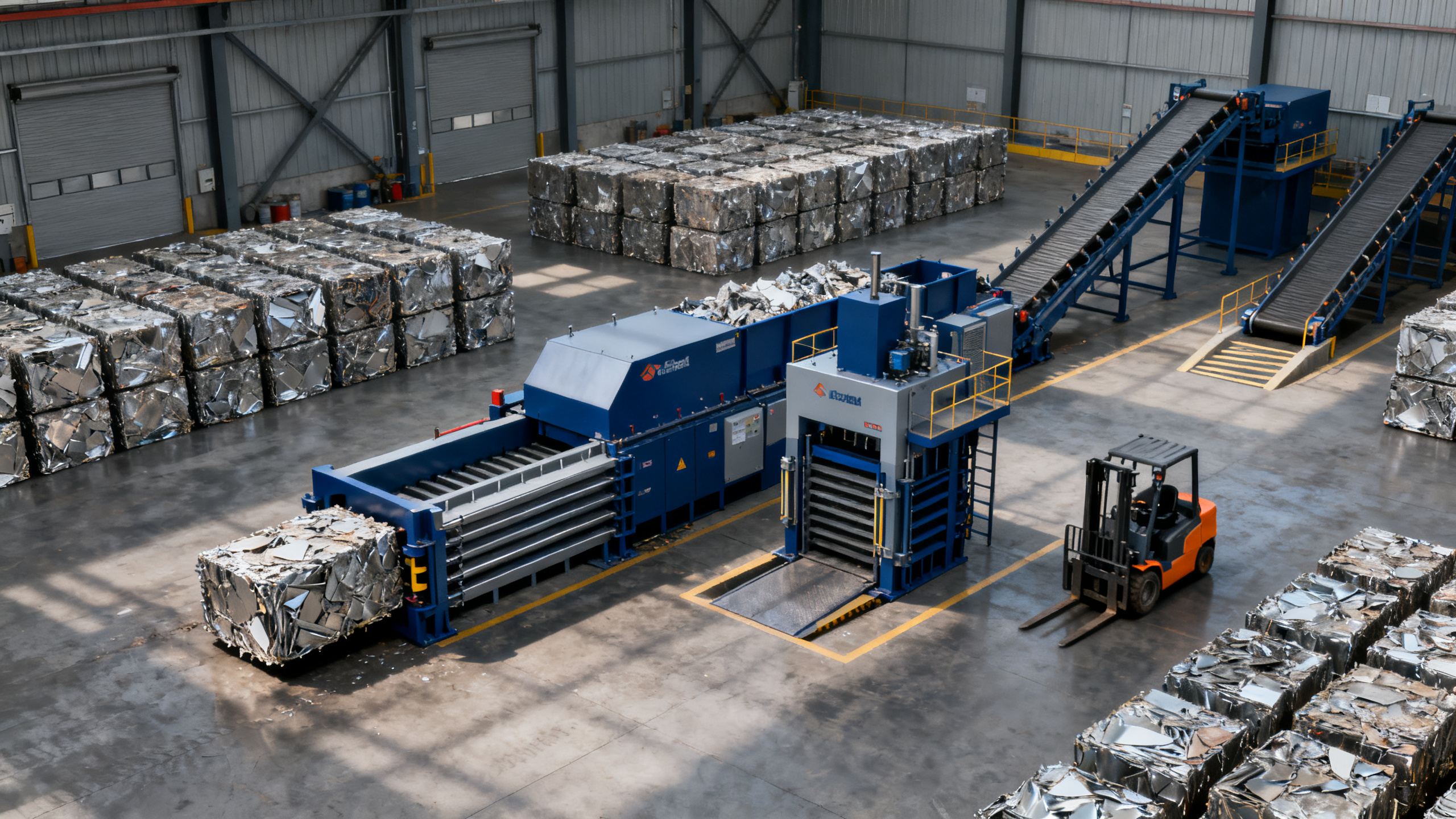
Capacity calculations also need to consider bulk density. Light packaging occupies conveyor volume rapidly even when its mass is modest. Dense mineral fractions may meet a mass target while imposing substantially greater belt loading and structural stress. For baling applications, feed consistency affects bale density, tying reliability, and the ability to maintain a stable discharge pattern.
Do not assume that oversizing every machine solves throughput risk. An oversized primary machine paired with undersized transfer conveyors, sorting cabins, dust extraction, or bale handling equipment simply relocates the bottleneck. A line should be reviewed as a connected system: receiving, feeding, separation, storage, compaction, dispatch, and residue handling all need compatible capacities.
Contamination determines the separation sequence
Contamination is often treated as a quality issue at the end of the process. In practice, it should shape the front end of the system. A high-contamination stream needs preparation steps that protect later equipment and create more stable particle conditions before precision sorting is attempted.
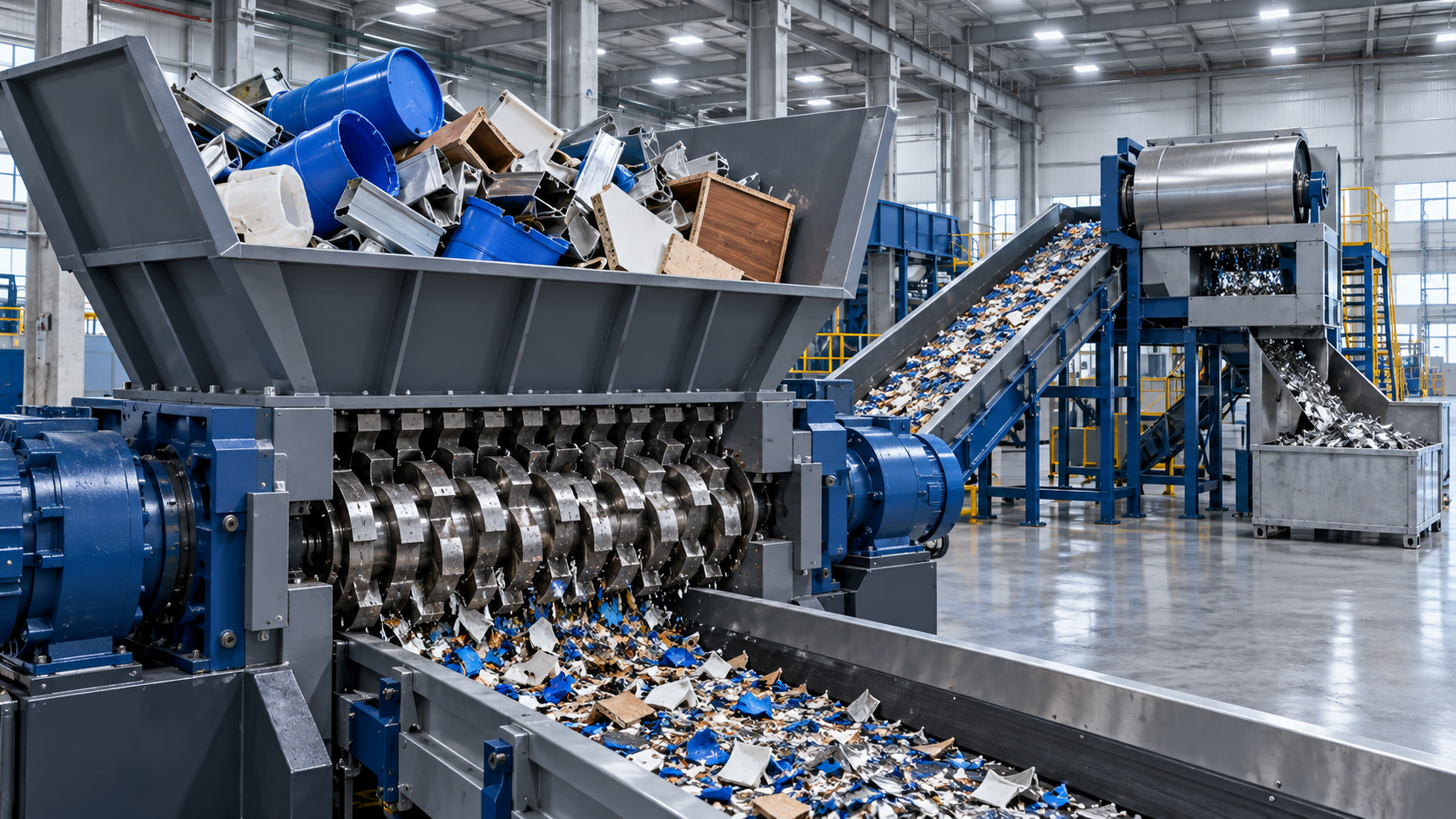
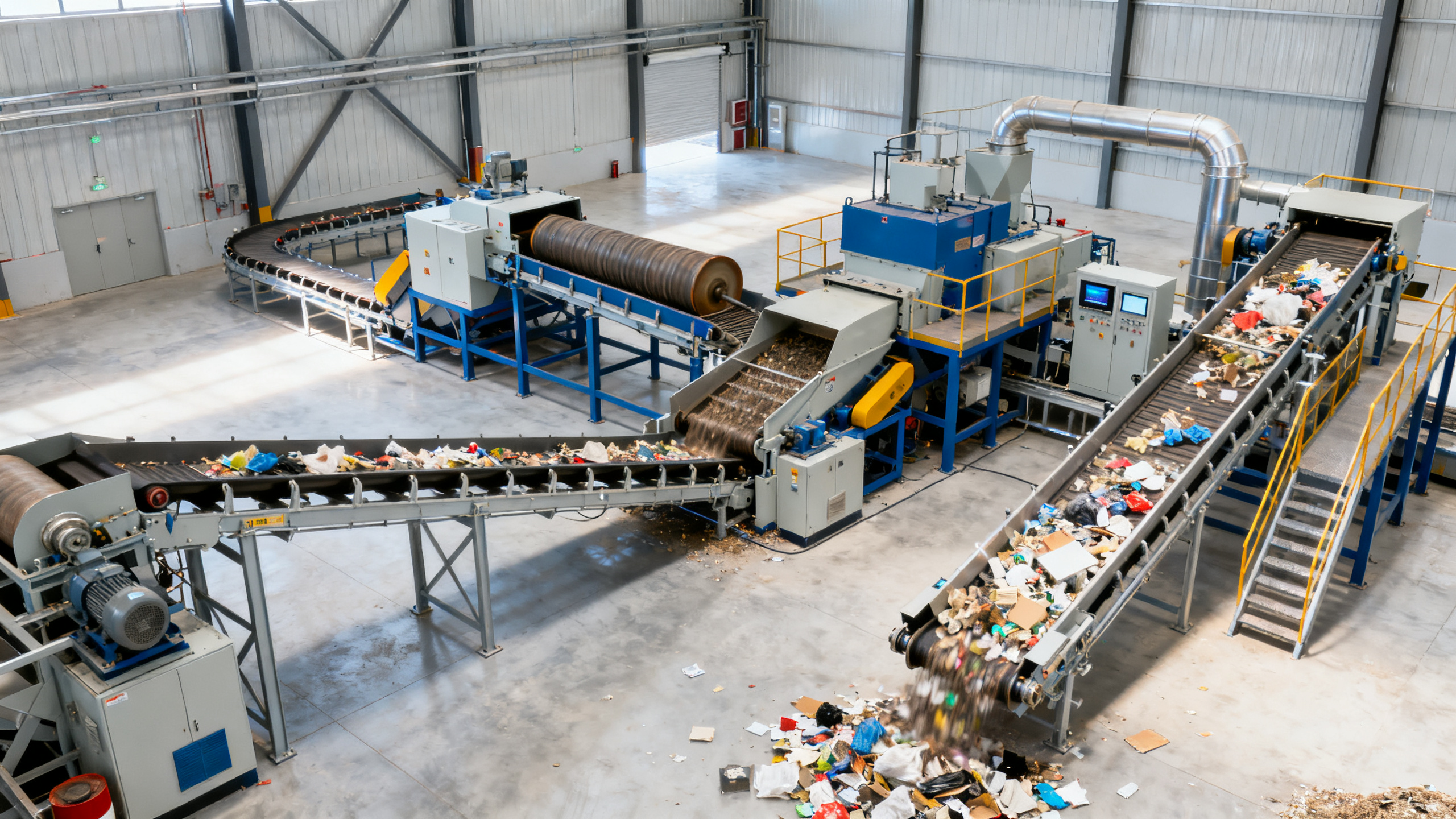
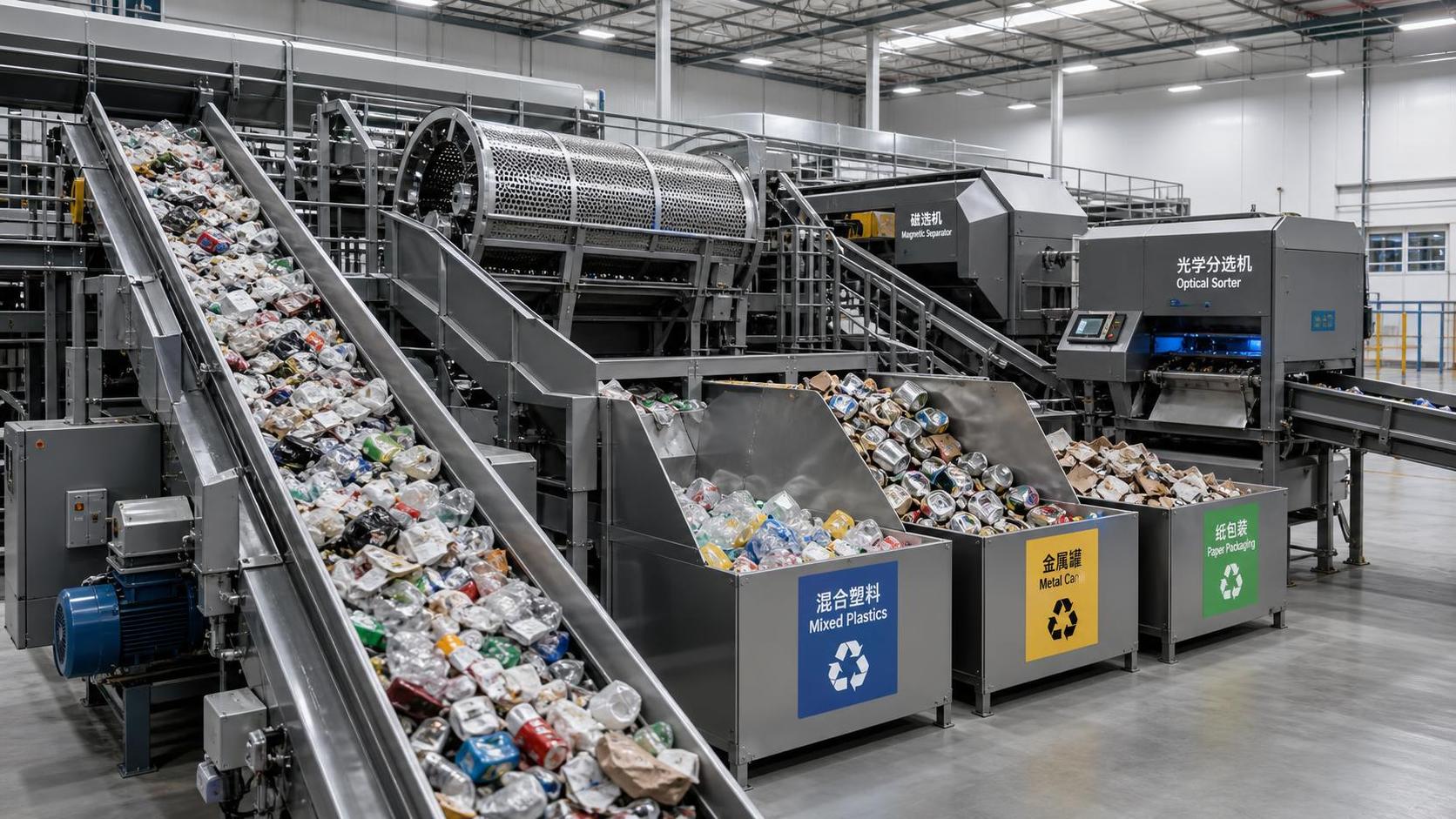
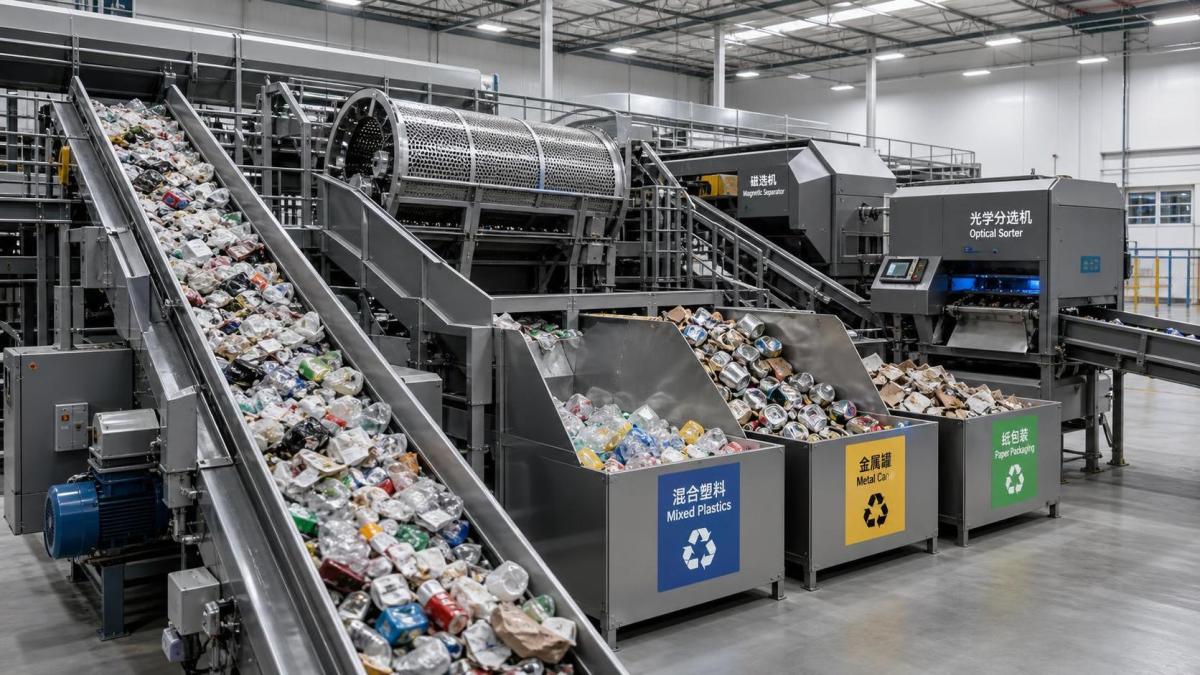
For mixed dry recyclables, bag opening and controlled metering may be needed before screening. If film and flat materials are important, a ballistic separator or similar technology may help split two-dimensional and three-dimensional fractions before further sorting. Ferrous removal is commonly positioned early enough to protect shredding or optical equipment, while eddy current separation is generally used only after the feed has been sized and stabilized appropriately.
Where organic contamination or moisture is significant, dry separation performance can deteriorate. Screens may blind, air separation becomes less predictable, and recyclable fibres or plastics can carry residue that limits their marketability. The better answer is not always more sorting equipment. It may be to divert heavily contaminated material earlier, adjust collection specifications, introduce washing only where water treatment and residue management are feasible, or accept that certain fractions belong in a recovery or disposal route rather than a high-purity recycling route.
Contamination also changes wear patterns. Glass, grit, and mineral debris can accelerate abrasion on conveyor belts, chutes, screen media, and shredder components. Sticky material can build up in transfer points and around sensors. For this reason, equipment proposals should describe not only nominal recovery performance but also the cleaning provisions, wear liners, access doors, and replacement tasks expected under the actual feed condition.
Match common technologies to the job they are being asked to do
Different equipment types solve different problems, and overlap between them can lead to unnecessary complexity. Feeders and metering conveyors regulate material flow; they do not improve material purity on their own. Trommels and vibratory screens separate by size but can struggle with wet, sticky, or highly tangled material. Magnetic separators target ferrous metals, while eddy current systems are intended for suitable non-ferrous fractions after preparation.
Air classifiers can separate light and heavy fractions when material size, moisture, and airflow are controlled. Optical sorters can identify selected materials through sensor-based recognition, but their performance depends strongly on presentation: material must be spread, sized within the equipment’s working range, and free enough from overlap, dirt, and moisture for reliable detection. Manual quality-control stations remain useful where contamination varies, where target specifications are demanding, or where an automated system needs verification.
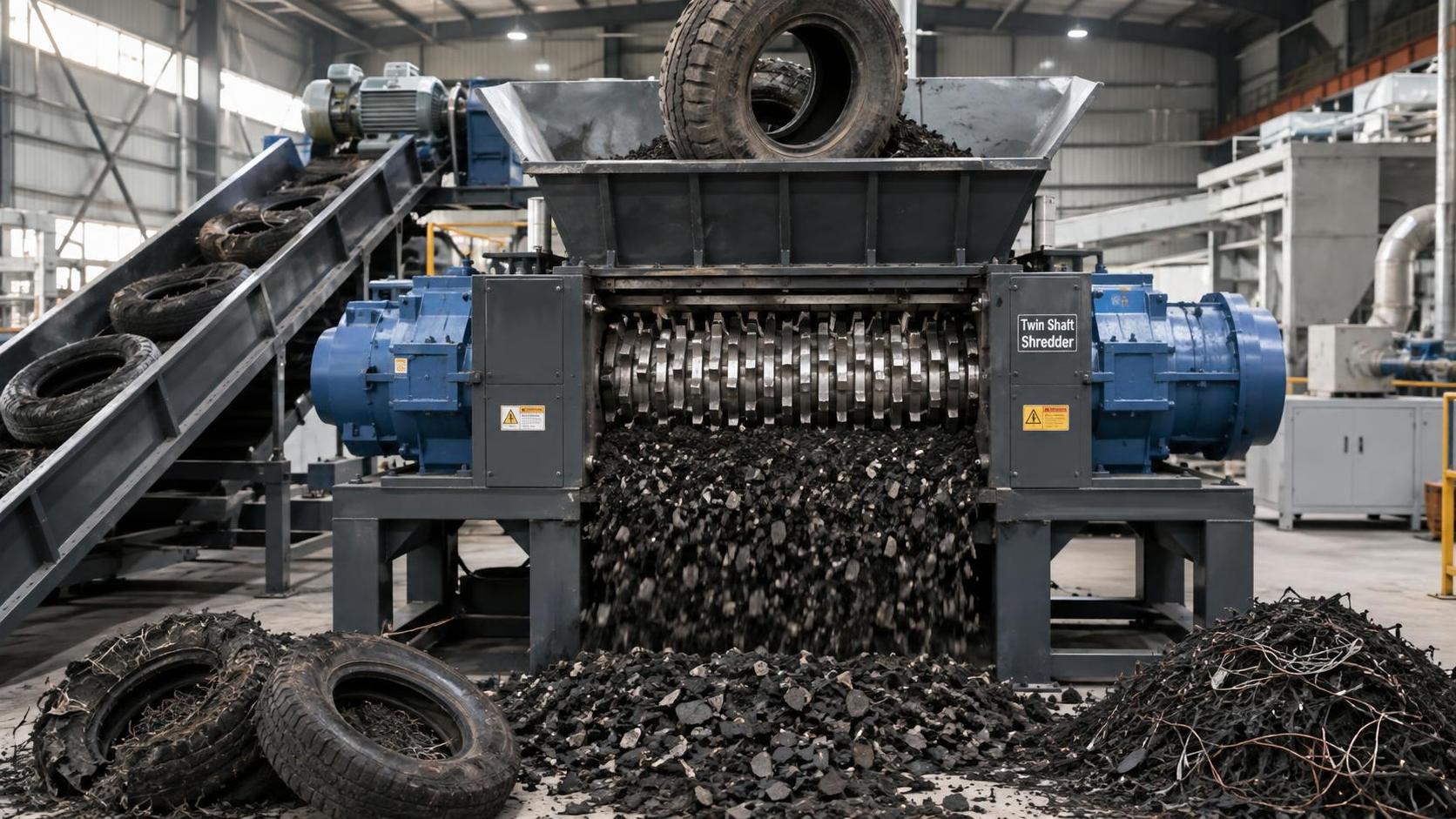
Shredders, granulators, and crushers should be selected with the downstream requirement in mind. Reducing size too early can make some separations harder by creating mixed fragments and increasing fines. Conversely, a controlled shred may be necessary to liberate material or meet a downstream fuel, washing, or processing specification. The desired output size should be tied to an actual next process, not simply to a machine’s available screen size.
Build the decision around failure modes
A productive way to compare waste recycling equipment is to ask how each option behaves when conditions are unfavorable. Rather than focusing only on a brochure flow diagram, examine likely disturbances: a surge of film, an unexpected steel object, a wet batch after rain exposure, a failed sensor, a blocked chute, or a full bunker downstream.
For each significant machine, request clear information on the following operational points:
- Permitted feed dimensions, bulk density, moisture conditions, and prohibited materials.
- Protection against overload, reverse-running capability where relevant, and safe stoppage procedures.
- Accessibility for cleaning, jam removal, inspection, and replacement of wear parts.
- Expected consumables and components that require routine attention.
- Control logic when upstream or downstream equipment stops.
- Fire detection, dust management, guarding, isolation points, and emergency access.
- Availability of operating data needed to investigate lost throughput or declining separation quality.
Safety should not be considered only at the procurement approval stage. Waste streams create changing hazards: hidden batteries, sharp objects, combustible dust, biological contamination, entanglement points, and unstable stockpiles. A technically effective line can still create unacceptable exposure if operators must enter guarded areas frequently to clear wraps or retrieve material. The preferred design reduces those interventions through better preparation, accessible cleanout points, suitable guarding, and controlled material flow.
Validate the proposed arrangement with representative trials
When material composition is uncertain or the target fraction has high value, trials are more useful than generic performance claims. The trial feed should represent ordinary material and difficult material, including the types of contaminants most likely to affect operation. It should also be documented well enough that the observed outcome can be interpreted later.
During a trial, look beyond recovered mass. Note the quality of each fraction, amount and nature of residue, carryover between streams, visible damage or wrapping, operator intervention, dust generation, noise concerns, and time required to regain stable operation after an upset. If a technology depends on a narrow feed size range, confirm how that sizing will be maintained in the full line.
It is also worth reviewing where samples are taken. Sampling only a clean discharge fraction can make a separation look effective while hiding valuable material lost to residue. Sampling only the incoming stream does not show whether the product meets a downstream buyer’s requirements. A balanced trial examines feed, products, and reject streams.
Specify the line as an operating system
The most durable specification does not merely list machines. It describes material handoffs, operating limits, maintenance access, controls, and acceptance criteria. It identifies the boundary between supplier responsibility and site responsibility, including civil works, power distribution, compressed air, drainage, dust collection, fire protection, and material storage.
Pay attention to interfaces. A sorting unit may require a precise belt speed and spread pattern that the upstream conveyor cannot maintain. A baler may be capable of the required output but need feed buffering that has not been included. A shredder can be mechanically suitable yet leave material too variable for the next separator. These gaps are often discovered late because each item was evaluated independently.
For projects involving several material grades, it may be more practical to design for controlled changeover than to pursue a single configuration that handles every stream equally well. Changeable screen media, adjustable airflow, configurable sorting recipes, and planned cleaning procedures can be valuable where feedstock changes by contract or season. The trade-off is that the operating team needs clear instructions and enough time to make those adjustments safely.
A practical basis for the final choice
The right equipment arrangement is the one that can consistently process the real incoming stream, produce fractions suitable for their intended outlet, and remain maintainable when contamination and volume fluctuate. Lowest purchase cost can become expensive if it creates frequent stoppages, excessive manual sorting, rapid wear, or residue that cannot be managed responsibly. The most complex line is not automatically the strongest choice either; extra separation stages should solve a defined material problem.
Before committing, compare options against the same feed description, throughput range, contamination assumptions, output specifications, utility requirements, and maintenance model. Ask suppliers to state exceptions and limitations plainly. Where uncertainty remains, preserve flexibility in the layout and use trials to resolve the highest-risk assumptions first.
That approach turns waste recycling equipment selection from a catalogue exercise into an engineering decision. It helps prevent a familiar outcome: a line that looks capable on a diagram but struggles once real waste, real variation, and real operating constraints enter the building.
Technical Specifications
- Air Handling Unit Supplier Checklist: Performance Data, Lead Times, and SupportAuthor :Environmental Engineering Director
- Buying Fiberglass Water Tanks Wholesale: Compare Quotes and Delivery CostsAuthor :Environmental Engineering Director
- Choosing an XLPE Power Cable Supplier: Test Reports, Traceability, and Lead TimesAuthor :Grid Infrastructure Analyst
Expert Insights

Chief Security Architect
Dr. Thorne specializes in the intersection of structural engineering and digital resilience. He has advised three G7 governments on industrial infrastructure security.
Related Analysis
- Oct 19, 2026Air Handling Unit Supplier Checklist: Performance Data, Lead Times, and SupportAuthor :Environmental Engineering Director
- Oct 18, 2026Buying Fiberglass Water Tanks Wholesale: Compare Quotes and Delivery CostsAuthor :Environmental Engineering Director
- Oct 17, 2026Choosing an XLPE Power Cable Supplier: Test Reports, Traceability, and Lead TimesAuthor :Grid Infrastructure Analyst
Core Sector // 01
Security & Safety
- How to Select a Twin Shaft Shredder for Bulky Waste, Scrap Metal, and PlasticsAuthor :Environmental Engineering Director

- How to Choose a Twin Shaft Shredder for Tires: Torque, Throughput, and Knife DesignAuthor :Environmental Engineering Director

- Selecting Waste Recycling Equipment by Waste Stream, Throughput, and Contamination LevelAuthor :Environmental Engineering Director

- How to Choose Waste Sorting Equipment for Recycling Plants by Material Stream and CapacityAuthor :Environmental Engineering Director

- Scrap Metal Baler Buying Guide: Horizontal vs Vertical, Capacity, Power, and OutputAuthor :Environmental Engineering Director

- What Is Industrial Ecology and How Does It Improve Resource Efficiency in Manufacturing?Author :Environmental Engineering Director

- Pet Bottle Washing Line Problems: Common Causes of Flake Contamination and How to Fix ThemAuthor :Environmental Engineering Director

- How to Evaluate Environment & Ecology Cost in Industrial ProjectsAuthor :Environmental Engineering Director