Steam Vortex Flow Meter Selection Guide: Pressure, Temperature and Line Size Explained
Author
Date Published
Reading Time
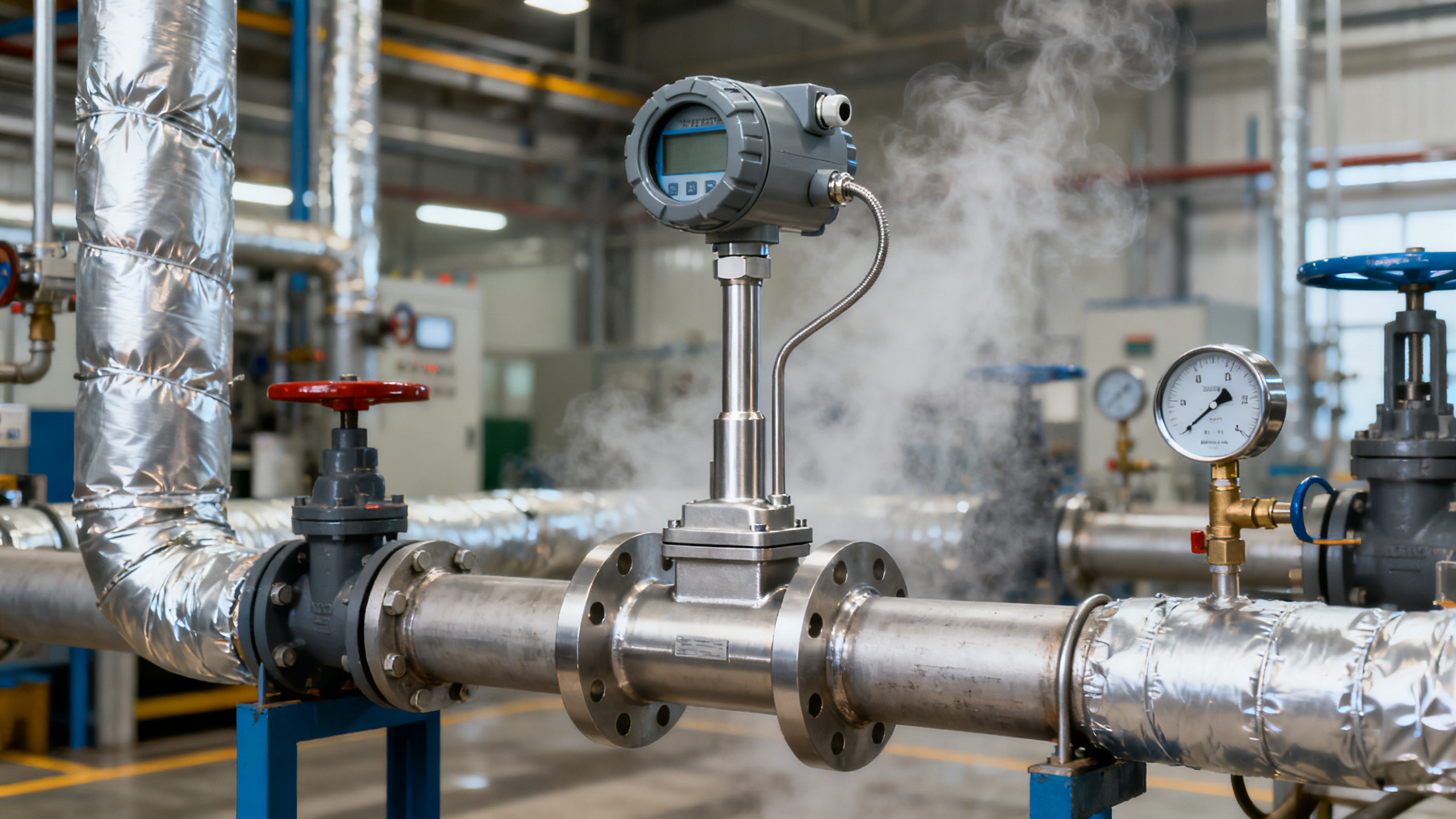
Steam Vortex Flow Meter Selection Guide: Pressure, Temperature and Line Size Explained
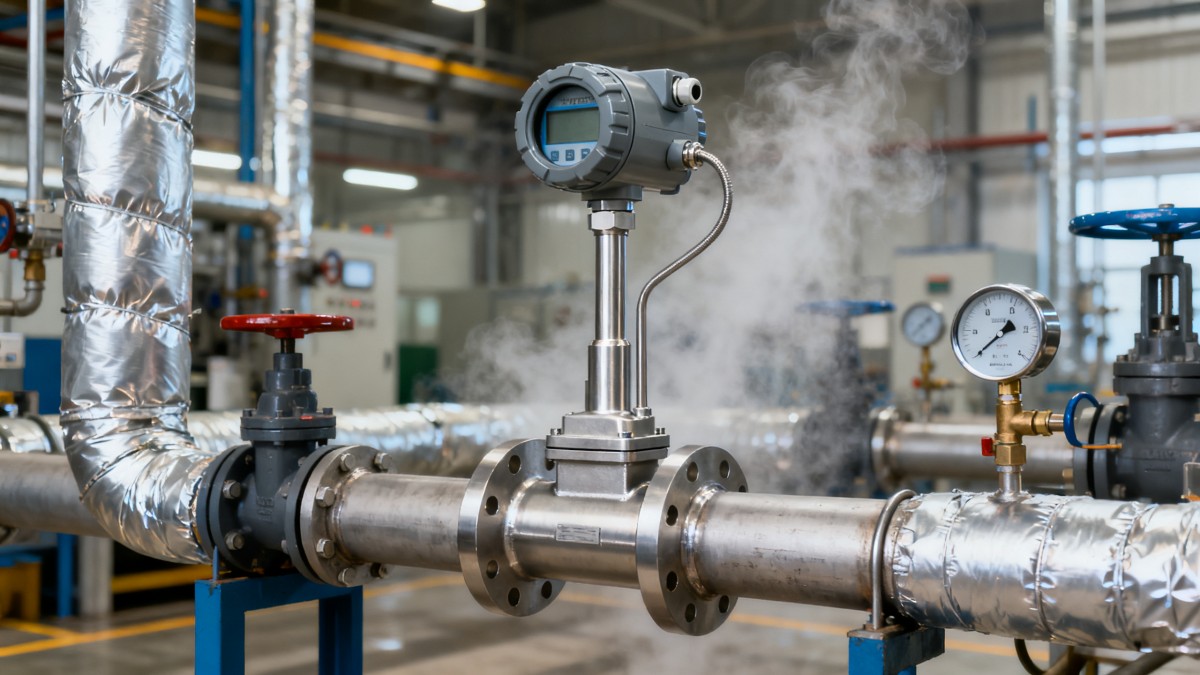
Choosing the right steam vortex flow meter shapes measurement accuracy, operating stability, and long-term maintenance cost. In steam service, small selection errors often become expensive performance problems.
Pressure, temperature, and line size are the three variables that usually decide whether a meter performs well in real plant conditions. They also influence installation method, body rating, sensor durability, and signal quality.
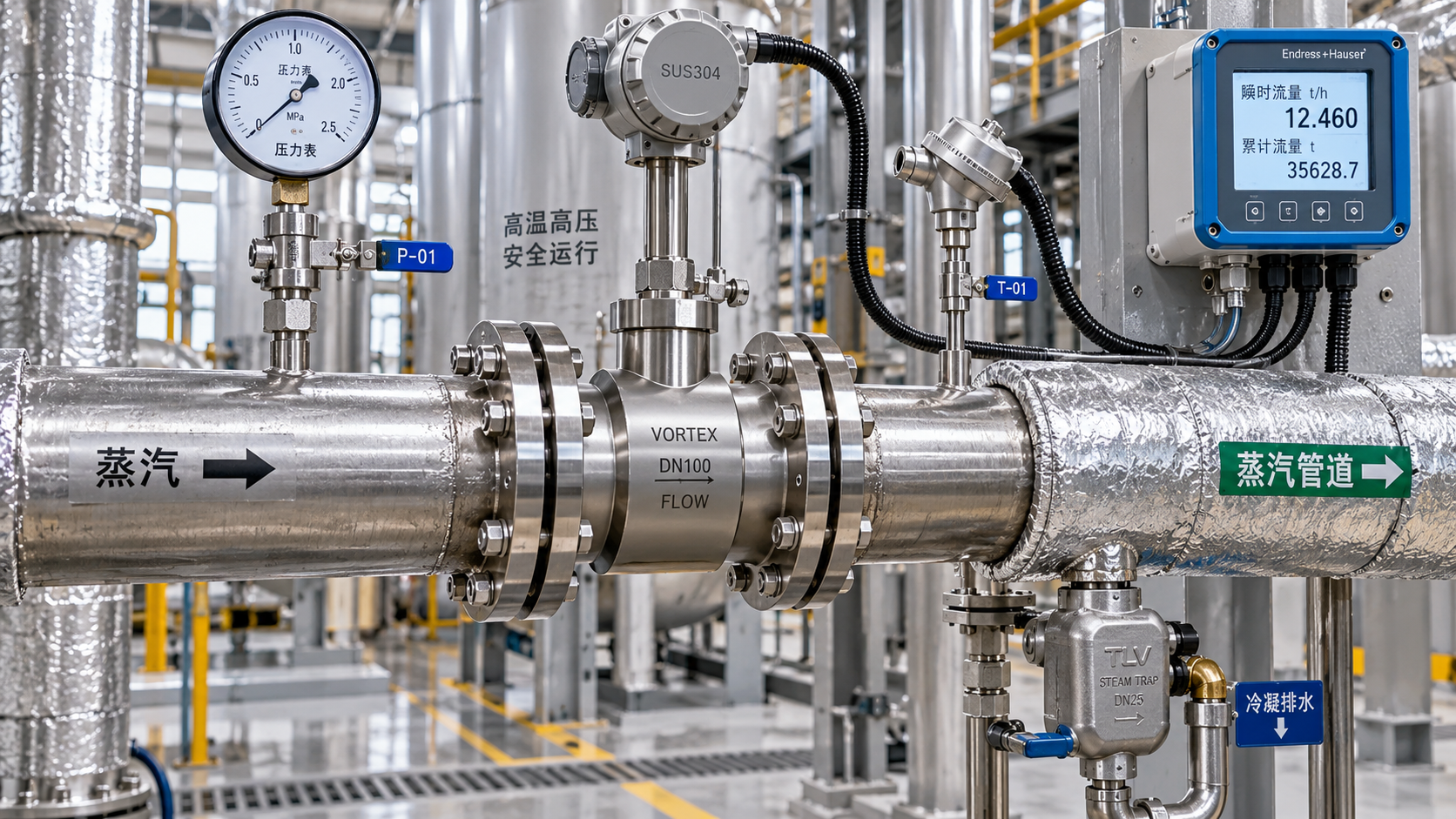
A steam vortex flow meter works by detecting vortices shed behind a bluff body. The vortex frequency is proportional to flow velocity, which makes the technology practical for saturated and superheated steam.
That said, steam is unforgiving. Density changes with pressure and temperature. Velocities vary fast during load changes. Pipe conditions can amplify vibration, noise, and wetness effects.
This guide explains how to evaluate a steam vortex flow meter from a technical selection standpoint. The goal is straightforward: match the meter to the process, not just to the purchase specification.
Why Steam Service Demands Careful Flow Meter Selection
Steam measurement looks simple on paper, but actual systems behave differently. Start-up loads, pressure drops, branch takeoffs, and trap performance can all distort the flow profile.
A steam vortex flow meter is often selected because it has no moving parts, offers good repeatability, and handles high temperatures better than many alternative technologies.
Even so, the meter only performs as expected when the operating envelope fits the application. The key checks are process pressure, operating temperature, nominal line size, and minimum flow velocity.
It is also important to separate design conditions from normal operating conditions. Many flow meter sizing mistakes come from using maximum design values instead of daily process values.
Pressure: More Than a Body Rating Check
Pressure affects a steam vortex flow meter in two ways. First, it determines mechanical suitability. Second, it changes steam density, which directly impacts volumetric flow and velocity.
Many teams only confirm flange class or pressure rating. That is necessary, but it is not enough. The real question is how pressure behaves across the full operating range.
At higher pressure, steam density rises. For a given mass flow, volumetric flow falls. Lower volumetric flow means lower velocity, and that can push the meter near its low-flow threshold.
At lower pressure, the opposite happens. Volumetric flow expands, velocity increases, and pressure loss across the meter may become more visible in tightly balanced systems.
This is why a steam vortex flow meter should be checked against minimum, normal, and maximum operating pressure. One-point sizing is rarely enough for utility steam networks.
In practical selection work, confirm these pressure-related points:
- Process pressure range, not only design pressure
- Required flange rating and material compatibility
- Expected pressure fluctuations during shift changes
- Minimum velocity at the highest operating pressure
- Available straight run under actual pipe routing
For saturated steam, pressure compensation is usually essential if mass flow or energy balance is required. For superheated steam, both pressure and temperature compensation are typically needed.
Temperature: The Variable That Changes Everything Faster
Temperature is not just a materials question. It affects steam state, density calculation, electronics exposure, seal performance, and the overall reliability of the steam vortex flow meter.
In saturated steam service, temperature follows pressure. In superheated service, temperature has its own independent behavior. That difference changes how the flow computer or transmitter must calculate mass flow.
Some steam vortex flow meter models integrate temperature sensing and compensation. Others rely on external transmitters. The better choice depends on maintenance practice and required calculation accuracy.
Thermal cycling deserves special attention. A meter that survives steady temperature may still suffer when the line repeatedly moves from ambient to full steam service.
That also means installation details matter. Remote electronics, proper insulation clearance, and support against pipe stress often protect long-term signal stability more than a higher specification alone.
When reviewing temperature suitability, check:
- Normal and maximum steam temperature
- Saturated or superheated steam condition
- Need for built-in or external compensation
- Ambient heat exposure near the transmitter head
- Thermal shock frequency during start-stop operation
A steam vortex flow meter used in high-temperature lines should also be checked for gasket selection, neck extension options, and electronics mounting orientation. Those details influence uptime more than many buyers expect.
Line Size: Where Many Selection Errors Start
Line size is often treated as a fixed input. In reality, it is the starting point for a velocity decision. A steam vortex flow meter must operate inside a stable velocity window.
If the line is oversized for actual demand, steam velocity can drop below the reliable measuring range. If the line runs too fast, erosion risk and signal stress may increase.
This is why line size alone should never determine the meter size. In many applications, a reduced-bore steam vortex flow meter gives better low-load performance than a full-bore model.
The tradeoff is pressure loss and installation complexity. A reduced meter can improve turndown, but only if the process can tolerate the added differential pressure.
Before final selection, calculate flow velocity at minimum, normal, and peak load. Then compare those values with the manufacturer’s recommended operating range, not just the absolute measuring limit.
In actual projects, the best steam vortex flow meter is often the one that matches the real load profile, not the nominal pipe diameter printed on the P&ID.
Other Factors That Affect Steam Vortex Flow Meter Performance
Pressure, temperature, and line size lead the selection process, but they are not the full picture. Several site conditions can undermine a technically correct specification.
Wet steam is one of the most common issues. Excess moisture can disturb vortex formation and reduce reading stability, especially during poor boiler control or inadequate drainage.
Mechanical vibration is another concern. A steam vortex flow meter installed near control valves, reciprocating equipment, or unsupported vertical runs may pick up unwanted signal noise.
Flow disturbances also matter. Elbows, tees, reducers, and partially open valves upstream can distort the velocity profile and reduce measurement confidence.
It is worth checking these practical items before approval:
- Drainage quality and steam dryness
- Upstream and downstream straight-run availability
- Nearby vibration sources
- Required output, protocol, and integration standard
- Calibration, verification, and maintenance access
From a standards perspective, material traceability, pressure class, temperature limits, and certification records should align with the site’s compliance framework and shutdown philosophy.
A Practical Selection Workflow
A disciplined workflow makes steam vortex flow meter selection faster and more defensible. It also reduces the chance of buying a technically acceptable meter that performs poorly on site.
- Collect minimum, normal, and maximum steam load data.
- Confirm whether the steam is saturated or superheated.
- Map operating pressure and temperature, not only design limits.
- Calculate velocity across the full range for the actual line size.
- Assess whether full-bore or reduced-bore sizing is more suitable.
- Review straight-run conditions, vibration risk, and drainage details.
- Verify compensation method, output requirements, and compliance documents.
This process creates a more reliable basis for vendor comparison. It also makes technical discussions clearer when multiple steam vortex flow meter options appear similar in the quotation stage.
Conclusion
A steam vortex flow meter should be selected around process reality, not catalog convenience. Pressure defines density and mechanical suitability. Temperature shapes compensation and hardware survival. Line size determines whether velocity stays in a usable range.
When those three variables are reviewed together, selection becomes much more precise. The result is better measurement confidence, fewer field adjustments, and a lower chance of lifecycle cost surprises.
For any steam vortex flow meter shortlist, the strongest next step is simple: validate operating data, confirm installation conditions, and check compensation logic before final approval.
Technical Specifications
- Air Handling Unit Supplier Checklist: Performance Data, Lead Times, and SupportAuthor :Environmental Engineering Director
- Buying Fiberglass Water Tanks Wholesale: Compare Quotes and Delivery CostsAuthor :Environmental Engineering Director
- Choosing an XLPE Power Cable Supplier: Test Reports, Traceability, and Lead TimesAuthor :Grid Infrastructure Analyst
Expert Insights

Chief Security Architect
Dr. Thorne specializes in the intersection of structural engineering and digital resilience. He has advised three G7 governments on industrial infrastructure security.
Related Analysis
- Oct 19, 2026Air Handling Unit Supplier Checklist: Performance Data, Lead Times, and SupportAuthor :Environmental Engineering Director
- Oct 18, 2026Buying Fiberglass Water Tanks Wholesale: Compare Quotes and Delivery CostsAuthor :Environmental Engineering Director
- Oct 17, 2026Choosing an XLPE Power Cable Supplier: Test Reports, Traceability, and Lead TimesAuthor :Grid Infrastructure Analyst
Core Sector // 01
Security & Safety
- Choosing a Bluetooth Total Station: Software Compatibility and Connection RangeAuthor :Precision Metrology Expert

- Material Testing Standards: ASTM E8 vs. ISO 6892-1 for Metal Tensile TestsAuthor :Precision Metrology Expert

- How to Verify Accuracy in Industrial Measurement Data and Test ReportsAuthor :Precision Metrology Expert

- Selecting a Steam Vortex Flow Meter: Sizing, Pressure, and Temperature LimitsAuthor :Precision Metrology Expert

- How to Select an Industrial Infrared Thermometer for Hot, Moving EquipmentAuthor :Precision Metrology Expert

- How to Evaluate a Precision Measurement Equipment Manufacturer for Critical TolerancesAuthor :Precision Metrology Expert

- How to Select an Emissions Monitoring System Analyzer for Compliance ReportingAuthor :Precision Metrology Expert

- Portable Gas Monitor Calibration: How Often Is It Needed for Safe Confined-Space Work?Author :Precision Metrology Expert