Slow Speed Dosing Agitator Problems: How to Prevent Settling, Foam and Uneven Mixing
Author
Date Published
Reading Time
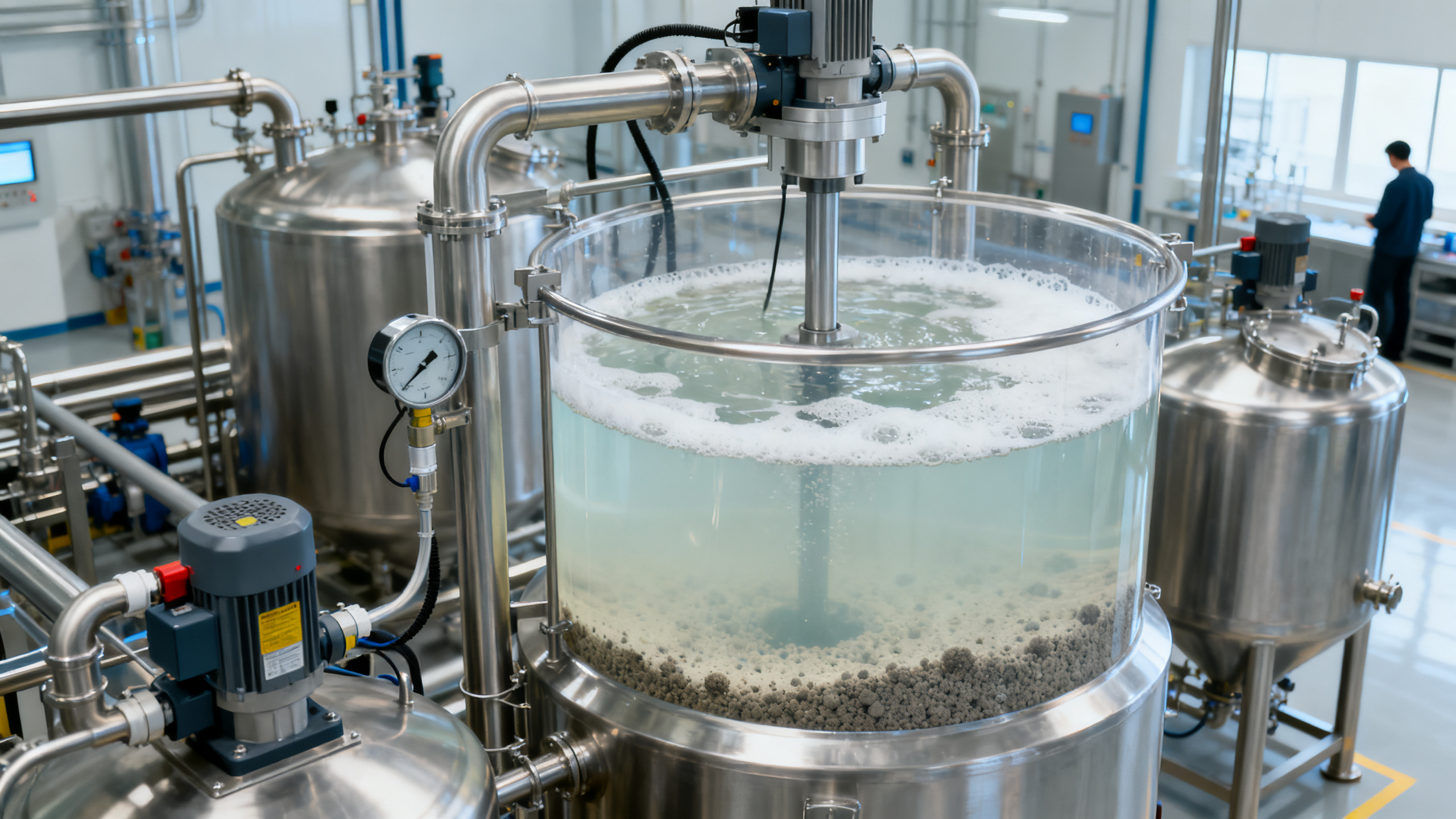
Why slow speed dosing agitator problems rarely begin at startup
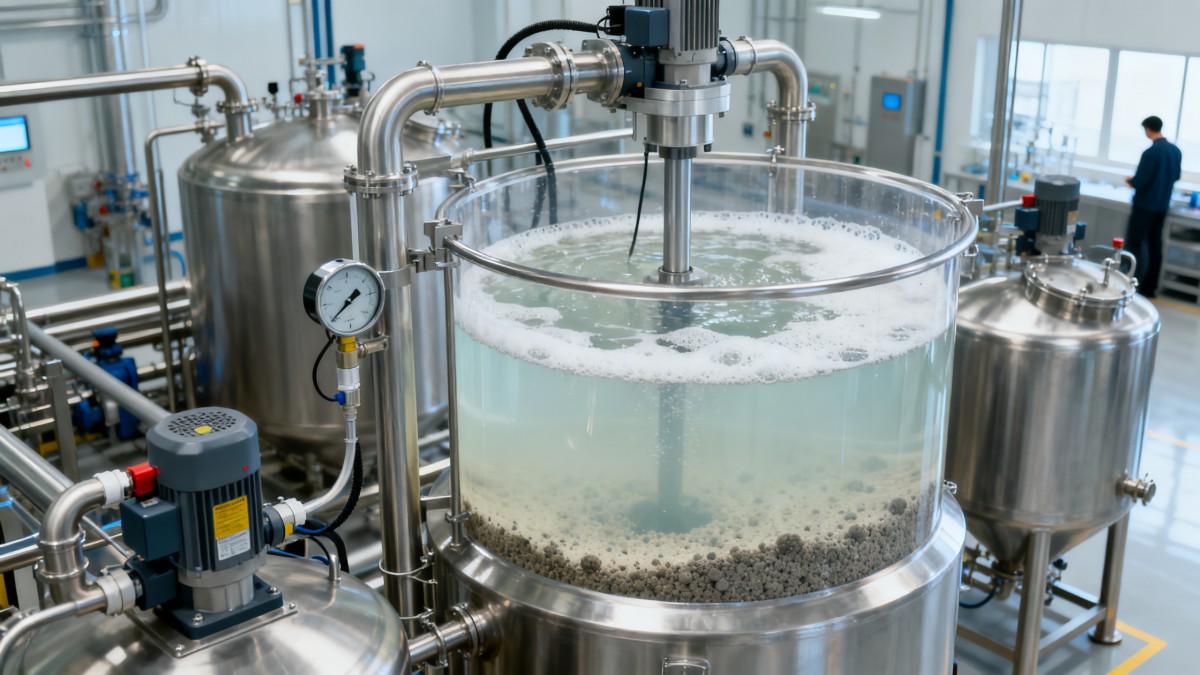
A slow speed dosing agitator often appears stable until process drift starts showing up in dosing accuracy, tank cleanliness, and maintenance frequency.
That is why settling, foam, and uneven mixing matter beyond the mixer itself. They can affect chemical performance, sensor reliability, transfer consistency, and shutdown planning.
In real industrial systems, the same slow speed dosing agitator behaves differently in water treatment, slurry conditioning, polymer preparation, and corrosion control loops.
The difference usually comes from fluid behavior, dosing sequence, tank geometry, temperature, and how tightly the process is controlled.
For organizations that depend on resilient infrastructure, this is not a minor maintenance topic. It is part of protecting compliance, uptime, and predictable process performance.
Within the broader engineering view emphasized by Global Industrial Core, mixer reliability connects directly with measurement quality, environmental control, and equipment life under real operating stress.
Actual operating conditions change what the agitator needs to do
A common mistake is treating all low speed mixing duties as gentle blending. In practice, a slow speed dosing agitator may be asked to suspend solids, dissolve powders, limit air entrainment, or protect shear-sensitive additives.
Those goals can conflict. The speed that minimizes foam may be too low to prevent sediment buildup. The impeller that keeps solids mobile may create a surface vortex in a shallow tank.
More useful judgment starts with three questions. What must remain uniform, where does instability first appear, and how quickly does the fluid change after dosing begins?
If the answer is concentration drift near discharge points, the issue may be circulation pattern. If residue appears at the tank bottom, the problem is usually suspension energy or dead zones.
If operators see foam near the top while lab results remain inconsistent, the slow speed dosing agitator may be creating local overmixing and weak bulk turnover at the same time.
The first signals are often indirect
- Dosing pumps cycle more often to hit the same target.
- Level instruments show unstable readings because foam disturbs the surface.
- Filters or injection points foul faster than expected.
- Tank cleanout intervals shorten even though chemistry has not changed.
Where settling becomes the main risk
Settling is most common when the slow speed dosing agitator handles mineral slurries, lime suspensions, metal treatment additives, or any fluid carrying dense undissolved particles.
In these cases, the visible problem is material collecting at the bottom. The real problem is that concentration changes from hour to hour, especially after standby periods.
A tank may look mixed near the center while solids compact along the wall or beneath the impeller sweep. That is why visual checks alone are unreliable.
The better approach is to compare bottom residue, discharge concentration trend, restart torque behavior, and cleanout frequency over several operating cycles.
If solids settle rapidly during pauses, the slow speed dosing agitator may need a different impeller diameter, lower mounting height, or intermittent run logic during idle periods.
Tank shape also matters more than many teams expect. Flat-bottom vessels with poor baffling create quiet zones where buildup begins long before performance alarms appear.
What to check before increasing speed
Raising rpm is the quickest response, but it is often incomplete. If the circulation loop is poorly directed, more speed may only intensify localized turbulence.
- Confirm particle size and solids loading under actual feed conditions.
- Check impeller clearance from the tank bottom.
- Review whether baffles are present, damaged, or undersized.
- Compare operating viscosity at startup and normal temperature.
Foam issues usually point to dosing sequence, not only agitator speed
Foam tends to dominate in polymer make-down, detergent additives, surface treatment chemicals, and wastewater conditioning where surfactants or trapped air are present.
Here, a slow speed dosing agitator may still generate persistent foam if liquid enters above the surface, if powders are introduced too quickly, or if the tank develops a shallow vortex.
This is one of the more frequent misjudgments in the field. The mixer gets blamed first, while the true trigger is feed location or addition timing.
When foam forms early and stays stable, look at inlet drop height, anti-foam compatibility, wetting time, and whether the fluid is being recirculated through a high-shear pump loop.
If foam appears only after recipe changes, the slow speed dosing agitator may still be suitable, but the dosing order may need to separate wetting, dispersion, and final homogenization.
In systems tied to level measurement or overflow protection, foam is not only a housekeeping issue. It can distort readings and trigger avoidable process interruptions.
Uneven mixing shows up differently in water, chemical, and metallurgical processes
Uneven mixing is harder to diagnose because the tank may look calm while concentration varies between sampling points or across batch time.
In water and wastewater dosing, the concern is usually treatment consistency. In chemical blending, it can affect reaction stability. In metallurgical support systems, additive distribution may influence downstream corrosion or scaling behavior.
The slow speed dosing agitator is often selected to avoid shear damage or energy waste, but low energy must still create full-volume circulation.
That is why residence time, tank aspect ratio, and nozzle location deserve as much attention as motor rating.
This is where application-specific judgment matters. Two tanks with the same volume may need very different slow speed dosing agitator setups because the control objective is different.
The misreads that lead to repeat maintenance calls
Several failures repeat across industries because initial troubleshooting stays too narrow.
- Only checking nameplate power while ignoring fluid changes across seasons or batches.
- Assuming a similar tank can use the same slow speed dosing agitator geometry without validating inlet and outlet layout.
- Focusing on purchase cost while overlooking cleanout labor, seal wear, and downtime exposure.
- Treating foam, solids buildup, and uneven mixing as separate faults when they often share one hydraulic cause.
Another frequent oversight is standards alignment. Materials, seals, and electrical components may be acceptable mechanically, yet unsuitable for chemical compatibility or site compliance expectations such as CE, UL, or ISO-driven documentation.
In critical facilities, maintenance decisions around a slow speed dosing agitator should support broader reliability evidence, not only immediate restart.
How to adapt the slow speed dosing agitator before problems spread
Useful prevention starts with matching the agitator to the dominant failure mode rather than applying one generic fix.
If settling is recurring, prioritize bottom motion, restart behavior, and standby strategy. If foam dominates, prioritize feed control, surface behavior, and air entrainment sources.
If uneven mixing is the main complaint, map where concentration actually varies before changing hardware.
A practical review sequence
- Document the fluid condition at startup, steady operation, and idle restart.
- Trace feed entry, sensor location, discharge point, and visible circulation path.
- Compare actual mixing duty with the original design assumption.
- Check whether impeller type, clearance, and baffles support that duty.
- Review maintenance records for residue, seal wear, vibration, and overflow events.
This sequence helps separate true agitator limits from process-side causes. It also creates a clearer basis for retrofit decisions, spare strategy, and condition monitoring.
What to clarify next before changing equipment or procedures
The most effective next step is to define the actual operating scene with more precision. That means confirming fluid range, solids tendency, acceptable foam level, tank geometry, and control sensitivity.
From there, compare whether the current slow speed dosing agitator is failing on suspension, circulation, or surface control. Those are related, but they are not the same problem.
A short field review with trend data, residue observations, and operating sequence notes usually reveals more than a simple speed adjustment.
For high-consequence industrial systems, the better path is to build a small site standard around mixer duty, inspection points, compatibility checks, and maintenance triggers.
That approach keeps the slow speed dosing agitator aligned with process stability instead of treating each settling, foam, or uneven mixing event as an isolated repair.
Technical Specifications
- Air Handling Unit Supplier Checklist: Performance Data, Lead Times, and SupportAuthor :Environmental Engineering Director
- Buying Fiberglass Water Tanks Wholesale: Compare Quotes and Delivery CostsAuthor :Environmental Engineering Director
- Choosing an XLPE Power Cable Supplier: Test Reports, Traceability, and Lead TimesAuthor :Grid Infrastructure Analyst
Expert Insights

Chief Security Architect
Dr. Thorne specializes in the intersection of structural engineering and digital resilience. He has advised three G7 governments on industrial infrastructure security.
Related Analysis
- Oct 19, 2026Air Handling Unit Supplier Checklist: Performance Data, Lead Times, and SupportAuthor :Environmental Engineering Director
- Oct 18, 2026Buying Fiberglass Water Tanks Wholesale: Compare Quotes and Delivery CostsAuthor :Environmental Engineering Director
- Oct 17, 2026Choosing an XLPE Power Cable Supplier: Test Reports, Traceability, and Lead TimesAuthor :Grid Infrastructure Analyst
Core Sector // 01
Security & Safety
- Buying Fiberglass Water Tanks Wholesale: Compare Quotes and Delivery CostsAuthor :Environmental Engineering Director

- How to Select Industrial pH Meters for Continuous Wastewater Process ControlAuthor :Environmental Engineering Director

- How to Size a Rinse Fill Cap Machine for Your Bottle Format and Target OutputAuthor :Environmental Engineering Director

- How to Size a Heavy-Duty Submersible Sewage Pump for High-Solids Lift StationsAuthor :Environmental Engineering Director

- How to Size a Wafer Butterfly Valve for HVAC Chilled-Water and Heating LoopsAuthor :Environmental Engineering Director

- How Pressure Class and Joint Design Affect Long-Term Performance of Ductile Iron Pipes in Drainage InfrastructureAuthor :Environmental Engineering Director

- How Ductile Iron Pipe Joints Affect Installation Reliability and Leak ControlAuthor :Environmental Engineering Director

- How to Size Effluent Treatment Equipment for Variable Industrial Wastewater LoadsAuthor :Environmental Engineering Director