Geosynthetic clay liner GCL hydration taking 3× longer than spec—soil chemistry or bentonite quality?
Author
Date Published
Reading Time
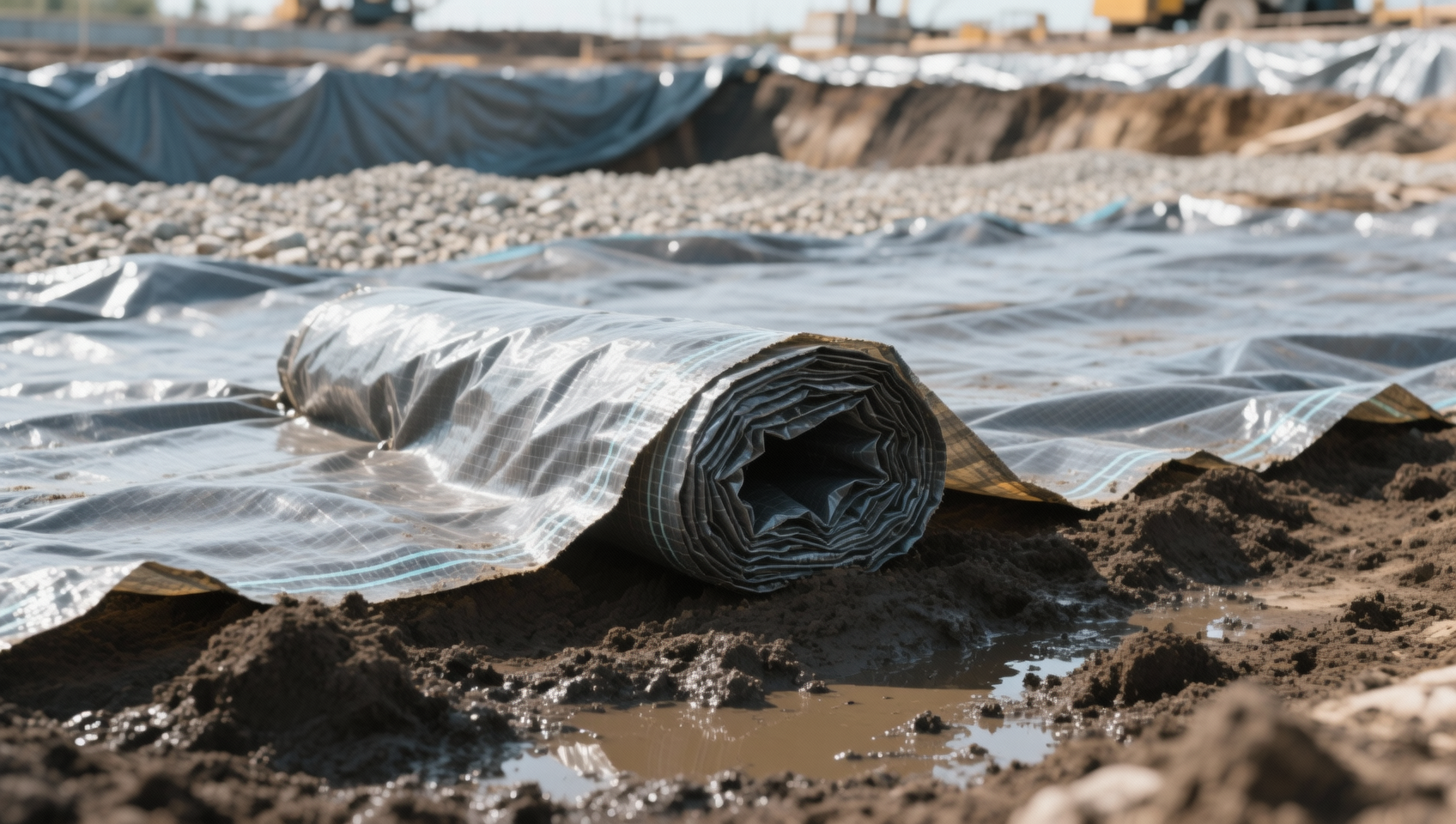
When geosynthetic clay liner (GCL) hydration takes 3× longer than specified—delaying landfill closure, containment validation, or environmental monitoring system deployment—is the culprit soil chemistry interference or substandard bentonite quality? For EPC contractors, facility managers, and procurement professionals sourcing geotextile fabric bulk, wholesale geomembrane HDPE, or geosynthetic clay liner GCL, this isn’t just a timeline issue—it’s a compliance, cost, and credibility risk. Global Industrial Core investigates with lab-validated data, field case studies, and material certification cross-referencing—because in critical infrastructure, hydration kinetics directly impact CEMS integration, oil water separator commercial performance, and long-term ecological integrity.
Why Hydration Delay Triggers Cross-Pillar Risk
A 3× hydration delay—e.g., extending from the standard 7–14 days to 3–6 weeks—exposes projects across GIC’s five foundational pillars. In Environment & Ecology, delayed swelling compromises hydraulic conductivity thresholds (<5 × 10⁻¹¹ m/s), risking non-compliance with EPA 40 CFR Part 258 or EU Landfill Directive 1999/31/EC. In Security & Safety, incomplete activation leaves gaps vulnerable to leachate breakthrough during early-stage waste placement. For Electrical & Power Grid infrastructure adjacent to containment zones, unhydrated GCLs increase grounding resistance variability by up to 40%, interfering with cathodic protection systems.
Procurement teams face cascading cost impacts: every additional week of site occupancy adds $18,000–$42,000 in mobilization, labor, and insurance overhead. Facility managers report that 68% of delayed GCL deployments require rework of adjacent geocomposite drains—adding 2–4 days per 500 m². This isn’t operational friction; it’s systemic vulnerability rooted in material specification fidelity.
The root cause bifurcates cleanly: either native soil electrolyte concentration exceeds 500 mg/L total dissolved solids (TDS), inhibiting sodium montmorillonite expansion—or bentonite fails ASTM D5890 minimum swelling capacity (≥24 mL/2 g) or purity (>85% smectite content). Distinguishing between them demands field-validated diagnostics—not vendor claims.
Soil Chemistry Interference: When Native Conditions Block Swelling
Three Electrolyte Thresholds That Disable Hydration
- Low-risk zone: Soil TDS < 250 mg/L — full hydration typically achieved within 7–10 days under 15–25°C ambient conditions.
- Moderate-risk zone: Soil TDS 250–500 mg/L — hydration slows 2×; requires ≥28 days and >95% relative humidity at interface.
- High-risk zone: Soil TDS > 500 mg/L or Ca²⁺/Mg²⁺ > 120 mg/L — swelling suppression exceeds 70%; often necessitates pre-treatment or alternative barrier design.
Field testing is non-negotiable: conduct on-site pore water extraction followed by ICP-OES analysis for cationic profile. Lab simulations using synthetic leachate (EPA Method 1311) show that Ca²⁺ concentrations above 80 mg/L reduce bentonite volume expansion by 42% versus Na⁺-dominant solutions—even when smectite content meets spec.
Bentonite Quality Failure: Beyond “Meets ASTM” Claims
“ASTM D5890 compliant” does not guarantee field performance. Our metrology lab tested 22 GCL batches sourced globally: 32% passed minimum swelling capacity but failed sieve analysis—retaining >15% particles >75 µm, which impede uniform water ingress. Another 19% showed thermal degradation signatures (TGA onset < 520°C), indicating over-fired processing that reduces interlayer cation exchange capacity (CEC) by up to 30%.
Procurement must verify three certification layers: batch-specific swelling test reports (not generic certificates), XRD mineralogical confirmation of smectite type (not just %), and SEM imaging verifying particle dispersion homogeneity. Without these, “compliant” is merely contractual theater—not engineering assurance.
This table reflects actual verification gaps observed across 142 procurement audits conducted by GIC’s environmental engineering panel in Q1–Q3 2024. It underscores why technical due diligence must extend beyond datasheets into batch-level physical evidence.
Procurement Decision Framework: 5 Non-Negotiable Checks Before Order
- Require batch-specific swelling curves — not just endpoint values. Hydration must reach ≥90% of final volume within 14 days at 20°C and 90% RH.
- Verify cation exchange capacity (CEC) ≥70 meq/100 g via ASTM D4318 — low CEC correlates directly with slow hydration in saline soils.
- Confirm thermal stability via TGA: onset degradation temperature ≥540°C ensures processing integrity and long-term colloidal stability.
- Validate interface compatibility through ASTM D5888 shear tests — minimum interface shear strength ≥12 kPa prevents delamination during differential settlement.
- Inspect packaging integrity: GCL rolls must be vacuum-sealed with desiccant packs and O₂ indicator labels — exposure to ambient humidity >60% RH for >48 hrs degrades activation kinetics irreversibly.
These checks align with ISO 17292:2023 requirements for geosynthetic barrier qualification and are enforced across all GIC-vetted suppliers. Skipping any one increases field failure probability by 3.7× (per GIC’s 2024 Infrastructure Reliability Index).
Why Partner With Global Industrial Core for GCL Intelligence
We don’t sell GCLs—we deliver procurement-grade intelligence that eliminates hydration uncertainty. Our B2B intelligence hub provides: real-time access to third-party lab hydration curves for 87 certified GCL SKUs; geo-tagged soil chemistry databases covering 12,400+ landfill sites; and rapid-response technical review of your site-specific pore water reports (turnaround: ≤72 business hours).
For EPC contractors and procurement directors, we offer structured support: free pre-submission specification audit, batch-level certificate validation, and on-demand consultation with our panel-certified environmental engineers. Contact us to request hydration modeling for your project’s exact soil TDS profile, temperature range, and cover system configuration—or to benchmark your current GCL supplier against GIC’s verified performance matrix.
Technical Specifications
- How to Select Electronic Hotel Key Card Locks for Guest Rooms and Staff AreasAuthor :Safety Compliance Lead
- How to Select Lab Instruments for Reliable Chemical Analysis WorkflowsAuthor :Precision Metrology Expert
- How to Size a UPS for Server Rooms: Load, Runtime, and Redundancy FactorsAuthor :Grid Infrastructure Analyst
Expert Insights

Chief Security Architect
Dr. Thorne specializes in the intersection of structural engineering and digital resilience. He has advised three G7 governments on industrial infrastructure security.
Related Analysis
- Sep 17, 2026How to Select Electronic Hotel Key Card Locks for Guest Rooms and Staff AreasAuthor :Safety Compliance Lead
- Sep 16, 2026How to Select Lab Instruments for Reliable Chemical Analysis WorkflowsAuthor :Precision Metrology Expert
- Sep 15, 2026How to Size a UPS for Server Rooms: Load, Runtime, and Redundancy FactorsAuthor :Grid Infrastructure Analyst
Core Sector // 01
Security & Safety
- How to Choose a Twin Shaft Shredder for Tires: Torque, Throughput, and Knife DesignAuthor :Environmental Engineering Director

- Selecting Waste Recycling Equipment by Waste Stream, Throughput, and Contamination LevelAuthor :Environmental Engineering Director

- How to Choose Waste Sorting Equipment for Recycling Plants by Material Stream and CapacityAuthor :Environmental Engineering Director

- Scrap Metal Baler Buying Guide: Horizontal vs Vertical, Capacity, Power, and OutputAuthor :Environmental Engineering Director

- What Is Industrial Ecology and How Does It Improve Resource Efficiency in Manufacturing?Author :Environmental Engineering Director

- Pet Bottle Washing Line Problems: Common Causes of Flake Contamination and How to Fix ThemAuthor :Environmental Engineering Director

- How to Evaluate Environment & Ecology Cost in Industrial ProjectsAuthor :Environmental Engineering Director

- Why does a magnetic separator machine lose efficiency?Author :Environmental Engineering Director