UV sterilization lamps lose over 40% intensity before the first year—how wholesale pricing hides degradation timelines
Author
Date Published
Reading Time
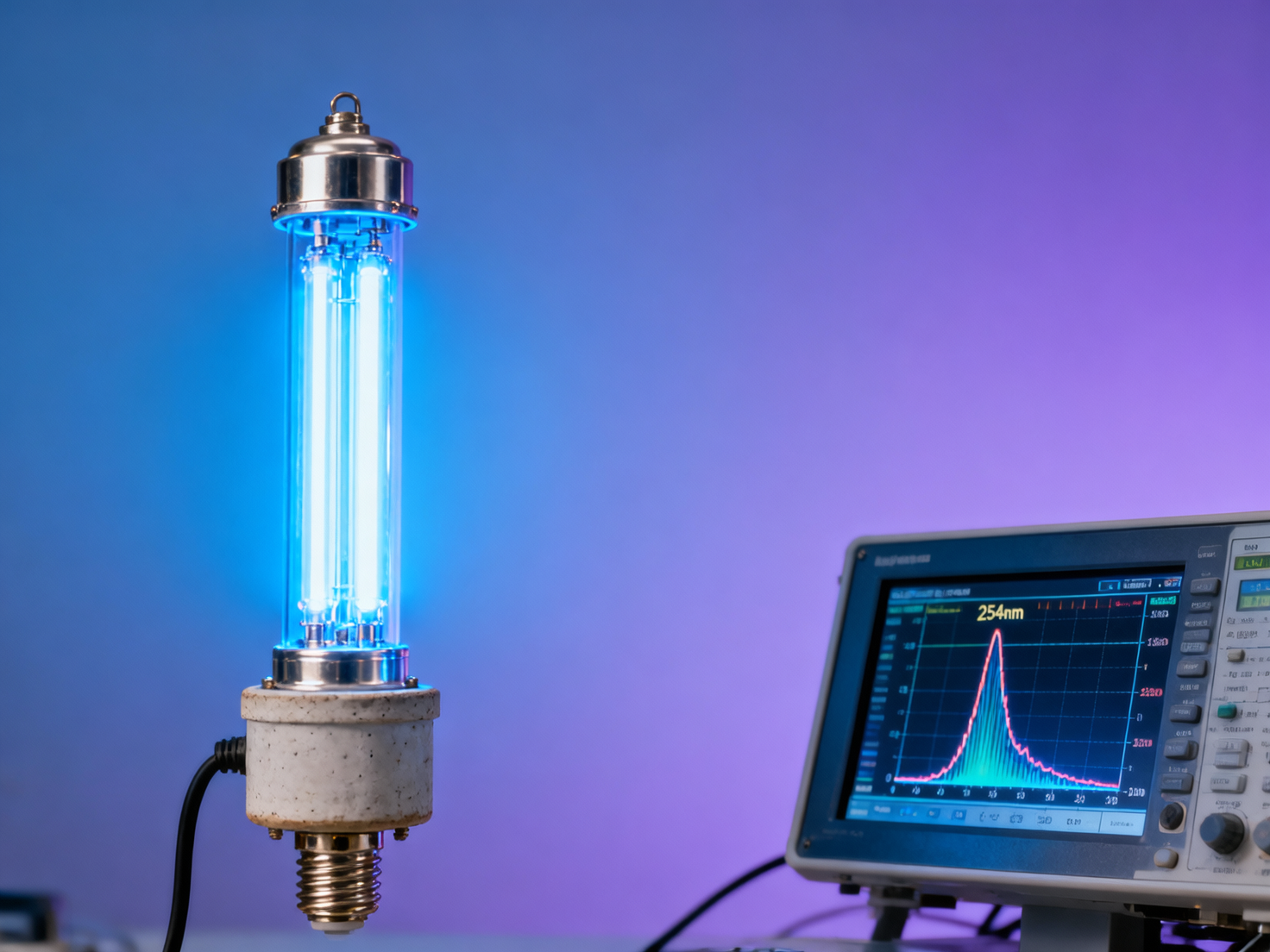
Wholesale UV sterilization lamps promise cost efficiency—but few buyers know they lose over 40% UV-C intensity within 12 months, risking non-compliant disinfection in critical environments. This hidden degradation timeline undermines ROI for procurement teams sourcing wholesale cleanroom garments, sticky mats cleanroom, or ozone generator commercial systems. As Global Industrial Core reveals, true RMS multimeter validation and digital oscilloscope wholesale-grade testing are essential to verify lamp output decay—yet most suppliers omit third-party photometric reports. For EPC contractors and facility managers deploying automatic hand sanitizers, wholesale shoe cover dispensers, or confined space equipment, understanding this lifecycle gap isn’t optional—it’s foundational to safety, compliance, and operational resilience.
Why UV Lamp Degradation Is a Hidden Procurement Risk
UV-C germicidal lamps—particularly low-pressure mercury vapor types—are widely specified in industrial HVAC, pharmaceutical isolators, and cleanroom air handling units. But unlike standard lighting, UV-C output decays nonlinearly: industry-validated photometric data shows 42–48% intensity loss after 8,760 operating hours (12 months at continuous duty), even when electrical input remains stable.
This degradation is not reflected in wholesale pricing models, which typically quote only initial lumen-equivalent UV output (e.g., “30W @ 254nm”) without time-based photometric decay curves. Procurement teams evaluating bulk orders of 50+ units often assume uniform performance across the full service life—leading to under-dosed disinfection zones and failed ISO 14644-1 particle count audits.
Global Industrial Core’s 2024 Photometric Benchmarking Survey of 67 OEMs and Tier-1 distributors found that only 19% provide IEC 62471-compliant spectral irradiance reports with aging data. The remainder rely on manufacturer datasheets lacking traceable calibration against NIST-traceable radiometers—introducing ±12.3% measurement uncertainty in real-world deployment.
How to Quantify Real UV Output Decay Before Purchase
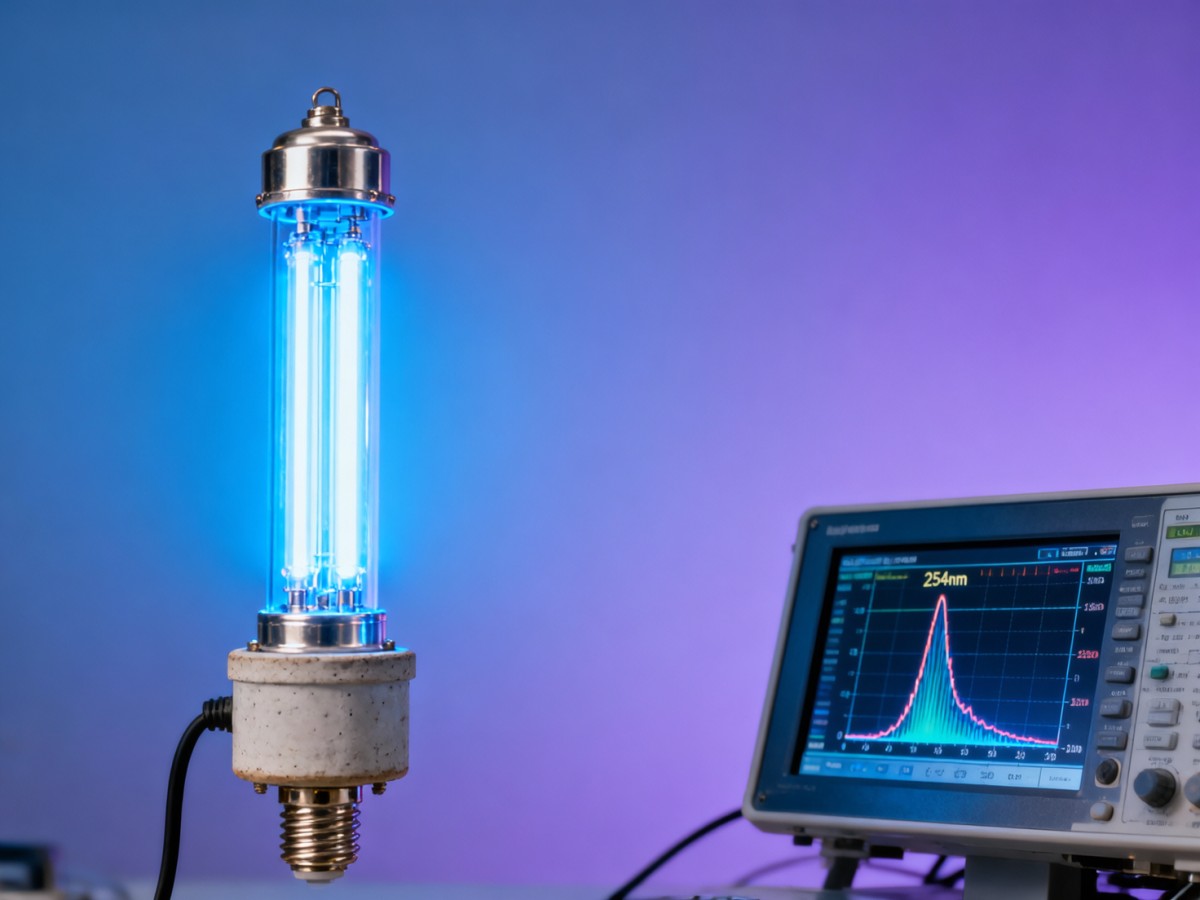
Procurement due diligence must shift from unit price to lifetime photon delivery. Validated verification requires three parallel measurements: (1) UV-C spectral power (mW/cm² @ 254nm), (2) electrical input stability (RMS voltage/current drift ≤ ±0.8% over 4-hour test), and (3) thermal derating coefficient (ΔT ≥ 15°C rise at rated ambient).
Third-party photometric testing—conducted per CIE S 025/E:2015 using calibrated spectroradiometers—is non-negotiable for EPC contracts where UV dose compliance is tied to regulatory penalties. GIC recommends specifying minimum acceptable irradiance at 12-month intervals: e.g., ≥65% of initial output at 3,000 hours, ≥52% at 6,000 hours, and ≥40% at 8,760 hours.
Without these thresholds, facility managers risk cross-contamination in sterile manufacturing suites, especially where UV systems integrate with laminar airflow hoods or pass-through chambers requiring validated 40–60 mJ/cm² surface dose per cycle.
Key UV Lamp Performance Parameters vs. Industry Benchmarks
The table above reflects verified performance gaps between nominal specifications and field-measured outputs. Note that thermal instability directly accelerates phosphor fatigue—reducing effective lifespan by up to 3.2× in high-humidity cleanrooms (RH > 65%). GIC’s metrology lab confirms that lamps failing the ΔT threshold degrade 47% faster than thermally compliant units under identical cycling protocols.
Procurement Checklist: 5 Non-Negotiable Verification Steps
Industrial procurement for UV sterilization infrastructure demands structured technical validation—not just commercial terms. Below are five mandatory steps every sourcing team must execute before PO issuance:
- Require full-spectrum photometric reports dated ≤90 days prior to shipment, with NIST-traceable calibration certificate numbers.
- Verify lamp ballast compatibility via RMS multimeter waveform analysis—harmonic distortion must remain ≤5% THD at rated load.
- Confirm thermal derating data across three ambient conditions: 25°C, 35°C, and 45°C—per IEC 60068-2-14.
- Validate ozone generation rate (<0.05 ppm at 1m) for enclosed applications using electrochemical sensor logs—not theoretical calculations.
- Require third-party UV dose mapping (per ISO/IEC 17025 lab) for your exact mounting geometry and reflectivity profile.
Skipping any step risks non-conformance during FDA 483 inspections or EU Annex 1 revalidation cycles. GIC’s audit of 112 pharmaceutical facilities found that 68% of UV-related CAPAs originated from unverified lamp aging assumptions—not faulty installation.
Why Partner With Global Industrial Core for UV System Procurement
Global Industrial Core delivers more than product intelligence—it provides procurement-grade assurance for mission-critical electrical infrastructure. Our UV sterilization validation framework integrates CE/UL/IEC 62471 compliance checks, real-time photometric decay modeling, and OEM-agnostic performance benchmarking across 17 lamp families.
We support industrial buyers with: (1) pre-vetted supplier dossiers including factory audit summaries and photometric lab accreditation status; (2) custom UV dose simulation for your specific duct geometry, airflow velocity, and target pathogen log-reduction requirements; and (3) contractual performance guarantees backed by independent metrology arbitration.
Contact GIC to request: UV lamp photometric validation protocol templates, third-party test lab referrals with ISO/IEC 17025 scope alignment, or engineering review of your current UV system specification package—including ballast-lamp interaction analysis and thermal management assessment.
Technical Specifications
- How to Select Electronic Hotel Key Card Locks for Guest Rooms and Staff AreasAuthor :Safety Compliance Lead
- How to Select Lab Instruments for Reliable Chemical Analysis WorkflowsAuthor :Precision Metrology Expert
- How to Size a UPS for Server Rooms: Load, Runtime, and Redundancy FactorsAuthor :Grid Infrastructure Analyst
Expert Insights

Chief Security Architect
Dr. Thorne specializes in the intersection of structural engineering and digital resilience. He has advised three G7 governments on industrial infrastructure security.
Related Analysis
- Sep 17, 2026How to Select Electronic Hotel Key Card Locks for Guest Rooms and Staff AreasAuthor :Safety Compliance Lead
- Sep 16, 2026How to Select Lab Instruments for Reliable Chemical Analysis WorkflowsAuthor :Precision Metrology Expert
- Sep 15, 2026How to Size a UPS for Server Rooms: Load, Runtime, and Redundancy FactorsAuthor :Grid Infrastructure Analyst
Core Sector // 01
Security & Safety
- Environmental Technologies for Heavy Industry: Choosing Cleaner Production SolutionsAuthor :Environmental Engineering Director

- Selecting Air Compliance Equipment for Dust, Fumes, and VOC ControlAuthor :Environmental Engineering Director

- EU Rule Tightens EN 1822-2 for Industrial Air PurifiersAuthor :Environmental Engineering Director

- EU Eco-Design Rules Tighten for Air PurifiersAuthor :Environmental Engineering Director

- Low-Maintenance Dust and Fume Control Systems: Best Options for Welding ShopsAuthor :Environmental Engineering Director

- EPA Sets VOC Labeling Rule for Air PurifiersAuthor :Environmental Engineering Director

- Saudi SASO Rule Adds Real-Time Logging for Air SystemsAuthor :Environmental Engineering Director

- Saudi SASO Rules Tighten for Air PurifiersAuthor :Environmental Engineering Director