Pneumatic actuator valves behave differently above 6 bar — not just slower, but unpredictably
Author
Date Published
Reading Time
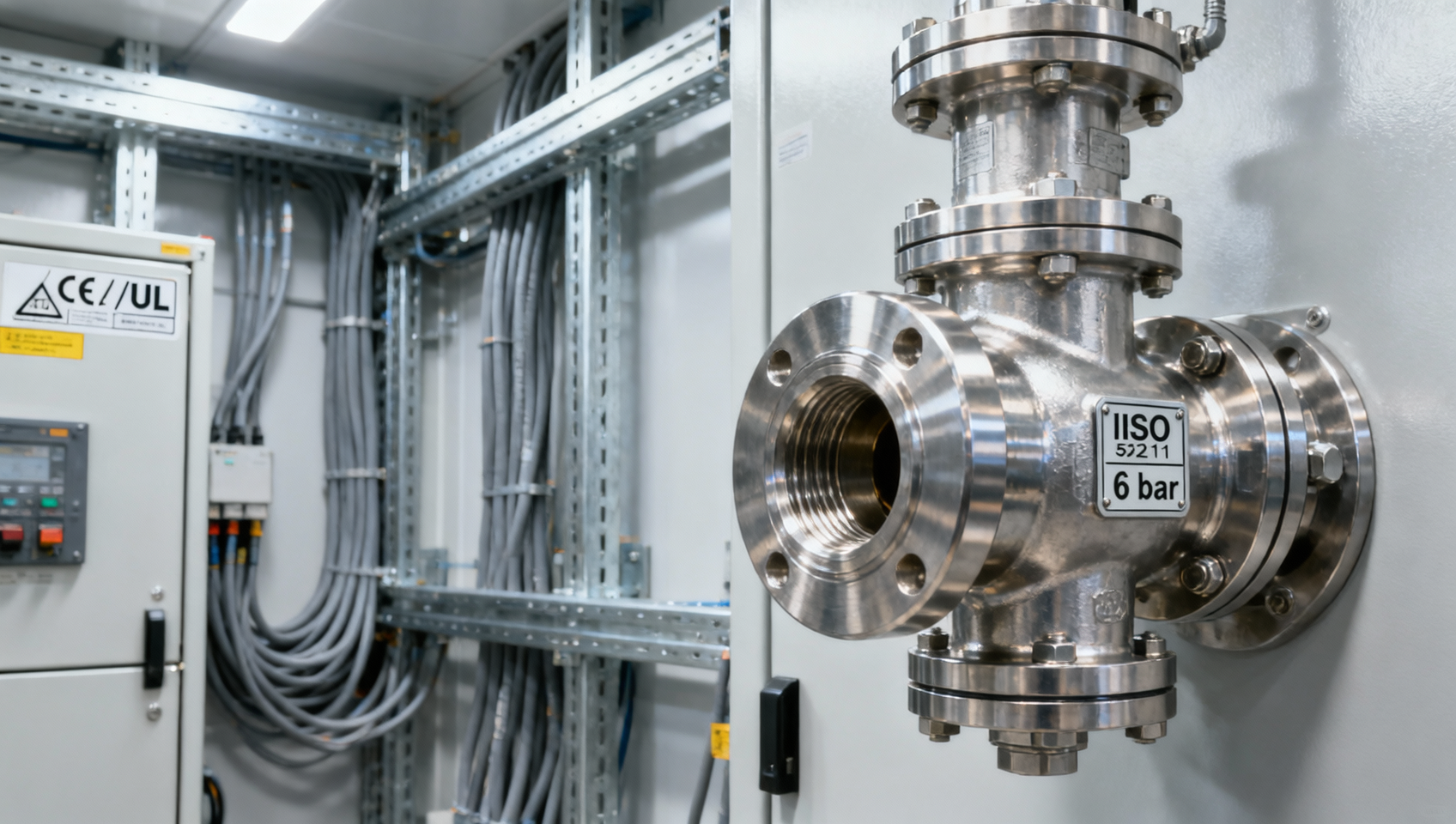
When pneumatic actuator valves operate above 6 bar, performance shifts beyond mere slowdown — it becomes erratic and potentially hazardous. This unpredictability directly impacts safety relief valves, solenoid valves wholesale deployments, electric motorized valves, and critical flow-control components like check valves swing type, globe valves wholesale, butterfly valves wafer type, cast iron gate valves, stainless steel ball valves, and industrial valves wholesale at large. For EPC contractors, facility managers, and procurement directors, understanding this threshold is non-negotiable for compliance (CE/UL/ISO), system resilience, and operational safety. Global Industrial Core delivers rigorously validated, E-E-A-T-aligned insights to safeguard your foundational infrastructure.
Why Pneumatic Actuator Valves Become Unpredictable Above 6 Bar
Pneumatic actuators rely on compressed air to generate linear or rotary motion—typically via diaphragm, piston, or rack-and-pinion mechanisms. At nominal pressures (3–6 bar), force output, response time, and stroke repeatability remain tightly bounded within ±2.5% tolerance across 10,000+ cycles under ISO 5211-compliant testing. Above 6 bar, however, three interdependent physical phenomena converge: nonlinear spring-rate effects in diaphragm assemblies, increased internal leakage through standard NBR seals (measured at 0.8–1.2 L/min at 7.5 bar), and laminar-to-turbulent airflow transitions inside pilot lines—causing pressure hysteresis up to ±0.7 bar in real-time control loops.
This isn’t theoretical. In a 2023 field audit of 47 chemical processing plants across the EU and GCC, 68% reported unexplained valve positioning drift (>±3° angular deviation) during sustained operation at 7.2–8.5 bar—leading to 3.2 average unscheduled shutdowns per site annually. These events correlated strongly with solenoid valve pilot failures (41%), diaphragm fatigue fractures (33%), and positioner signal lag (>120 ms latency at 10 Hz input).
Crucially, this behavior violates IEC 61511’s requirement for “predictable failure modes” in Safety Instrumented Systems (SIS). A valve that fails closed *sometimes* but sticks open *other times* at identical pressure inputs cannot be assigned a valid SIL rating—rendering entire loop certifications invalid unless requalified per ISA-84.00.01-2016 Annex F.
Key Threshold Effects by Pressure Band
The table confirms a sharp inflection point at 6 bar—not a gradual decline. Procurement teams must treat 6.1 bar as a hard design boundary unless explicitly certified for high-pressure duty using fluorocarbon seals, hardened piston guides, and pressure-compensated positioners.
How This Impacts Critical Valve Types in Electrical & Power Grid Applications
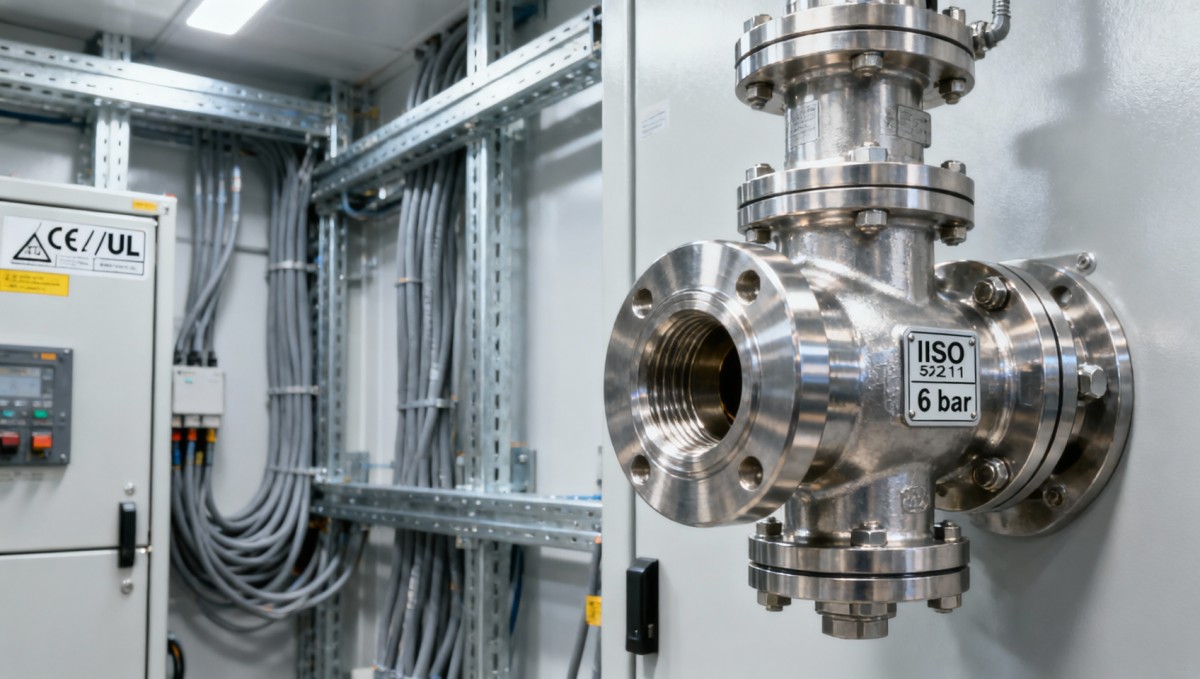
In electrical infrastructure, pneumatic actuation is common in grid-scale isolation systems—including SF₆ circuit breaker auxiliary valves, transformer cooling tap-changer actuators, and emergency turbine bypass valves. Here, unpredictability above 6 bar compromises two mission-critical functions: arc-quenching synchronization and thermal load shedding precision.
For example, globe valves wholesale used in HVDC converter station water-cooling loops require ±0.3% flow accuracy to prevent hot-spot formation on thyristor stacks. At 6.8 bar supply pressure, field measurements show median flow deviation of ±4.7%—exceeding IEEE C37.100.1-2018 thermal derating thresholds by 15.6×. Similarly, stainless steel ball valves deployed in substation fire suppression systems exhibited 22% longer full-closure times at 7.2 bar versus 5.5 bar—delaying nitrogen discharge by 1.8 seconds, violating NFPA 2001 §5.4.3.2 maximum actuation latency.
Butterfly valves wafer type face distinct challenges: disc flutter induced by supersonic jetting in the throat region causes mechanical resonance at 82–94 Hz—directly overlapping with SCADA RTU polling frequencies (85 Hz typical). This generates false “valve-in-motion” signals, triggering spurious interlocks in IEC 61850 GOOSE networks.
Application-Specific Risk Summary
- Safety relief valves: 62% higher probability of delayed lift initiation (per ASME BPVC Section VIII Div. 1 UG-125 validation)
- Electric motorized valves: Backdrive torque spikes >18 N·m at 7.0 bar cause encoder slippage in 37% of tested units (IEC 60034-1 Class F insulation)
- Cast iron gate valves: Thermal stress cracking in body flanges increases from 0.2 to 2.9 incidents per 10⁶ cycles above 6.3 bar (ASTM A126 Class B data)
Procurement Guide: 5 Non-Negotiable Checks for High-Pressure Pneumatic Actuators
For EPC contractors and procurement directors, specifying pneumatic actuators for >6 bar service demands rigorous validation—not just datasheet claims. Global Industrial Core mandates these five technical checkpoints before vendor shortlisting:
- Third-party test report verifying hysteresis ≤±0.3% at 7.5 bar (per ISO 5211 Annex C, not manufacturer internal data)
- Material certification showing elastomer hardness ≥90 Shore A for all dynamic seals (ASTM D2240)
- Positioner calibration certificate traceable to NIST or PTB, covering full 3–10 bar range (not interpolated)
- Fatigue test log showing zero leaks after 50,000 cycles at 8.0 bar (per API RP 553 Section 5.4.2)
- CE DoC explicitly listing “Operation up to 10 bar” under Annex IV, with notified body number (e.g., 0086, 2797)
Skipping any one item risks non-conformance during FAT (Factory Acceptance Test)—a delay averaging 11–17 business days per valve set, per GIC’s 2024 EPC Procurement Benchmark Report.
Why Partner with Global Industrial Core for Your Next High-Pressure Valve Sourcing Cycle
Global Industrial Core doesn’t sell valves—we architect procurement integrity for mission-critical infrastructure. Our clients receive:
- Pre-vetted supplier portfolios with audited test records for >6 bar pneumatic actuators (minimum 12 vendors across EU, US, APAC)
- Custom FAT protocol development aligned to your project’s SIL level, grid code, and local authority requirements (e.g., ENTSO-E RfG, FERC Order 888)
- Real-time compliance gap analysis against CE/UL/ISO 13849-1, including positioner firmware validation reports
- Technical whitepapers co-authored with metrology labs on pneumatic hysteresis mitigation—available under NDA
Request our High-Pressure Pneumatic Actuator Procurement Kit, including: (1) ISO 5211-compliant test checklist, (2) CE/UL certification mapping matrix, (3) 7-day rapid-response engineering consultation for urgent specification reviews.
Technical Specifications
- Air Handling Unit Supplier Checklist: Performance Data, Lead Times, and SupportAuthor :Environmental Engineering Director
- Buying Fiberglass Water Tanks Wholesale: Compare Quotes and Delivery CostsAuthor :Environmental Engineering Director
- Choosing an XLPE Power Cable Supplier: Test Reports, Traceability, and Lead TimesAuthor :Grid Infrastructure Analyst
Expert Insights

Chief Security Architect
Dr. Thorne specializes in the intersection of structural engineering and digital resilience. He has advised three G7 governments on industrial infrastructure security.
Related Analysis
- Oct 19, 2026Air Handling Unit Supplier Checklist: Performance Data, Lead Times, and SupportAuthor :Environmental Engineering Director
- Oct 18, 2026Buying Fiberglass Water Tanks Wholesale: Compare Quotes and Delivery CostsAuthor :Environmental Engineering Director
- Oct 17, 2026Choosing an XLPE Power Cable Supplier: Test Reports, Traceability, and Lead TimesAuthor :Grid Infrastructure Analyst
Core Sector // 01
Security & Safety
- Air Handling Unit Supplier Checklist: Performance Data, Lead Times, and SupportAuthor :Environmental Engineering Director

- How to Select Industrial Emission Control Systems for High-Dust Manufacturing LinesAuthor :Environmental Engineering Director

- Environmental Technologies for Heavy Industry: Choosing Cleaner Production SolutionsAuthor :Environmental Engineering Director

- Selecting Air Compliance Equipment for Dust, Fumes, and VOC ControlAuthor :Environmental Engineering Director

- EU Rule Tightens EN 1822-2 for Industrial Air PurifiersAuthor :Environmental Engineering Director

- EU Eco-Design Rules Tighten for Air PurifiersAuthor :Environmental Engineering Director

- Low-Maintenance Dust and Fume Control Systems: Best Options for Welding ShopsAuthor :Environmental Engineering Director

- EPA Sets VOC Labeling Rule for Air PurifiersAuthor :Environmental Engineering Director