EU CBAM Phase 2 Launches: Industrial Filter Exports Require LCA + Supply Chain Carbon Data
Author
Date Published
Reading Time
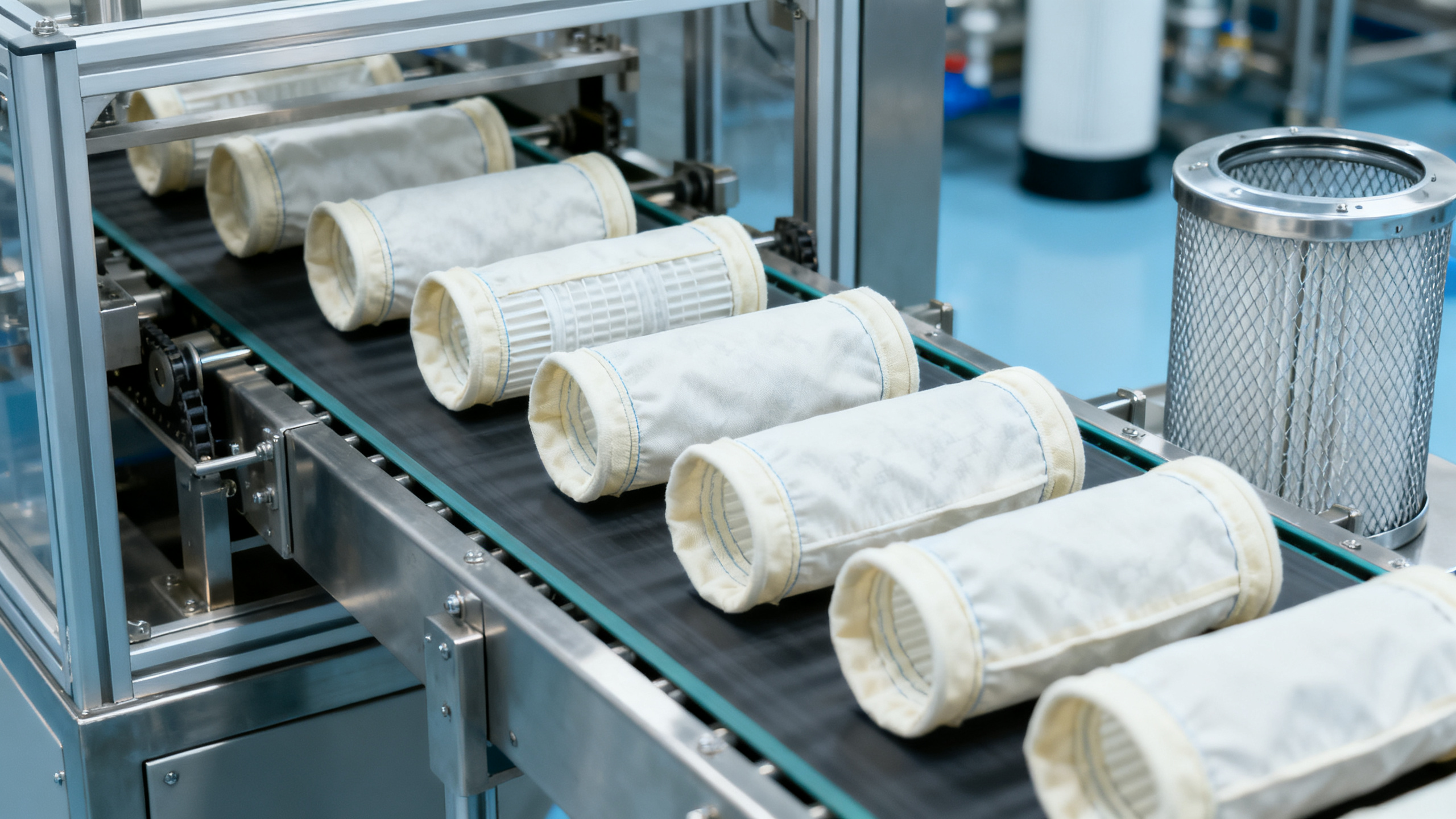
Starting 23 May 2026, the EU’s Carbon Border Adjustment Mechanism (CBAM) enters its second phase, mandating carbon reporting for industrial air filters, baghouse filter bags, and water treatment filter cartridges — core components under the ‘Air Purifiers & Dust’ category. This development directly affects manufacturers and exporters of filtration media, particularly those based in China and other third countries supplying the EU market.
Event Overview
On 23 May 2026, the European Union officially commenced the second phase of the CBAM. As confirmed in official EU regulatory updates, industrial air filters, baghouse filter bags, and water treatment filter cartridges have been newly added to the list of goods subject to mandatory CBAM reporting. Exporters must submit verified Life Cycle Assessment (LCA) reports and carbon data covering at least three tiers of upstream suppliers. All documentation must be validated by an EU-recognized third-party verifier. For Chinese filter material manufacturers, this requirement is expected to extend average delivery lead times by 7–10 working days.
Which Subsectors Are Affected
Direct Exporters (Filter Manufacturers & OEMs)
These entities face immediate compliance obligations. Because their products are now explicitly listed under CBAM’s scope, they must generate and submit LCA reports and multi-tier supply chain carbon data for each shipment destined for the EU — not just annual declarations. Failure to provide verified documentation may result in customs delays or rejection of consignments.
Raw Material Suppliers (Fibers, Nonwovens, Membranes)
Suppliers to filter manufacturers are indirectly but materially impacted. Under the new rules, export-level LCA reports require carbon data from Tier 1 (direct suppliers), Tier 2 (sub-suppliers), and Tier 3 (e.g., polymer resin producers or energy providers). This increases traceability demands and may trigger new data-sharing requests from downstream customers.
Contract Manufacturers & Toll Processors
Companies engaged in finishing, coating, or assembly of filtration media — without brand ownership or direct export relationships — may be asked to disclose process-level energy use, chemical inputs, and emissions data to support their clients’ LCA submissions. Their role shifts from operational service provider to data contributor within a regulated carbon value chain.
Logistics & Trade Compliance Service Providers
Firms offering customs brokerage, sustainability documentation support, or verification coordination will see increased demand for CBAM-specific expertise. However, only EU-accredited verifiers may sign off on LCA and supply chain reports — limiting eligible service partners and raising coordination complexity for exporters unfamiliar with EU accreditation frameworks.
What Relevant Companies or Practitioners Should Focus On — And How to Respond
Monitor Official EU CBAM Transitional Registry Updates
The EU’s CBAM Transitional Registry is expected to publish updated guidance on acceptable LCA methodologies, data granularity requirements for Tier 2–3 suppliers, and timelines for phased implementation of verification mandates. Exporters should subscribe to official notifications and cross-check against Commission Implementing Regulation (EU) 2023/1773 as amended.
Prioritize Product-Level Carbon Baseline Assessments for Key Export SKUs
Rather than waiting for full-scale reporting deadlines, companies should initiate internal LCA scoping for high-volume export items — especially air filters and baghouse bags. Focus on identifying primary emission hotspots (e.g., nonwoven thermal bonding, PTFE membrane extrusion, or epoxy impregnation) and mapping Tier 1–3 input sources. This helps anticipate data gaps before formal submission cycles begin.
Distinguish Between Regulatory Signal and Operational Requirement
The 23 May 2026 date marks the start of mandatory reporting — not a grace period. However, enforcement of Tier 3 data completeness or verification frequency remains subject to ongoing Commission interpretation. Companies should treat initial submissions as both compliance acts and learning exercises, documenting assumptions and limitations transparently to support future audits.
Initiate Supplier Engagement and Data Protocol Alignment Now
Upstream suppliers — especially those outside the EU — may lack carbon accounting systems or familiarity with ISO 14040/44 LCA standards. Exporters should proactively share standardized data request templates, clarify required units (e.g., kg CO₂e per kg material), and agree on confidentiality terms ahead of formal CBAM filing windows.
Editorial Perspective / Industry Observation
Observably, this CBAM expansion signals a structural shift — from targeting bulk commodities (e.g., cement, steel) toward precision-engineered industrial components with complex, globally distributed supply chains. Analysis shows that inclusion of filtration media reflects the EU’s growing focus on ‘embedded emissions’ in capital equipment and infrastructure-related consumables. From an industry perspective, it is more accurate to interpret this not as a standalone trade barrier, but as an early indicator of how environmental due diligence is becoming embedded in B2B technical procurement criteria — even where carbon pricing is not yet applied directly. Continued monitoring is warranted, as the Commission has indicated potential further expansions to filtration-related ancillaries (e.g., cage wires, pulse-jet valves) in subsequent phases.
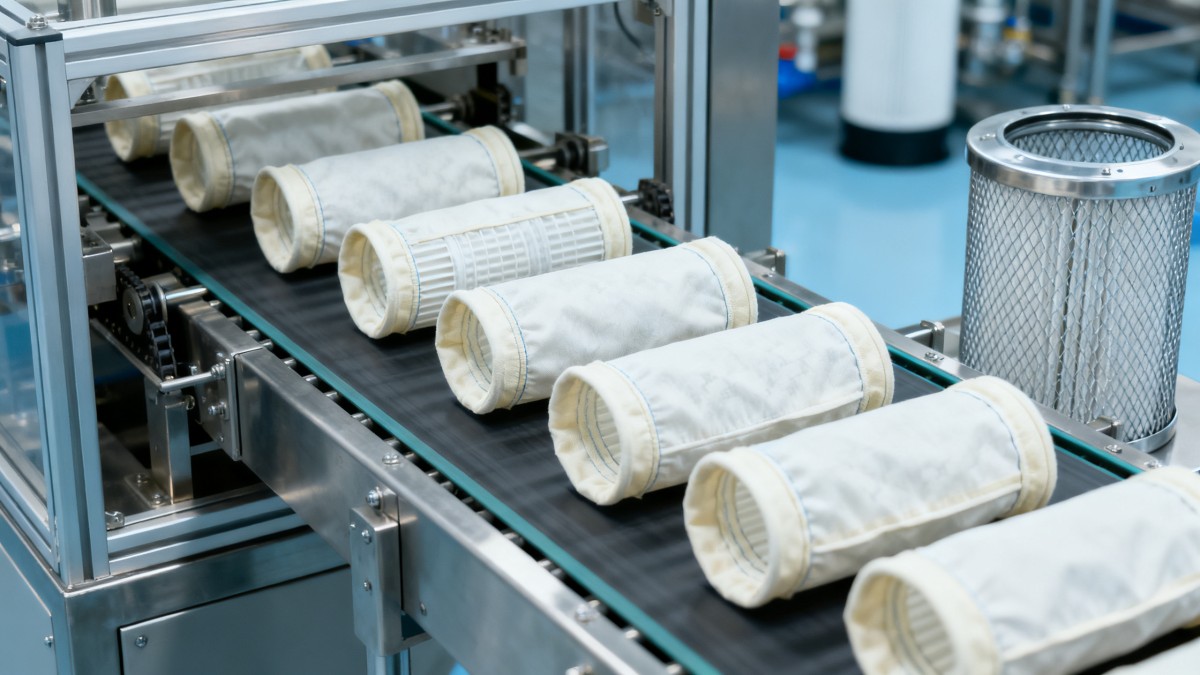
CBAM’s second phase underscores that carbon transparency is no longer optional for industrial exporters serving the EU — particularly in sectors where filtration performance intersects with environmental regulation, such as waste-to-energy, semiconductor cleanrooms, or municipal water treatment. The requirement for verified LCA and multi-tier supply chain data elevates technical documentation from a commercial appendix to a regulatory prerequisite. Current evidence suggests this is neither a temporary pilot nor a symbolic gesture: it is an enforceable, operational mandate with measurable lead-time consequences. Accordingly, it is more appropriate to understand this development as a procedural inflection point — one that redefines baseline expectations for product-level environmental accountability in global filtration trade.
Source: European Commission CBAM Transitional Regulation (Regulation (EU) 2023/1773), as amended; official EU CBAM website (cbam.ec.europa.eu); confirmed timeline and scope update published 15 March 2026. Note: Ongoing verification protocols for Tier 3 supplier data and national-level implementation guidance remain under observation.
Technical Specifications
- How to Select Electronic Hotel Key Card Locks for Guest Rooms and Staff AreasAuthor :Safety Compliance Lead
- How to Select Lab Instruments for Reliable Chemical Analysis WorkflowsAuthor :Precision Metrology Expert
- How to Size a UPS for Server Rooms: Load, Runtime, and Redundancy FactorsAuthor :Grid Infrastructure Analyst
Expert Insights

Chief Security Architect
Dr. Thorne specializes in the intersection of structural engineering and digital resilience. He has advised three G7 governments on industrial infrastructure security.
Related Analysis
- Sep 17, 2026How to Select Electronic Hotel Key Card Locks for Guest Rooms and Staff AreasAuthor :Safety Compliance Lead
- Sep 16, 2026How to Select Lab Instruments for Reliable Chemical Analysis WorkflowsAuthor :Precision Metrology Expert
- Sep 15, 2026How to Size a UPS for Server Rooms: Load, Runtime, and Redundancy FactorsAuthor :Grid Infrastructure Analyst
Core Sector // 01
Security & Safety
- Environmental Technologies for Heavy Industry: Choosing Cleaner Production SolutionsAuthor :Environmental Engineering Director

- Selecting Air Compliance Equipment for Dust, Fumes, and VOC ControlAuthor :Environmental Engineering Director

- EU Rule Tightens EN 1822-2 for Industrial Air PurifiersAuthor :Environmental Engineering Director

- EU Eco-Design Rules Tighten for Air PurifiersAuthor :Environmental Engineering Director

- Low-Maintenance Dust and Fume Control Systems: Best Options for Welding ShopsAuthor :Environmental Engineering Director

- EPA Sets VOC Labeling Rule for Air PurifiersAuthor :Environmental Engineering Director

- Saudi SASO Rule Adds Real-Time Logging for Air SystemsAuthor :Environmental Engineering Director

- Saudi SASO Rules Tighten for Air PurifiersAuthor :Environmental Engineering Director