Iranian Export Cuts Tighten Global Industrial Filter Media Supply
Author
Date Published
Reading Time
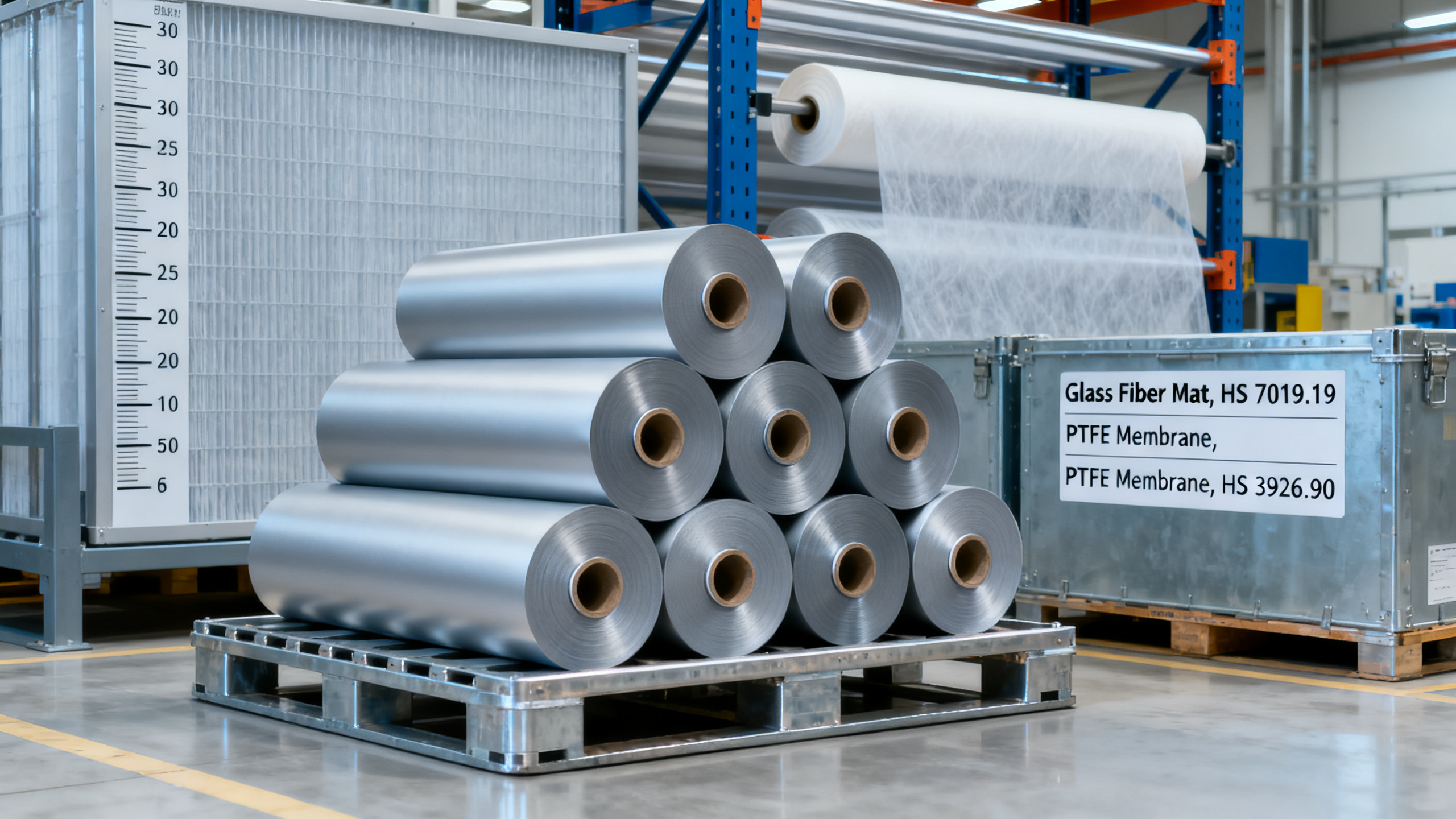
Global supply of industrial-grade filter media—particularly glass fiber and PTFE-based substrates used in HEPA/ULPA air filters and welding fume purification modules—has tightened since April 1, 2026, following Iran’s reduction of export quotas. This development is especially relevant for manufacturers and integrators in cleanroom engineering, industrial air purification, and process dust control sectors, as it directly affects material availability, lead times, and landed costs.
Event Overview
Effective April 1, 2026, Iran implemented reduced export quotas for industrial-grade glass fiber and polytetrafluoroethylene (PTFE) filter base materials. As a result, global supply of core filtration components—including HEPA/ULPA filter cartridges and welding smoke purification modules—has become constrained. In the third week of May 2026, FOB China prices for mainstream-brand filter cartridges rose 8% week-on-week. Average delivery lead times extended to over 12 weeks. The impact has already reached European cleanroom construction projects and dust control system deployments at petrochemical facilities in the Middle East.
Impact on Specific Industry Segments
Direct Trading Enterprises
Companies engaged in cross-border trade of filter media or finished filter cartridges face tighter margin pressure due to rising FOB prices and longer shipping cycles. Iranian-sourced raw materials or semi-finished goods previously relied upon for cost-competitive procurement are now subject to quota restrictions, reducing order fulfillment flexibility.
Raw Material Procurement Teams
Procurement departments sourcing glass fiber or PTFE substrates—especially those with exposure to Iranian suppliers or secondary distributors—must reassess vendor diversification. Inventory planning is now complicated by unpredictable allocation windows and delayed customs clearance for quota-controlled shipments.
Filtration Equipment Manufacturers
Manufacturers of air purifiers, ULPA filter housings, and industrial dust collectors are experiencing input cost inflation and production scheduling delays. Extended lead times for critical filter cores constrain project timelines, particularly for turnkey cleanroom or hazardous-area ventilation contracts where filter certification and validation are mandatory.
Supply Chain & Logistics Service Providers
Freight forwarders, customs brokers, and inventory management platforms serving the filtration sector report increased inquiries regarding alternative origin documentation, quota verification procedures, and buffer stock optimization. Demand for real-time visibility into filter media availability—especially for certified PTFE and borosilicate glass fiber grades—has intensified.
Key Considerations and Recommended Actions
Monitor official policy updates from Iranian trade authorities and importing-country customs agencies
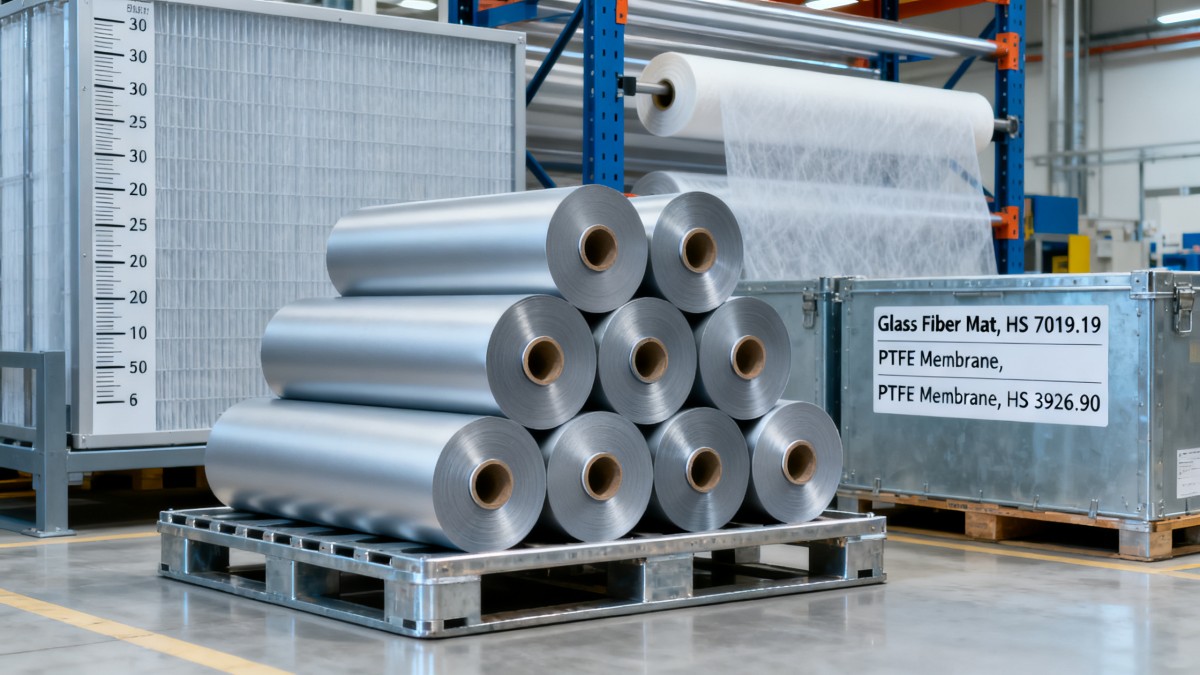
Quota adjustments may be announced via Iran’s Ministry of Industry and Mines or the Islamic Republic of Iran Customs Administration. Importers should track revisions to Harmonized System (HS) code classifications for glass fiber mats (HS 7019.19) and PTFE membranes (HS 3926.90), as reclassification could affect eligibility or reporting requirements.
Track price and lead time trends for specific filter categories—not just broad market averages
The 8% weekly FOB increase applies to mainstream branded cartridges; however, performance-critical variants—e.g., ULPA-rated PTFE composites or high-temperature glass fiber media—may show sharper volatility. Focus monitoring on product lines tied to Iranian-sourced substrates, rather than aggregated filter index data.
Distinguish between regulatory signals and operational impact
The April 1 quota reduction is confirmed, but its enforcement scope—such as whether it applies only to direct exports or also covers transshipments via third countries—remains subject to interpretation. Until clarification is issued, procurement teams should treat all Iranian-origin filter media as high-risk for allocation uncertainty.
Activate contingency planning for critical filter-dependent projects
For ongoing cleanroom builds or retrofit programs requiring certified HEPA/ULPA modules, assess current stock levels against projected 12+ week lead times. Where feasible, pre-position qualified alternatives—e.g., non-Iranian PTFE laminates or alternative binder systems—and document equivalency per ISO 14644-3 or EN 1822 standards.
Editorial Perspective / Industry Observation
Observably, this is not merely a short-term supply hiccup but an early indicator of tightening constraints in specialized filtration substrate markets where geopolitical factors increasingly intersect with technical qualification requirements. Analysis shows that Iranian glass fiber and PTFE materials have served niche roles in mid-tier filtration products due to competitive pricing and consistent dimensional stability—factors not easily replicated by rapid substitution. Current developments are better understood as a structural signal rather than an isolated incident: they highlight growing vulnerability in dual-sourced or single-origin substrate strategies. From an industry perspective, the event underscores why material traceability, alternative certification pathways, and regional buffer stocking are becoming operational necessities—not just risk-mitigation options.
This situation remains dynamic. Continued observation is warranted for potential adjustments to Iranian export licensing procedures, responses from EU and GCC regulatory bodies regarding import eligibility, and shifts in downstream inventory behavior among major filtration OEMs.
Information Source: Confirmed public trade notices issued by the Islamic Republic of Iran Customs Administration (April 2026); verified FOB price and lead time data from three independent international filter market intelligence services (reported May 2026). Ongoing developments related to quota enforcement mechanisms and third-country transshipment policies remain under observation.
Technical Specifications
- How to Select Electronic Hotel Key Card Locks for Guest Rooms and Staff AreasAuthor :Safety Compliance Lead
- How to Select Lab Instruments for Reliable Chemical Analysis WorkflowsAuthor :Precision Metrology Expert
- How to Size a UPS for Server Rooms: Load, Runtime, and Redundancy FactorsAuthor :Grid Infrastructure Analyst
Expert Insights

Chief Security Architect
Dr. Thorne specializes in the intersection of structural engineering and digital resilience. He has advised three G7 governments on industrial infrastructure security.
Related Analysis
- Sep 17, 2026How to Select Electronic Hotel Key Card Locks for Guest Rooms and Staff AreasAuthor :Safety Compliance Lead
- Sep 16, 2026How to Select Lab Instruments for Reliable Chemical Analysis WorkflowsAuthor :Precision Metrology Expert
- Sep 15, 2026How to Size a UPS for Server Rooms: Load, Runtime, and Redundancy FactorsAuthor :Grid Infrastructure Analyst
Core Sector // 01
Security & Safety
- Environmental Technologies for Heavy Industry: Choosing Cleaner Production SolutionsAuthor :Environmental Engineering Director

- Selecting Air Compliance Equipment for Dust, Fumes, and VOC ControlAuthor :Environmental Engineering Director

- EU Rule Tightens EN 1822-2 for Industrial Air PurifiersAuthor :Environmental Engineering Director

- EU Eco-Design Rules Tighten for Air PurifiersAuthor :Environmental Engineering Director

- Low-Maintenance Dust and Fume Control Systems: Best Options for Welding ShopsAuthor :Environmental Engineering Director

- EPA Sets VOC Labeling Rule for Air PurifiersAuthor :Environmental Engineering Director

- Saudi SASO Rule Adds Real-Time Logging for Air SystemsAuthor :Environmental Engineering Director

- Saudi SASO Rules Tighten for Air PurifiersAuthor :Environmental Engineering Director