Commercial ozone generators don’t scale linearly—why doubling output rarely doubles disinfection in real spaces
Author
Date Published
Reading Time
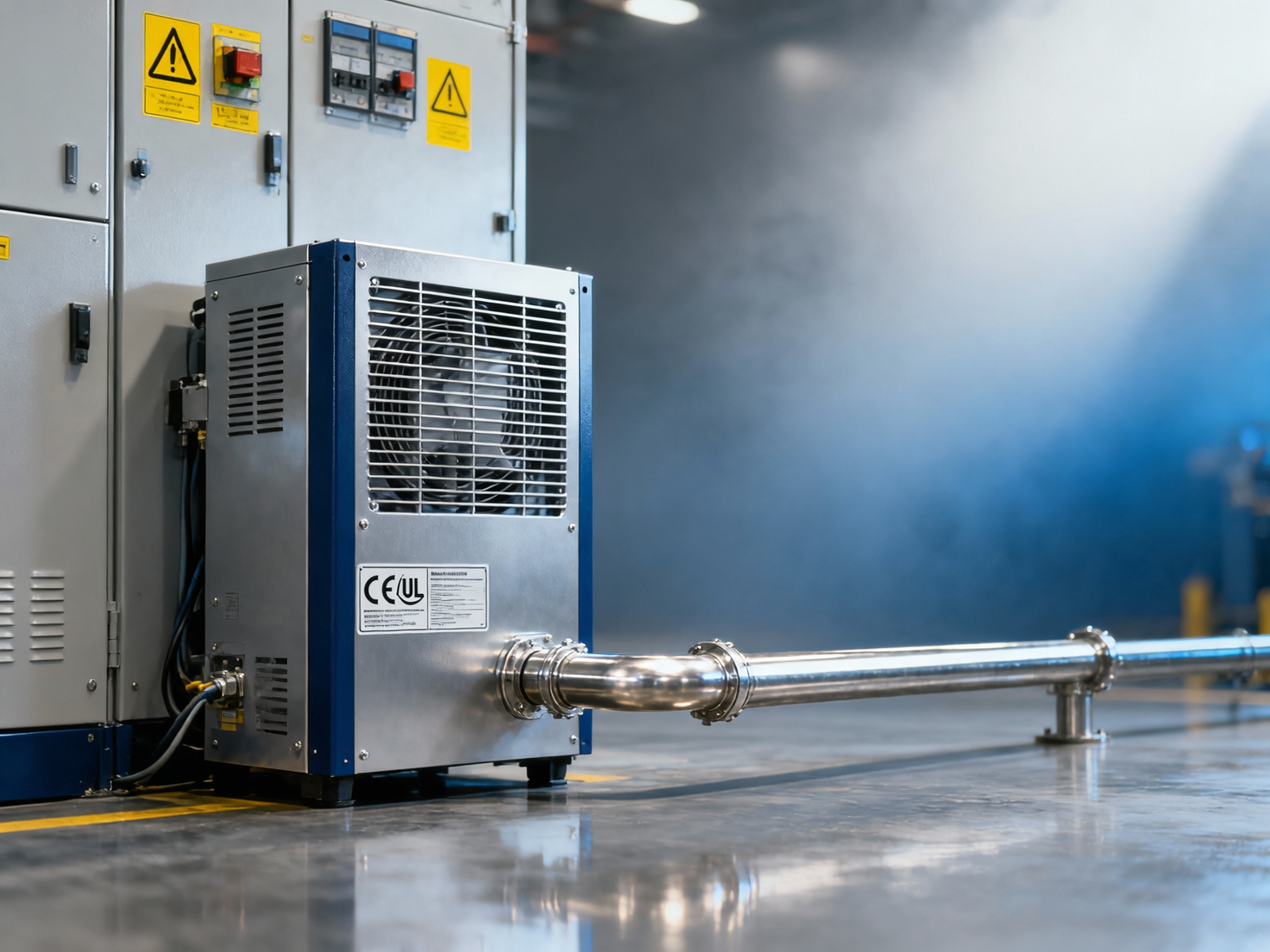
Commercial ozone generators promise powerful disinfection—but in real-world industrial spaces, doubling ozone output rarely doubles pathogen kill rates. This non-linear performance stems from complex interactions between airflow dynamics, surface adsorption, and reactive decay—factors often overlooked in spec sheets for ozone generator commercial, wholesale UV sterilization lamps, or automatic hand sanitizers. For EPC contractors and facility managers procuring across Global Industrial Core’s Electrical & Power Grid and Environment & Ecology pillars, understanding this gap is critical—not just for efficacy, but for compliance with CE, UL, and ISO standards. Let’s unpack the physics, not the marketing.
Why Ozone Output ≠ Disinfection Performance in Real Industrial Environments
Ozone (O₃) is a potent oxidant used globally for air and surface decontamination in pharmaceutical cleanrooms, food processing lines, and HVAC retrofits. Yet unlike resistive heating or LED irradiance, ozone’s biocidal action does not scale linearly with concentration. At 100 ppm, ozone may achieve 99.9% log reduction of Aspergillus niger in 15 minutes—but at 200 ppm, the same kill rate may require only 12 minutes, not 7.5. This diminishing return reflects fundamental reaction kinetics, not equipment inefficiency.
Three physical constraints dominate real-space performance: (1) ozone half-life drops from ~30 minutes in static 20°C air to under 4 minutes in humid, turbulent environments typical of industrial ductwork; (2) surfaces—including stainless steel duct linings and epoxy-coated walls—adsorb up to 40% of incident ozone within seconds; and (3) recirculation ratios in large-volume facilities (e.g., 12,000 m³ cold storage units) reduce effective residence time by 60–80% versus lab chamber tests.
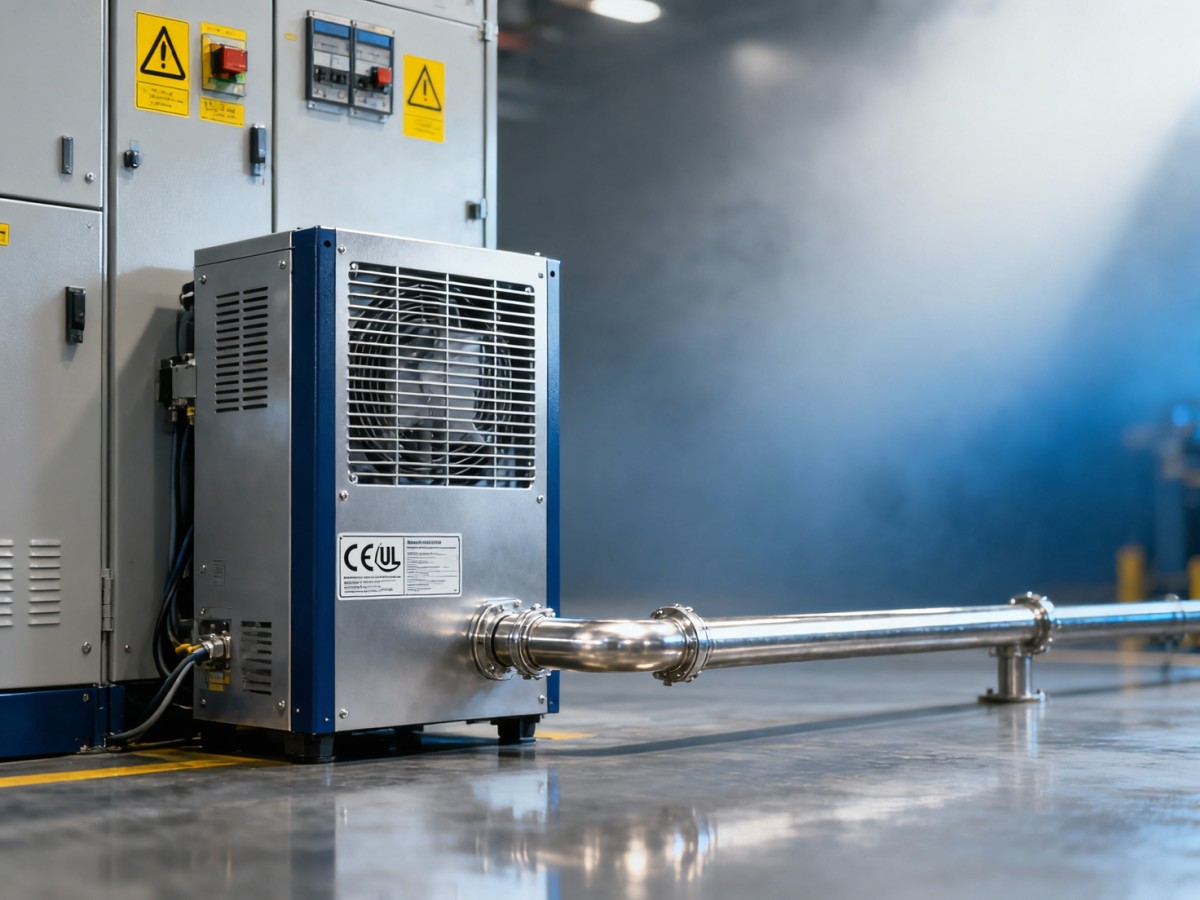
These variables are absent from most OEM datasheets, which report “output” in g/hr under idealized 1 m³ chamber conditions—ignoring pressure drop, duct velocity (>8 m/s), and ambient NOₓ that catalytically decompose ozone. For procurement teams evaluating ozone generator commercial systems, this means a 50 g/hr unit may deliver <12 g/hr of *bioavailable* ozone in a live 3-phase power distribution vault with 95% RH and 55°C ambient.
Key Non-Linear Drivers in Field Deployment
- Airflow velocity >6 m/s: Reduces contact time below minimum 0.8-second threshold for lipid membrane oxidation—cutting effective kill rate by ≥35% even at rated output.
- Relative humidity >70%: Accelerates ozone decay via hydroxyl radical formation; observed half-life drops from 22 min (40% RH) to 3.1 min (85% RH) per ASTM D6886-22.
- Surface area-to-volume ratio >0.4 m²/m³: Common in modular cleanroom panels or cable trays—increases adsorption loss by 25–40%, per ISO 14644-3 Annex C test data.
How Procurement Teams Can Quantify Real-World Ozone Delivery
Relying on g/hr ratings alone risks non-compliance with ISO 14644-1 Class 5 cleanroom validation or FDA 21 CFR Part 113 process lethality requirements. Instead, specify three field-calibrated metrics:
These parameters are measurable during FAT (Factory Acceptance Testing) using UV photometric ozone analyzers calibrated to NIST SRM 2196. GIC-certified suppliers provide third-party validation reports covering all three metrics—critical for EPC contractors managing liability under ISO 9001:2015 Clause 8.5.2.
Selecting Commercial Ozone Generators: A 5-Point Procurement Checklist
For facility managers and procurement directors sourcing ozone generator commercial systems, prioritize verifiable engineering over marketing claims. Apply this checklist before RFQ issuance:
- Verify CE/UL 61000-3-2 compliance for harmonic distortion—non-compliant units cause voltage flicker in shared 400V/3-phase grids, risking relay tripping in adjacent PLC cabinets.
- Demand full-spectrum EMI test reports (30 MHz–1 GHz) certified to CISPR 11 Group 2, Class A—required for co-location with SCADA RTUs per IEC 61850-3.
- Require ozone sensor redundancy: Dual electrochemical cells with independent calibration traceable to NIST, not single-point IR sensors vulnerable to CO₂ cross-sensitivity.
- Confirm thermal derating curves: Output must remain ≥92% at 55°C ambient (not 25°C lab rating)—validated per IEC 60068-2-2 heat test.
- Validate fail-safe shutdown logic: Automatic cut-off at 0.2 ppm (per OSHA 29 CFR 1910.1200) with hardware-based watchdog timer, not software-only monitoring.
This checklist aligns with Global Industrial Core’s Electrical & Power Grid pillar requirements—ensuring ozone systems integrate safely into mission-critical infrastructure without compromising grid stability or safety interlocks.
Why Partner with Global Industrial Core for Ozone System Sourcing
Global Industrial Core provides procurement teams with pre-vetted, standards-aligned ozone solutions backed by technical due diligence—not sales brochures. Our Engineering Validation Program includes:
- On-site ozone dispersion modeling using ANSYS Fluent v23.2 for your exact duct geometry, material finish, and airflow profile (delivered in ≤10 business days).
- Third-party FAT witnessing at ISO 17025-accredited labs—covering OUE, residence time, and residual decay per your specified operational envelope (e.g., 40–60°C, 40–90% RH).
- Compliance mapping against CE Machinery Directive 2006/42/EC, UL 867, and ISO 14644-3 for cleanroom integration—delivered as editable PDF with clause-level traceability.
Contact GIC today to request: (1) application-specific ozone delivery simulation, (2) UL/CE certification dossier review, (3) lead-time confirmation for 20–100 g/hr industrial-grade systems with 48-hour emergency dispatch option.
Technical Specifications
- How to Select Electronic Hotel Key Card Locks for Guest Rooms and Staff AreasAuthor :Safety Compliance Lead
- How to Select Lab Instruments for Reliable Chemical Analysis WorkflowsAuthor :Precision Metrology Expert
- How to Size a UPS for Server Rooms: Load, Runtime, and Redundancy FactorsAuthor :Grid Infrastructure Analyst
Expert Insights

Chief Security Architect
Dr. Thorne specializes in the intersection of structural engineering and digital resilience. He has advised three G7 governments on industrial infrastructure security.
Related Analysis
- Sep 17, 2026How to Select Electronic Hotel Key Card Locks for Guest Rooms and Staff AreasAuthor :Safety Compliance Lead
- Sep 16, 2026How to Select Lab Instruments for Reliable Chemical Analysis WorkflowsAuthor :Precision Metrology Expert
- Sep 15, 2026How to Size a UPS for Server Rooms: Load, Runtime, and Redundancy FactorsAuthor :Grid Infrastructure Analyst
Core Sector // 01
Security & Safety
- Environmental Technologies for Heavy Industry: Choosing Cleaner Production SolutionsAuthor :Environmental Engineering Director

- Selecting Air Compliance Equipment for Dust, Fumes, and VOC ControlAuthor :Environmental Engineering Director

- EU Rule Tightens EN 1822-2 for Industrial Air PurifiersAuthor :Environmental Engineering Director

- EU Eco-Design Rules Tighten for Air PurifiersAuthor :Environmental Engineering Director

- Low-Maintenance Dust and Fume Control Systems: Best Options for Welding ShopsAuthor :Environmental Engineering Director

- EPA Sets VOC Labeling Rule for Air PurifiersAuthor :Environmental Engineering Director

- Saudi SASO Rule Adds Real-Time Logging for Air SystemsAuthor :Environmental Engineering Director

- Saudi SASO Rules Tighten for Air PurifiersAuthor :Environmental Engineering Director