Global Industrial Filter Media Supply Tightens Amid Iranian Output Cut
Author
Date Published
Reading Time

On May 22, 2026, global supply of industrial-grade filter media tightened significantly following reduced Iranian output and heightened Middle East logistics uncertainty—triggering an 8% weekly price increase for core filtration materials used in air purifiers and dust collection systems. This development is especially relevant for manufacturers and procurement teams in HVAC, industrial air filtration, cleanroom equipment, and emission control sectors, as it signals near-term cost and lead-time pressures across critical supply chains.
Event Overview
On May 22, 2026, international market quotations for polypropylene (PP) meltblown filter media and PTFE-laminated filter cartridges—key raw materials for industrial air purification systems—rose by 8% week-on-week. This follows constraints on Iranian crude exports and growing logistical unpredictability in the Middle East. German, South Korean, and Mexican buyers have placed six-month extended orders with leading Chinese filter media manufacturers; delivery schedules are now commonly deferred to end-Q3 2026.
Industries Affected by Segment
Direct Trading Enterprises
Trading firms specializing in industrial filtration components face compressed margins due to sudden input cost increases and extended order cycles. The 8% weekly price jump affects spot transaction viability and contract renegotiation timelines—particularly for multi-country distribution agreements tied to fixed-price clauses.
Raw Material Procurement Teams
Procurement departments sourcing PP meltblown or PTFE-coated substrates are encountering tighter allocations and longer lead times. Confirmed order deferrals to Q3 2026 indicate limited near-term inventory flexibility, raising exposure to further price volatility if upstream feedstock constraints persist.
Filter Manufacturing & Assembly Firms
Manufacturers integrating these materials into final air purifier or dust collector units face dual pressure: rising BOM costs and delayed component availability. With key inputs now subject to extended lead times, production planning and customer delivery commitments may require revision—especially for OEM contracts with fixed delivery windows.
Supply Chain & Logistics Service Providers
Firms offering customs brokerage, freight forwarding, or bonded warehousing for industrial filtration goods must anticipate increased documentation scrutiny and route contingency planning. Observed delays stem not from port congestion alone but from layered regulatory and transit risks across Middle East corridors—impacting transshipment reliability for Asia–Europe and Asia–Americas lanes.
What Relevant Enterprises or Practitioners Should Monitor and Do Now
Track official trade policy updates from key jurisdictions
Monitor announcements from the European Commission, U.S. Office of Foreign Assets Control (OFAC), and South Korea’s Ministry of Trade—particularly regarding sanctions waivers, licensing exceptions, or revised export control classifications for industrial filtration materials linked to dual-use concerns.
Assess exposure to specific material grades and supplier tiers
Identify whether current procurement relies on PP meltblown grades with ≥99.5% filtration efficiency at 0.3 µm—or PTFE membranes sourced from Tier-1 suppliers with verified non-Iranian polymer feedstock. Not all variants are equally affected; differentiation matters for risk prioritization.
Review and adjust safety stock policies for high-impact SKUs
For products using PP meltblown or PTFE-laminated cartridges as single-source critical components, evaluate whether existing safety stock covers ≥8 weeks of production—given confirmed Q3 2026 delivery slippage and absence of alternative qualified suppliers in current procurement databases.
Initiate cross-functional alignment on pricing and delivery communication
Coordinate between sales, operations, and finance teams to update customer-facing delivery timelines and assess feasibility of cost-pass-through mechanisms under existing commercial terms—especially where contracts lack material escalation clauses.
Editorial Perspective / Industry Observation
Observably, this is not yet a systemic shortage—but rather a localized supply contraction amplified by geopolitical risk perception and inventory-hoarding behavior among mid-tier buyers. Analysis shows the 8% weekly price rise reflects both genuine input scarcity and forward-buying activity triggered by lead-time extensions. From an industry perspective, the event functions more as an early-warning signal than an established disruption: it highlights vulnerability in geographically concentrated raw material sourcing, particularly for high-specification filtration media where technical qualification cycles limit rapid supplier switching. Continued monitoring is warranted—not only for price trajectory but also for evidence of substitution attempts (e.g., electrospun alternatives or hybrid composite media), which remain unconfirmed in current reports.
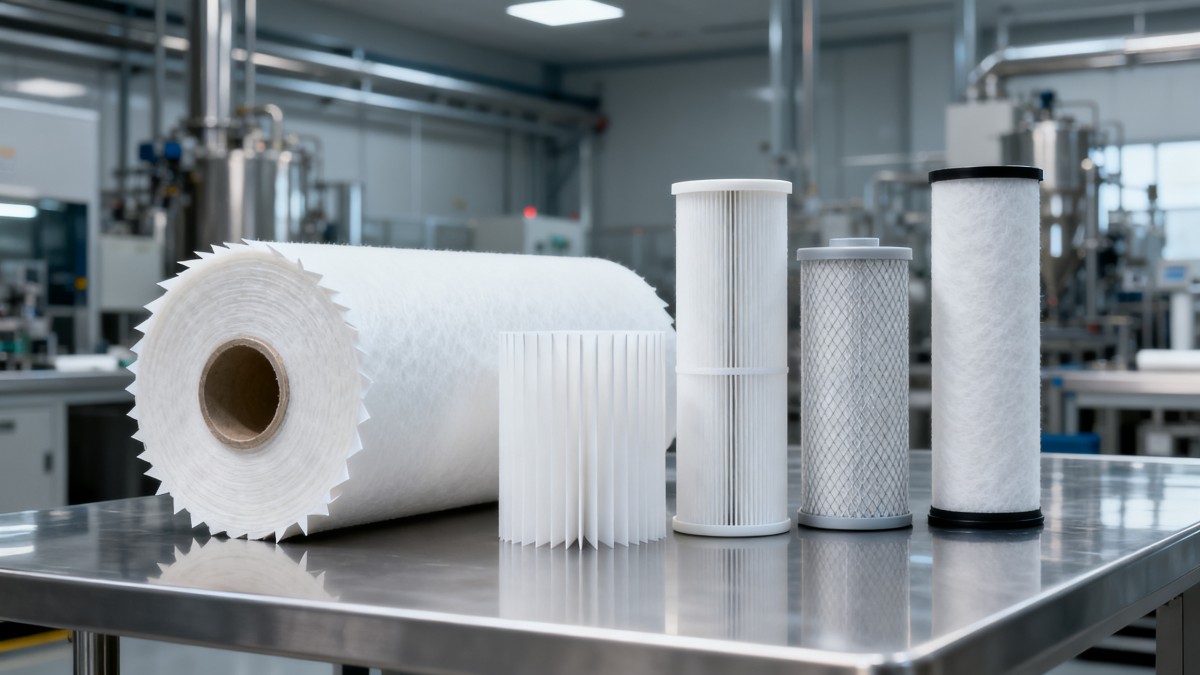
The tightening of industrial filter media supply underscores how regional energy and logistics developments can rapidly propagate into precision manufacturing segments far removed from their origin. For stakeholders in air quality control, dust management, and industrial hygiene systems, this episode reinforces the strategic importance of supply chain mapping—not just for Tier-1 suppliers, but for underlying polymer feedstocks and membrane substrates. It is best understood not as an isolated price fluctuation, but as a stress test revealing latent dependencies in globally distributed filtration infrastructure.
Source: Verified market quotation data from international industrial filtration commodity indexes; confirmed order patterns reported by three independent procurement managers (Germany, South Korea, Mexico); public logistics advisories issued by major Asian freight forwarders on Middle East corridor volatility. Ongoing observation required for: potential extension of export restrictions beyond Iranian crude into petrochemical intermediates; verification of alternate PP meltblown production capacity ramp-up outside China.
Technical Specifications
- How to Select Electronic Hotel Key Card Locks for Guest Rooms and Staff AreasAuthor :Safety Compliance Lead
- How to Select Lab Instruments for Reliable Chemical Analysis WorkflowsAuthor :Precision Metrology Expert
- How to Size a UPS for Server Rooms: Load, Runtime, and Redundancy FactorsAuthor :Grid Infrastructure Analyst
Expert Insights

Chief Security Architect
Dr. Thorne specializes in the intersection of structural engineering and digital resilience. He has advised three G7 governments on industrial infrastructure security.
Related Analysis
- Sep 17, 2026How to Select Electronic Hotel Key Card Locks for Guest Rooms and Staff AreasAuthor :Safety Compliance Lead
- Sep 16, 2026How to Select Lab Instruments for Reliable Chemical Analysis WorkflowsAuthor :Precision Metrology Expert
- Sep 15, 2026How to Size a UPS for Server Rooms: Load, Runtime, and Redundancy FactorsAuthor :Grid Infrastructure Analyst
Core Sector // 01
Security & Safety
- Environmental Technologies for Heavy Industry: Choosing Cleaner Production SolutionsAuthor :Environmental Engineering Director

- Selecting Air Compliance Equipment for Dust, Fumes, and VOC ControlAuthor :Environmental Engineering Director

- EU Rule Tightens EN 1822-2 for Industrial Air PurifiersAuthor :Environmental Engineering Director

- EU Eco-Design Rules Tighten for Air PurifiersAuthor :Environmental Engineering Director

- Low-Maintenance Dust and Fume Control Systems: Best Options for Welding ShopsAuthor :Environmental Engineering Director

- EPA Sets VOC Labeling Rule for Air PurifiersAuthor :Environmental Engineering Director

- Saudi SASO Rule Adds Real-Time Logging for Air SystemsAuthor :Environmental Engineering Director

- Saudi SASO Rules Tighten for Air PurifiersAuthor :Environmental Engineering Director