Indonesia BPOM Mandates ePM1 Efficiency Retention ≥95% for Industrial Air Filter Cartridges
Author
Date Published
Reading Time

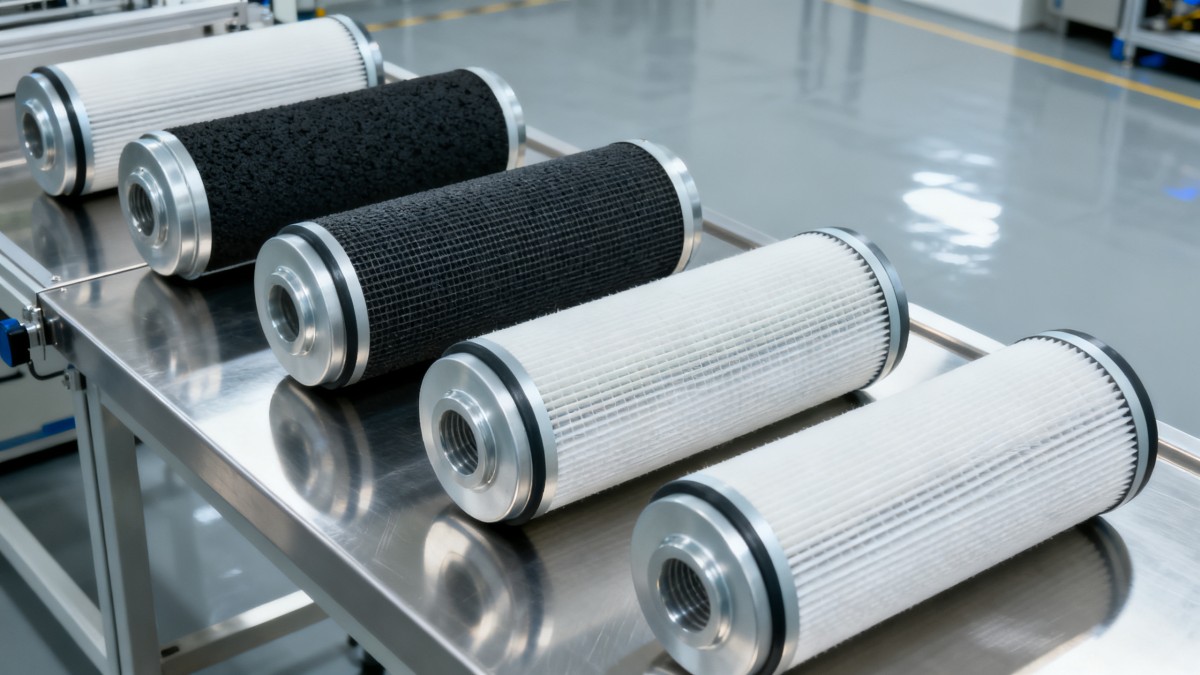
On May 8, 2026, Indonesia’s Food and Drug Authority (BPOM) issued Regulation No. HK.01.07/B/456/2026, introducing a mandatory performance requirement for industrial air filter cartridges sold or registered in the country. The regulation specifies that all chemical adsorption-, electrostatic precipitator-, and hybrid-type industrial air filter cartridges must retain ≥95% of their initial ePM1 filtration efficiency after undergoing a standardized humid-heat aging test (40°C / 90% RH for 168 hours). Enforcement begins on October 1, 2026. Exporters of filter cartridges from China—and other manufacturing countries—must now assess and upgrade their accelerated aging validation capabilities to comply. This development is particularly relevant for manufacturers, exporters, and distributors of industrial air purification components serving Southeast Asian industrial facilities, cleanrooms, and process environments.
Event Overview
Indonesia’s National Agency of Drug and Food Control (Badan Pengawas Obat dan Makanan, or BPOM) published Regulation No. HK.01.07/B/456/2026 on May 8, 2026. The regulation mandates that all industrial-grade air filter cartridges registered or marketed in Indonesia—including chemical adsorption, electrostatic precipitation, and composite types—must demonstrate ePM1 particle capture efficiency retention of at least 95% following humid-heat aging under conditions of 40°C and 90% relative humidity for 168 hours. The requirement takes effect on October 1, 2026. No transitional provisions or grandfathering clauses are stated in the publicly available regulatory text.
Industries Affected by the Regulation
Direct Exporters (e.g., Chinese filter cartridge manufacturers)
These enterprises supply finished filter cartridges to Indonesian importers or OEMs. They are directly responsible for product registration with BPOM and must provide test reports verifying compliance. Impact includes increased pre-market validation costs, potential delays in registration timelines, and possible redesign of filter media or housing to maintain efficiency post-aging.
Filter Media and Component Suppliers
Suppliers of activated carbon, HEPA-grade nonwovens, electret-charged fibers, or ion-generating modules may face revised technical specifications from downstream cartridge assemblers. Demand may shift toward materials with proven resistance to humidity-induced charge decay or adsorbent saturation—though no material-level certification is mandated under the current rule.
OEMs and System Integrators
Companies integrating filter cartridges into larger industrial air purification systems must ensure component-level compliance aligns with their own product registrations. Non-compliant cartridges could invalidate system-level BPOM approvals, triggering retesting or recall exposure if discovered post-market.
Distribution and Regulatory Affairs Service Providers
Local Indonesian agents and regulatory consultants assisting foreign registrants will need updated test report review protocols—specifically verifying test method alignment with BPOM’s referenced aging protocol (not just ISO 16890 or EN 1822). Misalignment may lead to rejection during BPOM’s technical assessment phase.
What Relevant Enterprises or Practitioners Should Focus On — And How to Respond
Confirm alignment with BPOM’s referenced test methodology
BPOM does not specify a proprietary test standard but references “ePM1 humid-heat aging (40°C / 90% RH × 168 h)” as a functional requirement. Enterprises should verify whether their current aging tests—conducted per ASTM D4329, ISO 4892-2, or internal protocols—match these exact environmental parameters and measurement timing (i.e., ePM1 efficiency measured immediately after aging, not after recovery). Discrepancies may require lab recalibration or third-party retesting.
Review existing product portfolios for high-risk categories
Cartridges relying heavily on electrostatic charge (e.g., low-weight synthetic electret filters) or hygroscopic adsorbents (e.g., certain impregnated carbons) are more likely to exceed the 5% efficiency loss threshold. Exporters should prioritize testing these categories first—not only for new registrations but also for products already listed with BPOM, as BPOM reserves authority to request post-registration verification.
Engage BPOM-accredited local representatives early
Registration dossiers submitted after October 1, 2026 must include compliant aging data. Pre-submission consultations with BPOM-authorized local agents can help clarify documentation expectations—especially regarding test report formatting, language requirements (Indonesian translation may be needed), and whether comparative data from multiple batches is required.
Map supply chain dependencies for validation readiness
Some aging tests require 7–10 days per batch plus pre-conditioning and post-test measurement. Manufacturers should audit internal lab capacity or contracted lab lead times, especially if reliance on overseas testing labs introduces shipping delays or customs clearance risks for physical samples.
Editorial Perspective / Industry Observation
Observably, this regulation marks BPOM’s first explicit performance durability requirement for air filtration components—not merely initial efficiency or safety. It signals a maturing regulatory posture focused on real-world operational reliability rather than static lab benchmarks. Analysis shows the rule functions less as an immediate market barrier and more as a forward-looking signal: it incentivizes long-term product stewardship and shifts competitive differentiation toward material stability under tropical climatic stress. From an industry perspective, the 5% allowable decay threshold is stringent relative to common aging tolerances in non-regulated markets (e.g., 10–15% loss in many OEM specs), suggesting BPOM intends to raise baseline expectations for industrial air quality infrastructure resilience. Current enforcement mechanisms remain unconfirmed—such as whether BPOM will conduct random post-market surveillance—but the regulation’s structure implies future expansion into other environmental stressors (e.g., thermal cycling, VOC exposure).
This is best understood not as a one-time compliance checkpoint, but as an indicator of tightening technical governance in Indonesia’s industrial environmental equipment sector—particularly where health-impacting particulate control intersects with tropical climate challenges.
Conclusion
The BPOM regulation represents a targeted, technically specific shift in market access requirements—not a broad-based trade restriction. Its significance lies in establishing a verifiable durability benchmark for industrial air filtration in a high-humidity environment, thereby elevating expectations for product lifecycle performance. For affected enterprises, the most rational interpretation is that this is an operational calibration point: it demands attention to aging validation capability, not wholesale product redesign—unless existing designs fall short of the 95% ePM1 retention threshold. Proactive alignment with the test condition and timeline, rather than reactive compliance, remains the most effective response pathway.
Source Attribution
Main source: Republic of Indonesia National Agency of Drug and Food Control (BPOM) Regulation No. HK.01.07/B/456/2026, published May 8, 2026.
Points requiring ongoing observation: (1) official BPOM guidance documents clarifying test report format and accreditation criteria for laboratories; (2) any announced surveillance or enforcement protocols post-October 2026.
Technical Specifications
- Air Handling Unit Supplier Checklist: Performance Data, Lead Times, and SupportAuthor :Environmental Engineering Director
- Buying Fiberglass Water Tanks Wholesale: Compare Quotes and Delivery CostsAuthor :Environmental Engineering Director
- Choosing an XLPE Power Cable Supplier: Test Reports, Traceability, and Lead TimesAuthor :Grid Infrastructure Analyst
Expert Insights

Chief Security Architect
Dr. Thorne specializes in the intersection of structural engineering and digital resilience. He has advised three G7 governments on industrial infrastructure security.
Related Analysis
- Oct 19, 2026Air Handling Unit Supplier Checklist: Performance Data, Lead Times, and SupportAuthor :Environmental Engineering Director
- Oct 18, 2026Buying Fiberglass Water Tanks Wholesale: Compare Quotes and Delivery CostsAuthor :Environmental Engineering Director
- Oct 17, 2026Choosing an XLPE Power Cable Supplier: Test Reports, Traceability, and Lead TimesAuthor :Grid Infrastructure Analyst
Core Sector // 01
Security & Safety
- Air Handling Unit Supplier Checklist: Performance Data, Lead Times, and SupportAuthor :Environmental Engineering Director

- How to Select Industrial Emission Control Systems for High-Dust Manufacturing LinesAuthor :Environmental Engineering Director

- Environmental Technologies for Heavy Industry: Choosing Cleaner Production SolutionsAuthor :Environmental Engineering Director

- Selecting Air Compliance Equipment for Dust, Fumes, and VOC ControlAuthor :Environmental Engineering Director

- EU Rule Tightens EN 1822-2 for Industrial Air PurifiersAuthor :Environmental Engineering Director

- EU Eco-Design Rules Tighten for Air PurifiersAuthor :Environmental Engineering Director

- Low-Maintenance Dust and Fume Control Systems: Best Options for Welding ShopsAuthor :Environmental Engineering Director

- EPA Sets VOC Labeling Rule for Air PurifiersAuthor :Environmental Engineering Director