Guangxi Mangroves Adopt 'Low-Altitude+' Drone Inspection; Air Monitoring Terminals Accelerate Global Certification
Author
Date Published
Reading Time
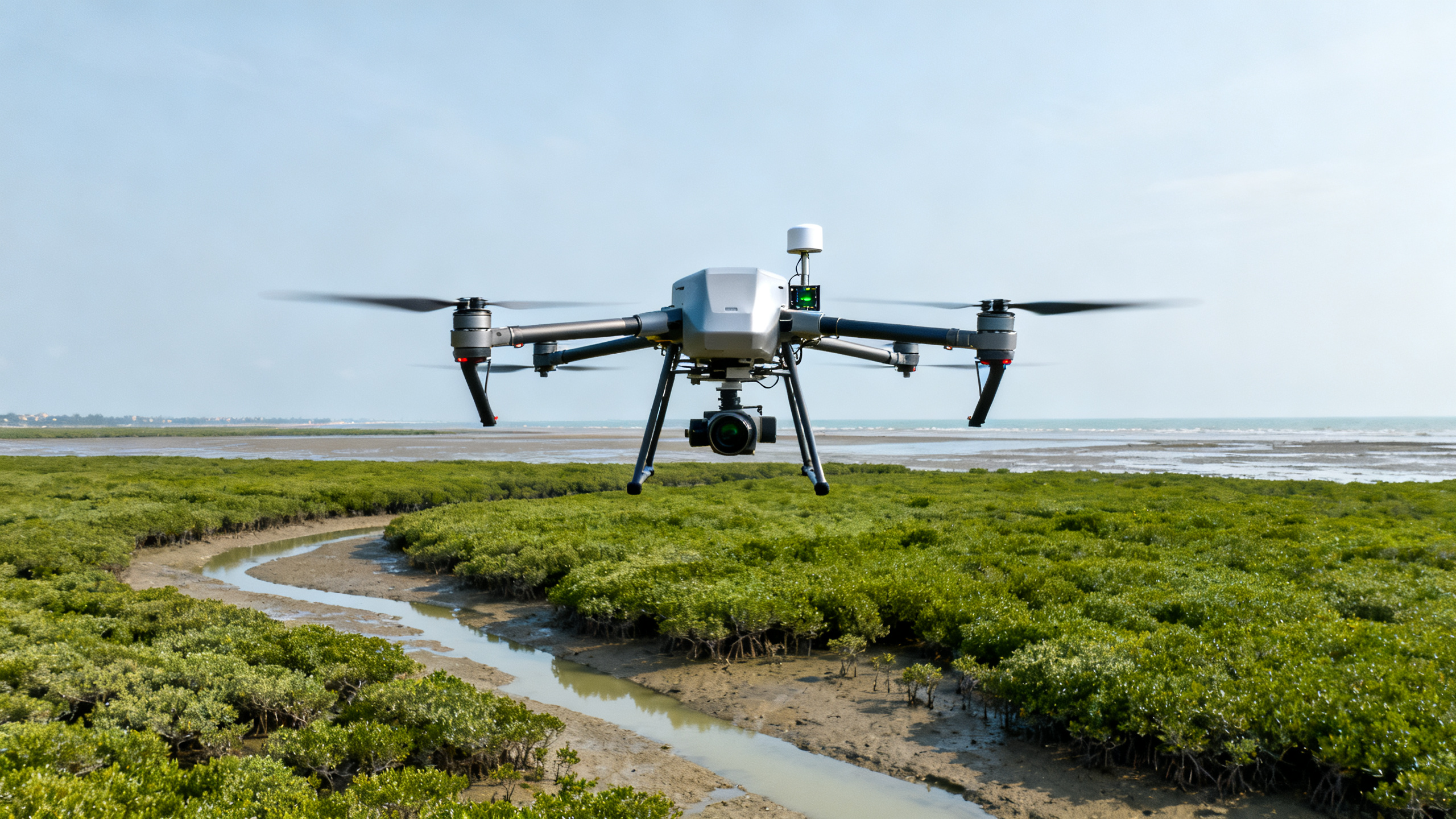
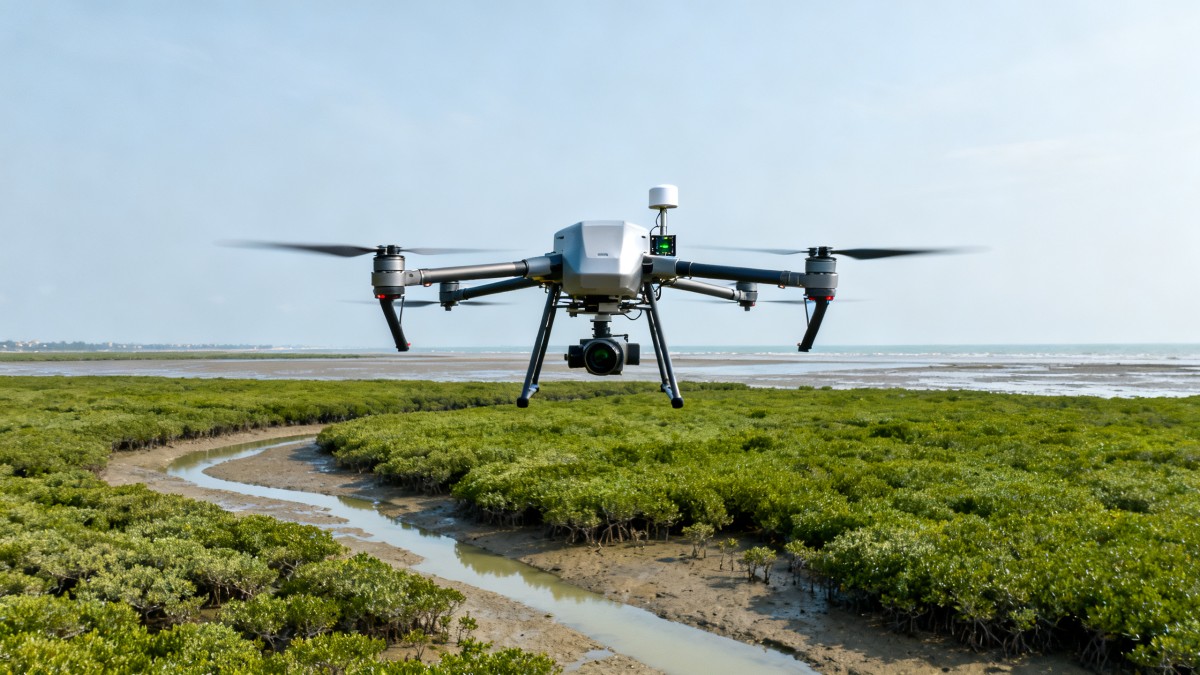
In early 2024, Guangxi Computing Center deployed a self-developed drone management platform in the Beihai mangrove reserve, integrating multispectral imaging and real-time particulate matter (PM1, PM2.5, ePM1) monitoring modules with direct data transmission to China’s national ecological environment monitoring platform. This development signals implications for environmental monitoring equipment exporters, industrial air quality solution providers, and regulatory compliance service providers—particularly those targeting Gulf Cooperation Council (GCC) countries, Indonesia, and Vietnam.
Event Overview
In early 2024, Guangxi Computing Center implemented an in-house drone-based inspection system in the Beihai mangrove ecosystem. The system combines multispectral imaging and real-time airborne particulate monitoring (PM1, PM2.5, ePM1), with telemetry data fed directly into the Ministry of Ecology and Environment’s national control platform. The associated air monitoring terminal has passed pre-assessment for EU CE-EMC and RoHS 3.0 certifications, as well as Saudi Arabia’s SASO IEQ 2026 indoor and ambient air quality monitoring device mandatory certification.
Industries Affected by This Development
Industrial Air Monitoring Equipment Exporters
These manufacturers face accelerated regulatory pathways for market entry in GCC, ASEAN, and Middle Eastern jurisdictions. The ‘scenario certification package’ referenced—comprising pre-validated hardware-software integration, documentation templates, and test report alignment—reduces time-to-market by 3–6 months for industrial-grade terminals. Impact is most direct for firms whose products align with the physical and functional specifications mirrored in the Beihai deployment (e.g., low-altitude UAV-integrated PM sensing, edge-data transmission protocols).
Regulatory Compliance & Certification Service Providers
Firms offering conformity assessment, technical file preparation, or regional certification support may see increased demand for ‘certification packaging’ services—especially those bundling EU EMC/RoHS and SASO IEQ requirements. The pre-assessment success indicates growing client interest in integrated, jurisdiction-specific certification roadmaps rather than siloed testing engagements.
OEM/ODM Manufacturers of Environmental Sensing Modules
Suppliers of PM sensors, embedded controllers, or wireless telemetry units used in air monitoring terminals may experience upstream demand shifts. The Beihai deployment specifies real-time ePM1-capable measurement—suggesting tightening performance expectations beyond basic PM2.5 compliance. Module-level validation against SASO IEQ 2026’s accuracy, stability, and environmental resilience criteria may become a differentiator.
What Relevant Enterprises or Practitioners Should Focus On Now
Monitor official updates on SASO IEQ 2026 implementation timelines
SASO IEQ 2026 becomes mandatory for imported air monitoring devices in Saudi Arabia starting January 2026. While pre-assessment has been completed, full certification requires final factory audits and batch testing. Exporters should track SASO’s published transition schedules and any revisions to test standards or documentation requirements.
Assess alignment between existing product architecture and the ‘scene-certified’ configuration
The Beihai solution uses a specific integration of drone platform, onboard sensor suite, and data transmission logic. Firms planning to leverage this ‘scenario certification package’ must verify whether their hardware interfaces, firmware update mechanisms, and calibration workflows match the validated configuration—or whether re-engineering or additional validation will be required.
Distinguish between pre-assessment status and full certification readiness
Passing pre-assessment does not equate to issued certification. Companies should avoid treating this milestone as de facto market access approval. Instead, they should treat it as confirmation that the technical approach meets preliminary regulatory intent—and use it to prioritize resources toward final audit preparation, local representative appointments, and technical file localization.
Prepare documentation and supply chain records for GCC/ASEAN target markets
Certification packages reduce time-to-market only when supporting materials—including bill-of-materials traceability, supplier declarations of conformity, and environmental stress test reports—are already compiled and translated. Firms should begin assembling these documents now, especially for components subject to RoHS 3.0 exemptions or SASO’s restricted substance list.
Editorial Perspective / Industry Observation
Observably, this initiative functions less as a standalone product launch and more as a regulatory scaffolding demonstration: it validates a repeatable pathway for certifying UAV-integrated environmental sensors under overlapping international frameworks. Analysis shows the emphasis lies not on novelty of sensing technology, but on system-level conformity—particularly data integrity, electromagnetic compatibility in field-deployed conditions, and interoperability with national monitoring infrastructures. From an industry perspective, this signals a shift toward ‘certification-by-use-case’, where real-world deployments serve as reference architectures for future approvals. It is currently best understood as an operational signal—not yet a commercial outcome—but one that warrants sustained attention as GCC and ASEAN regulators formalize air quality device requirements.
This development underscores how localized environmental monitoring projects are increasingly serving dual roles: fulfilling domestic ecological governance needs while simultaneously generating export-ready compliance evidence. For affected stakeholders, the immediate value lies not in replicating the Beihai setup, but in leveraging its certified architecture as a benchmark for anticipating and preparing for upcoming regional regulatory thresholds.
Information Sources
Main source: Official announcement from Guangxi Computing Center (publicly reported in early 2024); certification status confirmed via publicly available SASO pre-assessment notices and EU Notified Body documentation references. Note: Full SASO IEQ 2026 certification issuance and implementation guidance remain pending official publication and are subject to ongoing observation.
Technical Specifications
- Air Handling Unit Supplier Checklist: Performance Data, Lead Times, and SupportAuthor :Environmental Engineering Director
- Buying Fiberglass Water Tanks Wholesale: Compare Quotes and Delivery CostsAuthor :Environmental Engineering Director
- Choosing an XLPE Power Cable Supplier: Test Reports, Traceability, and Lead TimesAuthor :Grid Infrastructure Analyst
Expert Insights

Chief Security Architect
Dr. Thorne specializes in the intersection of structural engineering and digital resilience. He has advised three G7 governments on industrial infrastructure security.
Related Analysis
- Oct 19, 2026Air Handling Unit Supplier Checklist: Performance Data, Lead Times, and SupportAuthor :Environmental Engineering Director
- Oct 18, 2026Buying Fiberglass Water Tanks Wholesale: Compare Quotes and Delivery CostsAuthor :Environmental Engineering Director
- Oct 17, 2026Choosing an XLPE Power Cable Supplier: Test Reports, Traceability, and Lead TimesAuthor :Grid Infrastructure Analyst
Core Sector // 01
Security & Safety
- Air Handling Unit Supplier Checklist: Performance Data, Lead Times, and SupportAuthor :Environmental Engineering Director

- How to Select Industrial Emission Control Systems for High-Dust Manufacturing LinesAuthor :Environmental Engineering Director

- Environmental Technologies for Heavy Industry: Choosing Cleaner Production SolutionsAuthor :Environmental Engineering Director

- Selecting Air Compliance Equipment for Dust, Fumes, and VOC ControlAuthor :Environmental Engineering Director

- EU Rule Tightens EN 1822-2 for Industrial Air PurifiersAuthor :Environmental Engineering Director

- EU Eco-Design Rules Tighten for Air PurifiersAuthor :Environmental Engineering Director

- Low-Maintenance Dust and Fume Control Systems: Best Options for Welding ShopsAuthor :Environmental Engineering Director

- EPA Sets VOC Labeling Rule for Air PurifiersAuthor :Environmental Engineering Director