Electrostatic Precipitator Price: Equipment and Installation Costs
Author
Date Published
Reading Time
An electrostatic precipitator price cannot be assessed reliably from the equipment quote alone. The installed cost also depends on ductwork, foundations, electrical power, access, commissioning, and the condition of the site. When comparing bids, establish a common gas-handling duty and a clear scope of supply first; otherwise, a lower equipment price may simply leave more work outside the contract.
A realistic budget should include the precipitator, its supporting systems, installation, and an allowance for site-specific uncertainty. There is no defensible universal price without a defined airflow, gas composition, emissions requirement, and installation location. For an early estimate, request a budgetary proposal based on stated assumptions, then replace allowances with engineered quantities before committing to a purchase.
Separate equipment cost from installed project cost
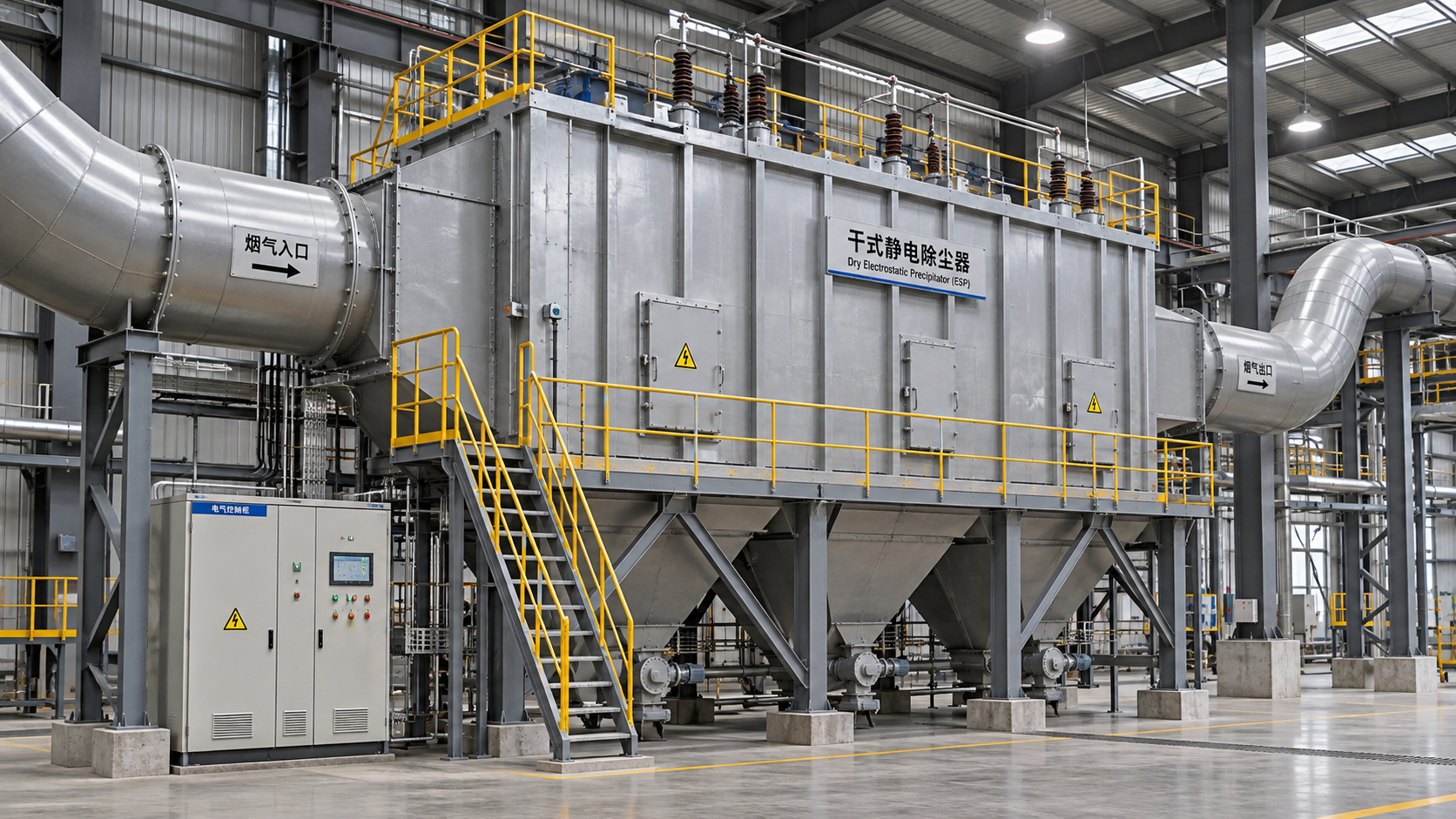
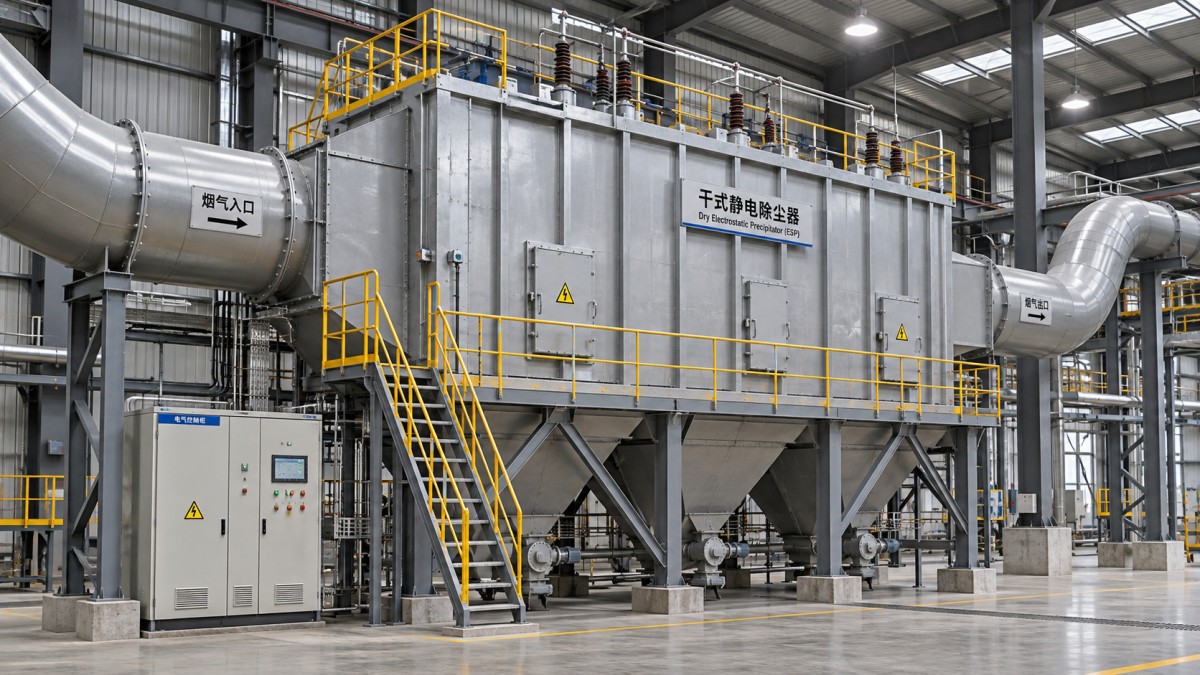
An electrostatic precipitator (ESP) removes suspended particles from a gas stream by electrically charging them and collecting them on surfaces. A dry ESP typically removes collected dust by rapping the collection surfaces and discharging material through hoppers. A wet ESP uses liquid to clean collection surfaces and requires a different arrangement for liquid collection and treatment.
Those differences matter to procurement because two quotations labeled “ESP system” may cover very different boundaries. One supplier may offer a complete mechanical and electrical package; another may quote only the precipitator vessel and internal components. The second price can look attractive until the missing work is added.
Ask each bidder to mark every line as included, excluded, optional, or by others. For excluded work, obtain a separate estimate rather than treating the item as zero. Keep equipment supply and installation prices visible even when requesting a turnkey proposal; this makes changes easier to evaluate later.
Establish the design basis before requesting prices
The most useful ESP quotation starts with a defined operating envelope. Suppliers need the gas flow at operating conditions, including temperature and pressure, as well as expected minimum, normal, and maximum flows. State whether the flow figure is actual or normalized and identify the reference conditions. A mismatch here can change the proposed collector size and invalidate a comparison.
Provide inlet dust loading and particle characteristics where available, together with the required outlet concentration or collection performance. Include the measurement basis and the operating conditions under which compliance must be demonstrated. A guarantee stated only as a percentage removal can be misleading if competing bidders assume different inlet loadings.
Gas chemistry also affects design and cost. Moisture, corrosive constituents, temperature variation, and dust properties influence material selection, electrical performance, insulation, and cleaning arrangements. Dust electrical resistivity and particle behavior can affect whether an ESP is suitable and how much collecting area is needed. Existing test data should be dated and tied to representative operating conditions; do not present uncertain values as verified measurements.
For a retrofit, provide drawings and photographs of the available footprint, duct routing, access points, power supplies, and existing structures. Identify planned operating hours, shutdown windows, and any requirement to maintain production during installation. These details allow bidders to price constraints rather than discover them after contract award.
Equipment choices that change the quotation
Collector size and operating margin
Gas volume and the required particulate performance influence collecting area and the number or arrangement of electrical fields. A tighter outlet requirement, difficult dust, or a requirement to maintain performance across varying loads can lead to a larger or more complex design. Ask suppliers to explain the assumptions behind their sizing and identify the conditions at which their performance guarantee applies.
Do not compare collection area alone as though it were a guaranteed performance figure. Electrode geometry, gas distribution, power supply configuration, dust properties, and operating conditions also matter. A design margin has value only if its basis is stated: determine whether it covers future production growth, uncertainty in dust loading, equipment availability, or another defined risk.
Dry versus wet collection
A dry unit may suit a process where collected material can be handled as a dry solid. Its purchase and operating scope may include rappers, hopper evacuation, dust-tight conveying, and measures to prevent material buildup. The economics depend partly on where the collected dust goes and whether it can be returned to the process or requires disposal.
A wet ESP may be considered for particular gas and particulate conditions, but its apparent equipment price should be assessed alongside wash-water supply, pumps, piping, drainage, and treatment or disposal of the resulting liquid. Confirm materials of construction and corrosion allowances against the actual gas and liquid chemistry. Neither configuration is automatically cheaper once the full installation and operating scope is counted.
Materials, power supplies, and access
Corrosive or high-temperature service can require more demanding casing, insulation, electrode, seal, and auxiliary-system specifications. Multiple electrical sections or independently controlled power supplies can improve operating flexibility, but their value depends on the duty and maintenance strategy. Request a clear equipment list, including transformer-rectifier or other high-voltage power supply arrangements and control features.
Maintenance access is a design issue as well as an installation expense. Inspection doors, platforms, lifting points, and removable components may increase the initial quotation but reduce disruption when electrodes or other internals need attention. Review access around the proposed equipment, not just its external dimensions.
Installation costs that are easy to underestimate
Foundations and structural steel depend on equipment weight, wind and seismic design requirements where applicable, ground conditions, and the capacity of existing structures. A supplier’s load schedule is essential, but it is not the same as a completed foundation design. Clarify who verifies the site and who bears the cost if the actual support conditions differ from the information supplied.
Ductwork can become a major variable when the ESP must fit into an existing gas path. The estimate should cover inlet and outlet transitions, expansion joints, supports, dampers where needed, insulation, and modifications to nearby equipment. Poor gas distribution can undermine performance, so ask whether the supplier’s scope includes distribution analysis, internal devices, and any required site adjustments.
Electrical installation needs the same scrutiny. Determine the available voltage, connected load, cable routes, earthing, isolation, and control-system interfaces. A quote for a local control panel does not necessarily include the feeder, field wiring, network connection, or changes to the plant’s control system. Confirm who supplies each interface drawing and who tests the complete arrangement.
For confined or operating sites, include lifting studies, temporary access, work permits, protection of adjacent equipment, and the cost of an outage where applicable. These are not interchangeable with a generic erection allowance. A site survey before the final offer can expose access restrictions that would otherwise appear later as variations.
Turn quotations into a comparable landed and installed cost
Issue bidders the same process data, scope matrix, site information, delivery terms, and requested guarantee. Require a priced breakdown and a separate list of assumptions and deviations. When a bidder proposes an alternative design, keep it visible as an alternative rather than silently comparing it with a different base scope.
- Normalize the supply boundary. Add independently estimated costs for omitted ductwork, electrical work, civil works, controls, freight, and commissioning. Avoid adding an item twice when it is included in another contractor’s package.
- Align commercial terms. Compare the same currency and delivery destination, and identify freight, insurance, duties, taxes, storage, and unloading responsibilities. Record the exchange-rate and tax assumptions used in the evaluation.
- Price the interfaces. Assign responsibility for connecting the ESP to ducts, power, controls, dust handling, and utilities. An unassigned interface is a likely source of delay or additional cost.
- Evaluate performance obligations. Compare the guaranteed outlet condition, test method, operating range, exclusions, and remedies. A lower price is not equivalent if the guarantee applies to a narrower duty.
- Review schedule and payment risk. Check engineering milestones, delivery, installation duration, payment triggers, warranty start, and the treatment of delays or changes.
Use a contingency for unresolved quantities and site risks, but do not use it to hide missing scope. Maintain a separate risk register identifying the uncertainty, its owner, and the evidence needed to close it. A ground investigation, duct survey, or electrical capacity study may be more valuable than an arbitrary allowance when it removes a significant pricing uncertainty.
Include operating costs in the purchase decision
Electricity consumption includes the high-voltage system and auxiliaries such as rappers, heaters, pumps, and conveying equipment. The ESP also adds pressure loss to the gas path, which may affect fan power or require fan modifications. Ask for expected consumption and pressure drop at the specified operating points, with the assumptions and operating hours shown. Convert those figures into an annual cost using the site’s own energy rates and duty cycle.
Maintenance estimates should cover inspection, cleaning, electrode and component replacement, spare parts, and access equipment. For dry systems, include dust handling and disposal or reuse costs. For wet systems, include water, treatment chemicals where applicable, wastewater handling, and discharge-related obligations. Request recommended spares with unit prices and lead times; a low initial offer can be less competitive if critical replacements are expensive or difficult to obtain.
Compare lifecycle costs over a stated evaluation period rather than adding an undefined “maintenance factor.” Use the same operating assumptions and financial treatment for every bid. Where a supplier’s consumption or maintenance figures are estimates rather than guarantees, label them accordingly and test how the ranking changes under less favorable assumptions.
Make the acceptance test part of the contract
Before placing the order, define how the installation will be accepted: the operating load, fuel or feed conditions, inlet characteristics, test locations, measurement method, and responsibility for an independent test provider if one is required. Address what happens if production conditions prevent testing on schedule or if the first test fails. The agreement should distinguish equipment defects from performance affected by conditions outside the supplier’s stated design basis.
Also define required documentation, training, spare parts, warranty exclusions, and the point at which ownership and risk transfer. The strongest commercial comparison is not simply the lowest delivered ESP price; it is the lowest evaluated cost for a clearly bounded system capable of meeting the specified duty, with installation risks and performance obligations allocated in writing.
Expert Insights

Chief Security Architect
Dr. Thorne specializes in the intersection of structural engineering and digital resilience. He has advised three G7 governments on industrial infrastructure security.
Related Analysis
- Nov 22, 2026McKinsey: India Needs Up to $400 Billion to Meet Steel Capacity Growth GoalAuthor :
- Nov 22, 2026Choosing Geotextile Fabric for Landfill Drainage and Liner ProtectionAuthor :Environmental Engineering Director
- Nov 21, 2026Japan's Steel Exports Could Fall to Lowest Level Since 1999 in 2026Author :
Core Sector // 01
Security & Safety
- Electrostatic Precipitator Price: Equipment and Installation CostsAuthor :Environmental Engineering Director

- Air Handling Unit Supplier Checklist: Performance Data, Lead Times, and SupportAuthor :Environmental Engineering Director

- How to Select Industrial Emission Control Systems for High-Dust Manufacturing LinesAuthor :Environmental Engineering Director

- Environmental Technologies for Heavy Industry: Choosing Cleaner Production SolutionsAuthor :Environmental Engineering Director

- Selecting Air Compliance Equipment for Dust, Fumes, and VOC ControlAuthor :Environmental Engineering Director

- EU Rule Tightens EN 1822-2 for Industrial Air PurifiersAuthor :Environmental Engineering Director

- EU Eco-Design Rules Tighten for Air PurifiersAuthor :Environmental Engineering Director

- Low-Maintenance Dust and Fume Control Systems: Best Options for Welding ShopsAuthor :Environmental Engineering Director