Safety First: The Role of Advanced LFP Battery Technology in C&I ESS
Author
Date Published
Reading Time
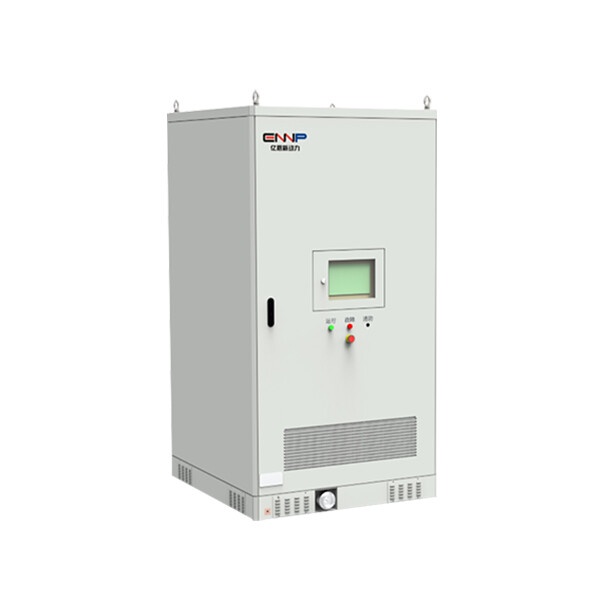
Introduction: The Safety Imperative in Energy Storage
As the global industrial sector accelerates its transition toward renewable energy, the deployment of large-scale Battery Energy Storage Systems (BESS) has reached unprecedented levels. However, this rapid growth has brought the issue of operational safety to the forefront. For a commercial enterprise or a heavy industrial facility, an energy storage system is a critical asset, but if poorly engineered, it can become a significant liability. Fire risks and thermal instability in early-generation storage systems have made many stakeholders cautious.
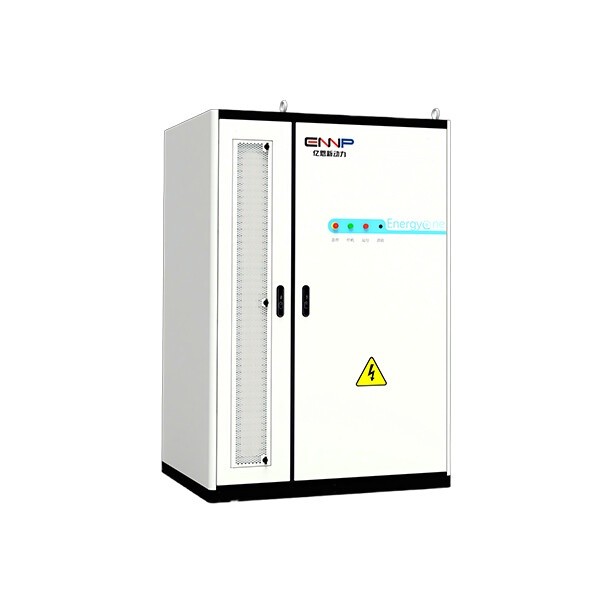
EN New Power Technology, a technology-intensive enterprise backed by the manufacturing excellence of the listed Yantai EDDIE Precision Machinery, recognizes that safety is not just a feature—it is the foundation of the entire
The Chemistry of Stability: Why LFP is the Gold Standard
The primary defense against battery-related incidents starts at the molecular level. In the world of high-capacity storage, there are two dominant chemistries: Nickel Manganese Cobalt (NMC) and Lithium Iron Phosphate (LFP). While NMC offers high energy density, it is inherently more volatile.
In our
High Thermal Runaway Temperature:
LFP cells do not experience thermal runaway until they reach approximately 270°C to 300°C, significantly higher than the 150°C to 210°C range of NMC cells.
Oxygen-Free Decomposition:
Unlike other chemistries, LFP does not release oxygen during thermal breakdown. Since fire requires oxygen, this characteristic inherently limits the potential for combustion within the battery module.
Extended Cycle Life:
Beyond safety, the robust P-O bond in LFP crystals allows for over 6,000 cycles at 80% Depth of Discharge (DOD). For a C&I ESS Solution, this translates to over 15 years of daily safe operation.
Multi-Tiered Protection: The Digital Shield
A safe battery cell is only as good as the system that manages it. EN New Power employs a sophisticated, three-tier Battery Management System (BMS) that acts as a continuous digital sentinel for the C&I ESS Solution.
Tier 1: Cell-Level Monitoring: Our sensors track the voltage and temperature of every individual cell within the LFP Battery Pack. This allows the system to detect micro-anomalies—such as a slight increase in internal resistance—long before they escalate into a fault.
Tier 2: Module-Level Balancing: The BMS ensures that energy is distributed evenly across all modules. Overcharging is one of the leading causes of battery failure; our system implements redundant hardware cut-offs to prevent any module from exceeding its safe voltage limits.
Tier 3: System-Level Coordination: At the rack and container level, the BMS communicates with the Power Conversion System (PCS) and the Energy Management System (EMS). In the event of an external grid surge or an internal short circuit, the system can isolate the affected string in milliseconds, preserving the integrity of the rest of the installation.
Advanced Thermal Management: Keeping it Cool
Heat is the enemy of battery longevity and safety. To maintain optimal operating temperatures, EN New Power utilizes state-of-the-art liquid cooling technology in our
By circulating a coolant through high-precision cold plates integrated into the LFP Battery Pack, we maintain a temperature variance of less than $pm 3^circtext{C}$ between cells. This precision not only prevents the onset of thermal stress but also slows the chemical aging process, ensuring that the system’s safety profile remains consistent from Year 1 to Year 15.
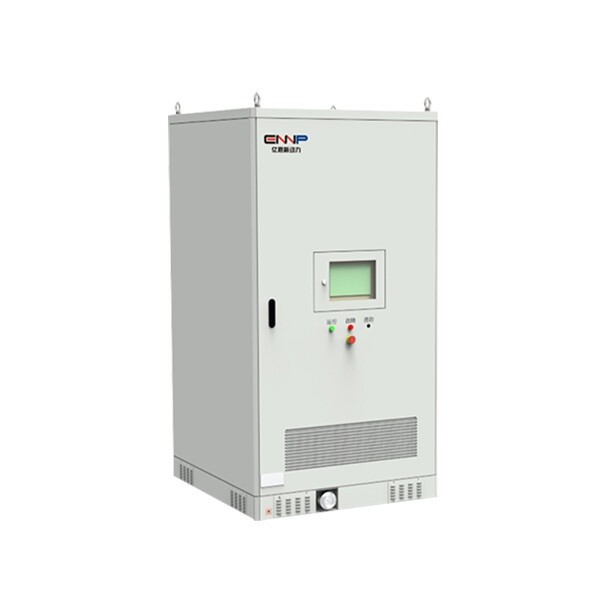
Physical Fortification and Fire Suppression
In the unlikely event of a primary failure, the physical architecture of our C&I ESS Solution provides a final line of defense. Our storage containers are constructed from fire-rated materials and feature internal structural isolation between battery racks.
Each container is equipped with an automated fire suppression system specifically designed for electrical fires. Utilizing early-warning gas sensors (detecting CO, H2, and smoke) and clean-agent suppressants like FM-200 or Novec 1230, the system can neutralize a potential fire without damaging the un-affected electronics. This level of preparation is a testament to EN New Power's heritage as a subsidiary of Yantai EDDIE Precision Machinery—a global leader in heavy-duty hydraulic and industrial systems where precision and safety are non-negotiable.
Conclusion: A Secure Energy Future
For modern enterprises, the transition to smart energy should not come at the cost of peace of mind. By choosing a C&I ESS Solution that integrates the safest LFP Battery Pack technology with world-class digital and physical safeguards, businesses can focus on their core operations, knowing their energy infrastructure is secure. At EN New Power Technology, we don't just build batteries; we build the trust required to power the next generation of industrial excellence.
Technical Specifications
- How to Select Electronic Hotel Key Card Locks for Guest Rooms and Staff AreasAuthor :Safety Compliance Lead
- How to Select Lab Instruments for Reliable Chemical Analysis WorkflowsAuthor :Precision Metrology Expert
- How to Size a UPS for Server Rooms: Load, Runtime, and Redundancy FactorsAuthor :Grid Infrastructure Analyst
Expert Insights

Chief Security Architect
Dr. Thorne specializes in the intersection of structural engineering and digital resilience. He has advised three G7 governments on industrial infrastructure security.
Related Analysis
- Sep 17, 2026How to Select Electronic Hotel Key Card Locks for Guest Rooms and Staff AreasAuthor :Safety Compliance Lead
- Sep 16, 2026How to Select Lab Instruments for Reliable Chemical Analysis WorkflowsAuthor :Precision Metrology Expert
- Sep 15, 2026How to Size a UPS for Server Rooms: Load, Runtime, and Redundancy FactorsAuthor :Grid Infrastructure Analyst
Core Sector // 01
Security & Safety
- How to Size a UPS for Server Rooms: Load, Runtime, and Redundancy FactorsAuthor :Grid Infrastructure Analyst

- How to Choose a Step-Down Transformer for a Control Panel: Key Sizing FactorsAuthor :Grid Infrastructure Analyst

- How Often Should Overseas Power Systems Undergo Safety Inspections?Author :Grid Infrastructure Analyst

- How to Choose Panels for Extreme-Cold Industrial Sites?Author :Grid Infrastructure Analyst

- What Should a Cross-Border EPC Equipment Procurement Reference Include?Author :Grid Infrastructure Analyst

- How to Compare Low-Voltage Equipment for Panel IntegrationAuthor :Grid Infrastructure Analyst

- IEC-Compliant Power Infrastructure: Key Design and Verification RequirementsAuthor :Grid Infrastructure Analyst

- Updated EN 61000-6-4:2026 Raises EMC Compliance Bar for EU-Bound Industrial EquipmentAuthor :Grid Infrastructure Analyst