How to Compare Low-Voltage Equipment for Panel Integration
Author
Date Published
Reading Time
Knowing how to compare low voltage equipment from different manufacturers for panel integration can prevent expensive redesigns, delayed approvals, and field failures. A breaker, contactor, power supply, relay, or meter may look equivalent on a quotation, yet differ materially in fault performance, installation space, heat dissipation, terminal layout, certification scope, and replacement availability. The sensible comparison starts with the panel's duty and constraints, then checks each component against them.
The aim is not to force every device into one brand family. It is to build a panel that is electrically safe, practical to assemble, straightforward to commission, and supportable for its full operating life.
How to Compare Low Voltage Equipment from Different Manufacturers for Panel Integration
Start with a defined application, not a catalogue. Before comparing manufacturers, document the incoming supply, nominal voltage and frequency, earthing arrangement, load types, full-load current, expected fault level, ambient conditions, enclosure rating, available space, control architecture, and governing standard. A water-treatment control panel, a motor control center in a cement plant, and a compact machine panel can all use low-voltage equipment, but their selection priorities are not the same.
For example, a compact panel builder may prioritize rail space and rapid wiring. An EPC contractor working on a remote industrial site may place greater weight on short-circuit coordination, documentation, approvals, and local spare-parts support. If these priorities are not agreed at the beginning, the comparison often becomes a misleading exercise in unit prices.
A useful rule is simple: compare devices by their required function and verified operating duty, not only by their headline rating.
Match Electrical Ratings Before Comparing Price
Two devices marked with the same current rating are not automatically interchangeable. A 100 A circuit breaker, for instance, needs to be evaluated in the context of its installation voltage, breaking capacity, trip characteristic, pole arrangement, short-circuit protection arrangement, and the prospective fault current at the point where it will be installed.
The same principle applies to contactors and motor protection devices. The nameplate current is only one part of the decision. Check the utilization category, switching duty, control-coil voltage, operating frequency, coordination type, and expected number of operations. A component that works comfortably on a lightly loaded resistive circuit may be unsuitable for frequent switching of a high-inertia motor.
Request the exact data sheet, not a generic series brochure. Where safety-related performance is involved, use the manufacturer's current technical documentation and confirm that the stated ratings apply to the selected part number, accessories, and intended configuration. A breaker combined with an accessory module, for example, may have different clearance, wiring, or approval conditions from the base device.
Short-Circuit Withstand Is a Panel-Level Question
Short-circuit performance is where many apparently economical substitutions become risky. The component's individual breaking capacity matters, but panel integration also depends on the available fault current, upstream protective device, feeder impedance, busbar design, and the coordination of downstream equipment.
Do not assume that an upstream breaker automatically makes every downstream component suitable. Conditional short-circuit ratings often depend on a specific upstream protective device, maximum fuse or breaker setting, cable arrangement, and installation method. Change one item in that chain and the documented rating may no longer apply.
Where a control panel must meet a recognized assembly standard or a customer specification, the panel builder should retain evidence for the final design. That evidence may include manufacturer coordination tables, verified design rules, calculations, or test documentation appropriate to the applicable standard. It should be reviewed by the party responsible for the assembly, rather than inferred from matching logo colors on components.
Certificates Must Match the Project, Not Just the Brand
“Certified” is too vague for a serious comparison. CE marking, UL recognition or listing, IEC test compliance, and ISO-based management certifications do not mean the same thing and do not apply in the same way. The relevant question is whether the specific equipment and final panel configuration meet the requirements of the installation country, customer, insurer, authority having jurisdiction, and project specification.
A device can be widely used in one market yet create approval problems in another. This is particularly common when panels are designed in one country and installed elsewhere. Review the markings, file references where applicable, environmental limitations, and instructions for use. Also check whether the certification covers the intended use: a recognized component may still require conditions of acceptability within the final assembly.
Documentation quality is a practical selection criterion. Manufacturers that provide current drawings, wiring diagrams, dimensional files, certificates, derating data, coordination tables, and clear installation instructions reduce engineering risk. In a multi-vendor panel, weak documentation can consume more time than the apparent purchase saving is worth.
Physical Fit Is More Than Dimensions on a Drawing
Panel integration frequently fails at the physical level. A replacement device may have the same width but a different depth, terminal direction, bend radius requirement, mounting arrangement, or clearance requirement. These details affect wire routing, duct sizing, door clearance, maintenance access, and the time needed to assemble the panel.
Compare the complete installed envelope, including plug-in connectors, terminal covers, busbar adapters, auxiliary blocks, and cable lugs. Check whether the device mounts on DIN rail, a backplate, or a proprietary system. A product that needs a special mounting kit or dedicated busbar adapter may still be the right choice, but its total installed cost should be visible early.
Terminal conventions deserve attention as well. Different manufacturers may use different screw head types, torque values, conductor preparation requirements, and terminal orientations. On a one-off cabinet these variations may be manageable. On a high-volume panel program, they can slow assembly, complicate quality control, and increase the chance of inconsistent torque application.
Thermal Performance Often Decides Whether the Design Is Robust
Published current ratings are commonly based on stated reference conditions. Inside a crowded enclosure, conditions can be very different. Heat from variable-frequency drives, transformers, power supplies, contactors, and adjacent breakers can raise local temperatures well above the room ambient. Equipment may need derating, spacing, forced ventilation, or a larger enclosure.
When comparing low-voltage equipment manufacturers, look for derating curves, power-loss figures, required mounting orientation, clearance rules, and permitted grouping arrangements. If a supplier cannot provide enough information to assess heat, that is a warning sign for a dense or high-duty design.
This is especially relevant when replacing a larger device with a compact alternative. Smaller equipment can be valuable where space is limited, but a reduced footprint does not remove heat. It can concentrate it. A compact design should be checked against the enclosure's thermal calculation or validated through testing under realistic load conditions.
Make Communication Compatibility a Commissioning Test
Modern panels often combine protection devices, soft starters, drives, meters, PLCs, remote I/O, and energy-management systems. Product pages may state support for Modbus, PROFINET, EtherNet/IP, CANopen, or another protocol. That is a starting point, not proof of smooth integration.
Compare supported protocol versions, available data points, update rates, device-description files, addressing rules, network topology limits, diagnostic behavior, cybersecurity options, and configuration software. One manufacturer may expose the values needed for maintenance and energy monitoring; another may provide only basic status data without an additional module or licence.
For a mixed-vendor control panel, test the intended communication path before final procurement when the project is complex or schedule-critical. A small bench test can reveal issues with register mapping, firmware, gateway behavior, or software licensing before they become commissioning delays on site.
Compare the Supplier Relationship, Not Only the Device
Low-voltage equipment lives in the field for years. The practical question is whether a failed item can be identified, sourced, fitted, and recommissioned without creating unnecessary downtime. Check local inventory, lead times, product lifecycle notices, technical support access, warranty terms, repair policy, and availability of accessories.
Ask suppliers how they handle obsolescence. A documented successor product, cross-reference information, and migration guidance are more useful than a general assurance that support will continue. Projects with long asset lives should also consider whether replacement equipment will retain the same cutout, wiring arrangement, communications interface, and approvals.
For global projects, regional support matters. An excellent component choice can become difficult to maintain when qualified service, approved distributors, or compatible spares are absent near the operating site.
Use a Weighted Comparison, but Do Not Let It Hide Risk
A comparison matrix helps procurement and engineering teams make decisions transparently. Typical categories include electrical compliance, short-circuit suitability, certifications, physical integration, thermal data, control compatibility, documentation, supply continuity, service support, and total installed cost.
Weighting can reflect the project. In a standard indoor machine panel, assembly efficiency and footprint may receive more weight. In a critical industrial facility, verified fault performance, environmental suitability, and service continuity may dominate. The important point is to identify “must-pass” requirements first. A component that fails an essential safety, approval, or fault-duty requirement should not remain competitive merely because a weighted score looks attractive.
Unit price should be reviewed alongside engineering hours, mounting accessories, changes to wire ducts or busbars, software licences, commissioning effort, spare holdings, and likely maintenance burden. The lowest line-item price often stops being the lowest cost once these elements are included.
Where Mixed Manufacturers Work Well, and Where They Need Caution
Mixed-manufacturer panels are often entirely practical. They can offer better availability, stronger performance in a specialist function, or a better fit with an existing site standard. Examples include pairing a preferred automation platform with a different manufacturer's power supply, using specialist measurement equipment, or selecting a particular protective device where its documented coordination is well suited to the design.
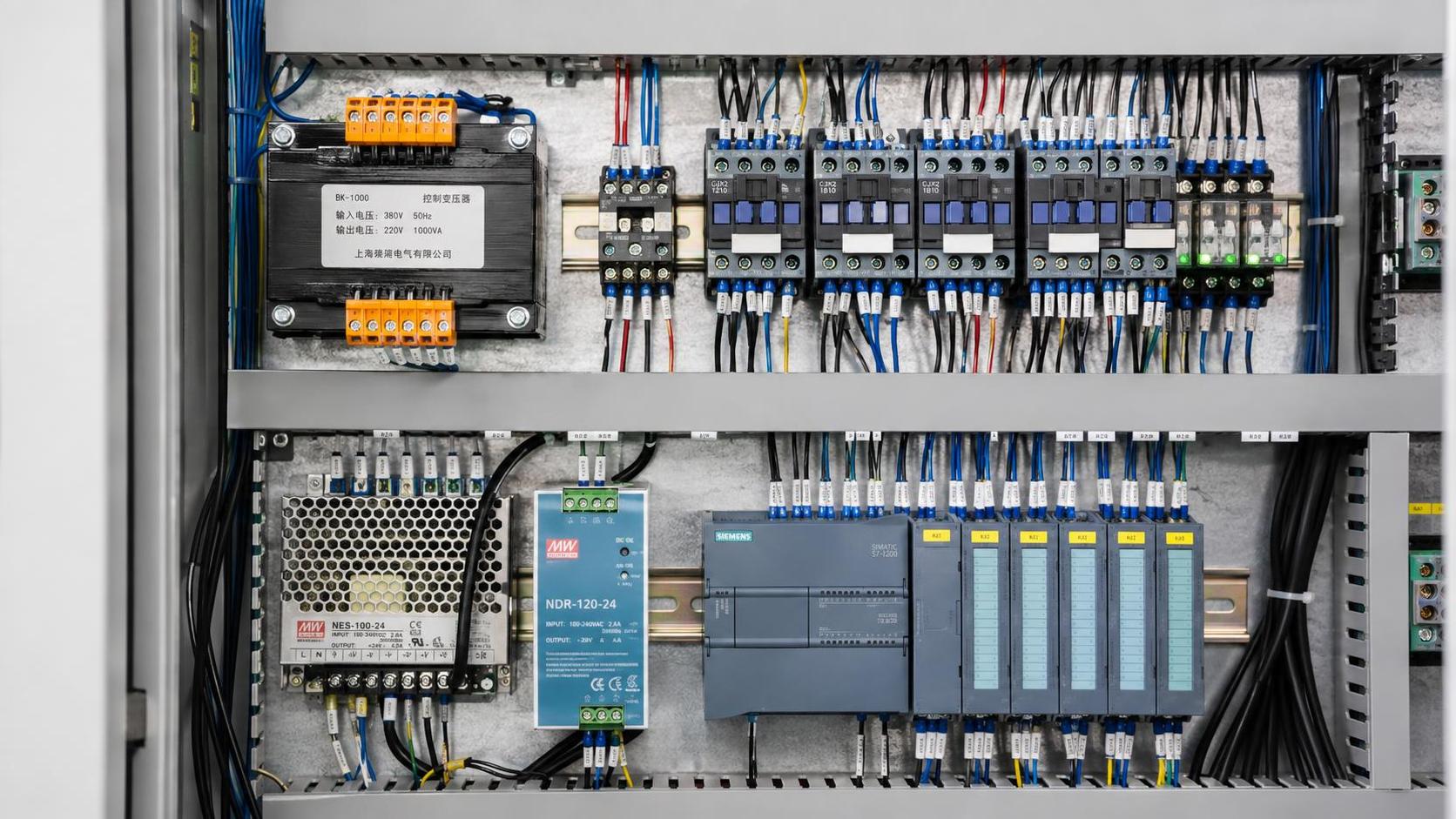
They require more care when products share mechanical interfaces, busbar systems, interlocking functions, coordinated protection schemes, or integrated engineering software. Proprietary distribution systems and safety architectures are areas where using a documented, validated product family can reduce uncertainty. Trying to combine parts that were not designed to connect may create a panel that works during a basic functional test but is difficult to certify, maintain, or expand.
Global Industrial Core (GIC) approaches these decisions as infrastructure questions rather than catalogue comparisons: technical evidence, compliance scope, and operating conditions should carry more weight than brand familiarity alone. That perspective is useful when an EPC package must bring several approved suppliers into a single dependable panel design.
Questions Buyers Commonly Ask
Can I replace a device with the same current rating from another manufacturer?
Only after checking voltage, fault duty, tripping or utilization characteristics, mounting, terminal arrangement, approvals, accessories, and the effect on coordination. Equal current ratings are not enough.
Is it safer to buy every component from one manufacturer?
Not automatically. A single-source design can simplify documentation, support, and system compatibility, particularly for integrated assemblies. A mixed design can be equally sound when interfaces and responsibilities are properly verified.
Should I standardize on the cheapest approved brand?
Approval is a threshold, not the whole decision. Standardization should also consider lead time, technical support, spare-part strategy, documentation, panel build efficiency, and lifecycle fit.
What should be checked first when equipment will be installed in a hot or dusty location?
Confirm the enclosure strategy, ambient temperature limits, derating information, contamination exposure, vibration, ingress protection needs, and maintenance access. The device rating alone does not describe its suitability inside the finished panel.
Make the Final Choice Against the Finished Panel
The most reliable method for how to compare low voltage equipment from different manufacturers for panel integration is to evaluate each candidate in the context of the completed assembly. Verify its electrical duty, fault performance, approvals, physical fit, thermal behavior, controls interface, and lifecycle support. Then document the basis for the decision.
This approach takes longer than comparing a few part numbers and prices, but it avoids the familiar late-stage surprises: an accessory that does not fit, a short-circuit claim that cannot be substantiated, a device that overheats after enclosure doors close, or a communication module that cannot provide the required diagnostics. Good panel integration is not about selecting the most familiar manufacturer. It is about selecting equipment that can be proven to work together under the conditions the panel will actually face.
Technical Specifications
- Air Handling Unit Supplier Checklist: Performance Data, Lead Times, and SupportAuthor :Environmental Engineering Director
- Buying Fiberglass Water Tanks Wholesale: Compare Quotes and Delivery CostsAuthor :Environmental Engineering Director
- Choosing an XLPE Power Cable Supplier: Test Reports, Traceability, and Lead TimesAuthor :Grid Infrastructure Analyst
Expert Insights

Chief Security Architect
Dr. Thorne specializes in the intersection of structural engineering and digital resilience. He has advised three G7 governments on industrial infrastructure security.
Related Analysis
- Oct 19, 2026Air Handling Unit Supplier Checklist: Performance Data, Lead Times, and SupportAuthor :Environmental Engineering Director
- Oct 18, 2026Buying Fiberglass Water Tanks Wholesale: Compare Quotes and Delivery CostsAuthor :Environmental Engineering Director
- Oct 17, 2026Choosing an XLPE Power Cable Supplier: Test Reports, Traceability, and Lead TimesAuthor :Grid Infrastructure Analyst
Core Sector // 01
Security & Safety
- Choosing a Step-Down Transformer Supplier: Test Reports, Lead Times, and WarrantyAuthor :Grid Infrastructure Analyst

- Metallurgy Processes That Improve Conductivity and Reliability in Power Grid ComponentsAuthor :Grid Infrastructure Analyst

- How to Size a UPS for Server Rooms: Load, Runtime, and Redundancy FactorsAuthor :Grid Infrastructure Analyst

- How to Choose a Step-Down Transformer for a Control Panel: Key Sizing FactorsAuthor :Grid Infrastructure Analyst

- How Often Should Overseas Power Systems Undergo Safety Inspections?Author :Grid Infrastructure Analyst

- How to Choose Panels for Extreme-Cold Industrial Sites?Author :Grid Infrastructure Analyst

- What Should a Cross-Border EPC Equipment Procurement Reference Include?Author :Grid Infrastructure Analyst

- How to Compare Low-Voltage Equipment for Panel IntegrationAuthor :Grid Infrastructure Analyst