Why Do Micro Switches Bulk Orders Need Testing?
Author
Date Published
Reading Time
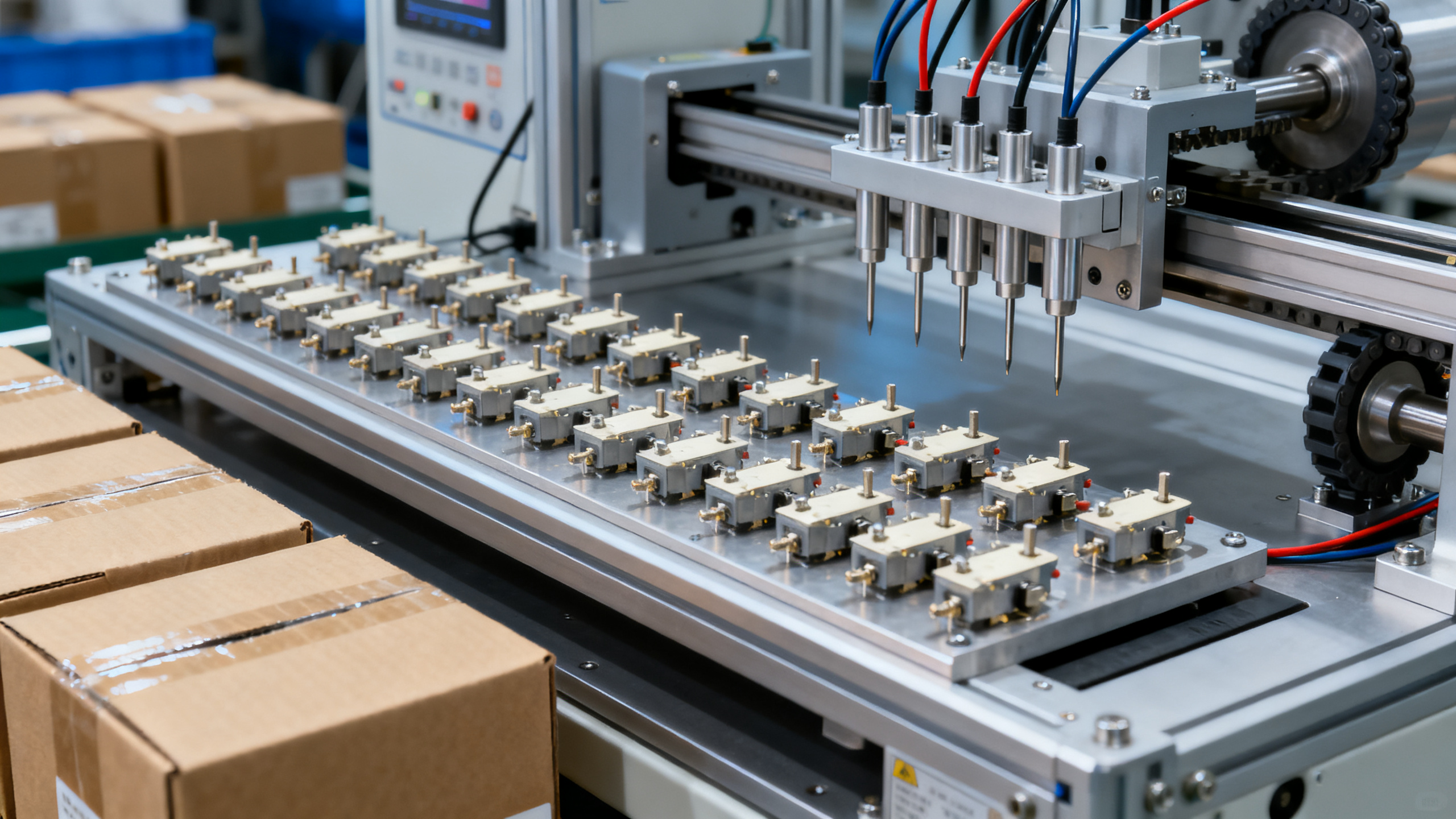
When purchasing micro switches bulk for industrial systems, testing is not a formality; it is a procurement safeguard against hidden operational risk.
A single defective switch can disrupt machinery, compromise safety circuits, or trigger costly downtime across production lines and automated equipment.
For buyers managing large-volume orders, quality verification confirms electrical performance, mechanical endurance, compliance documentation, and batch consistency before installation.
This article explains why rigorous testing belongs in every bulk sourcing decision and how it reduces risk for procurement teams.
Bulk Orders Multiply Small Defects Into Operational Risk
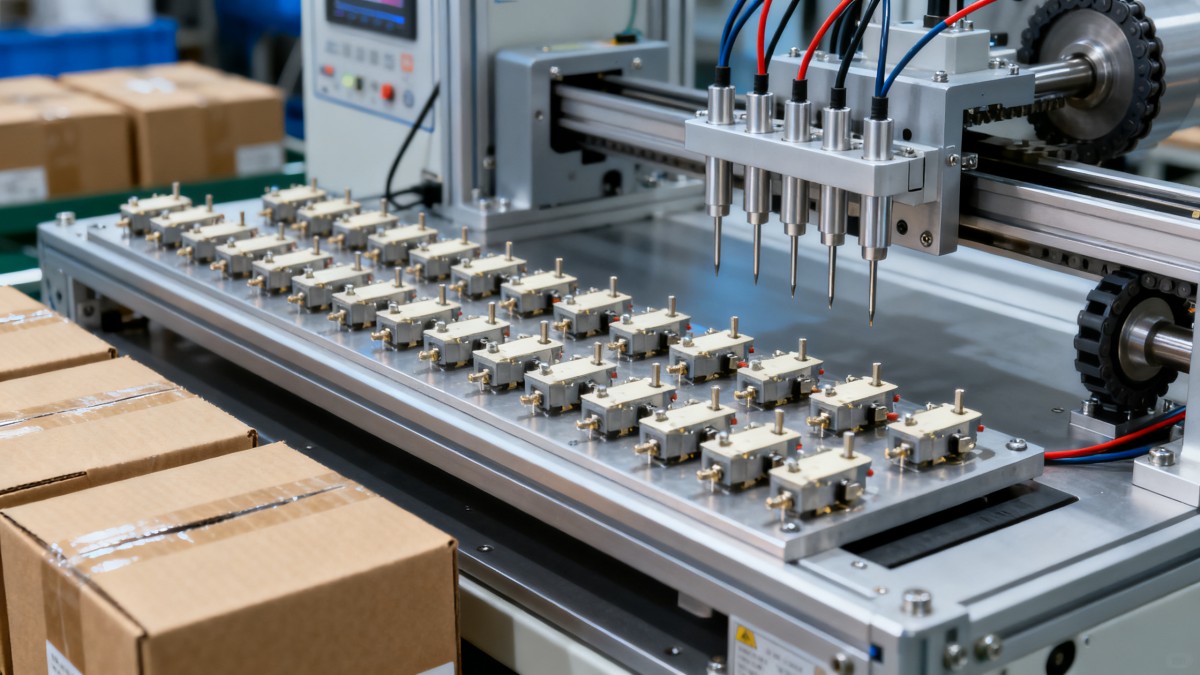
Micro switches are small components, yet they often sit inside limit controls, interlocks, actuators, appliances, and industrial monitoring assemblies.
In a bulk order, even a low defect rate can become a serious reliability issue once thousands of units enter production.
For procurement teams, the question is not whether one sample works, but whether the entire shipment performs predictably.
A batch containing inconsistent actuation force, poor contact stability, or weak terminals can create failures across multiple product lines.
Testing helps buyers identify these risks before parts reach assembly floors, field equipment, or customer-facing systems.
Without verification, procurement savings may be offset by rework, warranty claims, production stoppages, or emergency replacement orders.
This is why professional buyers treat micro switches bulk testing as part of supplier qualification, not as an optional inspection step.
What Procurement Teams Are Really Trying To Verify
Buyers are usually not testing for curiosity; they are testing to protect uptime, safety, compliance, and supply continuity.
The first concern is electrical reliability, including rated voltage, current capacity, insulation resistance, and contact resistance under practical operating conditions.
The second concern is mechanical consistency, especially actuation force, operating travel, release travel, and repeatability across the batch.
The third concern is endurance, because micro switches may cycle thousands or millions of times during their service life.
The fourth concern is documentation, including certificates, material declarations, inspection reports, and traceability data linked to production lots.
When these areas are verified, procurement can make decisions based on evidence rather than supplier promises or catalog claims.
Electrical Testing Protects Circuits And Safety Functions
Electrical performance is one of the most important reasons to test micro switches before accepting a bulk shipment.
A switch with unstable contact resistance may pass a simple on-off check but still generate heat, signal loss, or intermittent faults.
In control systems, these intermittent faults can be difficult to diagnose because they appear only under vibration, load, or temperature changes.
Testing should confirm rated load performance, dielectric strength, insulation resistance, and contact behavior under expected application conditions.
For safety-related circuits, buyers should be especially careful, because a failed switch may prevent machinery from stopping when required.
Procurement teams should request electrical test data that matches the application, not only generic specifications from a product brochure.
This approach reduces the chance of installing switches that look compliant but fail when exposed to real operating stress.
Mechanical Endurance Testing Reveals Long-Term Value
Micro switches are mechanical devices, so their value depends heavily on precision, spring performance, housing stability, and contact movement.
In bulk purchasing, small differences in actuator geometry or internal spring quality can create noticeable performance variation.
Endurance testing evaluates how switches perform after repeated cycles, helping buyers understand whether the batch can survive normal use.
A cheaper switch may appear attractive at quotation stage but become costly if it fails earlier than expected.
For procurement personnel, this is where total cost of ownership becomes more important than unit price alone.
Mechanical life testing can also uncover problems such as delayed release, contact bounce, weak tactile response, or actuator deformation.
These issues may not appear during basic incoming inspection, yet they can affect equipment reliability after installation.
Batch Consistency Matters More Than A Perfect Sample
Many suppliers can provide a good sample, but bulk supply requires stable manufacturing processes and consistent quality control.
Procurement risk increases when the approved sample differs from the actual mass-production shipment delivered weeks later.
Testing multiple units from each batch helps confirm whether production quality matches the submitted sample and agreed specification.
Sampling plans should consider order volume, application risk, supplier history, and the consequences of field failure.
For high-risk applications, buyers may require stricter acceptance criteria, larger sample sizes, or third-party inspection before shipment.
Batch testing also helps identify lot-to-lot variation caused by tooling wear, material substitution, operator error, or process drift.
This is especially important when micro switches bulk orders support continuous manufacturing schedules with limited tolerance for disruption.
Compliance Testing Reduces Import And Liability Exposure
Industrial buyers must consider more than component function; they also need evidence that switches meet applicable regulatory requirements.
Depending on the market and application, relevant standards may include UL, CE, RoHS, REACH, ISO systems, or customer-specific criteria.
Certificates should be checked carefully because expired, incomplete, or unrelated documents can create problems during audits or customs clearance.
Procurement teams should confirm whether certificates apply to the exact model, rating, material, and production site being purchased.
Testing and documentation review protect buyers from receiving components that cannot legally or safely enter target markets.
For manufacturers exporting finished equipment, weak component compliance can become a downstream liability affecting the entire product.
Reliable suppliers should provide test reports, declarations, traceability records, and clear answers when buyers request compliance confirmation.
Testing Helps Compare Suppliers Beyond Price
When sourcing micro switches bulk, many quotations may look similar on paper, especially when suppliers list comparable ratings.
Testing gives procurement teams a practical way to compare suppliers using measurable performance instead of price alone.
A supplier with slightly higher pricing may deliver better consistency, stronger terminals, lower failure rates, and more complete documentation.
Another supplier may offer a lower price but show unstable actuation force, inconsistent contact resistance, or weak packaging quality.
By converting quality into data, buyers can negotiate better terms, reject risky batches, or justify preferred supplier selection internally.
This is especially valuable when procurement decisions must satisfy engineering, quality assurance, finance, and production stakeholders.
Testing creates a shared evidence base, reducing disputes between departments and improving confidence in sourcing decisions.
Which Tests Should Be Included Before Acceptance?
A practical testing plan should begin with visual inspection, checking housing condition, actuator alignment, markings, terminals, and packaging integrity.
Dimensional checks should confirm that mounting holes, terminal sizes, actuator positions, and external geometry match drawings or approved samples.
Electrical tests should verify continuity, contact resistance, insulation resistance, dielectric strength, and load performance under specified conditions.
Mechanical checks should measure operating force, release force, differential travel, overtravel, and return behavior across sampled units.
Endurance tests should simulate repeated operation, especially when switches are used in automation, safety interlocks, or high-cycle equipment.
Environmental tests may include temperature, humidity, vibration, dust exposure, or corrosion resistance when applications involve harsh conditions.
The right combination depends on the switch type, application risk, order value, and failure consequences in the final system.
How Testing Fits Into A Smart Procurement Workflow
Testing should not happen only after problems appear; it should be integrated into the sourcing process from the beginning.
Before placing an order, buyers should define technical specifications, acceptance criteria, required documents, and inspection responsibilities.
During supplier evaluation, procurement teams should review factory capabilities, quality systems, previous test data, and relevant industry experience.
Before mass production, an approved sample should be tested and formally locked as the reference for future deliveries.
During production or before shipment, buyers may request pre-shipment inspection, lot sampling, or third-party laboratory verification.
After delivery, incoming quality control should compare received goods against the approved sample and purchase agreement.
This workflow reduces misunderstandings and gives both buyer and supplier a clear standard for acceptance or rejection.
When Third-Party Testing Is Worth The Investment
Not every bulk order requires full third-party laboratory testing, but certain situations justify the additional cost.
Independent testing is valuable when the switches are used in safety systems, export products, medical equipment, or critical machinery.
It is also useful when working with a new supplier, changing materials, increasing order volume, or entering regulated markets.
Third-party reports provide neutral evidence that can support internal approvals, customer audits, and compliance reviews.
For large orders, the cost of testing is often small compared with the cost of a failed production run.
Procurement teams should view testing as risk insurance, particularly when component failure could affect workers, equipment, or contractual delivery.
The investment becomes easier to justify when compared with downtime, replacement labor, penalties, and reputational damage.
Common Warning Signs Buyers Should Not Ignore
Procurement teams should be cautious if a supplier avoids technical questions or provides only vague product descriptions.
Another warning sign is documentation that does not match the exact model, electrical rating, or production facility.
Unusually low pricing can also indicate material compromises, weak quality control, or inconsistent subcontracted production.
Buyers should investigate if samples perform well but bulk shipments show different markings, packaging, or physical details.
Late responses, missing batch numbers, unclear warranty terms, and refusal of inspection are also signs of procurement risk.
These issues do not always prove poor quality, but they justify closer testing and stronger contractual controls.
Professional sourcing decisions are strongest when supplier claims are verified before dependence becomes operationally expensive.
Packaging And Logistics Testing Should Not Be Overlooked
Even qualified micro switches can be damaged if packaging fails during long-distance shipping, warehousing, or handling.
Bulk orders often move through multiple logistics stages, including export cartons, pallets, containers, distribution centers, and factory storage.
Poor packaging may cause bent terminals, cracked housings, contamination, moisture exposure, or mixed product lots.
Inspection should confirm carton strength, labeling accuracy, moisture protection, anti-static measures, and separation between models or batches.
For procurement teams, logistics quality is part of product quality because damaged switches create the same operational problems.
Clear labeling also improves traceability, making it easier to isolate problems if a specific lot shows defects.
When suppliers understand packaging requirements early, buyers reduce receiving disputes and protect production schedules.
Testing Improves Negotiation And Supplier Accountability
Testing data gives buyers stronger leverage when discussing price, replacement terms, warranties, and long-term supply agreements.
If a batch fails agreed criteria, procurement can request corrective action, replacement, credit, or process improvement using objective evidence.
Without documented testing, quality disputes often become opinion-based and difficult to resolve across borders.
Clear acceptance standards should be written into purchase orders, framework agreements, or quality assurance contracts.
These standards may define sample size, test methods, failure thresholds, reporting format, and responsibility for inspection costs.
Suppliers that accept transparent testing requirements usually demonstrate stronger confidence in their manufacturing capability.
Over time, testing records also help procurement teams build supplier scorecards and refine sourcing strategy.
Conclusion: Testing Turns Bulk Purchasing Into Controlled Risk
Micro switches bulk purchasing is not simply a volume transaction; it is a reliability decision affecting equipment, safety, and continuity.
Testing protects procurement teams from hidden defects, inconsistent batches, weak documentation, and supplier claims that cannot be verified.
The most valuable testing plans focus on electrical performance, mechanical endurance, compliance evidence, batch consistency, and packaging integrity.
For low-risk applications, a practical sampling program may be sufficient, provided specifications and acceptance criteria are clearly defined.
For critical systems, third-party testing and stricter inspection can prevent failures that would cost far more than verification.
Ultimately, testing helps buyers choose suppliers with confidence, defend purchasing decisions internally, and protect industrial operations from avoidable disruption.
Technical Specifications
- How to Select Electronic Hotel Key Card Locks for Guest Rooms and Staff AreasAuthor :Safety Compliance Lead
- How to Select Lab Instruments for Reliable Chemical Analysis WorkflowsAuthor :Precision Metrology Expert
- How to Size a UPS for Server Rooms: Load, Runtime, and Redundancy FactorsAuthor :Grid Infrastructure Analyst
Expert Insights

Chief Security Architect
Dr. Thorne specializes in the intersection of structural engineering and digital resilience. He has advised three G7 governments on industrial infrastructure security.
Related Analysis
- Sep 17, 2026How to Select Electronic Hotel Key Card Locks for Guest Rooms and Staff AreasAuthor :Safety Compliance Lead
- Sep 16, 2026How to Select Lab Instruments for Reliable Chemical Analysis WorkflowsAuthor :Precision Metrology Expert
- Sep 15, 2026How to Size a UPS for Server Rooms: Load, Runtime, and Redundancy FactorsAuthor :Grid Infrastructure Analyst
Core Sector // 01
Security & Safety
- Can SPDs Handle Repeated Voltage Spikes in Tropical Grids?Author :Grid Infrastructure Analyst

- How to Evaluate IEC-Compliant Power Protection Devices for Industrial PanelsAuthor :Grid Infrastructure Analyst

- How to Choose Smart Industrial Control Equipment for Harsh Plant EnvironmentsAuthor :Grid Infrastructure Analyst

- EU EMC Update Triggers Re-Certification for BreakersAuthor :Grid Infrastructure Analyst

- How to Select the Right SPD for Solar Inverter Protection in PV Systems?Author :Grid Infrastructure Analyst

- Industrial Valve Systems Factory Checklist: What Buyers Should Verify Before OrderingAuthor :Grid Infrastructure Analyst

- Breaker and Relay Lead Times Hit 24 WeeksAuthor :Grid Infrastructure Analyst

- IEC 61850-10-3 Sets Cybersecurity Bar for Grid DevicesAuthor :Grid Infrastructure Analyst