SASO Mandates AFDD with Real-Time Diagnostics for Power Tool Circuit Breakers
Author
Date Published
Reading Time
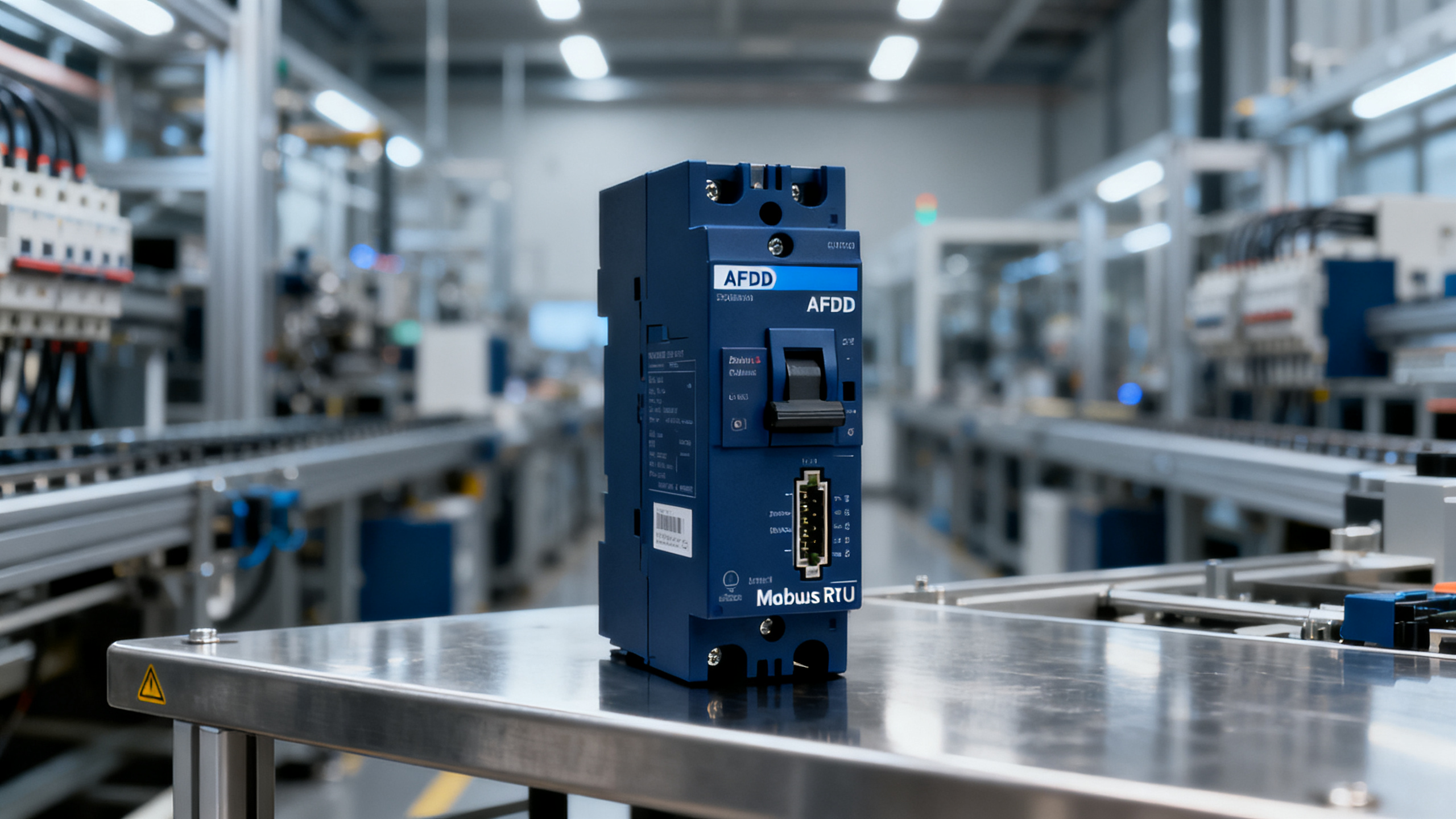
On May 10, 2026, the Saudi Standards, Metrology and Quality Organization (SASO) issued mandatory technical regulation SASO IEC 62841-3-10:2026, requiring arc-fault detection and interruption devices (AFDDs) with real-time diagnostic data output (via Modbus RTU protocol) in all circuit breakers supplied with electric power tools entering the Saudi market. This development directly affects manufacturers, exporters, and distributors of circuit breakers and relays targeting the Middle East — particularly those engaged in low-voltage electrical safety components and power tool supply chains.
Event Overview
On May 10, 2026, SASO published SASO IEC 62841-3-10:2026 as a mandatory technical regulation. It applies to circuit breakers integrated with or supplied alongside electric power tools — including both handheld and stationary equipment — intended for the Saudi market. The regulation mandates built-in arc-fault detection and disconnection capability (AFDD), plus real-time diagnostic data output compliant with Modbus RTU protocol.
Industries Affected by This Regulation
Manufacturers of Circuit Breakers & Protective Relays
These companies supply core components subject to direct compliance requirements. The mandate necessitates hardware redesign (e.g., AFDD integration), firmware updates (for Modbus RTU support), and new conformity assessment procedures under SASO’s certification framework. Impact includes extended product development cycles, revised type-testing protocols, and potential requalification of existing SKUs.
Exporters and Distributors of Power Tools and Accessories
Entities sourcing or bundling circuit breakers with power tools for Saudi import must verify upstream component compliance. Non-compliant breakers may trigger customs rejection or post-market surveillance actions. Impact manifests in tightened supplier audits, updated technical documentation packages (e.g., declarations of conformity referencing SASO IEC 62841-3-10:2026), and revised labeling requirements.
Suppliers of Electrical Safety Components and Subassemblies
Firms providing AFDD modules, communication interface ICs, or embedded firmware solutions face increased demand — but only if their offerings meet SASO’s implementation-specific interpretation of IEC 62841-3-10:2026. Impact includes heightened scrutiny of interoperability claims, traceability of diagnostic data outputs, and alignment with Saudi national testing lab requirements.
Key Considerations and Recommended Actions for Stakeholders
Monitor Official SASO Implementation Guidance and Timeline Clarifications
SASO IEC 62841-3-10:2026 is effective upon publication (May 10, 2026), but transition periods, enforcement milestones, and conformity assessment pathways (e.g., SASO Product Safety Program vs. SABER platform requirements) remain pending official notice. Stakeholders should track SASO’s official portal and authorized conformity assessment bodies for updates on accepted test reports and certification routes.
Identify and Prioritize High-Risk Product Categories
Handheld power tools (e.g., drills, grinders, saws) with integrated or bundled residual-current or miniature circuit breakers are most likely to fall under immediate scope. Exporters should audit current SKUs for breaker integration architecture and assess whether legacy models rely on non-AFDD or non-Modbus-capable units — especially those certified under prior editions of IEC 62841 or generic low-voltage standards.
Distinguish Between Regulatory Signal and Operational Readiness
The regulation reflects a formalized safety requirement, not yet a widely enforced market gate. However, its linkage to IEC 62841-3-10:2026 — an internationally harmonized standard — signals long-term regional alignment with arc-fault mitigation trends. Companies should treat this as a binding technical baseline for new designs, while recognizing that full customs enforcement may follow phased capacity-building at Saudi inspection agencies.
Initiate Internal Technical Alignment and Supplier Engagement
Manufacturers and exporters should review internal design specifications, update bill-of-materials (BOM) controls to flag AFDD/Modbus RTU dependencies, and initiate dialogue with breaker suppliers to confirm roadmap alignment. Where third-party breakers are used, procurement contracts should explicitly reference compliance with SASO IEC 62841-3-10:2026 — including verification of diagnostic data structure and Modbus register mapping.
Editorial Perspective / Industry Observation
Observably, SASO IEC 62841-3-10:2026 functions less as an isolated compliance update and more as a signal of institutional convergence: Saudi Arabia is aligning its electrical safety infrastructure with advanced fault-detection paradigms previously adopted in EU (e.g., HD 60364-4-42) and select APAC markets. Analysis shows this move prioritizes actionable diagnostics over passive protection — shifting emphasis from ‘trip-or-not’ behavior to verifiable, field-accessible fault intelligence. From an industry perspective, it marks the beginning of a broader regional recalibration of what constitutes minimum acceptable performance for low-voltage protective devices in consumer-facing electromechanical equipment. It is not yet a fully operationalized enforcement regime, but it is a definitive technical threshold that will shape R&D investment, certification strategy, and supply chain diligence over the next 12–24 months.
Conclusion: SASO IEC 62841-3-10:2026 establishes a new, enforceable baseline for circuit breaker functionality in electric power tools destined for Saudi Arabia. Its significance lies not only in its technical specificity — AFDD + Modbus RTU — but in its role as an early indicator of how Gulf Cooperation Council (GCC) markets may progressively adopt diagnostic-aware safety architectures. For stakeholders, it is best understood not as an emergency compliance event, but as a structural inflection point requiring deliberate, cross-functional technical and commercial adaptation.
Source: Saudi Standards, Metrology and Quality Organization (SASO), official publication of SASO IEC 62841-3-10:2026 on May 10, 2026.
Note: Transition timelines, enforcement mechanisms, and acceptance criteria for Modbus RTU implementation details remain subject to further SASO clarification and are under active observation.
Technical Specifications
- Air Handling Unit Supplier Checklist: Performance Data, Lead Times, and SupportAuthor :Environmental Engineering Director
- Buying Fiberglass Water Tanks Wholesale: Compare Quotes and Delivery CostsAuthor :Environmental Engineering Director
- Choosing an XLPE Power Cable Supplier: Test Reports, Traceability, and Lead TimesAuthor :Grid Infrastructure Analyst
Expert Insights

Chief Security Architect
Dr. Thorne specializes in the intersection of structural engineering and digital resilience. He has advised three G7 governments on industrial infrastructure security.
Related Analysis
- Oct 19, 2026Air Handling Unit Supplier Checklist: Performance Data, Lead Times, and SupportAuthor :Environmental Engineering Director
- Oct 18, 2026Buying Fiberglass Water Tanks Wholesale: Compare Quotes and Delivery CostsAuthor :Environmental Engineering Director
- Oct 17, 2026Choosing an XLPE Power Cable Supplier: Test Reports, Traceability, and Lead TimesAuthor :Grid Infrastructure Analyst
Core Sector // 01
Security & Safety
- Can SPDs Handle Repeated Voltage Spikes in Tropical Grids?Author :Grid Infrastructure Analyst

- How to Evaluate IEC-Compliant Power Protection Devices for Industrial PanelsAuthor :Grid Infrastructure Analyst

- How to Choose Smart Industrial Control Equipment for Harsh Plant EnvironmentsAuthor :Grid Infrastructure Analyst

- EU EMC Update Triggers Re-Certification for BreakersAuthor :Grid Infrastructure Analyst

- How to Select the Right SPD for Solar Inverter Protection in PV Systems?Author :Grid Infrastructure Analyst

- Industrial Valve Systems Factory Checklist: What Buyers Should Verify Before OrderingAuthor :Grid Infrastructure Analyst

- Breaker and Relay Lead Times Hit 24 WeeksAuthor :Grid Infrastructure Analyst

- IEC 61850-10-3 Sets Cybersecurity Bar for Grid DevicesAuthor :Grid Infrastructure Analyst