INMETRO Launches Green Circuit Breaker Fast-Track Certification
Author
Date Published
Reading Time
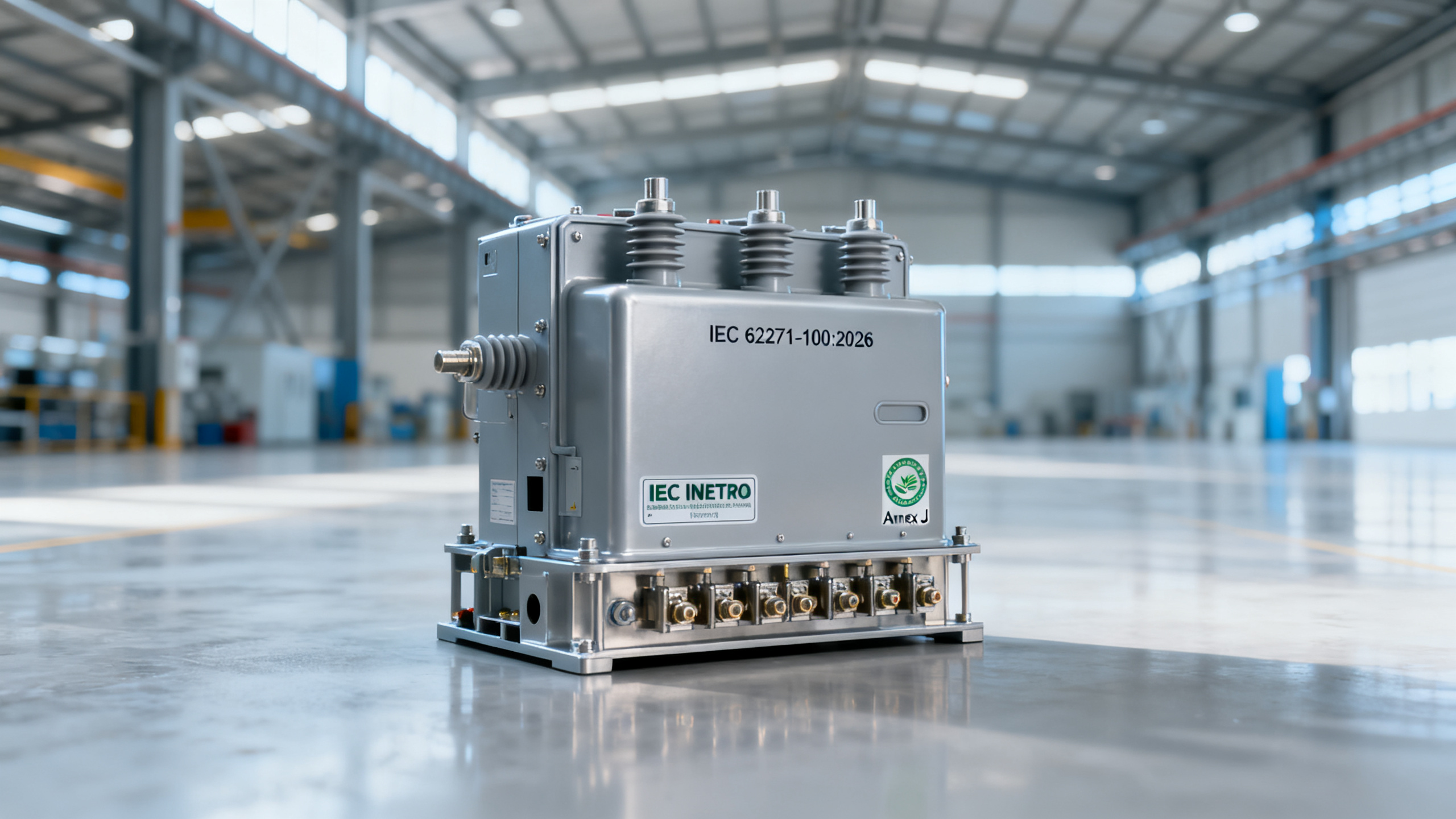
Brazil’s National Institute of Metrology, Standardization and Industrial Quality (INMETRO) launched a dedicated certification fast-track for environmentally compliant circuit breakers on May 9, 2026. The ‘Green Circuit Breaker’ channel enables type certification in just three working days for industrial circuit breakers using SF6-free insulation media and meeting the environmental requirements in Annex J of IEC 62271-100:2026. This development is particularly relevant for manufacturers, exporters, and supply chain stakeholders involved in medium- and high-voltage switchgear—especially those engaged in Brazil’s energy transition projects or exporting eco-designed equipment from China and other markets.
Event Overview
On May 9, 2026, INMETRO announced the official launch of its ‘Green Circuit Breaker’ fast-track certification pathway. Under this initiative, industrial circuit breakers that use non-sulfur hexafluoride (SF6) insulation media and conform to the environmental provisions specified in Annex J of IEC 62271-100:2026 are eligible for type certification completion within three working days. The measure is explicitly intended to accelerate deployment of low-global-warming-potential (GWP) equipment in Brazil’s energy infrastructure modernization efforts—and to create a time-bound opportunity for exporters of compliant products, notably from China.
Impact on Specific Industry Segments
Direct Exporters (e.g., Chinese Switchgear Manufacturers)
These firms face a narrow but actionable window to align product certifications with Brazilian market entry timelines. Because the fast-track applies only to devices certified to IEC 62271-100:2026 Annex J—and not legacy standards—their existing SF6-free designs must be re-evaluated against the updated technical and environmental criteria. Impact manifests primarily in certification lead time compression, but also in heightened documentation and test report requirements tied to the 2026 edition.
Component & Material Suppliers (e.g., Insulation Media Producers)
Suppliers of alternative insulating gases (e.g., clean air, fluoroketones, or gas mixtures) may see increased demand validation—but only if their materials are referenced in test reports submitted under the new scheme. Since INMETRO’s fast-track does not pre-approve specific media, suppliers must ensure their formulations support full compliance with Annex J’s performance, safety, and environmental verification protocols—not just GWP reduction claims.
OEMs and System Integrators
Companies integrating circuit breakers into substations or grid-scale solutions must verify whether their current bill-of-materials includes units already tested and documented per IEC 62271-100:2026 Annex J. If not, integration timelines for Brazil-bound projects could be delayed unless newly certified units are sourced and qualified. The fast-track does not waive system-level conformity assessments; it only accelerates the component-type certification step.
Certification & Compliance Service Providers
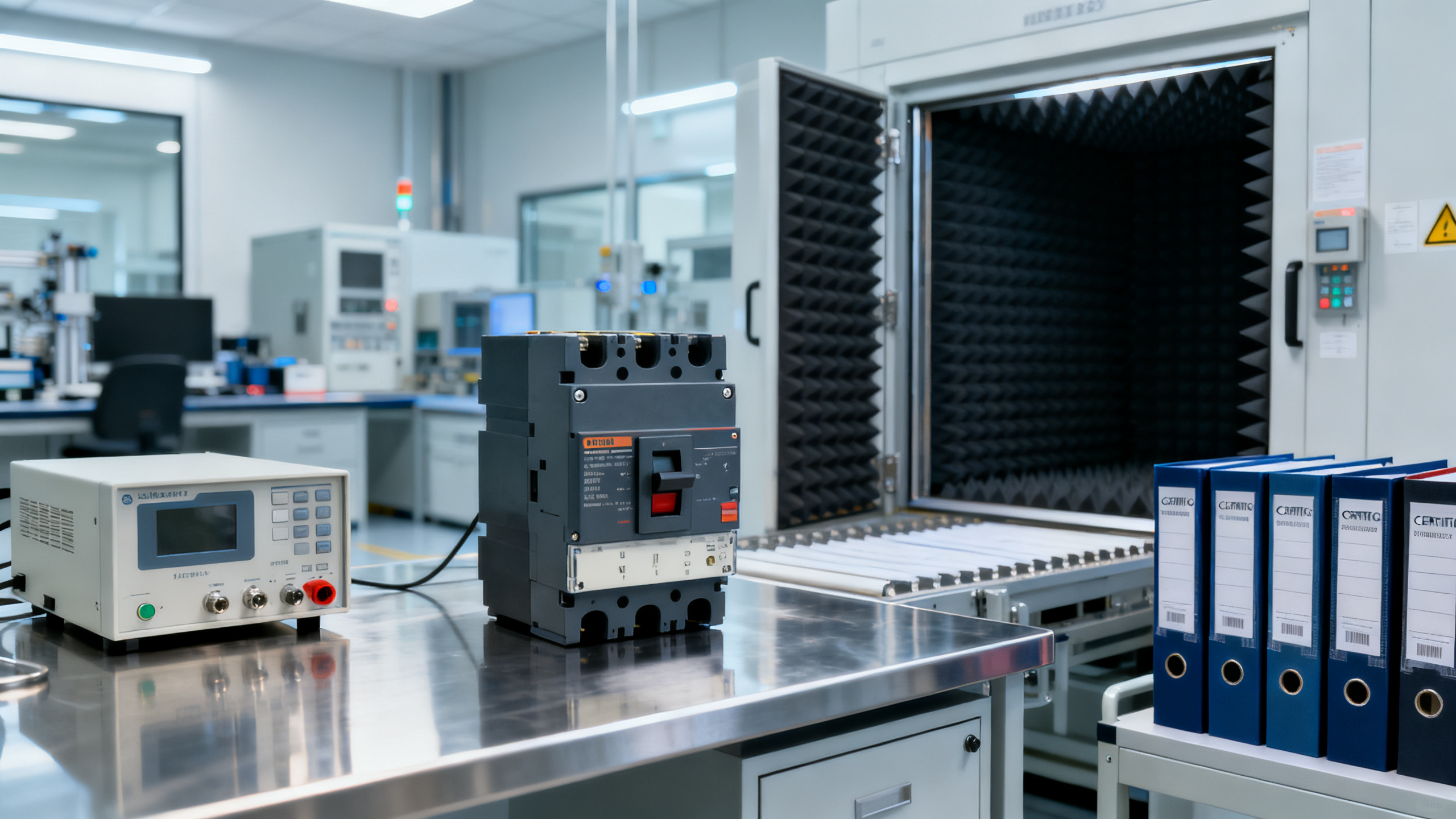
Third-party labs and certification bodies accredited for INMETRO schemes must confirm their readiness to issue reports aligned with IEC 62271-100:2026—including Annex J’s expanded environmental test parameters (e.g., decomposition byproduct analysis, lifecycle leakage assessment). Their capacity to deliver compliant test documentation within tight turnaround windows will directly influence clients’ ability to access the three-day certification path.
Key Considerations for Affected Enterprises
Monitor Official Guidance on Scope and Eligibility Criteria
INMETRO has not yet published detailed eligibility checklists, accepted test lab lists, or transitional arrangements for products certified to earlier editions of IEC 62271-100. Enterprises should track updates via INMETRO’s official portal and registered communication channels—particularly any clarifications on whether partial compliance (e.g., meeting Annex J only for certain voltage classes) qualifies for fast-track processing.
Prioritize Verification of Product Documentation Against IEC 62271-100:2026 Annex J
Manufacturers should audit existing technical files—not just product design—to confirm alignment with all Annex J requirements, including environmental impact declarations, material traceability, and end-of-life handling instructions. Retesting may be needed even for previously certified SF6-free models if earlier evaluations did not cover Annex J’s specific verification steps.
Distinguish Between Policy Signal and Operational Readiness
The fast-track announcement signals regulatory intent to incentivize low-GWP switchgear, but does not guarantee immediate scalability of certification throughput. Enterprises should treat the three-day timeline as conditional on complete, error-free submissions—and avoid assuming automatic eligibility based solely on SF6-free status or prior INMETRO certification.
Prepare for Coordinated Supply Chain Alignment
Exporters intending to leverage the fast-track should proactively engage with test labs, local representatives, and importers to synchronize documentation submission, sample logistics, and post-certification labeling. Delays at any handoff point—e.g., missing bilingual test reports or unverified factory inspection records—will void the accelerated timeline.
Editorial Perspective / Industry Observation
Observably, this initiative functions less as an immediate market-opening mechanism and more as a targeted regulatory signal—one calibrated to both incentivize green technology adoption and pressure stakeholders to upgrade compliance infrastructure. Analysis shows the three-day certification window is operationally narrow and highly dependent on upfront readiness; it is not a general simplification of INMETRO’s broader conformity assessment framework. From an industry perspective, the move reflects growing alignment between national energy policy and international standard evolution—particularly the increasing weight given to environmental annexes in IEC standards. It is therefore better understood as an early indicator of tightening environmental gatekeeping in Latin American power equipment markets, rather than a standalone trade facilitation measure.
Conclusion
This development marks a procedural shift—not a structural change—in how low-GWP circuit breakers gain market access in Brazil. Its significance lies not in broad deregulation, but in the explicit linkage between updated international environmental specifications (IEC 62271-100:2026 Annex J) and national certification speed. For industry participants, the most rational interpretation is that INMETRO is testing responsiveness to climate-aligned standards—and that sustained advantage will accrue to organizations with agile, standards-forward compliance systems—not just those holding SF6-free designs.
Source: Official announcement by the Brazilian National Institute of Metrology, Standardization and Industrial Quality (INMETRO), dated May 9, 2026.
Note: Ongoing observation is required regarding INMETRO’s publication of implementation guidelines, accredited laboratory updates, and potential extensions to other equipment categories beyond circuit breakers.
Technical Specifications
- Air Handling Unit Supplier Checklist: Performance Data, Lead Times, and SupportAuthor :Environmental Engineering Director
- Buying Fiberglass Water Tanks Wholesale: Compare Quotes and Delivery CostsAuthor :Environmental Engineering Director
- Choosing an XLPE Power Cable Supplier: Test Reports, Traceability, and Lead TimesAuthor :Grid Infrastructure Analyst
Expert Insights

Chief Security Architect
Dr. Thorne specializes in the intersection of structural engineering and digital resilience. He has advised three G7 governments on industrial infrastructure security.
Related Analysis
- Oct 19, 2026Air Handling Unit Supplier Checklist: Performance Data, Lead Times, and SupportAuthor :Environmental Engineering Director
- Oct 18, 2026Buying Fiberglass Water Tanks Wholesale: Compare Quotes and Delivery CostsAuthor :Environmental Engineering Director
- Oct 17, 2026Choosing an XLPE Power Cable Supplier: Test Reports, Traceability, and Lead TimesAuthor :Grid Infrastructure Analyst
Core Sector // 01
Security & Safety
- Can SPDs Handle Repeated Voltage Spikes in Tropical Grids?Author :Grid Infrastructure Analyst

- How to Evaluate IEC-Compliant Power Protection Devices for Industrial PanelsAuthor :Grid Infrastructure Analyst

- How to Choose Smart Industrial Control Equipment for Harsh Plant EnvironmentsAuthor :Grid Infrastructure Analyst

- EU EMC Update Triggers Re-Certification for BreakersAuthor :Grid Infrastructure Analyst

- How to Select the Right SPD for Solar Inverter Protection in PV Systems?Author :Grid Infrastructure Analyst

- Industrial Valve Systems Factory Checklist: What Buyers Should Verify Before OrderingAuthor :Grid Infrastructure Analyst

- Breaker and Relay Lead Times Hit 24 WeeksAuthor :Grid Infrastructure Analyst

- IEC 61850-10-3 Sets Cybersecurity Bar for Grid DevicesAuthor :Grid Infrastructure Analyst