INMETRO Launches Fast-Track Certification for AI-Enabled Circuit Breakers
Author
Date Published
Reading Time

On May 8, 2026, Brazil’s National Institute of Metrology, Standardization and Industrial Quality (INMETRO) introduced the ‘Smart Power Distribution Green Channel’, offering a 5-working-day expedited type approval process for industrial circuit breakers equipped with locally deployed AI overload prediction modules compliant with API v2.1. This development is particularly relevant for manufacturers of intelligent electrical protection equipment, export-oriented power infrastructure suppliers, and third-party testing and certification service providers active in the Brazil–China trade corridor.
Event Overview
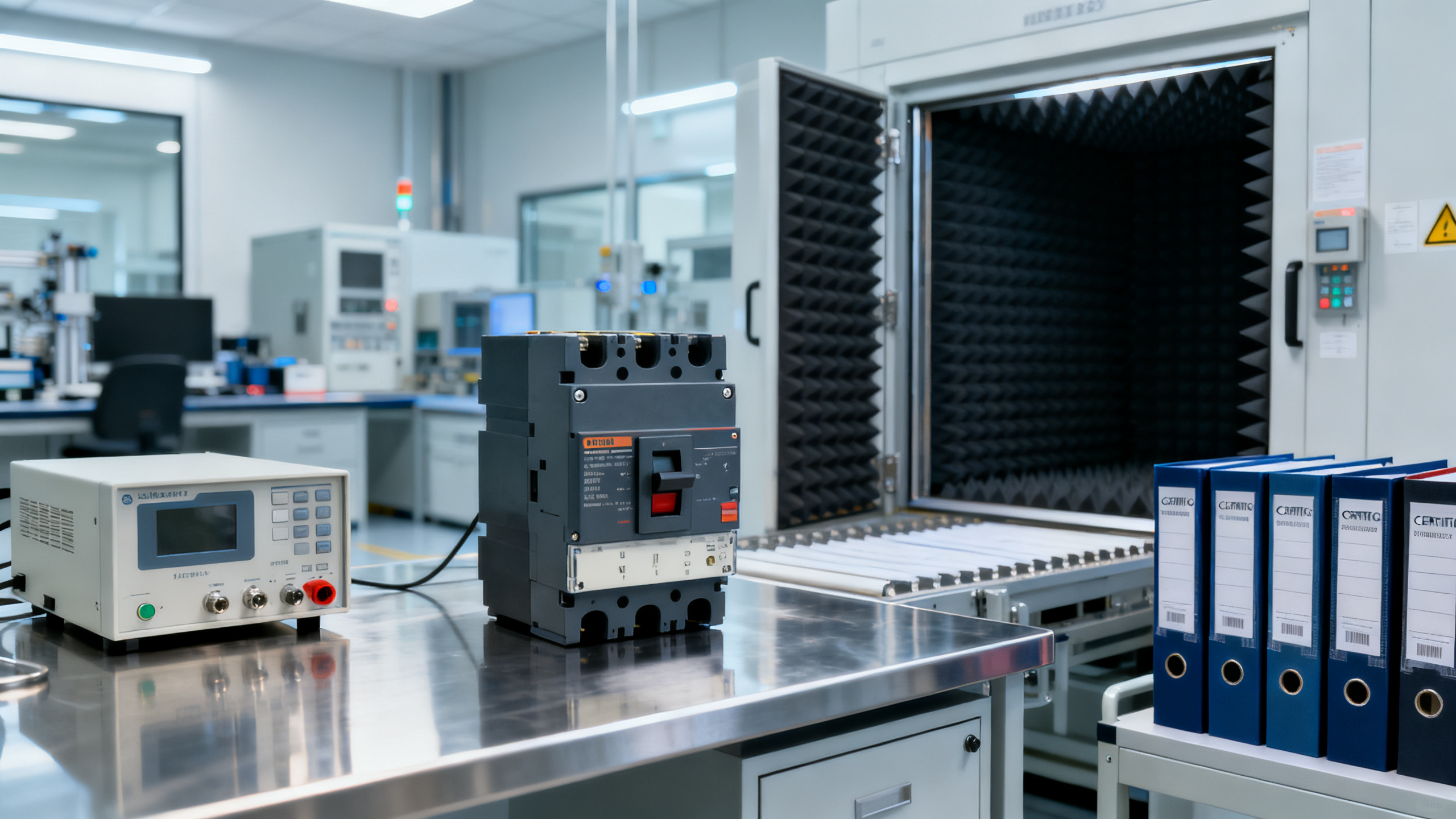
On May 8, 2026, INMETRO announced the launch of its ‘Smart Power Distribution Green Channel’. Under this initiative, industrial circuit breakers integrating an AI-based overload prediction interface conforming to API v2.1 specification are eligible for type certification within five working days. Eligibility requires submission of an interoperability test report for API v2.1, issued by a laboratory accredited by China’s National Accreditation Service for Conformity Assessment (CNAS). No further conditions, timelines for application intake, or fee structures have been publicly disclosed as of the announcement date.
Impact on Specific Industry Segments
Direct Exporters (Electrical Equipment Manufacturers)
Manufacturers exporting smart circuit breakers from China to Brazil face a newly defined compliance pathway. The fast-track option applies only to products with embedded, localized API v2.1–compliant AI modules — not generic IoT connectivity or cloud-based analytics. Impact centers on certification lead time reduction, but eligibility hinges entirely on pre-validation via CNAS-accredited labs.
Third-Party Testing & Certification Service Providers
Laboratories holding CNAS accreditation — especially those with existing capabilities in API interoperability validation — may see increased demand for API v2.1 conformance testing. However, no formal recognition or delegation of INMETRO authority to CNAS labs has been confirmed; the requirement remains a prerequisite document, not a delegated assessment.
Supply Chain Integrators & OEMs
OEMs incorporating AI-enabled circuit breakers into larger switchgear or energy management systems must verify whether their upstream component suppliers meet both the functional (API v2.1) and evidentiary (CNAS test report) requirements. Delayed or non-compliant subcomponents could disrupt eligibility for the green channel across the full assembly.
What Relevant Enterprises or Practitioners Should Focus On Now
Monitor official INMETRO guidance for implementation details
The initial announcement does not specify application procedures, document templates, or whether the 5-day timeline includes review of technical documentation or only processing after full submission. Stakeholders should track updates via INMETRO’s official portal and authorized conformity assessment bodies in Brazil.
Verify API v2.1 implementation scope and localization requirements
Analysis shows the green channel explicitly requires ‘locally deployed’ AI overload prediction modules. This suggests edge-based inference — not cloud-dependent models — is mandated. Firms should confirm that their firmware architecture, data residency, and real-time inference latency align with what INMETRO interprets as ‘local deployment’.
Distinguish between policy signal and operational readiness
Observably, the green channel represents a targeted regulatory signal supporting digitalized grid infrastructure, rather than an immediately scalable certification stream. Its narrow eligibility criteria (CNAS test report + local AI + API v2.1) mean it currently serves a limited subset of high-readiness exporters — not a broad simplification of INMETRO requirements.
Prepare documentation and lab coordination in advance
Since the CNAS-issued API v2.1 interoperability test report is a strict gatekeeper, manufacturers should initiate testing well before submission. Coordination between product development, firmware validation, and accredited lab scheduling is essential — especially given potential lead times for specialized API conformance testing.
Editorial Perspective / Industry Observation
This initiative is best understood as a targeted regulatory pilot — not a wholesale reform. From an industry perspective, it reflects INMETRO’s prioritization of AI-integrated grid-edge devices aligned with Brazil’s ongoing electricity infrastructure modernization. Analysis shows it functions primarily as a ‘certification acceleration lever’ for vendors who have already achieved a high level of technical and documentation maturity. It is not a relaxation of safety or performance standards, nor does it replace standard conformity assessment for non-AI or non-API–compliant products. Continued attention is warranted because its success — or limitations — may inform future fast-track expansions to other smart grid components.

Conclusion: The INMETRO fast-track channel signals growing regulatory attention toward AI-enabled electrical protection devices in emerging markets. However, its immediate operational impact remains constrained by stringent prerequisites. It is more accurately interpreted as a conditional opportunity for technically prepared exporters — rather than a broadly applicable efficiency gain. Current readiness depends less on regulatory change and more on prior investment in API-aligned firmware design and CNAS-recognized validation capacity.
Source: Official announcement by INMETRO (May 8, 2026).
Note: Implementation guidelines, application forms, and list of accepted CNAS laboratories for API v2.1 testing remain pending publication and are subject to ongoing observation.
Technical Specifications
- How to Select an Emissions Monitoring System Analyzer for Compliance ReportingAuthor :Precision Metrology Expert
- How to Select an Access Control Management System for Multi-Site FacilitiesAuthor :Safety Compliance Lead
- Portable Gas Monitor Calibration: How Often Is It Needed for Safe Confined-Space Work?Author :Precision Metrology Expert
Expert Insights

Chief Security Architect
Dr. Thorne specializes in the intersection of structural engineering and digital resilience. He has advised three G7 governments on industrial infrastructure security.
Related Analysis
- Sep 21, 2026How to Select an Emissions Monitoring System Analyzer for Compliance ReportingAuthor :Precision Metrology Expert
- Sep 20, 2026How to Select an Access Control Management System for Multi-Site FacilitiesAuthor :Safety Compliance Lead
- Sep 19, 2026Portable Gas Monitor Calibration: How Often Is It Needed for Safe Confined-Space Work?Author :Precision Metrology Expert
Core Sector // 01
Security & Safety
- Can SPDs Handle Repeated Voltage Spikes in Tropical Grids?Author :Grid Infrastructure Analyst

- How to Evaluate IEC-Compliant Power Protection Devices for Industrial PanelsAuthor :Grid Infrastructure Analyst

- How to Choose Smart Industrial Control Equipment for Harsh Plant EnvironmentsAuthor :Grid Infrastructure Analyst

- EU EMC Update Triggers Re-Certification for BreakersAuthor :Grid Infrastructure Analyst

- How to Select the Right SPD for Solar Inverter Protection in PV Systems?Author :Grid Infrastructure Analyst

- Industrial Valve Systems Factory Checklist: What Buyers Should Verify Before OrderingAuthor :Grid Infrastructure Analyst

- Breaker and Relay Lead Times Hit 24 WeeksAuthor :Grid Infrastructure Analyst

- IEC 61850-10-3 Sets Cybersecurity Bar for Grid DevicesAuthor :Grid Infrastructure Analyst