EU Updates EN 61000-6-4:2026 EMC Standard for Breakers & Relays
Author
Date Published
Reading Time
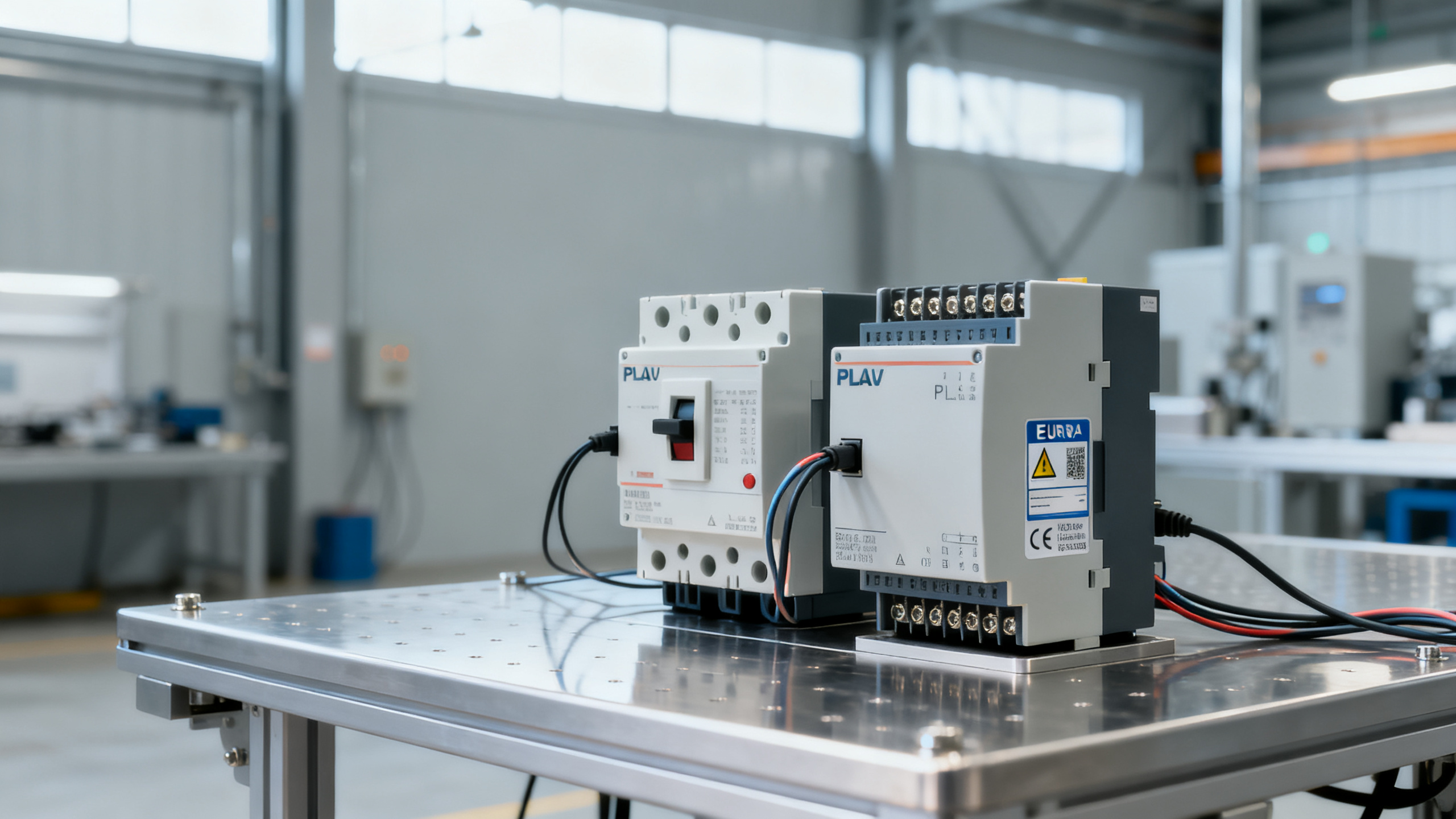
On 19 May 2026, the European Commission published EN 61000-6-4:2026, the updated electromagnetic compatibility (EMC) immunity standard for industrial electrical equipment. This revision directly affects Chinese exporters of circuit breakers, relays, and PLC control modules destined for the EU market — triggering urgent compliance reassessment across manufacturing, certification, and supply chain functions.
Event Overview
The European Committee for Electrotechnical Standardization (CENELEC) officially released EN 61000-6-4:2026 on 19 May 2026. The standard specifies electromagnetic immunity requirements for industrial, scientific, and medical (ISM) equipment, with mandatory application to industrial circuit breakers, relays, and programmable logic controller (PLC) modules. It introduces stricter limits for electrical fast transient (EFT) burst immunity and conducted radio-frequency immunity, and adds a new dynamic immunity verification requirement under AI-driven load scenarios. The standard will supersede EN 61000-6-4:2019 on 1 December 2026, establishing a six-month transition period.
Impact on Specific Industry Segments
Direct Exporters of Breakers & Relays
These companies face immediate re-evaluation of existing EU type certifications. Because EN 61000-6-4:2026 is harmonised under the EU EMC Directive 2014/30/EU, non-compliant products cannot be placed on the EU market after 1 December 2026. Impact includes delayed shipments, potential certification retesting costs, and possible redesign cycles for legacy models.
Electrical Equipment Manufacturers (OEMs & ODMs)
Manufacturers supplying components or fully assembled devices to EU importers must verify whether their current designs meet the revised EFT and RF immunity thresholds — especially under dynamically varying loads. The new AI-driven load scenario requirement implies that immunity testing can no longer rely solely on static operating conditions, increasing test complexity and duration.
EMC Testing Laboratories & Certification Bodies
Laboratories accredited for EN 61000-6-4:2019 must update their test procedures, calibration protocols, and reporting templates to align with the 2026 edition. Accreditation bodies (e.g., UKAS, DAkkS) are expected to require evidence of technical capability for the new dynamic verification method before granting extended scope.
Supply Chain & Logistics Providers
Providers handling pre-certified inventory may encounter customs hold-ups if documentation references the outdated standard post-1 December 2026. Shipment-level conformity declarations and DoC (Declaration of Conformity) documents must explicitly cite EN 61000-6-4:2026 for products placed on the EU market from that date onward.
What Relevant Enterprises or Practitioners Should Focus On and How to Respond
Monitor Official Harmonisation Status in the EU Official Journal
Although EN 61000-6-4:2026 has been published by CENELEC, its formal status as a harmonised standard under Directive 2014/30/EU depends on publication in the Official Journal of the European Union. Until then, notified bodies may apply transitional acceptance policies — but manufacturers should treat the standard as binding for all new applications submitted after 19 May 2026.
Prioritise Re-testing for High-Volume Export SKUs with Known EFT/RF Margins
Analysis shows that legacy breaker and relay designs — particularly those using older control ICs or minimal filtering on auxiliary power inputs — often operate near the previous EFT immunity threshold (±2 kV). The 2026 revision tightens this requirement; therefore, prioritising re-testing for top-10 export SKUs with marginal pass/fail history is operationally more efficient than blanket re-certification.
Review Test Reports for Dynamic Load Coverage and Update Test Plans Accordingly
Observably, many existing test reports do not include variable-load profiles mimicking AI-coordinated switching events (e.g., rapid sequential tripping across distributed nodes). Manufacturers should confirm with labs whether their current test plans cover the new ‘dynamic immunity verification’ clause (Clause 7.3 in EN 61000-6-4:2026) and revise test specifications before scheduling new validation runs.
Update Technical Documentation and Internal Compliance Checklists Before Transition Deadline
Current more appropriate action is to revise internal product compliance checklists, DoC templates, and EU representative appointment letters to reference EN 61000-6-4:2026 — effective immediately for new submissions and no later than 1 December 2026 for all ongoing production batches. This avoids last-minute administrative bottlenecks during final certification audits.
Editorial Perspective / Industry Observation
This update is better understood as both a technical escalation and a regulatory signal. Analysis shows it reflects the EU’s broader shift toward validating equipment resilience under digitally orchestrated operational conditions — not just static electrical environments. From an industry perspective, the six-month transition window is notably shorter than prior EMC revisions, suggesting increased enforcement readiness and reduced tolerance for legacy compliance pathways. Observably, it also signals growing alignment between EMC requirements and functional safety expectations in smart industrial systems — though EN 61000-6-4:2026 itself remains strictly an immunity standard, not a safety standard.
Conclusion
EN 61000-6-4:2026 marks a targeted tightening of EMC immunity expectations for industrial control and protection devices entering the EU. Its significance lies less in broad sectoral disruption and more in its precise impact on product validation timelines, test methodology, and documentation rigor — especially for Chinese manufacturers with established breaker and relay export operations. It is more accurately interpreted as an operational inflection point than a strategic pivot: one requiring focused technical response rather than wholesale system overhaul.
Source: CENELEC EN 61000-6-4:2026 (published 19 May 2026); EU Commission EMC Directive 2014/30/EU; CENELEC Press Release No. 26/05-EN.
Note: Formal harmonisation status in the Official Journal of the European Union remains pending and is subject to ongoing monitoring.
Technical Specifications
- How to Select Electronic Hotel Key Card Locks for Guest Rooms and Staff AreasAuthor :Safety Compliance Lead
- How to Select Lab Instruments for Reliable Chemical Analysis WorkflowsAuthor :Precision Metrology Expert
- How to Size a UPS for Server Rooms: Load, Runtime, and Redundancy FactorsAuthor :Grid Infrastructure Analyst
Expert Insights

Chief Security Architect
Dr. Thorne specializes in the intersection of structural engineering and digital resilience. He has advised three G7 governments on industrial infrastructure security.
Related Analysis
- Sep 17, 2026How to Select Electronic Hotel Key Card Locks for Guest Rooms and Staff AreasAuthor :Safety Compliance Lead
- Sep 16, 2026How to Select Lab Instruments for Reliable Chemical Analysis WorkflowsAuthor :Precision Metrology Expert
- Sep 15, 2026How to Size a UPS for Server Rooms: Load, Runtime, and Redundancy FactorsAuthor :Grid Infrastructure Analyst
Core Sector // 01
Security & Safety
- Can SPDs Handle Repeated Voltage Spikes in Tropical Grids?Author :Grid Infrastructure Analyst

- How to Evaluate IEC-Compliant Power Protection Devices for Industrial PanelsAuthor :Grid Infrastructure Analyst

- How to Choose Smart Industrial Control Equipment for Harsh Plant EnvironmentsAuthor :Grid Infrastructure Analyst

- EU EMC Update Triggers Re-Certification for BreakersAuthor :Grid Infrastructure Analyst

- How to Select the Right SPD for Solar Inverter Protection in PV Systems?Author :Grid Infrastructure Analyst

- Industrial Valve Systems Factory Checklist: What Buyers Should Verify Before OrderingAuthor :Grid Infrastructure Analyst

- Breaker and Relay Lead Times Hit 24 WeeksAuthor :Grid Infrastructure Analyst

- IEC 61850-10-3 Sets Cybersecurity Bar for Grid DevicesAuthor :Grid Infrastructure Analyst