Circuit Breakers and Relays Explained: Differences, Coordination, and Common Sizing Mistakes
Author
Date Published
Reading Time
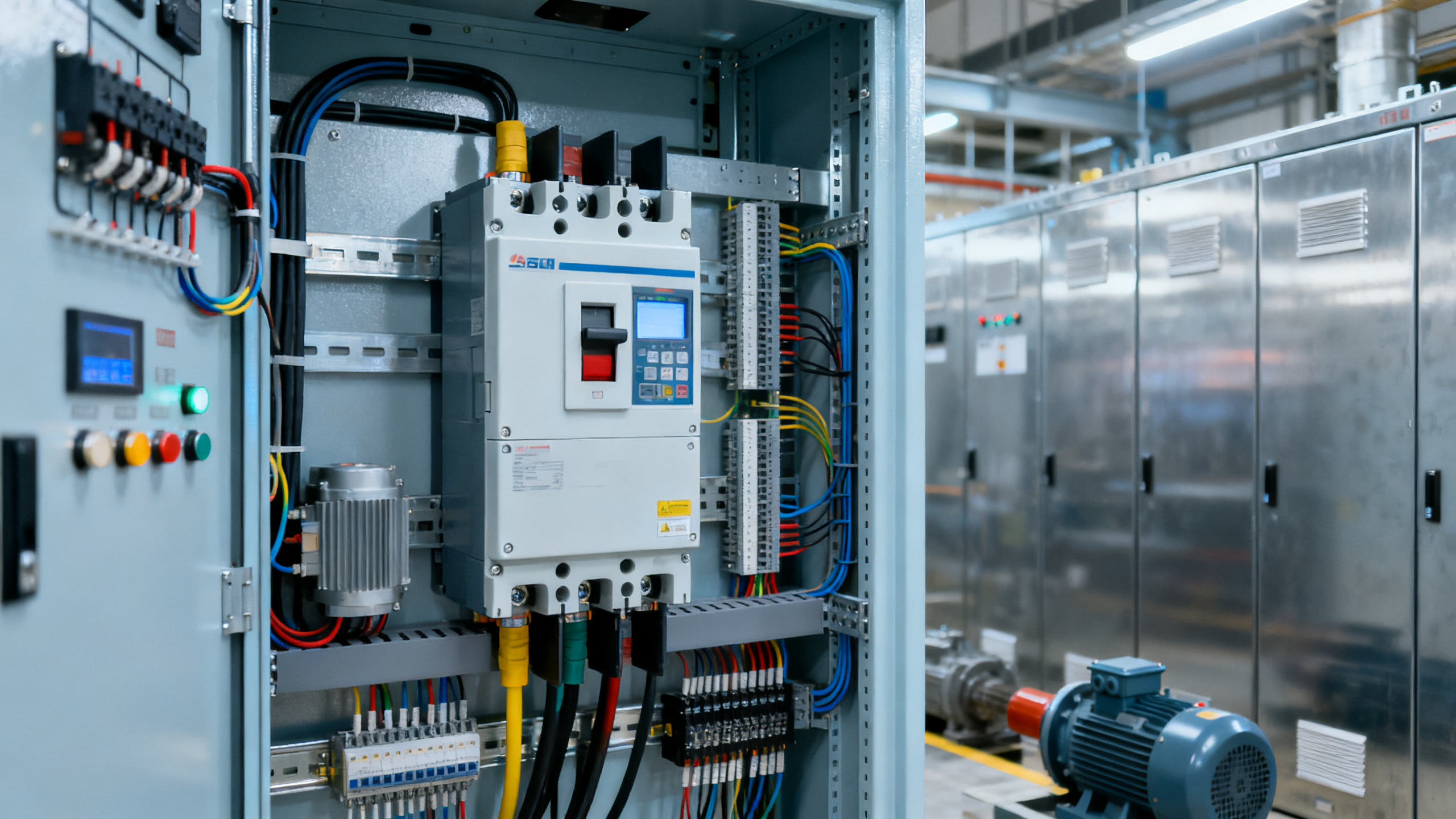
Why circuit breakers and relays are judged differently in real industrial service work
Circuit breakers and relays are often discussed together, yet they solve different protection problems inside the same power chain.
That difference matters most during maintenance, retrofit, and fault tracing, where a wrong assumption can create repeat trips or hidden exposure.
In practical terms, a circuit breaker interrupts fault current. A relay detects abnormal conditions and tells another device when to act.
The confusion usually starts when both are treated as interchangeable protection devices instead of coordinated parts of one scheme.
Across heavy industry, that mistake becomes expensive. Process lines, utility rooms, motor control centers, and backup systems rarely fail in the same way.
Global Industrial Core consistently emphasizes this point in electrical and power grid analysis: protection decisions should follow actual duty, standards, and failure consequences.
When uptime, CE or UL alignment, and selective isolation all matter, circuit breakers and relays must be sized and coordinated with the site context in mind.
The first check is not the device, but the operating scene
Different facilities ask different questions before choosing circuit breakers and relays. The equipment may look similar, but the protection objective changes.
A feeder supplying mixed loads needs selective tripping. A single critical motor usually needs better overload and phase-loss sensitivity.
A remote water treatment pump may prioritize simple restoration. A petrochemical auxiliary system may prioritize discrimination, arc risk reduction, and event visibility.
This is why circuit breakers and relays cannot be chosen from nameplate current alone. Available fault current, duty cycle, startup profile, and ambient heat all affect the answer.
The better approach is to map the fault behavior first, then decide how circuit breakers and relays should divide detection and interruption duties.
Motor circuits usually expose the biggest coordination mistakes
Motor applications are where circuit breakers and relays get misapplied most often, especially after replacements during urgent shutdown recovery.
A breaker sized too close to full-load current may survive normal operation, then nuisance trip during inrush or a long acceleration period.
A relay set too aggressively may interpret temporary startup asymmetry as a sustained fault. The result is downtime without any real equipment damage.
In conveyor drives, crushers, fans, and chilled water pumps, the starting profile often matters more than the nominal motor current.
More careful coordination considers rotor acceleration time, start frequency, thermal class, and whether the load can stall under process upset.
What to check before resetting or resizing
- Compare relay pickup and delay values with the actual motor start curve, not the catalog average.
- Confirm the breaker interrupting capacity against available short-circuit current at that exact panel location.
- Review ambient temperature and enclosure loading, because thermal stress shifts tripping behavior.
- Check whether a variable frequency drive or soft starter changes upstream relay sensing assumptions.
In actual plant history, many so-called defective breakers were simply responding to poor relay coordination or an unrecognized load change.
Distribution boards and utility feeders demand a different balance
Feeder protection is less about one machine and more about keeping the rest of the system alive when one section fails.
Here, circuit breakers and relays must support selectivity. The downstream device should clear the fault before the upstream source is lost.
That sounds straightforward, but real installations complicate it. Cable lengths change impedance, transformer upgrades raise fault current, and panel additions shift coordination margins.
A feeder that coordinated well during commissioning may stop coordinating after expansion, even if no single breaker appears oversized.
Relays add value here because settings can reflect time delay zones, earth fault sensitivity, and grading logic that fixed breaker characteristics cannot cover alone.
Common field misunderstanding
It is common to replace a tripping breaker with a higher rating without reviewing the relay logic or upstream discrimination study.
That may stop the immediate trip, but it can also reduce protection for cables, busbars, or downstream equipment during a real fault.
Backup power and mixed sources change how circuit breakers and relays behave
Sites with generators, UPS branches, or renewable tie-ins often see protection behavior change between normal and emergency modes.
This matters because circuit breakers and relays respond to a power source as much as to the load.
Utility supply may provide high fault current and fast breaker operation. A generator may deliver lower fault current, which can leave standard settings too insensitive.
In these cases, the relay becomes critical for detecting abnormal conditions early enough, while the breaker still needs enough certainty to interrupt safely.
Protection reviews should also include transfer sequences, inrush after re-energization, and the risk of overlapping time delays across source paths.
Where compliance and resilience are both priorities, this is one of the clearest reasons to treat circuit breakers and relays as a coordinated system, not isolated parts.
Sizing mistakes usually come from incomplete assumptions, not bad components
Most recurring issues with circuit breakers and relays are not manufacturing defects. They come from sizing based on only one visible parameter.
The most frequent mistakes are easy to recognize once the operating context is reviewed carefully.
- Using full-load current as the only sizing basis, while ignoring inrush, acceleration, or cyclic overload.
- Matching relay settings to old process behavior after a mechanical upgrade changed torque demand.
- Ignoring low-voltage conditions that increase current draw and alter relay timing.
- Selecting a breaker with adequate continuous rating but insufficient interrupting capacity.
- Overlooking ambient derating, dust loading, or altitude effects in enclosed installations.
- Assuming similar lines need identical settings, even when cable lengths and source stiffness differ.
In practice, these errors appear after line expansions, motor replacements, or emergency substitutions where documentation is incomplete.
That is why engineering reviews should connect electrical data with process behavior, maintenance records, and standards documentation.
A practical way to compare requirements before changing settings
When conditions vary across a site, a compact comparison method is more useful than relying on one preferred breaker or relay family.
This kind of review aligns well with the evidence-based approach expected in modern industrial infrastructure decisions.
What usually gets overlooked before a protection change is signed off
The overlooked details are rarely dramatic. They are small mismatches between design assumptions and field reality.
A relay may be technically correct yet still unsuitable if the maintenance team cannot test and document the setting consistently.
A breaker may appear compliant on paper, yet perform poorly if enclosure heat, contamination, or switching frequency were underestimated.
Another common blind spot is lifecycle drift. Loads become heavier, spare parts change, and temporary fixes become permanent operating conditions.
In that environment, circuit breakers and relays need periodic revalidation, not just one-time sizing at installation.
A more reliable sign-off process links event logs, trip history, thermal observations, and updated single-line diagrams before changes are finalized.
Where to go next if coordination still feels uncertain
The useful next step is to separate symptom from cause. A nuisance trip does not automatically mean the breaker is too small or the relay is faulty.
Start by listing the exact operating scene, source condition, load behavior, and protection sequence seen before each event.
Then compare circuit breakers and relays against three things: fault duty, coordination timing, and environmental derating.
If the site has changed over time, update the short-circuit and coordination study before replacing hardware again.
That disciplined review usually reveals whether the issue is sizing, settings, source variation, or a wider compatibility gap.
For industrial systems where reliability and compliance carry equal weight, circuit breakers and relays should always be judged as a coordinated protection strategy.
Technical Specifications
- How to Select an Emissions Monitoring System Analyzer for Compliance ReportingAuthor :Precision Metrology Expert
- How to Select an Access Control Management System for Multi-Site FacilitiesAuthor :Safety Compliance Lead
- Portable Gas Monitor Calibration: How Often Is It Needed for Safe Confined-Space Work?Author :Precision Metrology Expert
Expert Insights

Chief Security Architect
Dr. Thorne specializes in the intersection of structural engineering and digital resilience. He has advised three G7 governments on industrial infrastructure security.
Related Analysis
- Sep 21, 2026How to Select an Emissions Monitoring System Analyzer for Compliance ReportingAuthor :Precision Metrology Expert
- Sep 20, 2026How to Select an Access Control Management System for Multi-Site FacilitiesAuthor :Safety Compliance Lead
- Sep 19, 2026Portable Gas Monitor Calibration: How Often Is It Needed for Safe Confined-Space Work?Author :Precision Metrology Expert
Core Sector // 01
Security & Safety
- Can SPDs Handle Repeated Voltage Spikes in Tropical Grids?Author :Grid Infrastructure Analyst

- How to Evaluate IEC-Compliant Power Protection Devices for Industrial PanelsAuthor :Grid Infrastructure Analyst

- How to Choose Smart Industrial Control Equipment for Harsh Plant EnvironmentsAuthor :Grid Infrastructure Analyst

- EU EMC Update Triggers Re-Certification for BreakersAuthor :Grid Infrastructure Analyst

- How to Select the Right SPD for Solar Inverter Protection in PV Systems?Author :Grid Infrastructure Analyst

- Industrial Valve Systems Factory Checklist: What Buyers Should Verify Before OrderingAuthor :Grid Infrastructure Analyst

- Breaker and Relay Lead Times Hit 24 WeeksAuthor :Grid Infrastructure Analyst

- IEC 61850-10-3 Sets Cybersecurity Bar for Grid DevicesAuthor :Grid Infrastructure Analyst