What Drives Industrial Roller Chains Price: Material, Pitch, Load, and Supplier Factors
Author
Date Published
Reading Time
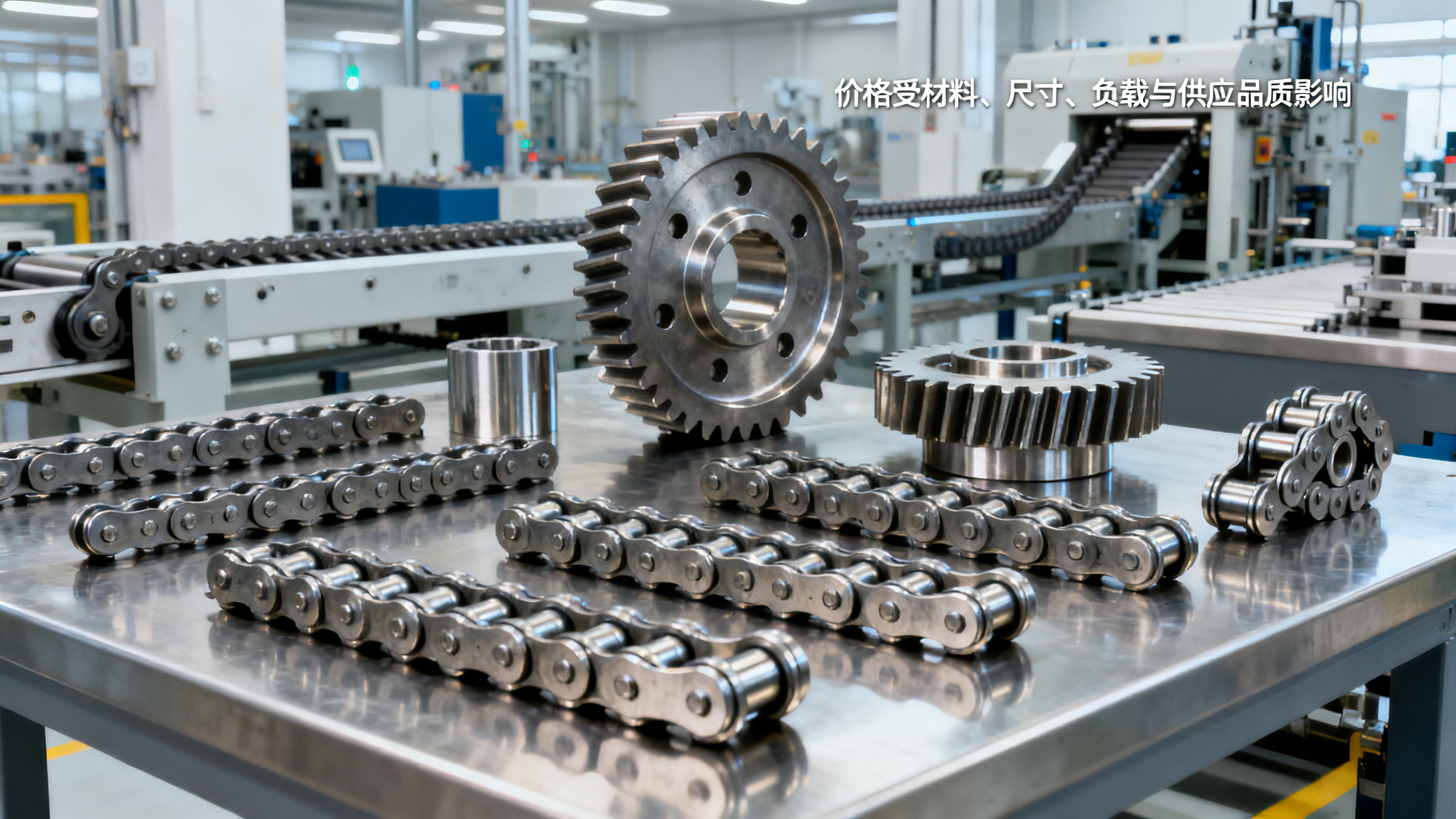
Understanding industrial roller chains price is essential for procurement teams balancing cost, durability, and compliance. Prices vary widely based on material grade, chain pitch, load capacity, manufacturing precision, and supplier reliability. This guide breaks down the core pricing factors that influence sourcing decisions, helping buyers compare options more accurately and reduce the risk of premature failure or hidden lifecycle costs.
For many buyers, the most expensive mistake is not overpaying for chain on day one. It is buying a chain that looks interchangeable on paper but performs very differently in service. Industrial roller chains are often treated as standardized commodities until an installation starts stretching too quickly, wearing sprockets unevenly, or failing under shock loads that were never properly considered during sourcing.
That is why price comparison in this category needs more discipline than a simple per-meter or per-piece check. A lower quoted price may reflect lighter material sections, lower heat-treatment consistency, weaker corrosion resistance, looser tolerances, thinner lubrication protection, or weaker documentation support. In critical conveying, power transmission, packaging, agricultural processing, or bulk material handling systems, those differences become operational cost very quickly.
Why the price range is wider than many buyers expect
Industrial roller chains are available across a broad spectrum: standard carbon steel transmission chains, attachment chains, corrosion-resistant stainless variants, heavy-duty series, double-pitch chains, engineered chains for abrasive service, and made-to-order assemblies for OEM line requirements. Even when two chains share the same nominal pitch, they may not be equivalent in metallurgy, fatigue resistance, dimensional consistency, or expected service life.
In procurement terms, the quoted price usually reflects five underlying variables:
- What the chain is made from
- How large and heavy the chain is
- How much load and shock it is expected to carry
- How tightly it is manufactured and tested
- How reliable the supplier is in quality, documentation, and delivery
The difficulty is that not all of these variables are visible in a basic quotation sheet. A buyer may see chain pitch, roller diameter, width, and tensile rating, but not always the details that most influence lifecycle cost. This is where experienced procurement teams separate “nominal equivalence” from “functional equivalence.”
Material is often the first pricing driver, but not in a simplistic way
Material choice has an obvious effect on industrial roller chains price, but buyers should avoid reducing the discussion to “carbon steel is cheap, stainless steel is expensive.” The material decision is really about operating environment, wear pattern, corrosion exposure, sanitation requirements, and maintenance discipline.
Standard carbon steel chain remains the mainstream option for general industrial duty because it balances cost and mechanical performance well. However, carbon steel pricing moves with broader steel market conditions, alloy surcharges, energy costs, and regional production economics. Within this category, chain pin and bushing hardness, plate quality, and heat-treatment consistency can create meaningful cost differences between suppliers.
Alloy steel and heat-treated components usually command a premium because they improve fatigue strength and wear resistance, especially in higher-load or shock-load applications. Buyers often see this premium as negotiable until they compare replacement intervals in real service. In many industrial settings, alloy upgrades cost far less than unplanned downtime.
Stainless steel chain is typically chosen for washdown environments, food-related applications, chemical exposure, or humid conditions where rusting would shorten service life or create contamination risk. But stainless chain is not automatically stronger than carbon steel. Depending on grade and design, corrosion resistance may improve while load capacity behaves differently. A lower-cost carbon chain with protective coating may be sufficient in mild environments; in aggressive environments, it often becomes a false economy.
Special coatings and surface treatments also affect cost. Zinc-plated, nickel-plated, dacromet-type, or other anti-corrosion finishes can narrow the gap between standard and stainless options for selected applications. The procurement question is not “which material is best?” but “which material provides the lowest total cost for this environment and maintenance regime?”
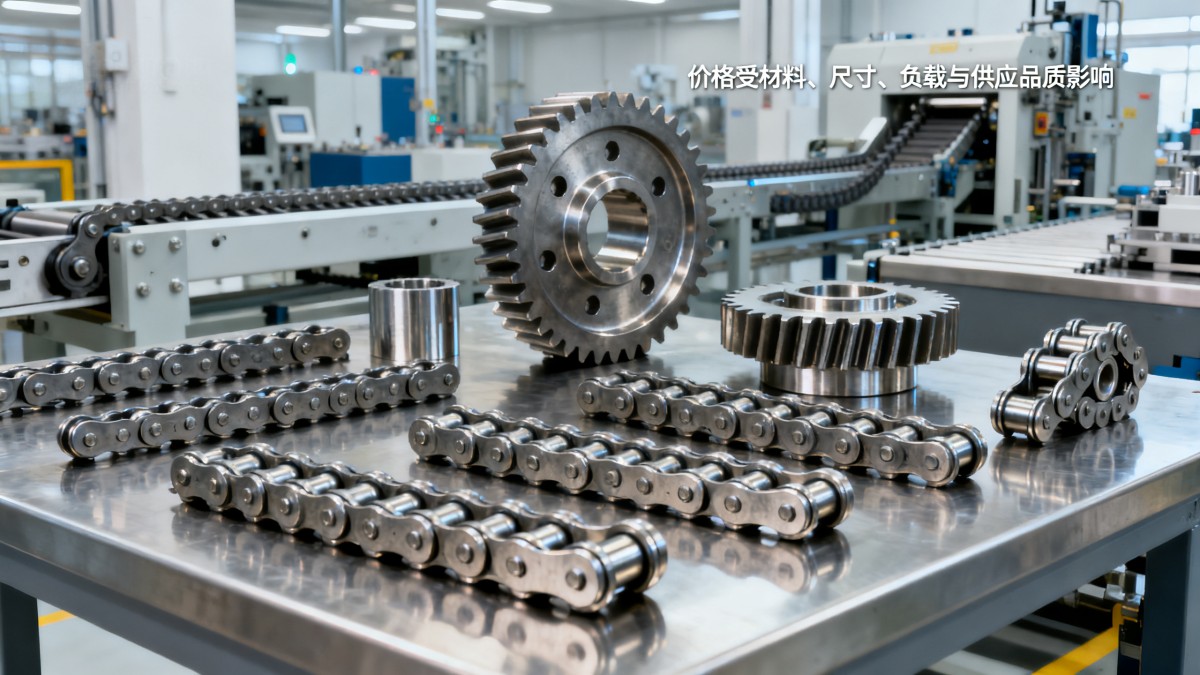
Pitch and chain size directly influence metal content, but also system economics
Pitch is one of the clearest structural drivers of chain price. As pitch increases, chain components become larger, heavier, and more material-intensive. Larger chains generally require more steel per unit length, more robust manufacturing processes, and more expensive handling and packaging. This is the simple part.
The less obvious point is that pitch also affects the rest of the drive system. A larger chain may require different sprockets, shaft loading considerations, guarding adjustments, and inventory strategy. In other words, selecting chain by minimum purchase price without considering pitch optimization can shift cost elsewhere.
For procurement teams supporting OEM production or plant maintenance, pitch decisions usually fall into three categories:
- Direct replacement: the pitch is fixed by the existing equipment design
- System redesign or upgrade: the pitch may be adjusted to improve service life or reduce maintenance
- New equipment sourcing: multiple pitch options may be technically viable, with different cost and lifecycle implications
In mature facilities, replacement purchases are often constrained by installed sprockets and space envelope. That makes interchangeability more important than nominal unit price. A slightly cheaper chain that accelerates sprocket wear or runs poorly on existing tooth profiles can raise total replacement cost significantly.
Load capacity is where cheap comparisons usually break down
Load rating is one of the most misread items in roller chain procurement. Buyers often compare catalog tensile strength figures as if they were service load guidance. In practice, chain selection should reflect working load, shock conditions, duty cycle, speed, lubrication, alignment, and environmental contamination. Ultimate tensile strength alone is not enough.
Chains designed for heavier loads require stronger plates, better pins and bushings, tighter process control, and often improved heat treatment. Those factors increase price, but they also reduce elongation, improve fatigue life, and help the chain survive real operating conditions.
This matters especially in applications with:
- Frequent starts and stops
- Reversing loads
- Impact loading
- Abrasive particles
- Poor lubrication access
- Long operating hours
A chain that appears “strong enough” in a static comparison may fail prematurely in dynamic service. Procurement teams should therefore ask suppliers for application-based selection support, not just a standard product match. If the supplier only confirms pitch and width without discussing working conditions, the quote may be incomplete from a risk standpoint.
For critical assets, it is reasonable to request supporting data such as material specifications, hardness range, fatigue-related testing information if available, and dimensional inspection standards. Some suppliers will provide this readily; others will not. That difference often explains part of the price gap.
Manufacturing precision is a hidden cost driver with visible operational consequences
Two chains with the same nominal dimensions can behave very differently because of manufacturing precision. Tolerance control affects articulation smoothness, sprocket engagement, noise, vibration, wear rate, and elongation behavior. Buyers may not notice this at receiving inspection, but maintenance teams usually notice it after installation.
Higher-precision chain production can increase cost through better tooling, tighter process control, calibrated heat treatment, better finishing, and more rigorous quality assurance. For commodity applications with low duty and easy maintenance access, basic-grade chain may be sufficient. For automated lines, synchronized conveying, or high-utilization systems, precision matters much more.
Watch for areas where a low quote may reflect lower process discipline:
- Inconsistent pitch accuracy across chain length
- Poor pin-bushing fit
- Variable plate thickness
- Weak rivet formation
- Inadequate pre-lubrication
- Insufficient traceability by batch
These issues do not always appear in a datasheet. They appear in field performance, maintenance records, and warranty disputes. Procurement teams working on frame agreements or multi-site sourcing can reduce this risk by validating samples, tracking installed life by supplier batch, and involving maintenance feedback before standardizing a low-cost source.
Supplier factors often explain the final quoted price more than the chain itself
When buyers compare industrial roller chains price across regions or vendors, supplier-related factors can create large differences even when technical specifications look close. Some of these differences are legitimate and valuable. Some indicate risk.
Reliable suppliers typically price in the cost of process stability, documentation, export packaging, compliance management, and after-sales support. Less mature suppliers may quote aggressively but provide limited consistency between batches, weaker communication on technical deviations, or unstable lead times.
Key supplier-side factors that influence price include:
- Manufacturing origin and input cost structure
- Quality system maturity, often including ISO 9001 if applicable
- Ability to provide dimensional reports, material certificates, or test records where required
- Experience with OEM, MRO, or export compliance expectations
- Minimum order quantities and production batch efficiency
- Stockholding versus make-to-order supply model
- Technical support for attachments, custom lengths, and matched sprockets
For overseas procurement, logistics reliability also matters. A low ex-works price can lose its advantage if the chain requires urgent air freight later because the supplier missed delivery windows or supplied nonconforming product. Buyers in EPC or shutdown-driven environments should weigh schedule risk as heavily as invoice cost.
Compliance and documentation do not always drive chain price, but they do affect sourcing risk
Roller chains are not always purchased under the same certification pressure as electrical or safety-critical products, yet documentation still matters. In many industrial procurement environments, buyers need confidence that supplied chain conforms to the relevant dimensional and performance standards referenced by the application.
Depending on market and application, this may include standards such as ISO chain dimensional references or ANSI-related series where applicable. Exact standard applicability should be checked against the equipment design and destination market requirements. If a supplier claims interchangeability, ask whether the chain is produced to the required standard series and whether sprocket compatibility has been verified.
Where food processing, cleanability, corrosion resistance, or special environmental conditions are involved, additional documentation may be relevant. If a supplier cannot clearly state what the chain conforms to, procurement risk rises even when price is attractive.
This is especially important in multinational sourcing programs. A chain that is acceptable in one plant may not be approved in another if internal specifications require certain traceability, material declarations, or supplier qualification steps.
How buyers should compare quotes without falling into the lowest-price trap
A useful quotation comparison for roller chain should go beyond line-item cost. At minimum, buyers should normalize the following variables before making a decision:
- Standard series and exact pitch
- Material grade and any surface treatment
- Breaking load and recommended working conditions if provided
- Heat-treatment scope for pins, bushings, and plates
- Chain construction details, including heavy-duty series if relevant
- Lubrication condition at delivery
- Dimensional tolerance and inspection practice
- Packaging, corrosion protection, and storage suitability
- Lead time, MOQ, and batch consistency
- Warranty terms and nonconformance handling
Without this normalization, price benchmarking becomes misleading. In practice, many “higher” quotes are simply more complete quotes.
One effective method is to split evaluation into three layers: technical conformity, supply reliability, and total landed cost. If a supplier is weak in any of those layers, the unit price discount needs to be large enough to justify the added risk. In critical operations, it rarely is.
Market conditions can shift chain pricing faster than buyers expect
Roller chain pricing is also sensitive to broader industrial conditions. Steel and alloy costs, energy prices, freight rates, exchange rates, and factory utilization all affect market offers. During periods of strong manufacturing demand, lead times and surcharges may rise even when catalog prices appear stable.
Procurement teams should also watch for sudden pricing movements tied to:
- Raw material volatility
- Trade restrictions or tariff changes
- Regional power cost increases for heat-treatment-intensive manufacturing
- Container freight disruption
- Supplier consolidation in specialized chain categories
For high-volume or recurring buyers, this creates a case for structured sourcing rather than spot buying. Blanket agreements, dual-source strategies, and safety stock planning can sometimes protect lifecycle cost better than repeated unit-price negotiations.
Where procurement teams usually misjudge value
The most common error is assuming all chains within the same size designation are effectively equal. They are not. Another frequent mistake is using replacement history only as a purchasing statistic rather than a reliability signal. If a site is buying chain more frequently than expected, the issue may be under-specification, contamination, lubrication failure, or inconsistent incoming quality rather than normal wear.
A third mistake is treating custom lengths, attachments, connecting links, and matched sprockets as secondary details. These features often affect both pricing and installation performance. A chain sourced cheaply but assembled incorrectly in the field can erase any savings through labor and downtime.
Buyers also underestimate the cost of supplier inconsistency. Even if one batch performs well, unstable quality across future orders can disrupt maintenance planning and spare parts confidence. For MRO-heavy environments, repeatability often has greater value than achieving the lowest first order price.
What a sound purchasing decision looks like
A strong procurement decision on industrial roller chains price is not based on getting the cheapest compliant-looking quote. It is based on understanding what the application actually demands, what failure would cost, and which supplier can reliably deliver the required quality at an acceptable total cost.
If the chain runs in a low-duty, noncritical application with easy maintenance access, cost optimization may reasonably favor a standard-grade source. If the chain supports continuous production, high shock loading, corrosive exposure, or expensive downtime, the procurement logic changes. In those cases, paying more for better material, tighter manufacturing control, and dependable supply is usually not overspending. It is risk control.
For buyers evaluating multiple offers, the most practical question is not “Which roller chain is cheapest?” It is “Which quoted chain gives us the most predictable service life, the lowest disruption risk, and the clearest technical accountability?” That question leads to better sourcing decisions than any spreadsheet built around unit price alone.
Technical Specifications
- Air Handling Unit Supplier Checklist: Performance Data, Lead Times, and SupportAuthor :Environmental Engineering Director
- Buying Fiberglass Water Tanks Wholesale: Compare Quotes and Delivery CostsAuthor :Environmental Engineering Director
- Choosing an XLPE Power Cable Supplier: Test Reports, Traceability, and Lead TimesAuthor :Grid Infrastructure Analyst
Expert Insights

Chief Security Architect
Dr. Thorne specializes in the intersection of structural engineering and digital resilience. He has advised three G7 governments on industrial infrastructure security.
Related Analysis
- Oct 19, 2026Air Handling Unit Supplier Checklist: Performance Data, Lead Times, and SupportAuthor :Environmental Engineering Director
- Oct 18, 2026Buying Fiberglass Water Tanks Wholesale: Compare Quotes and Delivery CostsAuthor :Environmental Engineering Director
- Oct 17, 2026Choosing an XLPE Power Cable Supplier: Test Reports, Traceability, and Lead TimesAuthor :Grid Infrastructure Analyst
Core Sector // 01
Security & Safety
- Does Power Transmission Maintenance Differ in Desert and Arctic Sites?Author :Heavy Industry Strategist

- Can Industrial Engineering Solutions Reduce Petrochemical Downtime?Author :Heavy Industry Strategist

- What Drives Industrial Roller Chains Price: Material, Pitch, Load, and Supplier FactorsAuthor :Heavy Industry Strategist

- How to Choose a Three Phase Soft Starter for Pumps, Fans, and ConveyorsAuthor :Heavy Industry Strategist

- How to Evaluate a Conveyor Roller Belts Manufacturer for Load, Speed, and Service LifeAuthor :Heavy Industry Strategist

- Power Transmission Systems Pricing: 7 Cost Drivers Buyers Should CompareAuthor :Heavy Industry Strategist

- India Expands BIS ISI Rule for Imported Belts and ChainsAuthor :Heavy Industry Strategist

- Zero Backlash Jaw Coupling Selection Guide: Torque, Misalignment, and Servo PerformanceAuthor :Heavy Industry Strategist