Can Industrial Engineering Solutions Reduce Petrochemical Downtime?
Author
Date Published
Reading Time
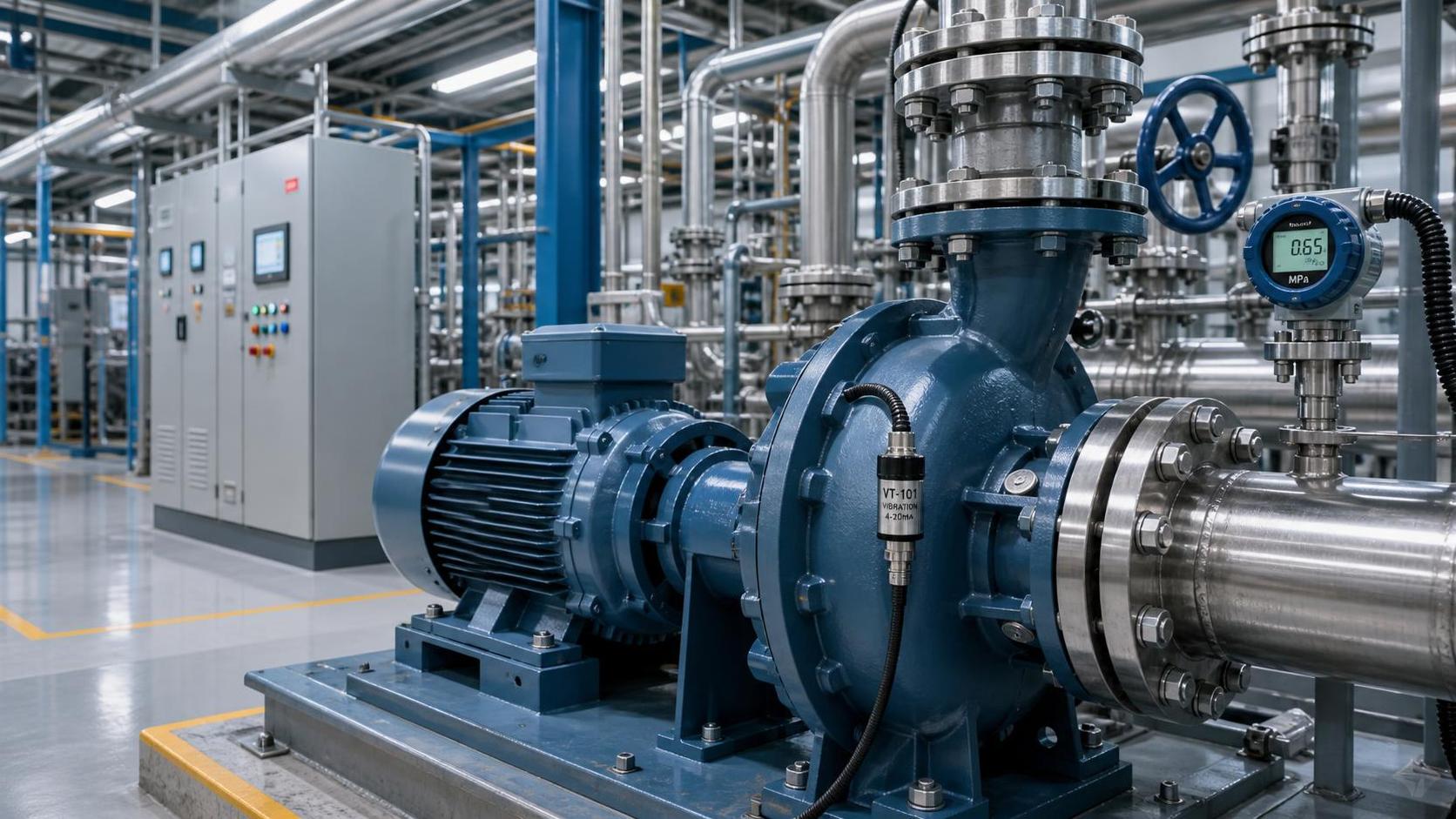
A petrochemical unit rarely announces a coming failure politely. A pump begins to vibrate outside its normal pattern. A level transmitter drifts just enough to distort a control decision. A corroded support weakens in a location no one can easily inspect. Then a small, manageable defect becomes a forced slowdown, an emergency repair window, or a shutdown that disrupts production schedules far beyond one process area.
So, can industrial engineering solutions reduce unplanned downtime in petrochemical plants? In many cases, yes—but not by adding technology indiscriminately. The strongest results come from connecting reliability engineering, instrumentation, power quality, mechanical integrity, corrosion management, and safety systems around the plant’s actual failure modes. The goal is not to promise that no equipment will ever fail. It is to make failures more visible, more predictable, less consequential, and easier to repair without interrupting critical production.
For EPC teams, maintenance leaders, and procurement directors, the decision is often a comparison between two approaches: continue responding to events as they arise, or invest in an engineered reliability framework that addresses the conditions creating those events. The difference affects not only maintenance cost, but also safety exposure, product availability, turnaround planning, and confidence in aging infrastructure.
Downtime is usually an engineering systems problem, not a single-equipment problem
When a compressor trips, the immediate cause may appear obvious: bearing damage, high temperature, seal failure, or a control-system alarm. Yet the underlying cause may sit elsewhere. Poor lubricant condition, an incorrectly ranged instrument, unstable electrical supply, inadequate cooling-water performance, misalignment after a prior repair, or a process excursion can all contribute to the same event.
This is why conventional “replace what failed” maintenance has limits. It restores service, but it may leave the initiating condition untouched. In petrochemical processing, where assets operate under pressure, heat, corrosive media, cyclic loading, and continuous production demands, repeated failures are often signals that the plant needs a broader engineering review.
An effective downtime-reduction program begins with a question that is more useful than “Which asset failed?”: Which combination of process, mechanical, electrical, instrumentation, and human factors made this failure possible?
Reactive maintenance versus integrated industrial engineering
The contrast below is not absolute. Every facility needs corrective maintenance at times, and every reliability initiative must be economically justified. Still, the comparison clarifies why isolated interventions often struggle to change long-term availability.
The last model is usually the most relevant for high-consequence petrochemical assets. It does not treat predictive maintenance as a stand-alone software purchase or an inspection route as a box-ticking activity. Instead, it asks how the information collected should change maintenance strategy, spares policy, engineering specifications, operating procedures, and capital priorities.
Where industrial engineering solutions have the greatest effect
Not every asset deserves the same level of monitoring or redesign. A practical program concentrates on equipment whose failure can create a safety event, environmental release, long restart, bottleneck, or substantial loss of production. That may include rotating equipment, fired heaters, utility systems, critical valves, electrical distribution equipment, tank farms, flare systems, and instrumented protective functions.
Precision instrumentation: reducing the blind spots before a trip
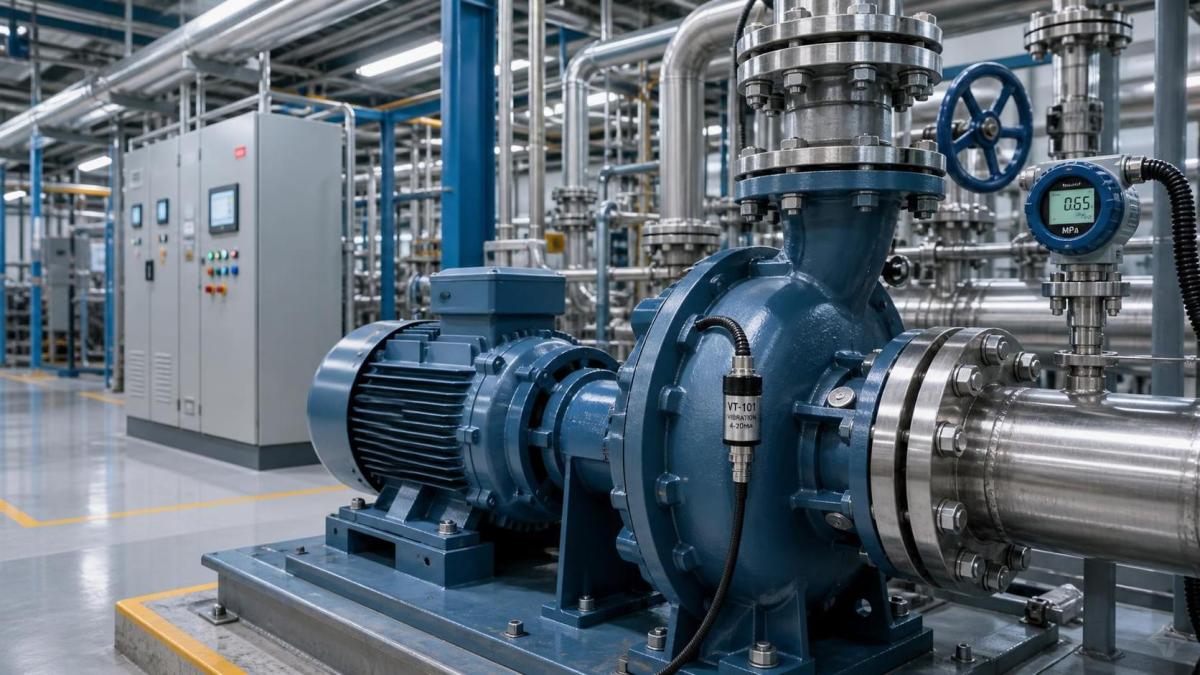
Instrumentation is frequently underestimated because many devices appear simple until they begin supplying misleading data. A pressure transmitter with calibration drift, a fouled flow meter, a poorly located thermowell, or an unreliable analyzer can prompt operators to respond to a condition that is not real—or fail to respond to one that is.
Industrial engineering solutions in this area include instrument criticality classification, calibration rationalization, proof-test planning, diagnostic use, loop checks after modifications, and review of installation conditions. The point is not merely to improve measurement accuracy. It is to ensure that control loops, alarms, interlocks, and operator decisions are based on information that can be trusted.
For example, a recurring pump trip may lead a team to focus on the motor. A review of suction pressure measurement, control-valve behavior, and process transients may reveal that the pump is being pushed repeatedly toward an unstable operating region. The repair is then no longer limited to the pump itself.
Mechanical integrity: stopping gradual damage from becoming an outage
Corrosion under insulation, erosion in high-velocity lines, fatigue at pipe supports, gasket degradation, misalignment, and inadequate bolting control all develop on different timelines. Some are detectable through inspection; others require a more targeted integrity strategy based on materials, process chemistry, temperature, pressure, and historical damage mechanisms.
Mechanical and metallurgy decisions therefore deserve a place in downtime planning. Selecting a more suitable alloy, improving coating specifications, redesigning a vibration-prone support, upgrading sealing arrangements, or correcting a chronic flange-management issue may cost more than a like-for-like replacement. But where a repeated defect affects a critical unit, the lifecycle case can be stronger than the lowest initial purchase price.
This is also where procurement choices become consequential. Equivalent dimensions do not automatically mean equivalent field performance. Material traceability, pressure-temperature ratings, fabrication controls, non-destructive testing requirements, and documentation quality should align with the service conditions—not simply the catalog description.
Electrical resilience: the overlooked route to continuous operation
A process unit can be mechanically sound and still lose availability because of electrical faults. Voltage dips, transformer degradation, protection coordination gaps, aging switchgear, cable insulation failure, poor grounding, or inadequate backup arrangements can interrupt motors, control systems, utility equipment, and safety-related loads.
A reliability-led electrical review typically looks beyond whether power is available today. It examines load criticality, selective coordination, power quality, thermal conditions, maintenance access, protection settings, emergency power behavior, and the consequences of a single-point failure. In some facilities, modest improvements in monitoring, relay testing, enclosure condition, or distribution redundancy can prevent a local fault from cascading into a wider operational event.
Electrical changes must be assessed carefully within site standards and applicable codes. The right solution is not always redundancy; sometimes it is better maintenance visibility, clearer isolation procedures, or replacement of a component whose condition is no longer acceptable for the duty it serves.
Safety systems: availability and protection should not compete
There is a dangerous misconception that safety reviews slow production reliability efforts. In reality, a well-managed safety system supports stable operations. Safety instrumented functions, gas detection, emergency shutdown logic, pressure relief systems, fire protection, and hazardous-area equipment all influence whether a process disturbance stays contained or becomes a major interruption.
Attempts to reduce nuisance trips by bypassing alarms, extending test intervals without justification, or overriding protective logic can create far greater downtime risk later. A better approach is to distinguish genuine nuisance conditions from valid protective actions. That may involve alarm rationalization, transmitter selection, improved process control, proof-test quality, or root-cause investigation of repeated trips.
Predictive maintenance is valuable—but only when it leads to decisions
Vibration analysis, infrared thermography, ultrasonic testing, oil analysis, motor-current monitoring, corrosion monitoring, and online condition sensors can all provide early warning. Yet plants sometimes collect large volumes of data without changing how maintenance work is prioritized.
The practical question is not, “Do we have monitoring?” It is, “What decision will this signal change?” If a vibration trend indicates bearing deterioration, the response may involve scheduling a repair, confirming alignment, checking lubrication practices, reviewing operating point, and verifying spare-part quality. If no defined action follows, the measurement becomes another dashboard rather than a reliability tool.
Condition monitoring works best when it is tied to a clear escalation path. Critical findings need ownership, acceptable limits, review frequency, work-order integration, and a decision on whether the condition can run to the next planned outage. This discipline is often more important than acquiring the most sophisticated platform.
A practical way to prioritize investments when budgets are constrained
Petrochemical facilities seldom have the budget or outage window to modernize everything at once. A defensible sequence starts with a risk-based asset register. Rank assets not only by replacement value, but by the consequences of failure: personnel safety, environmental exposure, production loss, restart complexity, repair lead time, regulatory requirements, and availability of alternatives.
Then review recurring events. Repeated seal failures, instrument-related trips, electrical disturbances, exchanger fouling, and valve reliability problems deserve attention because they expose patterns that may be correctable. A plant does not need perfect data to begin; maintenance records, operator logs, trip histories, inspection reports, and spare consumption often reveal enough to identify priority areas.
For each candidate improvement, compare four elements:
- Failure mechanism: Is the cause understood, or is additional inspection and analysis required?
- Consequence: What happens to safety, production, equipment, and the environment if the event recurs?
- Intervention options: Can operating practice, maintenance scope, component selection, monitoring, or design be changed?
- Implementation reality: Does the solution require a shutdown, specialist labor, approved materials, software integration, or long-lead procurement?
This comparison keeps the discussion grounded. A low-cost sensor may offer good value where it prevents a known and frequent failure. Conversely, a major redesign may be justified where a single event can stop an entire unit for an extended period. Neither decision should be made purely from the purchase order amount.
Common mistakes that dilute the value of reliability investment
Buying technology before defining the problem. Digital monitoring has a role, but it cannot compensate for unclear criticality, weak maintenance records, or an unresolved design defect.
Using generic specifications in severe service. Petrochemical environments can expose components to chemicals, temperatures, pressures, and vibration conditions that demand precise materials and construction requirements. “Standard industrial grade” is often too vague.
Separating maintenance from operations. Operators observe changing process behavior first; maintainers understand equipment condition; engineers evaluate design limits. Downtime reduction depends on these perspectives meeting before the next incident.
Ignoring compliance in the pursuit of uptime. CE, UL, ISO-related requirements, site procedures, hazardous-area classifications, and local regulations are not obstacles to work around. They are part of creating equipment systems that can remain dependable under demanding conditions.
The real measure of success is controlled continuity
Industrial engineering solutions do not eliminate uncertainty from petrochemical operations. Feedstocks change, assets age, weather disrupts utilities, and even well-designed equipment can fail. What engineering can do is reduce exposure to surprise by making weak signals visible and by improving the plant’s ability to absorb disruption.
For decision-makers asking whether industrial engineering solutions can reduce unplanned downtime in petrochemical plants, the most honest answer is conditional: they can, when the solutions are selected against real failure mechanisms and supported by disciplined execution. Precision measurement, mechanical integrity, electrical resilience, environmental controls, and safety compliance are most powerful when treated as connected parts of one operating system.
The next productive step is rarely a plant-wide shopping list. It is a focused review of the assets that repeatedly threaten safe, continuous production—followed by engineering decisions that are technically appropriate, verifiable, and sustainable long after the immediate repair is complete.
Technical Specifications
- Air Handling Unit Supplier Checklist: Performance Data, Lead Times, and SupportAuthor :Environmental Engineering Director
- Buying Fiberglass Water Tanks Wholesale: Compare Quotes and Delivery CostsAuthor :Environmental Engineering Director
- Choosing an XLPE Power Cable Supplier: Test Reports, Traceability, and Lead TimesAuthor :Grid Infrastructure Analyst
Expert Insights

Chief Security Architect
Dr. Thorne specializes in the intersection of structural engineering and digital resilience. He has advised three G7 governments on industrial infrastructure security.
Related Analysis
- Oct 19, 2026Air Handling Unit Supplier Checklist: Performance Data, Lead Times, and SupportAuthor :Environmental Engineering Director
- Oct 18, 2026Buying Fiberglass Water Tanks Wholesale: Compare Quotes and Delivery CostsAuthor :Environmental Engineering Director
- Oct 17, 2026Choosing an XLPE Power Cable Supplier: Test Reports, Traceability, and Lead TimesAuthor :Grid Infrastructure Analyst
Core Sector // 01
Security & Safety
- Does Power Transmission Maintenance Differ in Desert and Arctic Sites?Author :Heavy Industry Strategist

- Can Industrial Engineering Solutions Reduce Petrochemical Downtime?Author :Heavy Industry Strategist

- What Drives Industrial Roller Chains Price: Material, Pitch, Load, and Supplier FactorsAuthor :Heavy Industry Strategist

- How to Choose a Three Phase Soft Starter for Pumps, Fans, and ConveyorsAuthor :Heavy Industry Strategist

- How to Evaluate a Conveyor Roller Belts Manufacturer for Load, Speed, and Service LifeAuthor :Heavy Industry Strategist

- Power Transmission Systems Pricing: 7 Cost Drivers Buyers Should CompareAuthor :Heavy Industry Strategist

- India Expands BIS ISI Rule for Imported Belts and ChainsAuthor :Heavy Industry Strategist

- Zero Backlash Jaw Coupling Selection Guide: Torque, Misalignment, and Servo PerformanceAuthor :Heavy Industry Strategist